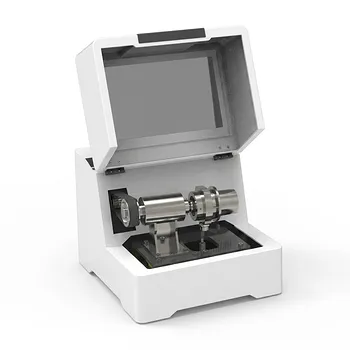
What is the primary function of a high-energy planetary ball mill in coal detonation research? Optimize Peak Reactivity
Updated 4 months ago
The primary function of a high-energy planetary ball mill is to reduce coal samples to ultra-fine particle sizes, typically below 10 micrometers. By utilizing intense impact and shear forces, the mill increases the specific surface area of the coal powder and ensures its suspension stability in the air, both of which are critical for achieving consistent and measurable chemical reactions during detonation.
In detonation performance research, the planetary ball mill acts as a catalyst for efficiency by transforming raw coal into a highly reactive, uniform powder. This process optimizes the material's physical state and chemical potential, ensuring the coal-air mixture remains stable enough for precise experimental analysis.
The Role of Particle Refinement in Detonation Research
Achieving High Specific Surface Area
The mill utilizes unique planetary motion to generate the energy required to reach a specific median particle size ($D_{50}$), often around 5.265 micrometers. This drastic reduction in size exponentially increases the specific surface area, which is essential for facilitating the rapid chemical reactions required for detonation. Without this refinement, the coal lacks the contact area necessary to react instantaneously with oxidizers.
Ensuring Suspension Stability in Air
For detonation to occur effectively, coal powder must be evenly dispersed in the air. Ultra-fine grinding ensures that particles are light enough to remain in a stable suspension, preventing settling that could lead to uneven combustion or failed detonation. This uniformity allows researchers to create predictable and repeatable coal-air mixtures in a laboratory setting.
Facilitating Efficient Material Fragmentation
The high-speed rotation of the mill allows for rapid pulverization of raw coal chunks into a fine powder. This initial fragmentation is the critical first step in achieving particle size uniformity. Consistency across the sample ensures that subsequent research data is not skewed by outliers in grain size or mass.
Beyond Grinding: Mechanochemical Activation
Disrupting Crystalline Structures
Beyond simple size reduction, the high-energy impact disrupts the crystalline structure of the coal matrix. This process, known as mechanochemical activation, increases the internal energy of the particles. By breaking these bonds, the mill makes the coal more susceptible to solvent penetration and rapid pyrolysis during the detonation phase.
Increasing Matrix Reactivity
Mechanical activation creates a higher concentration of structural defects on the powder surface. These defects lower the activation energy barrier required for chemical reactions to trigger. Consequently, the coal powder becomes significantly more chemically active, allowing for lower ignition temperatures and faster reaction rates.
Achieving Microscopic Homogeneity
The intense friction and shear forces ensure that the coal components are homogenized at a microscopic scale. If the coal contains various mineral or chemical dopants, the mill ensures they are distributed uniformly throughout the sample. This prevents component segregation, which could otherwise lead to inconsistent detonation performance.
Understanding the Trade-offs and Limitations
Heat Generation and Thermal Degradation
The intense mechanical energy required for ultra-fine grinding inevitably generates significant heat within the milling jars. If not carefully managed, this temperature rise can lead to the premature oxidation or thermal degradation of the coal's volatile components. Researchers must often use intermittent milling cycles or cooling systems to preserve the sample's chemical integrity.
Potential for Material Contamination
Because the mill relies on high-energy impacts between the grinding media (balls) and the jar walls, there is a risk of media wear. Small amounts of material from the grinding balls (such as stainless steel or zirconia) can contaminate the coal powder. This may introduce unwanted variables into the detonation research by altering the chemical composition of the fuel.
How to Apply This to Your Research Project
Making the Right Choice for Your Goal
To maximize the effectiveness of a planetary ball mill in your preparation process, consider your specific research objectives:
- If your primary focus is reaction speed: Aim for the smallest possible $D_{50}$ (below 6 micrometers) to maximize specific surface area and minimize the chemical induction period.
- If your primary focus is suspension longevity: Focus on achieving a narrow particle size distribution to ensure all particles remain airborne for the duration of the test.
- If your primary focus is chemical purity: Utilize high-hardness grinding media like tungsten carbide or zirconia to minimize contamination from the milling equipment itself.
By mastering the balance between particle refinement and mechanical activation, researchers can unlock the full reactive potential of coal powder for advanced detonation studies.
Summary Table:
| Key Function | Technical Impact | Benefit to Detonation Research |
|---|---|---|
| Particle Refinement | $D_{50}$ < 10μm | Maximizes specific surface area for rapid reaction. |
| Suspension Stability | Uniform dispersion | Ensures a stable and repeatable coal-air mixture. |
| Structural Activation | Crystal disruption | Lowers activation energy and ignition temperatures. |
| Micro-Homogeneity | Component blending | Prevents segregation for consistent experimental data. |
Elevate Your Research with Precision Sample Preparation
At [Brand Name], we provide complete laboratory sample preparation solutions specifically engineered for material science. We specialize in high-performance powder processing and compaction equipment designed to meet the rigorous demands of ultra-fine grinding and material synthesis.
Our extensive product line includes:
- Advanced Milling: Planetary ball mills, jet mills, cryogenic grinders, and rotor mills for achieving sub-micron particle sizes.
- Sizing & Mixing: Sieve shakers (vibratory/air-jet), powder mixers, and defoaming mixers for perfect homogeneity.
- Compaction & Synthesis: A full spectrum of hydraulic presses, including Cold/Warm Isostatic Presses (CIP/WIP), vacuum hot presses, and XRF pellet presses.
Whether you are a researcher aiming for microscopic homogeneity or a distributor seeking reliable OEM/ODM support and high-margin equipment, our solutions ensure superior results and supply reliability.
Ready to optimize your laboratory workflow? Contact our technical experts today!
References
- Jing Guo, Shirong Ge. Preliminary study on the explosive performance of coal dust and prospects for engineering applications. DOI: 10.1038/s41598-025-85274-x
Mentioned Products
- High Energy Planetary Ball Mill for Nano Scale Grinding and Mechanical Alloying
- High Energy Laboratory Planetary Ball Mill for Nano Grinding and Colloidal Mixing of Hard and Brittle Materials
- High Energy Planetary Ball Mill for Nano Scale Grinding and Colloidal Mixing in Material Science Research
- High Energy Omnidirectional Planetary Ball Mill 16L
- High Energy Laboratory Planetary Ball Mill for Nano Grinding and Material Science Sample Preparation
People Also Ask
- Why is a high-energy planetary ball mill used for nano-milling As4Se3? Achieve Expert Structural Transformation
- What role do high-energy planetary ball mills play in FDM composite filament preparation? Optimize Material Performance
- What is the role of a high-energy planetary ball mill in the exfoliation of modified WSe2? Achieve Nano-Precision
- What is the function of a planetary ball mill in glass-ceramic sintering? Optimize Reactivity and Uniformity
- What is the role of a high-energy planetary ball mill in the preparation of high-performance nano-ceramics? Key Guide

Tech Team · PowderPreparation
Last updated on Jun 03, 2026
Related Products

High Energy Planetary Ball Mill for Nano Scale Grinding and Mechanical Alloying
High Energy Laboratory Planetary Ball Mill for Nano Grinding and Colloidal Mixing of Hard and Brittle Materials
High Energy Planetary Ball Mill for Nano Scale Grinding and Colloidal Mixing in Material Science Research
High Energy Omnidirectional Planetary Ball Mill 16L

High Energy Laboratory Planetary Ball Mill for Nano Grinding and Material Science Sample Preparation
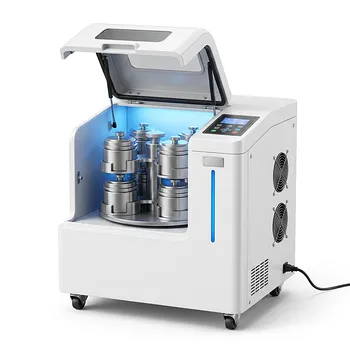
High Energy Omnidirectional Planetary Ball Mill 20L

Vertical Square Planetary Ball Mill for Laboratory Sample Preparation and Nanoscale Grinding

8L Planetary Ball Mill for Laboratory Grinding and Sample Preparation

Miniature Planetary Ball Mill with Vacuum Grinding and High Efficiency for Laboratory Sample Preparation
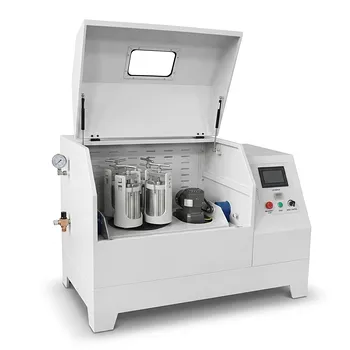
Vertical Production Planetary Ball Mill for High Throughput Powder Processing
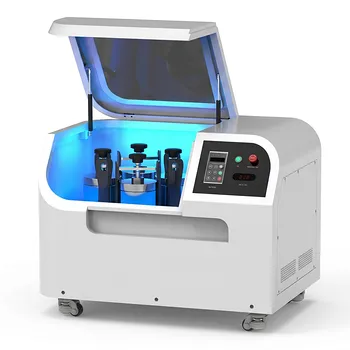
Planetary Ball Mill 12L
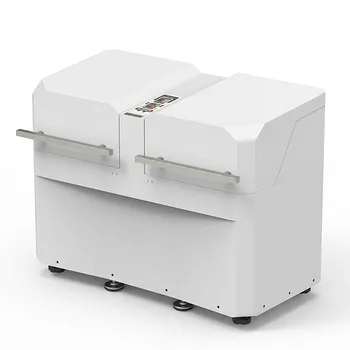
Dual Station Planetary Ball Mill 24L
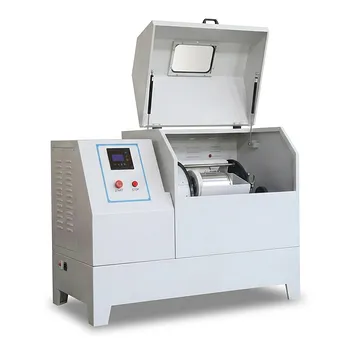
Heavy Duty Horizontal Planetary Ball Mill for Efficient Industrial Grinding and Sample Preparation
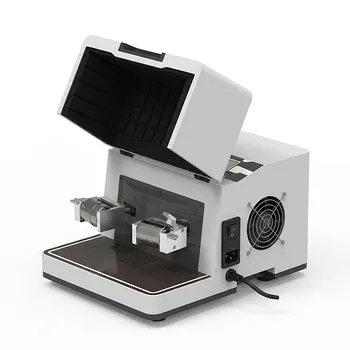
High Energy Hybrid Vibratory Ball Mill for Grinding Mixing and Cell Disruption
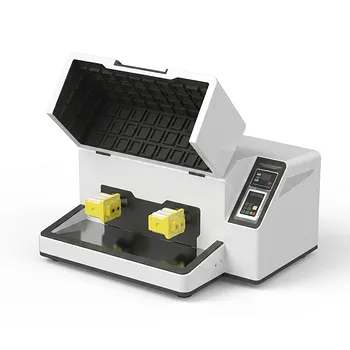
Multi-Platform Nanoscale High-Energy Vibratory Ball Mill
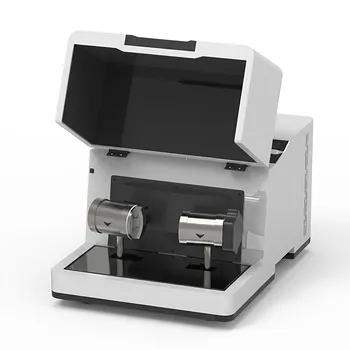
Ultra-Low Temperature Cryogenic High-Energy Vibratory Ball Mill

Nano High Energy Vibratory Ball Mill with Heating and Temperature Control
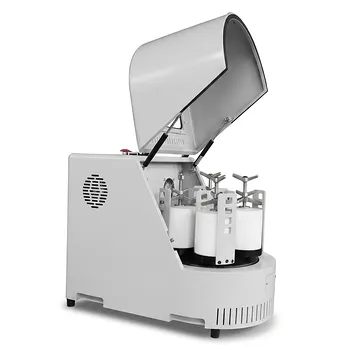
Vertical Semi Circular Planetary Ball Mill for Laboratory Precision Grinding
Nanoscale High-Energy Vibratory Ball Mill for Laboratory Sample Preparation, Mechanochemistry, and Mechanical Alloying