What is the primary function of a drum-type powder mixer in composite analysis? Your Baseline for Material Research
Updated 4 months ago
The primary function of a drum-type powder mixer (turbulent mixer) in the comparative analysis of composite materials is to serve as a baseline for low-energy, preliminary mixing. By using periodic rotation to distribute powders onto the surface of polymer particles, it allows researchers to evaluate how simple physical coverage affects material properties compared to more intensive methods. This process helps quantify the performance gap between conventional blending and high-energy mechanical activation.
A drum-type mixer acts as the "control group" in material science experiments. It provides a standard for physical uniformity and surface coating that reveals whether more complex processing methods are actually necessary to achieve specific strength or structural goals.
The Role of Turbulent Mixing as a Research Baseline
Establishing the Control Group for Mechanical Activation
In the comparative study of composites, the drum-type mixer represents the conventional mixing standard. It allows scientists to measure the "natural" performance of a material mixture before any high-energy mechanical activation is applied.
Because this method involves low-energy input, it primarily focuses on the physical distribution of components rather than changing their chemical or structural nature. This distinction is critical for determining if the strength enhancements found in later stages are due to the materials themselves or the intensity of the processing method.
Quantifying Physical Coverage vs. Material Bonding
The turbulent mixer distributes secondary components, such as molybdenum disulfide, onto the surfaces of base polymer particles through simple rotation.
This creates a surface-level coating that serves as a point of comparison for more aggressive techniques that might embed particles deeper into the matrix. Research typically shows that while drum-type mixing provides a uniform distribution, it results in smaller strength enhancements than high-energy methods, effectively highlighting the limitations of simple physical adhesion.
Achieving Structural and Chemical Homogeneity
Preventing Component Stratification and Segregation
A core challenge in composite manufacturing is the stratification or separation of fibers and polymer pellets. Drum-type mixers utilize bidirectional rotation and mechanical agitation to ensure that components with different densities or shapes stay integrated.
This physical uniformity is the foundation for stable molding and curing reactions. Without this initial homogenization, the final product may suffer from "local compositional bias," where certain areas of the composite have vastly different properties than others.
Ensuring Statistical Reproducibility
The goal of a laboratory-scale powder mixer is to produce a statistically homogeneous mixture. This means the ratio of components at any given sampling point matches the overall bulk composition within a very narrow variance.
By eliminating local deviations, the mixer ensures that subsequent rheological testing or baking experiments are repeatable. This precision is vital for validating that the results of a comparative analysis are due to the material formula rather than flaws in the mixing process.
Understanding the Trade-offs
Low Energy vs. Low Reinforcement
The most significant trade-off of a drum-type mixer is its low-intensity nature. While it is excellent for preserving the integrity of fragile particles (like luffa fibers or expanded polystyrene), it lacks the power to achieve deep "forced mixing" required for components with extreme density differences.
Physical Coating vs. Structural Integration
Because this method relies on gravity-induced diffusion and surface coating, the bond between the filler and the matrix is purely physical. If a project requires high mechanical strength or advanced material "activation," the drum-type mixer will likely fall short of the performance benchmarks set by high-speed or high-shear equipment.
Making the Right Choice for Your Research Goal
To effectively utilize a drum-type powder mixer in your workflow, consider how your specific goals align with the equipment's strengths and limitations.
- If your primary focus is establishing a performance floor: Use the drum-type mixer to create a baseline sample that represents the simplest possible physical blend of your components.
- If your primary focus is preserving delicate filler structures: Rely on the low-energy rotation of a turbulent mixer to prevent the breakage or degradation of fragile fibers or lightweight aggregates.
- If your primary focus is ensuring experimental repeatability: Use this equipment to achieve statistical homogeneity across small batches, ensuring that every test sample is compositionally identical.
- If your primary focus is maximizing composite tensile strength: Treat the drum-type mixer only as a preliminary step before moving to high-energy mechanical activation or high-speed vertical mixing.
By understanding the drum-type mixer as a tool for uniformity rather than intensification, researchers can accurately measure the true impact of advanced processing techniques.
Summary Table:
| Feature | Function in Composite Research |
|---|---|
| Energy Level | Low-energy input; ideal for physical surface coating without structural change. |
| Research Role | Serves as the "control group" to benchmark high-energy mechanical activation. |
| Homogeneity | Prevents component stratification and ensures statistical reproducibility across batches. |
| Material Integrity | Preserves delicate filler structures (e.g., fibers) from mechanical degradation. |
| Main Output | Uniform physical distribution and baseline material performance data. |
Optimize Your Composite Research with Precision Sample Preparation
Achieving accurate research results starts with the right mixing and compaction strategy. At [Brand Name], we provide complete laboratory sample preparation solutions tailored for material science.
Whether you need drum-type mixers for physical homogenization or high-energy planetary ball mills, jet mills, and rotor mills for advanced mechanical activation, our equipment ensures your samples meet the highest standards of uniformity. To complete your workflow, we offer a full spectrum of powder processing tools, including:
- Crushing & Sieve Analysis: Jaw/roll crushers and vibratory/air-jet sieve shakers.
- Advanced Mixing: Powder mixers and vacuum defoaming mixers.
- Compaction Solutions: Lab-scale hydraulic presses, including Cold/Warm Isostatic Presses (CIP/WIP), XRF pellet presses, and vacuum hot presses.
Ready to enhance your lab's efficiency and experimental reproducibility? Contact our experts today to find the perfect equipment for your material processing needs!
References
- D. O. Zavrazhin, Anastasia Chuprikova. The Effect of Preliminary Mixing Methods on the Properties of PA6 Composites with Molybdenum Disulphide. DOI: 10.3390/sci7040178
Mentioned Products
- V-Type Powder Mixer for Uniform Blending of Dry Powders and Granules
- Three-Dimensional Motion Mixer for Laboratory Powder and Granule Blending
- Horizontal Ribbon Mixer for Dry Powder and Slurry Blending
- Horizontal Ribbon Mixer for Uniform Powder and Slurry Mixing
- Industrial Double Cone Mixer for Powder Blending and Homogeneous Mixing
People Also Ask
- Why is a media-free and ball-free V-type powder mixer used for Al2O3/Inconel 718? Preserve Purity & Shape
- How does a V-type powder mixer facilitate the blending of oxidizers and catalysts? Safe & Uniform Mixing Solutions
- Why is it necessary to consider the influence of static walls in powder mixing experiment design? Optimize Uniformity.
- What role does powder mixing play in Al2O3-Er3Al5O12 ceramics? Achieve Precise Homogeneity and Phase Control
- How do powder mixers and additives influence ZTA ceramics? Optimize microstructure for superior toughness and density

Tech Team · PowderPreparation
Last updated on Jun 03, 2026
Related Products
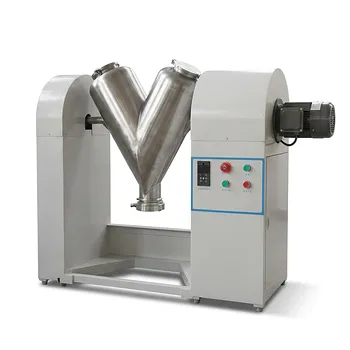
V-Type Powder Mixer for Uniform Blending of Dry Powders and Granules
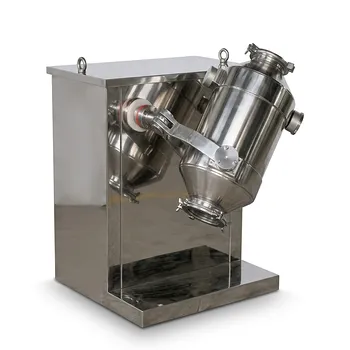
Three-Dimensional Motion Mixer for Laboratory Powder and Granule Blending
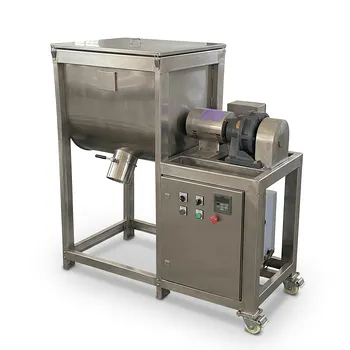
Horizontal Ribbon Mixer for Dry Powder and Slurry Blending
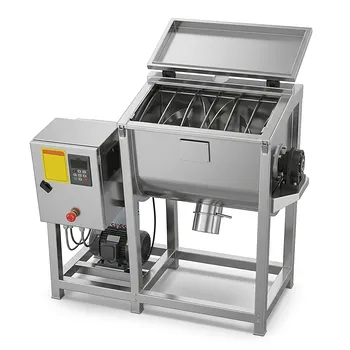
Horizontal Ribbon Mixer for Uniform Powder and Slurry Mixing
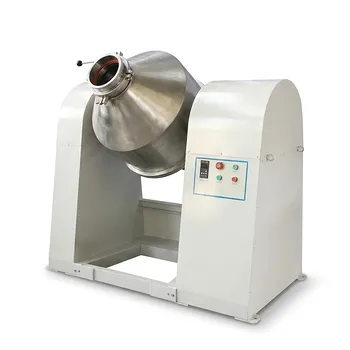
Industrial Double Cone Mixer for Powder Blending and Homogeneous Mixing
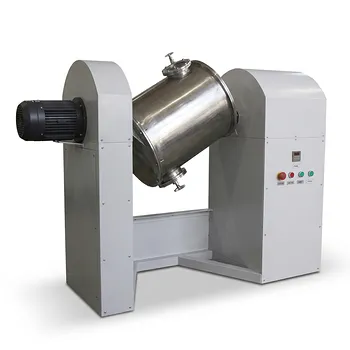
Inclined Mixer for Homogeneous Powder Blending and Grinding
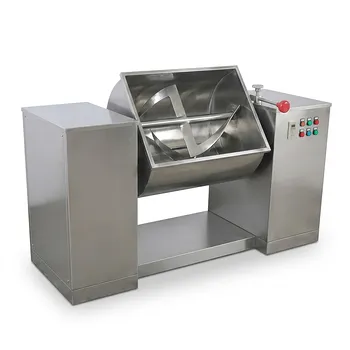
Horizontal Trough Mixer for Uniform Powder and Paste Blending
非介入式材料均质机真空脱泡行星搅拌高粘度混合设备
Multi Dimensional Universal Mixer for High Uniformity Powder Blending
High Efficiency Vacuum Planetary Centrifugal Mixer and Defoaming Machine for Industrial Material Research and Precise Laboratory Powder Dispersion
Air Guided Ultrafine Pulverizer High Speed Laboratory Powder Grinder for Chemical and Material Processing
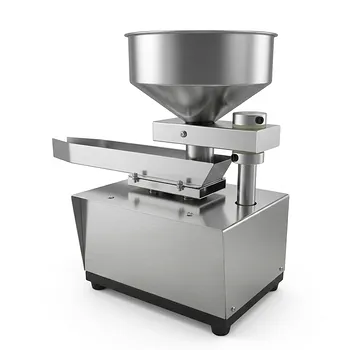
Automatic Vibrating Powder Feeder for Laboratory Material Processing Precision Vibratory Hopper Feeder for Granular and Powder Material Handling Industrial Grade Vibrating Tray Feeder for Consistent Material Sample Preparation
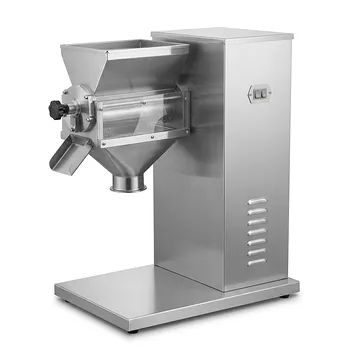
Small Swing Granulator Efficient Powder Granulation for Pharmaceutical Chemical Food Industries
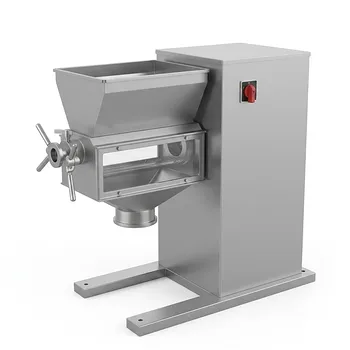
Industrial Swing Granulator for Powder Processing in Pharma Food and Chemical Industries
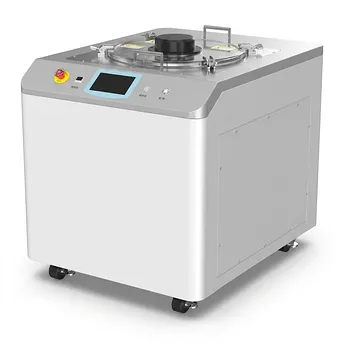
Industrial Planetary Centrifugal Vacuum Defoaming Mixer for High Viscosity Paste and Powder Homogenization
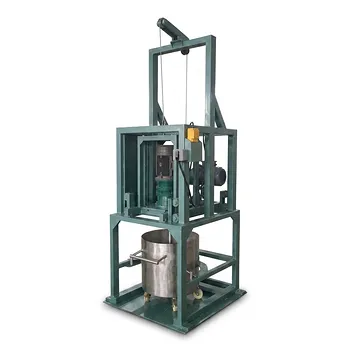
High-Speed Simple Disperser for Efficient Mixing, Dispersion, and Emulsification
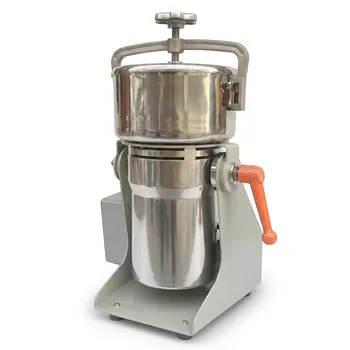
High Speed Laboratory Grinder Efficient Stainless Steel Powder Pulverizer Universal Material Science Mill for Sample Preparation
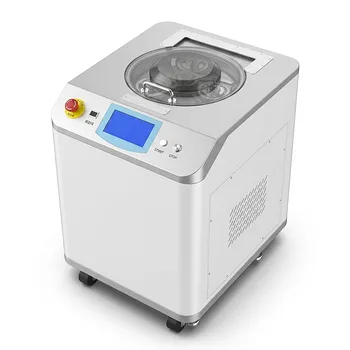
Dual Cup Vacuum Centrifugal Mixer Planetary Paste Defoaming Machine Industrial Material Processor
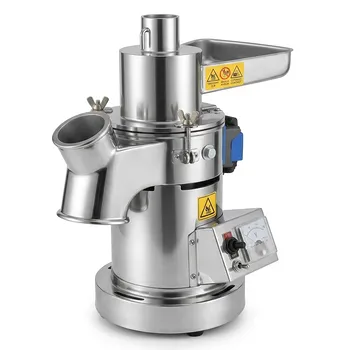
Continuous Feeding Grinder High Efficiency Pulverizer for Lab Sample Preparation