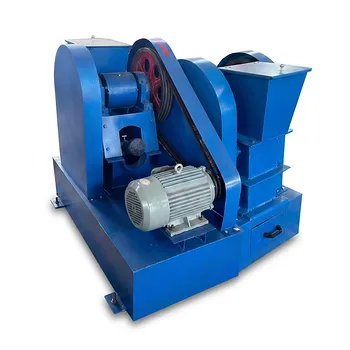
What is the potential application of laboratory hydraulic presses and forming equipment in microplastic preparation? - A Guide
Updated 4 months ago
Standardizing sample geometry is the fundamental role of laboratory hydraulic presses in microplastic research. These devices are used to re-press recycled or raw plastics into sheets, pellets, or "green bodies" of uniform thickness and density. This process ensures that subsequent fragmentation or aging experiments begin with a consistent baseline, eliminating variables caused by irregular sample shapes.
The core application of hydraulic presses in this field is the creation of homogeneous source materials. By providing precise control over pressure and temperature, these tools transform inconsistent plastic waste into standardized specimens that produce reproducible data during degradation and grinding studies.
Establishing Uniformity in Source Materials
Standardizing Thickness and Density
A hydraulic press allows researchers to compress plastic fragments into sheets of standard thickness. This uniformity is critical because the physical dimensions of a sample directly influence how it responds to external stressors.
Eliminating Structural Inconsistencies
Raw recycled plastics often contain internal voids or varying densities that can skew experimental results. High-pressure compaction creates a dense, solid green body that provides a stable microstructural foundation for the entire study.
Homogenizing Recycled Stock
When working with diverse recycled sources, pressing the material into a single, cohesive unit ensures that the chemical composition is more evenly distributed across the test specimen. This step is vital for ensuring the source material is representative of the plastic being studied.
Enhancing Environmental Degradation Studies
Facilitating Uniform UV and Ozone Exposure
Standardized sheets provide a flat, consistent surface area for ultraviolet (UV) irradiation or ozone oxidation. Without this uniformity, the aging process would be uneven, making it difficult to quantify how environmental factors contribute to microplastic formation.
Preparing Samples for Chemical Analysis
Beyond creating the plastics themselves, hydraulic presses are essential for producing KBr pellets used in infrared spectroscopy. This allows researchers to track chemical changes and oxidation levels in the plastic at various stages of the degradation process.
Supporting Mechanical Testing
Presses are used to form plastics into specific shapes for tensile and flexural testing. Evaluating the mechanical properties of the plastic before it is fragmented helps researchers understand the "brittleness" that leads to microplastic shedding.
Optimizing Fragmentation and Grinding
Improving Cryogenic Grinding Efficiency
Grinding loose, irregular plastic debris often results in inconsistent particle sizes. By first pressing the material into a uniform green body, the subsequent cryogenic grinding process becomes more efficient and produces more homogeneous model particles.
Controlling Particle Size Distribution
The uniform density achieved through precise pressure control ensures that the plastic fractures predictably during physical fragmentation. This allows for a more controlled distribution of microplastic sizes, which is essential for toxicological studies.
Preventing Structural Cracking
During high-pressure compaction, the expulsion of gases and the tight packing of polymer chains help prevent unwanted cracking during handling. This ensures that the material only breaks down when and how the researcher intends during the fragmentation phase.
Understanding the Trade-offs
Potential Thermal Degradation
Many hydraulic presses utilize heat to soften plastics for molding. There is a risk that excessive temperatures may cause premature chemical aging or degradation, potentially altering the plastic’s properties before the actual experiment begins.
Sample Cross-Contamination
If the pressing dies are not meticulously cleaned, residual polymers from previous runs can contaminate the new sample. In microplastic research, even trace amounts of foreign plastic can invalidate sensitive chemical or environmental analyses.
Pressure-Induced Phase Changes
Applying extreme force can sometimes alter the crystallinity or phase of certain polymers. Researchers must carefully calibrate the pressure to avoid fundamentally changing the material's structure in a way that does not reflect real-world conditions.
Making the Right Choice for Your Research Goal
Depending on the focus of your microplastic study, the application of the hydraulic press will vary:
- If your primary focus is reproducible fragmentation: Use the press to create high-density green bodies to ensure consistent particle size distribution during mechanical grinding.
- If your primary focus is environmental aging: Prioritize creating thin, uniform sheets to ensure every part of the sample receives equal exposure to UV light or oxidation agents.
- If your primary focus is chemical characterization: Utilize the press specifically for KBr pellet preparation to ensure high-quality infrared spectroscopy readings.
By treating the hydraulic press as a tool for standardization, you ensure that the microplastics you create are the result of controlled experimental variables rather than inconsistent starting materials.
Summary Table:
| Application Area | Key Function | Research Benefit |
|---|---|---|
| Source Material Prep | Standardizing thickness & density | Eliminates variables; ensures reproducible experimental baselines. |
| Degradation Studies | Creating uniform plastic sheets | Ensures even UV/Ozone exposure for quantifiable aging data. |
| Chemical Analysis | KBr pellet preparation | Enables high-quality infrared spectroscopy for oxidation tracking. |
| Fragmentation | Creating dense "green bodies" | Improves cryogenic grinding efficiency and particle size control. |
| Mechanical Testing | Forming tensile/flexural bars | Helps evaluate the brittleness leading to microplastic shedding. |
Elevate Your Microplastic Research with Precision Sample Preparation
Standardizing your starting materials is critical for reproducible environmental science. At [Company Name], we provide complete laboratory sample preparation solutions for material science, specializing in high-performance powder processing and compaction equipment.
Whether you need to create uniform sheets for UV aging or dense green bodies for grinding, our extensive manufacturing line has you covered:
- Hydraulic Presses: A full spectrum including Cold/Warm Isostatic Presses (CIP/WIP), standard lab presses, XRF pellet presses, hot presses, and vacuum hot presses.
- Processing Equipment: Industrial-grade crushers (jaw/roll), liquid nitrogen cryogenic grinders, and advanced mills (planetary ball, jet, rotor).
- Analysis Support: Sieve shakers, powder mixers, and defoaming mixers to ensure sample homogeneity.
Our equipment is designed to help researchers eliminate structural inconsistencies and achieve precise control over sample geometry.
Contact our technical experts today to find the perfect solution for your lab!
References
- Urška Šunta, Mojca Bavcon Kralj. Insights into Microplastics: from Physical and Chemical Characterisation to its Potential as a Vector.. DOI: 10.55295/psl.2022.d13
Mentioned Products
- 6-Ton Small Single-Punch Tablet Press — Laboratory Powder & Granule Tableting Equipment / Tablet Forming Machine
- 5 Ton Single Punch Tablet Press Laboratory Small Batch Production
- Manual Tablet Press with Dual Scale Pressure Gauge for Pharmaceutical Food Chemical Laboratory Sample Preparation
- 6 Ton Variable Frequency Single Punch Tablet Press
- High Shear Laboratory Emulsifier for Mixing and Homogenization
People Also Ask
- What is the function of a laboratory press in Cr-Ti alloy evaluation? Quantify Fracture Stress & Strength
- What is the function of a laboratory press in assessing the hydrophobic performance of modified vermiculite fillers?
- What is the core function of a laboratory press in the forming of ceramic filter element green bodies? Maximize Density.
- What is the function of a laboratory press in the preparation of ceramic feed rods? Master Density and Precision
- Why is vacuum sealing and flexible packaging necessary for Aluminum Titanate powders during CIP? Ensure Peak Density

Tech Team · PowderPreparation
Last updated on Jun 03, 2026
Related Products
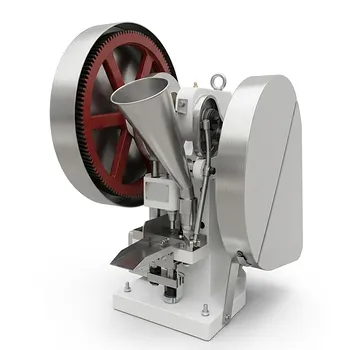
6-Ton Small Single-Punch Tablet Press — Laboratory Powder & Granule Tableting Equipment / Tablet Forming Machine
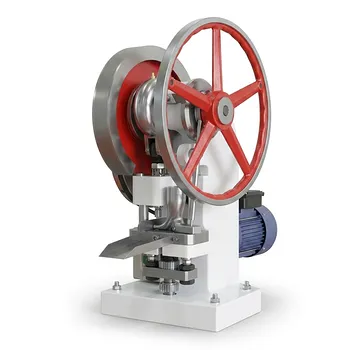
5 Ton Single Punch Tablet Press Laboratory Small Batch Production
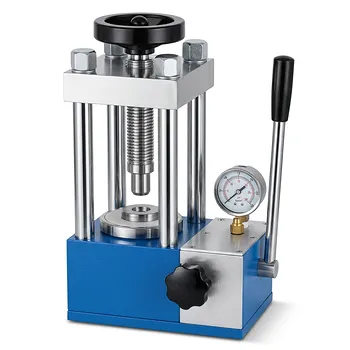
Manual Tablet Press with Dual Scale Pressure Gauge for Pharmaceutical Food Chemical Laboratory Sample Preparation
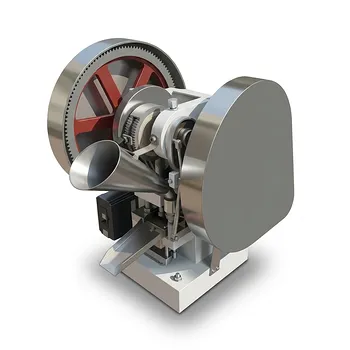
6 Ton Variable Frequency Single Punch Tablet Press
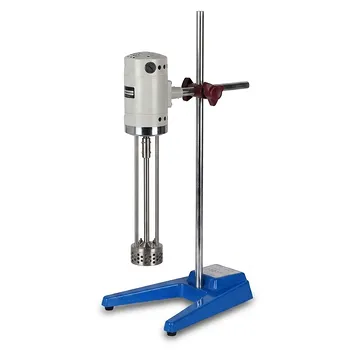
High Shear Laboratory Emulsifier for Mixing and Homogenization
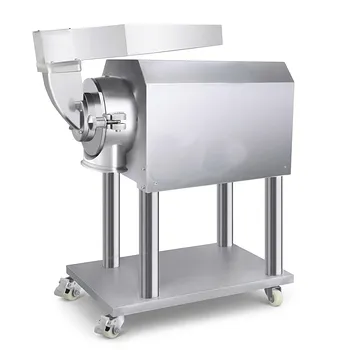
High Speed Small Laboratory Crusher for Dry Material Sample Preparation
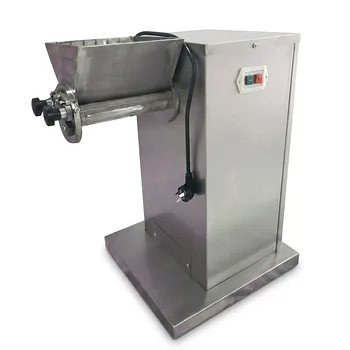
Small Laboratory Oscillating Granulator for Wet and Dry Granulation Processing
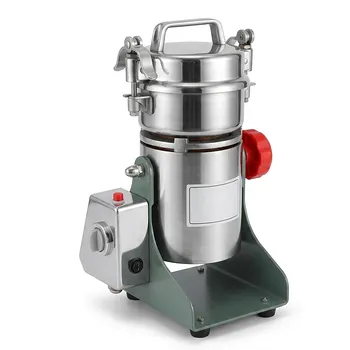
High Speed Swing Type Laboratory Pulverizer for Fine Powder Grinding and Sample Preparation