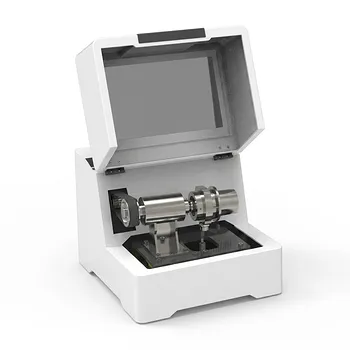
What is the necessity of using a planetary ball mill for processing thermally activated diabase tailing powders?
Updated 4 months ago
The planetary ball mill is essential for transforming thermally treated diabase tailings into a highly reactive, uniform precursor. It utilizes high-speed rotation to generate powerful impact and shear forces that grind materials to a specific target size, such as an average of 80 µm. This mechanical activation is critical for increasing the powder’s surface energy, chemical reactivity, and particle size distribution.
The planetary ball mill serves as the bridge between raw calcined tailings and a functional engineering material. It provides the high-energy environment necessary to induce lattice defects and optimize packing density, ensuring the resulting powder is both chemically active and physically workable.
Enhancing Chemical Reactivity through Mechanical Activation
Inducing Lattice Distortion and Amorphization
High-energy milling goes beyond simple size reduction by inducing lattice distortion and defects within the mineral structure. These physical changes can lead to amorphization, where the crystalline structure breaks down into a more disordered state. This structural instability is vital for enhancing the pozzolanic reaction capability of the tailings when used in cementitious or geopolymer systems.
Increasing Specific Surface Energy
The intense friction and impact significantly increase the specific surface area of the diabase powder. By exposing new surfaces, the milling process elevates the surface energy, making the particles more prone to chemical bonding. This increased energy is a primary driver for the rapid densification and reaction kinetics required during subsequent processing.
Optimizing Physical Characteristics for Geopolymers
Precision Control of Particle Size Distribution
A planetary ball mill allows for precise control over the particle size distribution (PSD), ensuring a uniform micron-level output. Achieving a consistent target size, such as the 80 µm benchmark, is necessary for maintaining the workability of geopolymer slurries. A well-controlled PSD prevents segregation and ensures a predictable flow during casting or molding.
Enhancing Packing Density and Workability
By refining the powder to a uniform state, the mill optimizes the packing density of the resulting slurry. This allows smaller particles to fill the voids between larger ones, leading to a denser, stronger final product. Improved packing density also reduces the amount of liquid activator required, further enhancing the mechanical properties of the geopolymer.
Addressing Post-Thermal Challenges
Breaking Hard Agglomerates
Thermal activation at high temperatures often results in the formation of hard agglomerates as particles fuse slightly together. The planetary ball mill provides the necessary energy to break these clusters apart, which conventional grinding methods may fail to achieve. This step is critical to ensure the powder does not retain "dead" zones of unreactive, fused material.
Achieving Homogeneous Dispersion
The high-frequency impact of the milling media ensures that any dopants or secondary phases are highly dispersed at a near-atomic level. This homogeneity is the physical foundation for solid-state reactions, ensuring that the chemical composition is uniform throughout the entire batch. Without this level of mixing, the final material may suffer from localized structural weaknesses.
Understanding the Trade-offs
Energy Intensity and Heat Generation
Planetary ball mills are high-energy devices that consume significant power compared to low-energy tumbling mills. The process also generates substantial heat, which can sometimes lead to unwanted phase changes if the milling duration is not carefully monitored. Cooling breaks or specialized jars may be required for sensitive materials.
Potential for Media Contamination
The high-speed impact can cause wear on the grinding media (balls) and the jar lining, potentially introducing impurities into the diabase powder. To mitigate this, users must carefully select media materials—such as zirconia or silicon nitride—that are compatible with the final application.
How to Apply This to Your Project
When integrating a planetary ball mill into your processing workflow, your approach should be dictated by the specific requirements of your end product.
- If your primary focus is Maximum Chemical Reactivity: Prioritize longer milling durations at higher speeds to maximize lattice distortion and amorphization.
- If your primary focus is Slurry Workability: Focus on optimizing the milling time to achieve a specific, narrow particle size distribution that favors high packing density.
- If your primary focus is Product Purity: Utilize high-hardness grinding media like tungsten carbide or zirconia to minimize contamination from the milling equipment.
Mechanical activation via a planetary ball mill is the definitive method for unlocking the full reactive potential of thermally activated diabase tailings.
Summary Table:
| Key Benefit | Mechanism | Impact on Diabase Tailings |
|---|---|---|
| Mechanical Activation | Lattice distortion & amorphization | Increases pozzolanic reactivity for geopolymers |
| Size Control | High-energy impact and shear | Achieves uniform PSD (e.g., 80 µm) for better workability |
| De-agglomeration | Breaking hard fused clusters | Eliminates "dead" unreactive zones after thermal treatment |
| Homogenization | Near-atomic level dispersion | Ensures uniform chemical composition and structural strength |
Elevate Your Material Research with Precision Powder Solutions
Transforming raw tailings into high-performance engineering materials requires the right high-energy equipment. [Brand Name] provides complete laboratory sample preparation solutions for material science, specializing in advanced powder processing and compaction technology.
Whether you are focusing on maximizing chemical reactivity or optimizing slurry workability, our extensive product line supports your entire workflow:
- Size Reduction: High-performance planetary ball mills, jet mills, and jaw/roll crushers.
- Classification & Mixing: Vibratory sieve shakers and high-speed powder or defoaming mixers.
- Advanced Compaction: A full spectrum of hydraulic presses, including Cold/Warm Isostatic Presses (CIP/WIP), vacuum hot presses, and XRF pellet presses.
Ready to achieve superior particle consistency and reactivity? Contact our technical experts today to find the ideal equipment for your laboratory or pilot plant.
References
- Yanan Hu, Xinchun Yang. Green Low-Temperature Activation and Curing for High-Toughness Geopolymer Binders from Diabase Tailings. DOI: 10.3390/ma18163815
Mentioned Products
- Vertical Semi Circular Planetary Ball Mill for Laboratory Precision Grinding
- High Energy Planetary Ball Mill for Nano Scale Grinding and Mechanical Alloying
- Vertical Production Planetary Ball Mill for High Throughput Powder Processing
- Heavy Duty Horizontal Planetary Ball Mill for Efficient Industrial Grinding and Sample Preparation
- 360° Rotating Omnidirectional Laboratory Planetary Ball Mill for Homogeneous Ultra-Fine Grinding and Mixing
People Also Ask
- What role does a planetary ball mill play in the synthesis of Li6PS5Cl (LPSCl)? Unlock High Ionic Conductivity
- Why is a planetary ball mill essential for SiBCN-rGO wet-spinning? Achieve Superior Dispersion and Spinnability
- Why is an intermittent grinding process required for perovskites in a planetary ball mill? Ensure Stability & Purity
- Why is a planetary ball mill required for PET micronization? Ensure Accurate Chemical Analysis of Reprocessed PET
- How does mechanized planetary ball milling compare to manual agate grinding? Optimize sulfide standard material precision.

Tech Team · PowderPreparation
Last updated on May 14, 2026
Related Products
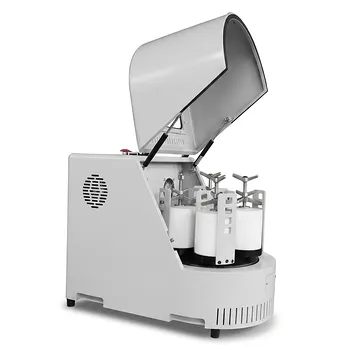
Vertical Semi Circular Planetary Ball Mill for Laboratory Precision Grinding

High Energy Planetary Ball Mill for Nano Scale Grinding and Mechanical Alloying
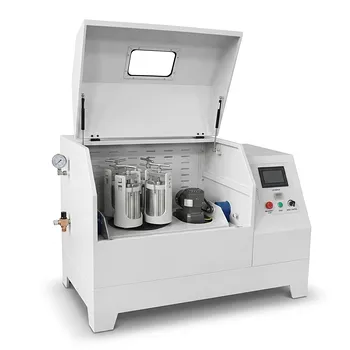
Vertical Production Planetary Ball Mill for High Throughput Powder Processing
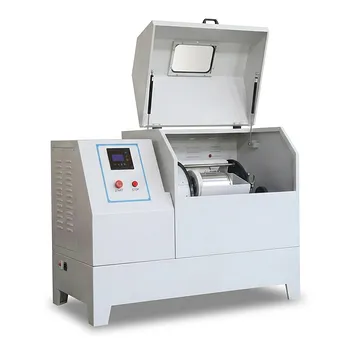
Heavy Duty Horizontal Planetary Ball Mill for Efficient Industrial Grinding and Sample Preparation
360° Rotating Omnidirectional Laboratory Planetary Ball Mill for Homogeneous Ultra-Fine Grinding and Mixing

Vertical Square Planetary Ball Mill for Laboratory Sample Preparation and Nanoscale Grinding

Miniature Planetary Ball Mill with Vacuum Grinding and High Efficiency for Laboratory Sample Preparation

High Energy Laboratory Planetary Ball Mill for Nano Grinding and Material Science Sample Preparation
High Energy Omnidirectional Planetary Ball Mill 16L
High Energy Planetary Ball Mill for Nano Scale Grinding and Colloidal Mixing in Material Science Research
High Energy Laboratory Planetary Ball Mill for Nano Grinding and Colloidal Mixing of Hard and Brittle Materials
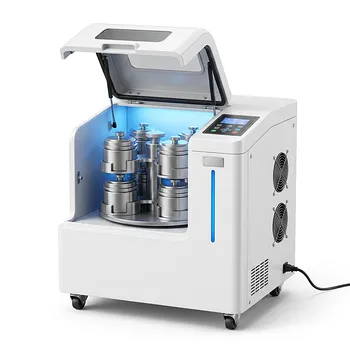
High Energy Omnidirectional Planetary Ball Mill 20L
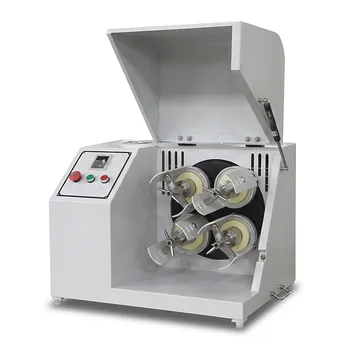
Horizontal Light Duty Planetary Ball Mill for Laboratory Sample Preparation
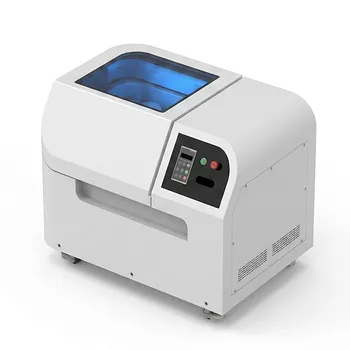
8L Planetary Ball Mill for Laboratory Grinding and Sample Preparation
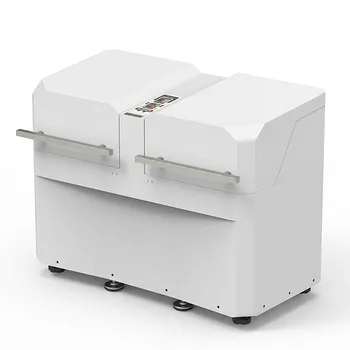
Dual Station Planetary Ball Mill 24L
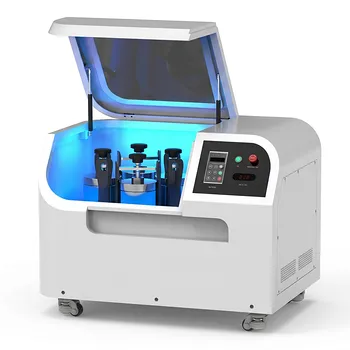
Planetary Ball Mill 12L
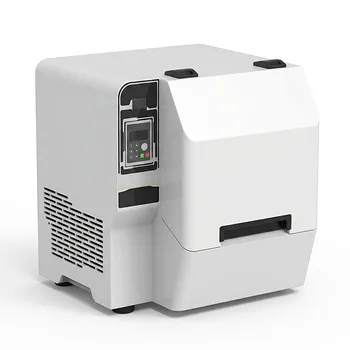
Nano High Energy Vibratory Ball Mill for Laboratory Sample Preparation
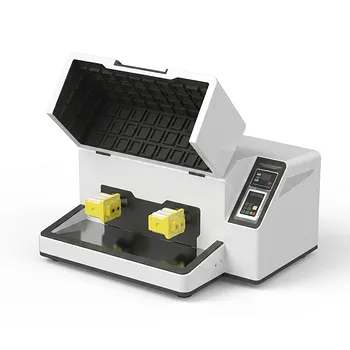
Multi-Platform Nanoscale High-Energy Vibratory Ball Mill
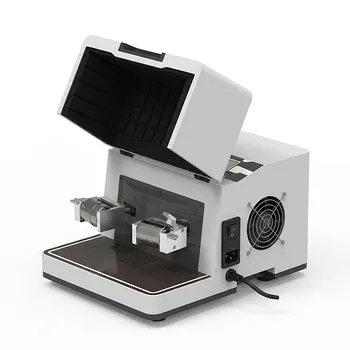
High Energy Hybrid Vibratory Ball Mill for Grinding Mixing and Cell Disruption