What is the necessity of using a laboratory vibratory sieve in Ce-TZP/Al2O3? Ensure High-Performance Ceramic Integrity
Updated 4 months ago
The use of a laboratory vibratory sieve is a critical quality control step in the pretreatment of Ce-TZP/Al2O3 composite materials to ensure structural integrity. It functions by removing large-particle impurities and secondary agglomerates that form during the drying and binder-addition phases. By refining the powder, the sieve guarantees a consistent particle size distribution and superior flowability, which are essential for producing defect-free green bodies during the subsequent pressing stage.
The primary necessity of vibratory sieving lies in its ability to eliminate hard agglomerates and impurities that cause internal defects and stress concentrations. This process transforms a raw, irregular powder into a uniform feedstock, directly determining the density distribution and mechanical reliability of the final ceramic composite.
Eliminating Structural Defects at the Source
Removal of Secondary Agglomerates
During the drying of Al2O3-based composites, particles often cluster into hard secondary agglomerates. If these clusters enter the pressing mold, they create uneven density regions. A vibratory sieve breaks down or removes these clusters, ensuring the powder remains in its optimal, granular state.
Elimination of Large-Particle Impurities
External contaminants or oversized particles introduced during mixing can act as failure initiation points. High-precision sieving effectively filters out these anomalies. This step is vital for high-performance ceramics where even a single oversized impurity can significantly lower the material's fracture toughness.
Optimizing Powder Behavior for Manufacturing
Enhancing Flowability and Mold Filling
For a pressing operation to be successful, the powder must flow freely into the mold cavities. Vibratory screening ensures a narrow particle size distribution, which prevents "arching" or bridging in the feeding system. This leads to a more predictable and repeatable manufacturing process.
Improving Packing Uniformity
The particle size distribution directly influences how particles nest together under pressure. A sieve-refined powder achieves higher packing density, reducing the volume of voids. This uniformity is a prerequisite for obtaining green bodies with a consistent density distribution, which prevents warping during sintering.
Ensuring Material Homogeneity and Performance
Controlling Interfacial Adhesion
In composites like Ce-TZP/Al2O3, the interface between the zirconia and alumina phases is critical. Precise particle size control, often verified through standard test sieves, ensures the reinforcement phase is distributed evenly throughout the matrix. This prevents the "clumping" of phases that leads to localized stress.
Preventing Stress Concentration
Oversized particles in the matrix can lead to localized stress concentration under mechanical load. By strictly controlling the maximum size of the reinforcing particles (e.g., ensuring 93% of the powder is below a specific micron threshold), the vibratory sieve helps ensure the final composite exhibits predictable mechanical performance and optimal interfacial bonding.
Understanding the Trade-offs and Pitfalls
Sieve Blinding and Maintenance
A common challenge with high-mesh sieving is sieve blinding, where fine particles clog the mesh openings. This can lead to inaccurate classification and reduced throughput. Regular cleaning and the use of ultrasonic debinding attachments are often necessary to maintain the integrity of the process.
Risk of Material Contamination
While sieving removes impurities, the sieve itself can be a source of cross-contamination if not properly managed. Using stainless steel or specialized alloy sieves that match the hardness of the Al2O3 composite is essential to prevent metallic wear from entering the ceramic mixture.
How to Apply This to Your Process
Recommendations for Implementation
- If your primary focus is maximizing green body density: Prioritize using a multi-stage vibratory sieve after the binder addition stage to ensure the powder is free-flowing and devoid of "soft" agglomerates.
- If your primary focus is preventing mechanical failure: Use high-precision, micron-sized test sieves (such as 325 mesh) to strictly limit the maximum particle size, thereby reducing internal stress concentrators.
- If your primary focus is research and development: Employ the vibratory sieve to classify powders into specific size fractions to investigate how matrix particle size influences the continuity of the secondary phase.
By implementing a rigorous vibratory sieving protocol, you transform the raw composite powder into a high-precision engineering material ready for advanced manufacturing.
Summary Table:
| Key Function | Benefit for Ce-TZP/Al2O3 Pretreatment | Impact on Final Composite |
|---|---|---|
| Agglomerate Removal | Eliminates hard clusters formed during drying | Prevents uneven density and voids |
| Impurity Filtration | Removes large-particle contaminants | Increases fracture toughness & reliability |
| Size Classification | Ensures narrow particle size distribution | Enhances flowability and mold filling |
| Homogeneity Control | Even distribution of zirconia/alumina phases | Prevents localized stress concentration |
| Packing Optimization | Minimizes voids between particles | Reduces warping during sintering |
Elevate Your Material Research with Precision Pretreatment Solutions
Achieving the perfect Ce-TZP/Al2O3 composite requires more than just high-quality raw materials—it demands rigorous powder processing. At [Brand Name], we provide complete laboratory sample preparation solutions specifically designed for material science and advanced ceramics.
Our specialized equipment ensures your powders are free of defects and optimized for manufacturing:
- Powder Processing: High-precision vibratory and air-jet sieve shakers, planetary ball mills, jet mills, and cryogenic grinders to achieve the exact particle morphology you need.
- Mixing & Homogenization: Advanced powder and defoaming mixers to ensure uniform phase distribution.
- Advanced Compaction: A full spectrum of hydraulic presses, including Cold/Warm Isostatic Presses (CIP/WIP), hot presses, and vacuum hot presses for defect-free green bodies.
Ready to eliminate structural defects and enhance your ceramic performance? Contact our experts today to find the ideal equipment for your laboratory or production line.
References
- Camila Catalano Gall, Eduardo de Sousa Lima. Effect of Y2O3-addition on the crystallographic and mechanical properties of the Ce-TZP/Al2O3 composite. DOI: 10.1590/0366-69132024703923517
Mentioned Products
- Laboratory Dry and Wet Three Dimensional Vibratory Sieve Shaker for Particle Analysis
- Stainless Steel Laboratory Vibratory Test Sieve Shaker
- Small Laboratory Vibratory Sieve Shaker for Powder Gradation and Particle Size Analysis
- Small Laboratory Vibrating Sieve Shaker for Precise Particle Size Analysis
- Laboratory Vibratory Test Sieve Shaker for Precision Particle Size Analysis and Powder Grading
People Also Ask
- What is the role of laboratory vibratory sieve shakers in waste PUR foam recycling? Optimize Particle Size and Density
- What is the primary function of a laboratory vibratory sieve shaker in the evaluation of sand liquefaction potential?
- What role do laboratory vibratory sieve shakers and test sieves play before the molding of Nb-Cu composite powders?
- What function does a laboratory vibratory sieve shaker serve in the production process of metakaolin? Optimize Reactivity
- Why is a precision laboratory vibratory sieve shaker necessary for particle size control? Optimize Biomass Carbonization

Tech Team · PowderPreparation
Last updated on Jun 03, 2026
Related Products
Laboratory Dry and Wet Three Dimensional Vibratory Sieve Shaker for Particle Analysis
Stainless Steel Laboratory Vibratory Test Sieve Shaker
Small Laboratory Vibratory Sieve Shaker for Powder Gradation and Particle Size Analysis
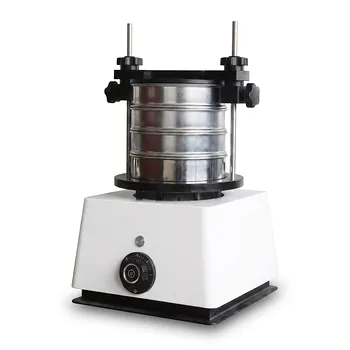
Small Laboratory Vibrating Sieve Shaker for Precise Particle Size Analysis
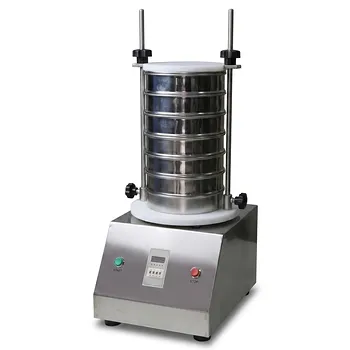
Laboratory Vibratory Test Sieve Shaker for Precision Particle Size Analysis and Powder Grading
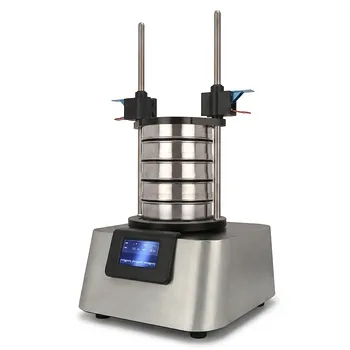
Vibratory Sieve Shaker Electromagnetic 3D Motion Powder Particle Size Analyzer for Dry and Wet Sieving
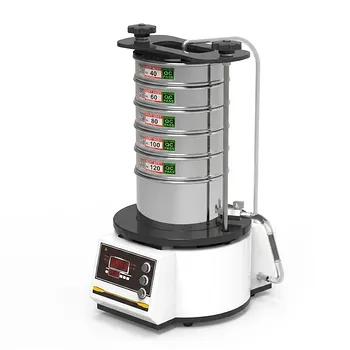
High Frequency Wet Three-Dimensional Vibrating Sieve Shaker for Dry and Wet Particle Size Analysis
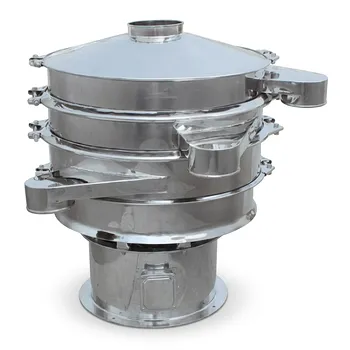
Stainless Steel Rotary Vibrating Sieve High Precision Circular Vibratory Separator Industrial Powder Grading Machine Multi Layer Sifting Equipment
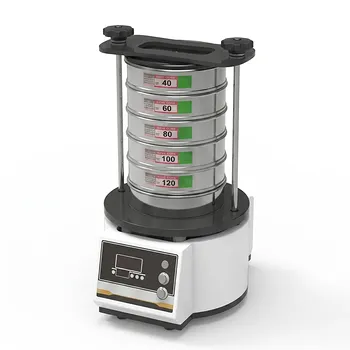
Dry Three Dimensional Vibratory Sieve Shaker
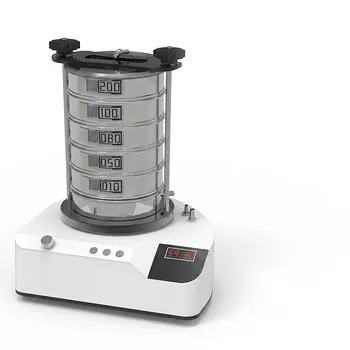
Heavy Duty Dry Three Dimensional Vibratory Sieve Shaker for Particle Separation
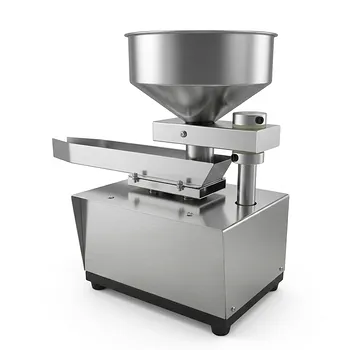
Automatic Vibrating Powder Feeder for Laboratory Material Processing Precision Vibratory Hopper Feeder for Granular and Powder Material Handling Industrial Grade Vibrating Tray Feeder for Consistent Material Sample Preparation
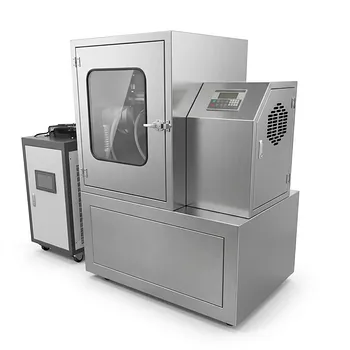
Vibratory Superfine Grinder for Ultra Fine Laboratory Powder Milling
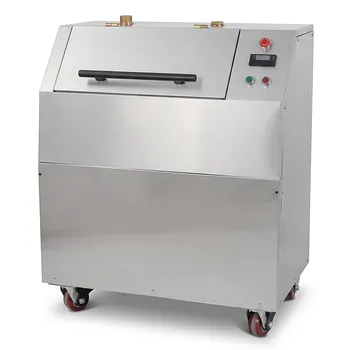
Vibratory Disc Mill for Rapid Fine Grinding and High Throughput Sample Preparation of Hard and Brittle Materials
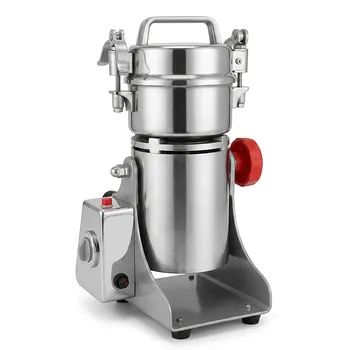
Industrial High Speed Small Sample Pulverizer Swing Type Laboratory Grinder for Powder Processing
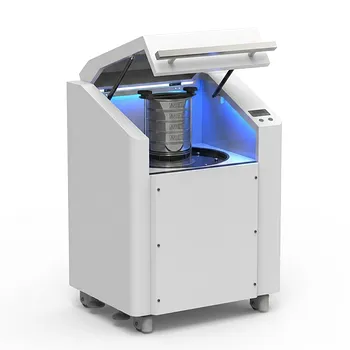
High Frequency Cabinet Type Three-Dimensional Rotary Vibrating Sieve Shaker for Dry Sieving and Particle Classification
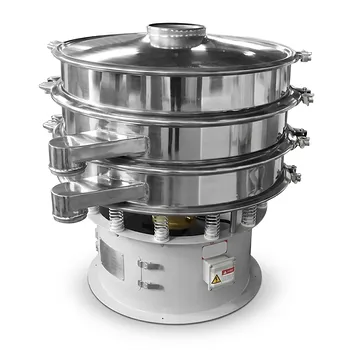
Three Dimensional Rotary Vibrating Sieve
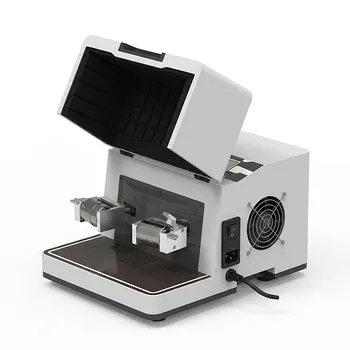
High Energy Hybrid Vibratory Ball Mill for Grinding Mixing and Cell Disruption
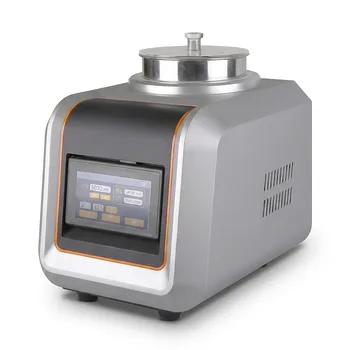
Laboratory Air Jet Sieving Machine for Fine Powder Particle Size Analysis and Deagglomeration
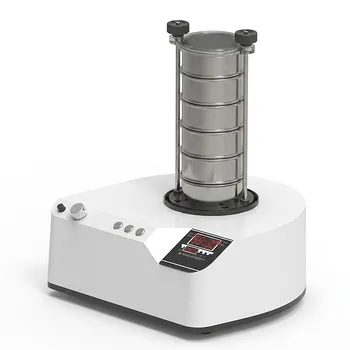
三维电磁微量振动筛分仪