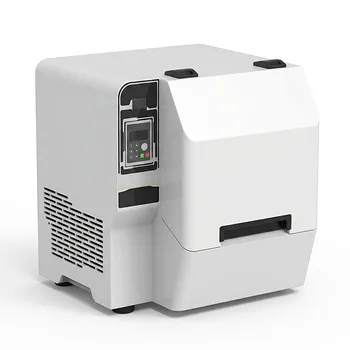
What is the key role of a planetary ball mill in Nsutite preparation? Boost Surface Area & Electrochemical Activity
Updated 5 months ago
The planetary ball mill is the primary engine for mechanical activation in Nsutite preparation. It utilizes high-speed rotation to generate intense mechanical impact and shear forces that refine coarse Nsutite ore into micro-nano level powders. This process significantly increases the material's specific surface area and improves its electrochemical activity, effectively doubling its specific capacitance from 14.65 F/g to 36 F/g.
The planetary ball mill serves as a critical tool for transforming the physical and chemical properties of Nsutite through high-energy mechanical activation. By reducing particle size to the micro-nano scale, the mill maximizes surface area and optimizes the material for high-performance energy storage applications.
Mechanisms of Material Refinement
The Role of High-Speed Impact and Shear
A planetary ball mill operates by rotating a sun wheel while the milling jars rotate in the opposite direction. This complex motion generates high-energy mechanical impact and shear forces between the grinding balls and the Nsutite ore. These forces are essential for breaking down the crystalline structure of coarse raw materials into the micro-nano range.
Maximizing Specific Surface Area
As the Nsutite particles are crushed and refined, their specific surface area increases dramatically. A larger surface area provides more active sites for electrochemical reactions to occur. This refinement is the physical foundation for the subsequent improvements in energy storage capacity.
Achieving Mechanical Activation
Boosting Electrochemical Activity
Mechanical activation goes beyond simple size reduction; it introduces structural defects and stored energy into the Nsutite particles. This mechanical energy lowers the activation barrier for ion transport. Consequently, the material exhibits significantly higher electrochemical activity, which is vital for battery and capacitor performance.
Performance Gains in Energy Storage
The practical result of this process is a substantial increase in specific capacitance. By utilizing a planetary ball mill, the capacitance of Nsutite can be raised from 14.65 F/g to 36 F/g. This leap in performance demonstrates the mill's necessity in preparing materials that meet modern energy density requirements.
Precision Control in Material Synthesis
Uniformity and Particle Size Distribution (PSD)
Planetary ball mills allow for precise control over the Particle Size Distribution (PSD). By adjusting milling speeds and durations, researchers can achieve a unimodal distribution of particles. This uniformity is critical for ensuring that the final Nsutite product performs consistently across all batches.
Interfacial Contact and Homogeneity
The mill is also used to achieve microscopic mixing when Nsutite is combined with other additives or conductive agents. High-energy mixing ensures tight interfacial contact between the active phase and conductive components. This level of homogeneity prevents "hot spots" or dead zones within the material during energy discharge.
Understanding the Trade-offs
Thermal Management and Material Degradation
The high-energy nature of planetary milling generates significant heat within the milling jars. If not managed through intermittent milling or cooling systems, this heat can cause undesired phase transformations in Nsutite. Over-milling can also lead to excessive lattice distortion, which may eventually degrade the structural stability of the material.
Potential for Contamination
Extended milling times increase the risk of media wear, where small fragments of the grinding balls or jar liners contaminate the Nsutite powder. This contamination can introduce impurities that negatively affect the purity and electrochemical behavior of the final product. Choosing the correct jar and ball material (e.g., zirconia or stainless steel) is a critical technical decision.
How to Apply This to Your Project
Making the Right Choice for Your Goal
To maximize the effectiveness of Nsutite modification, you must align your milling parameters with your specific performance targets.
- If your primary focus is Maximum Specific Capacitance: Prioritize high-speed milling to achieve the finest micro-nano particle size and maximize mechanical activation.
- If your primary focus is Material Purity: Utilize high-hardness milling media like zirconia and implement shorter milling cycles to minimize contamination.
- If your primary focus is Processing Scalability: Focus on optimizing the ball-to-powder ratio and milling time to achieve a unimodal particle size distribution efficiently.
Proper utilization of planetary ball milling transforms Nsutite from a raw mineral into a high-activity electrochemical component through precise mechanical force.
Summary Table:
| Feature | Impact on Nsutite Material | Key Outcome |
|---|---|---|
| Mechanical Activation | Introduces structural defects and lowers ion transport barriers | Enhanced electrochemical activity |
| High-Energy Impact | Refines coarse ore into micro-nano level powders | Dramatic increase in specific surface area |
| Size Reduction | Increases capacitance from 14.65 F/g to 36 F/g | Doubled energy storage capacity |
| Precision Control | Ensures unimodal Particle Size Distribution (PSD) | Consistent batch-to-batch performance |
| Homogenization | Tight interfacial contact with conductive agents | Prevention of discharge "dead zones" |
Elevate Your Material Synthesis with Professional Powder Processing
Optimizing Nsutite and other high-performance energy materials requires precision and reliability. We provide complete laboratory sample preparation solutions tailored for material science, specializing in advanced powder processing and compaction equipment.
Our extensive product line is designed to meet the rigorous demands of modern research and production:
- Milling & Grinding: High-energy planetary ball mills, jet mills, cryogenic grinders, and disc mills for achieving micro-nano refinement.
- Sample Preparation: Jaw/roll crushers and vibratory sieve shakers for precise particle size control.
- Mixing Excellence: Specialized powder mixers and defoaming mixers to ensure material homogeneity.
- Compaction Solutions: A full spectrum of hydraulic presses, including Cold/Warm Isostatic Presses (CIP/WIP), XRF pellet presses, and vacuum hot presses for high-density material formation.
Whether you are focusing on maximizing specific capacitance or ensuring structural purity, our equipment provides the control you need. Contact our technical experts today to discuss your specific Nsutite modification goals and discover how our solutions can accelerate your results!
References
- Manika Chaudhary, Rahúl Singhal. Effect of Ball Milling and Annealing Temperature on Electrochemical Properties of Nsutite Materials. DOI: 10.4236/ajac.2025.168009
Mentioned Products
- Vertical Square Planetary Ball Mill for Laboratory Sample Preparation and Nanoscale Grinding
- Vertical Semi Circular Planetary Ball Mill for Laboratory Precision Grinding
- High Energy Planetary Ball Mill for Nano Scale Grinding and Mechanical Alloying
- High Energy Laboratory Planetary Ball Mill for Nano Grinding and Colloidal Mixing of Hard and Brittle Materials
- 360° Rotating Omnidirectional Laboratory Planetary Ball Mill for Homogeneous Ultra-Fine Grinding and Mixing
People Also Ask
- What is the function of a planetary ball mill in wollastonite ceramic prep? Achieve Molecular Homogenization & Reactivity
- How does a planetary ball mill contribute to the homogenization of trace elements? Achieve Sub-Micron Uniformity
- Why grind lime-pozzolan specimens for TG/DTA for 3 mins? Master sample prep for high-precision thermal analysis.
- What role does a planetary ball mill play in the synthesis of Li6PS5Cl (LPSCl)? Unlock High Ionic Conductivity
- What role does a planetary ball mill play in KNTO ceramic refinement? Optimize Homogeneity & Reactivity

Tech Team · PowderPreparation
Last updated on May 14, 2026
Related Products

Vertical Square Planetary Ball Mill for Laboratory Sample Preparation and Nanoscale Grinding
Vertical Semi Circular Planetary Ball Mill for Laboratory Precision Grinding
High Energy Planetary Ball Mill for Nano Scale Grinding and Mechanical Alloying
High Energy Laboratory Planetary Ball Mill for Nano Grinding and Colloidal Mixing of Hard and Brittle Materials
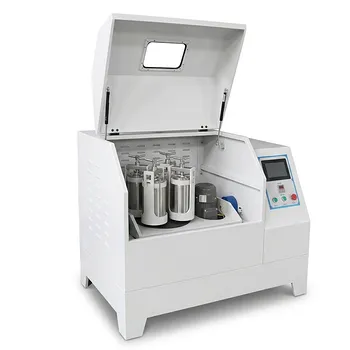
360° Rotating Omnidirectional Laboratory Planetary Ball Mill for Homogeneous Ultra-Fine Grinding and Mixing
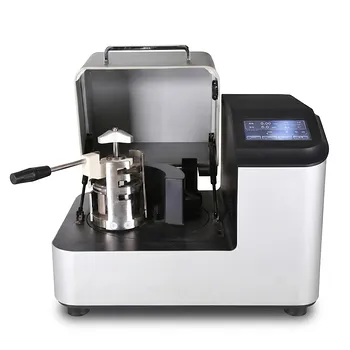
High Energy Laboratory Planetary Ball Mill for Nano Grinding and Material Science Sample Preparation
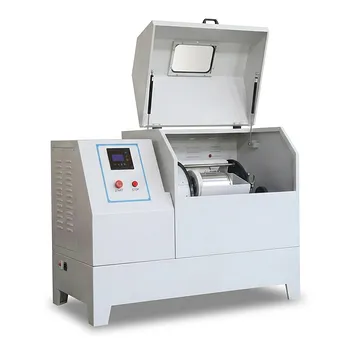
Heavy Duty Horizontal Planetary Ball Mill for Efficient Industrial Grinding and Sample Preparation
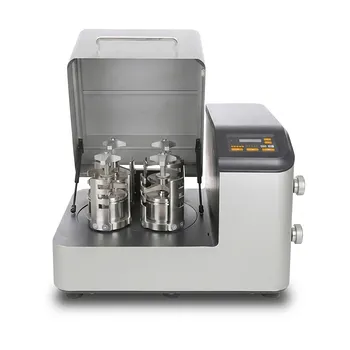
High Energy Planetary Ball Mill for Nano Scale Grinding and Colloidal Mixing in Material Science Research
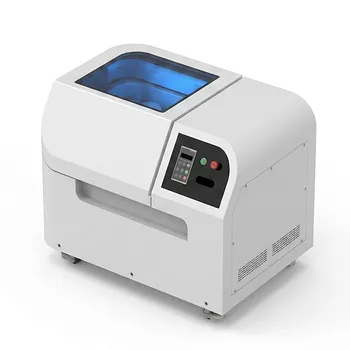
8L Planetary Ball Mill for Laboratory Grinding and Sample Preparation
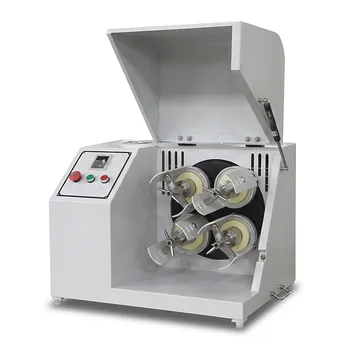
Horizontal Light Duty Planetary Ball Mill for Laboratory Sample Preparation
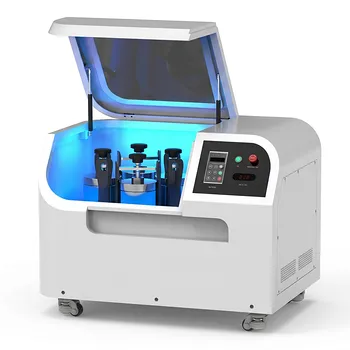
Planetary Ball Mill 12L
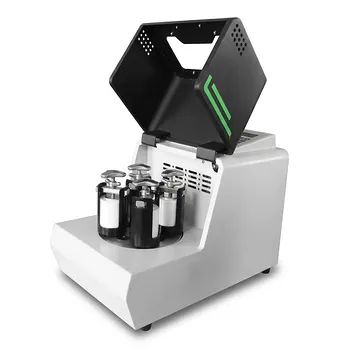
Miniature Planetary Ball Mill with Vacuum Grinding and High Efficiency for Laboratory Sample Preparation
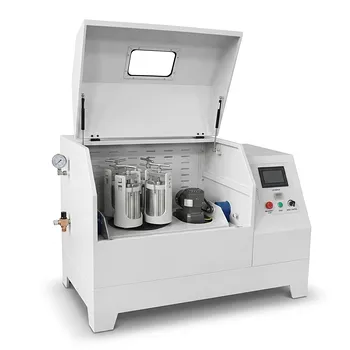
Vertical Production Planetary Ball Mill for High Throughput Powder Processing
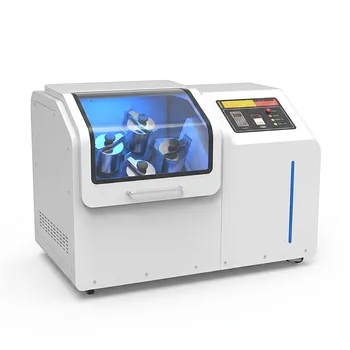
High Energy Omnidirectional Planetary Ball Mill 16L
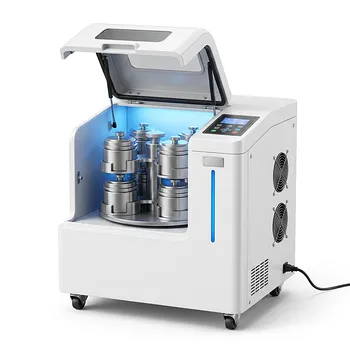
High Energy Omnidirectional Planetary Ball Mill 20L
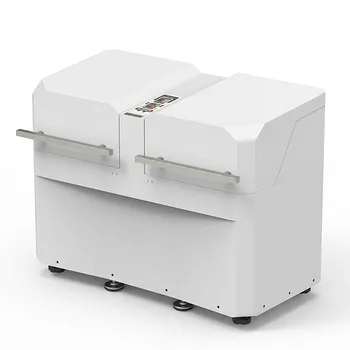
Dual Station Planetary Ball Mill 24L
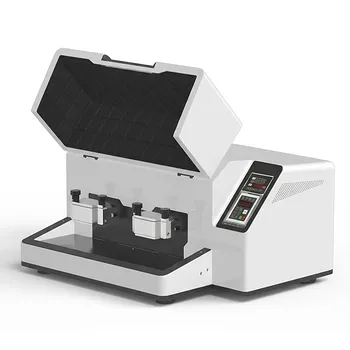
Nanoscale High-Energy Vibratory Ball Mill for Laboratory Sample Preparation, Mechanochemistry, and Mechanical Alloying
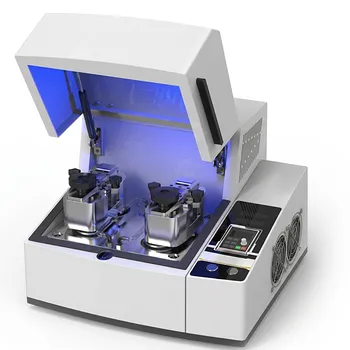
Laboratory Nano High Energy Ball Mill Ultrafine Grinding Mechanical Alloying
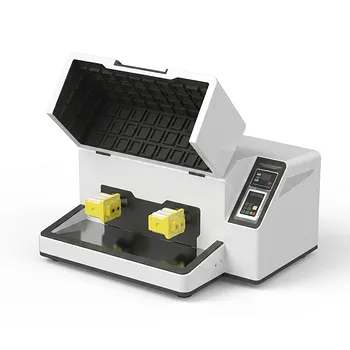
Multi-Platform Nanoscale High-Energy Vibratory Ball Mill