What is the importance of using a vibratory sieve shaker for processing eroded sediment? Ensure Precise & Reliable Data
Updated 5 months ago
Vibratory sieve shakers are indispensable in sediment analysis because they provide standardized mechanical oscillation that ensures repeatable results while preserving the integrity of soil aggregates. Unlike manual methods, these machines apply consistent frequency and duration to accurately classify particles by size without destroying the naturally formed clusters that define the sediment's physical state.
Using a vibratory sieve shaker transforms sediment analysis from a subjective manual task into a standardized scientific process. It ensures data accuracy by maintaining the structural integrity of aggregates and providing the consistent mechanical energy required for precise particle size distribution.
Standardizing the Classification Process
Eliminating Human Error and Variability
Manual sieving is inherently inconsistent, as the intensity and rhythm vary between operators and even between trials. Vibratory sieve shakers provide a standardized mechanical oscillation frequency, ensuring that every sample is treated with the exact same energy. This consistency is the foundation for repeatable experiments and reliable data sets.
Ensuring Thorough Particle Separation
To achieve a precise distribution, particles must tumble and rotate until they find the orientation that allows them to pass through the sieve mesh. High-frequency mechanical vibrations cause sediment particles to "dance" across the sieve surface, ensuring they are fully classified. The process continues until the amount of sample remaining on each level becomes constant, a level of precision manual shaking cannot match.
Generating Precise Distribution Curves
The automated nature of these shakers allows for the calculation of critical statistical markers such as D10, D50, and D90. These values are essential for creating ground truth labels used in deep learning models and geological studies. By providing a clear mass percentage for different ranges, such as the 0.1 mm to 0.2 mm window, researchers can build a detailed profile of the sediment's composition.
Preserving the Physical Integrity of Eroded Sediment
Protecting Naturally Formed Soil Aggregates
Eroded sediment often travels in the form of soil aggregates rather than isolated primary particles (like individual grains of sand or clay). Vibratory shakers are calibrated to separate these clusters by size without applying the destructive force that would break them apart. This preservation is critical for understanding how soil actually behaves during an erosion event.
Capturing the "True" Physical State of Erosion
If a researcher uses a method that is too aggressive, they risk measuring only the primary particles, which provides a false view of the sediment's transport characteristics. Mechanical sieving allows for accurate classification that reflects the sediment's true physical state. This data is vital for analyzing beach morphology and the movement of complex materials like microplastics.
Bridging the Gap in Measurement Ranges
Complementing Laser Diffraction Analysis
While laser particle size analyzers are excellent for fine materials, they have a limited upper measurement range, often struggling with particles larger than 2 mm. Vibratory sieve shakers handle the coarse fractions, typically ranging from 2 mm to 32 mm. This allows researchers to physically separate larger components before moving to optical methods for the finer silt and clay.
Constructing Full-Range Distribution Curves
Data from the vibratory shaker can be mathematically combined with laser analysis data to create a single, comprehensive distribution curve. This hybrid approach is the gold standard for complex sediment samples that contain a wide variety of grain sizes. It ensures that no part of the sample—from the coarsest pebble to the finest clay—is ignored.
Understanding the Trade-offs
Mechanical Wear and Sieve Blinding
Continuous high-frequency vibration can lead to sieve blinding, where particles become wedged in the mesh openings. Over time, this can distort results and require frequent, careful cleaning or replacement of the sieves. Users must balance the vibration amplitude to be strong enough for separation but gentle enough to prolong equipment life.
Sample Volume Limitations
Vibratory shakers are designed for specific weight capacities; overloading a sieve stack can dampen the vibrations and lead to incomplete separation. Effective stratification requires that particles have enough space to move freely. If the sample is too large, the shaker may fail to move the material efficiently through the lower, finer meshes.
How to Apply This to Your Research
Successful sediment analysis depends on matching your sieving technique to your specific data requirements.
- If your primary focus is capturing the true transport state of soil: Use a vibratory shaker at a lower amplitude to ensure you classify soil aggregates without breaking them into primary particles.
- If your primary focus is creating models for deep learning or image recognition: Prioritize standardized time and frequency settings to ensure your "ground truth" data is highly repeatable across hundreds of samples.
- If your primary focus is analyzing a wide range of grain sizes (coarse to fine): Use the vibratory shaker for the 2 mm to 32 mm fractions and mathematically integrate these results with laser diffraction data for the finer particles.
By leveraging the standardized mechanical power of a vibratory sieve shaker, researchers can move beyond the limitations of manual sorting to achieve a truly objective understanding of sediment dynamics.
Summary Table:
| Key Benefit | Description | Practical Impact |
|---|---|---|
| Standardization | Consistent mechanical oscillation frequency | Eliminates operator error and ensures repeatability |
| Aggregate Preservation | Gentle but thorough particle separation | Captures the true physical state of eroded soil |
| Broad Range Support | Handles coarse fractions (2 mm - 32 mm) | Complements laser diffraction for full-range data |
| Data Precision | Accurate statistical markers (D10, D50, D90) | Provides reliable ground truth labels for modeling |
Elevate Your Material Science Research with [Your Brand Name]
Precision in particle size distribution starts with the right equipment. [Your Brand Name] provides comprehensive laboratory sample preparation solutions tailored for material science, specializing in advanced powder processing and compaction technology.
Our extensive product lines are designed to meet the rigorous demands of geological and material research:
- Sieving & Analysis: Professional vibratory and air-jet sieve shakers with high-precision test sieves and meshes.
- Milling & Grinding: Planetary ball mills, jet mills, disc/rotor mills, and liquid nitrogen cryogenic grinders.
- Crushing: Robust jaw and roll crushers for primary sample reduction.
- Hydraulic Presses: A full spectrum including Cold/Warm Isostatic Presses (CIP/WIP), vacuum hot presses, and XRF pellet presses.
- Mixing: High-efficiency powder mixers and defoaming mixers.
Don't let manual variability compromise your data. Contact us today to discover how our specialized equipment can enhance your lab's efficiency and deliver the precision your research deserves!
References
- John A. Moody, P. Nyman. Variations in soil detachment rates after wildfire as a function of soil depth, flow properties, and root properties. DOI: 10.3133/sir20125233
Mentioned Products
- Vibratory Sieve Shaker Electromagnetic 3D Motion Powder Particle Size Analyzer for Dry and Wet Sieving
- Laboratory Dry and Wet Three Dimensional Vibratory Sieve Shaker for Particle Analysis
- Stainless Steel Laboratory Vibratory Test Sieve Shaker
- Heavy Duty Dry Three Dimensional Vibratory Sieve Shaker for Particle Separation
- Dry Three Dimensional Vibratory Sieve Shaker
People Also Ask
- How does a vibratory sieve shaker contribute to optimizing the performance of activated carbon? Enhance Adsorption Precision
- Why is a laboratory vibratory sieve shaker necessary for processing magnesium-based borate precursor powders? Boost Activity
- Why use a vibratory sieve shaker to verify coarse aggregate grading in rubberized concrete? Ensure Structural Integrity
- What function do vibratory sieve shakers and standard test sieves serve in the preparation of adsorbents? Key Guide
- What role does a vibratory sieve shaker play in the particle size analysis of ground corn products? Enhance QC Precision

Tech Team · PowderPreparation
Last updated on May 14, 2026
Related Products
Vibratory Sieve Shaker Electromagnetic 3D Motion Powder Particle Size Analyzer for Dry and Wet Sieving
Laboratory Dry and Wet Three Dimensional Vibratory Sieve Shaker for Particle Analysis
Stainless Steel Laboratory Vibratory Test Sieve Shaker
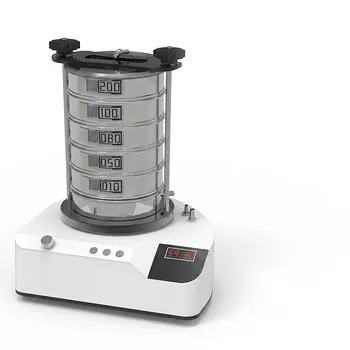
Heavy Duty Dry Three Dimensional Vibratory Sieve Shaker for Particle Separation
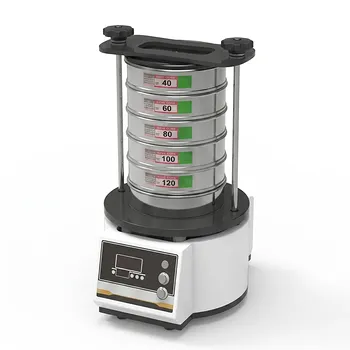
Dry Three Dimensional Vibratory Sieve Shaker
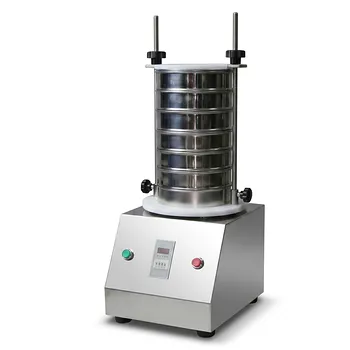
Small Laboratory Vibratory Sieve Shaker for Powder Gradation and Particle Size Analysis
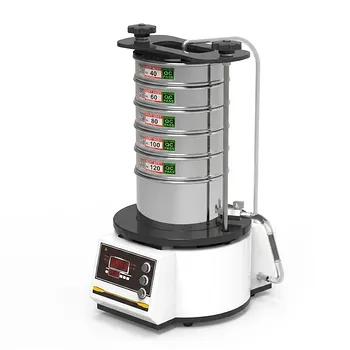
High Frequency Wet Three-Dimensional Vibrating Sieve Shaker for Dry and Wet Particle Size Analysis
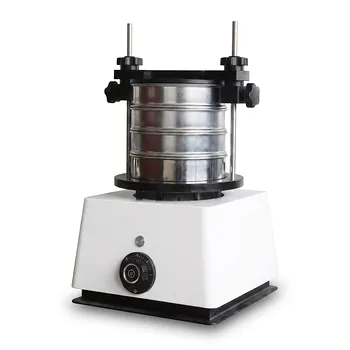
Small Laboratory Vibrating Sieve Shaker for Precise Particle Size Analysis
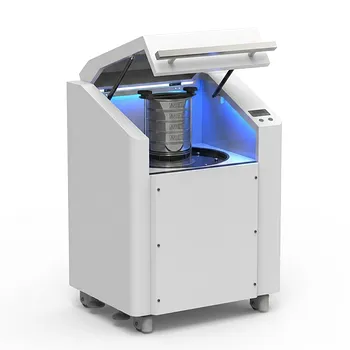
High Frequency Cabinet Type Three-Dimensional Rotary Vibrating Sieve Shaker for Dry Sieving and Particle Classification
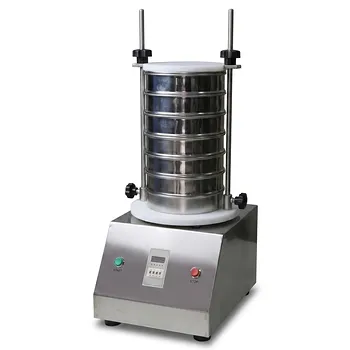
Laboratory Vibratory Test Sieve Shaker for Precision Particle Size Analysis and Powder Grading
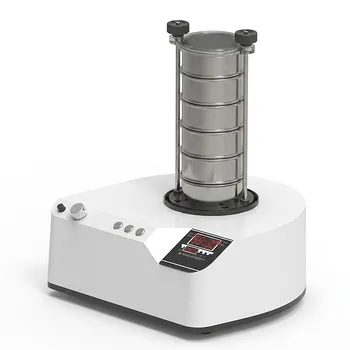
三维电磁微量振动筛分仪
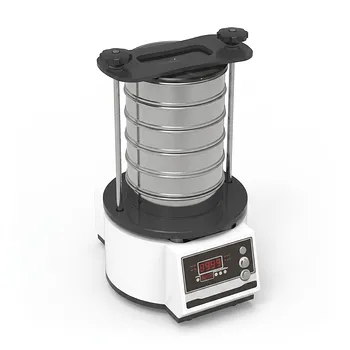
Tapping Oscillating Sieve Shaker for Dry and Wet Particle Size Analysis
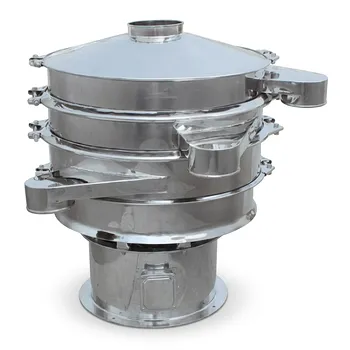
Stainless Steel Rotary Vibrating Sieve High Precision Circular Vibratory Separator Industrial Powder Grading Machine Multi Layer Sifting Equipment
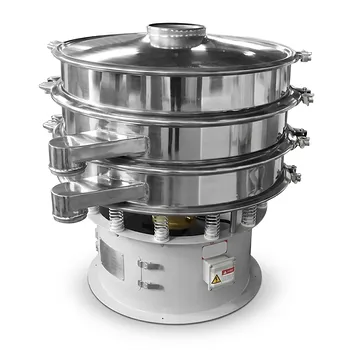
Three Dimensional Rotary Vibrating Sieve
Small Vibrating Ultrafine Grinder for Traditional Chinese Medicine
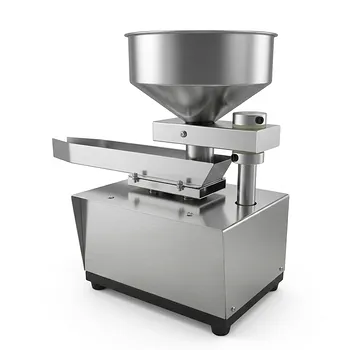
Automatic Vibrating Powder Feeder for Laboratory Material Processing Precision Vibratory Hopper Feeder for Granular and Powder Material Handling Industrial Grade Vibrating Tray Feeder for Consistent Material Sample Preparation
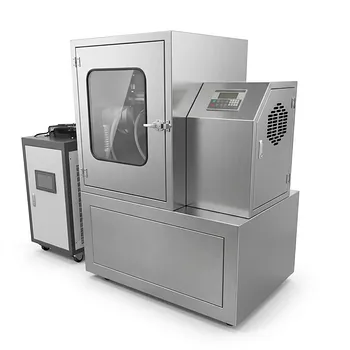
Vibratory Superfine Grinder for Ultra Fine Laboratory Powder Milling
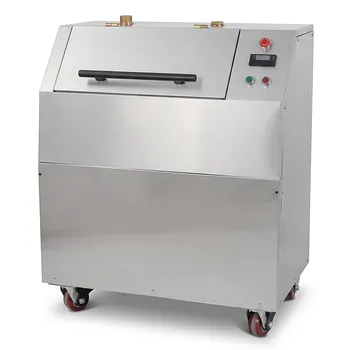
Vibratory Disc Mill for Rapid Fine Grinding and High Throughput Sample Preparation of Hard and Brittle Materials