What is the importance of a vibratory sieve shaker for (Ni0.5Zn0.5Fe2O4/CI/CB) composites? Ensure Material Consistency
Updated 4 months ago
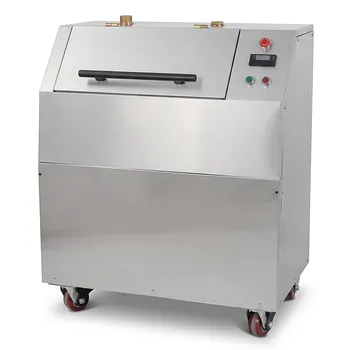
The vibratory sieve shaker is the primary tool for validating the particle size distribution of Carbonyl Iron (CI) and Carbon Black (CB) powders used in composite fabrication. By ensuring that CI particles remain within the 10–25 μm range and CB within the 2–8 μm range, the shaker guarantees the reproducibility of electromagnetic parameter testing and the consistency of the raw material feedstock.
Core Takeaway: Precise particle size control via vibratory sieving is essential to optimize packing density and interfacial polarization, which directly dictate the electromagnetic performance and structural integrity of (Ni0.5Zn0.5Fe2O4/CI/CB) composites.
Ensuring Raw Material Specification and Consistency
Validating Particle Size Ranges
The vibratory sieve shaker performs a forced classification of raw powders to ensure they meet strict dimensional specifications. For (Ni0.5Zn0.5Fe2O4/CI/CB) composites, this means verifying that Carbonyl Iron and Carbon Black do not deviate from their required micrometer ranges.
Preparing Feedstock for Downstream Processing
Uniformly sized particles provide a consistent starting point for ball milling refinement and mechanical mixing. This uniformity prevents fluctuations in the composite's internal structure, ensuring that the Ni0.5Zn0.5Fe2O4 ferrite and fillers integrate seamlessly.
Eliminating Coarse Fraction Anomalies
Sieving identifies and removes oversized particles or secondary agglomerates that could compromise the matrix. By establishing a strict upper limit on particle size, the process prevents localized defects that often occur during the pressing or extrusion stages of material preparation.
Optimizing Physical and Electromagnetic Performance
Impact on Packing Density
The efficiency with which fillers occupy space within the matrix—the packing density—is entirely dependent on particle size consistency. Controlled sieving ensures that the CI and CB particles fit together optimally, reducing unwanted porosity and increasing the final density of the composite.
Enhancing Interfacial Polarization
In electromagnetic composites, the interfacial polarization effect occurs at the boundaries between different material phases. By using a vibratory shaker to maintain specific size distributions, engineers can precisely control the contact area between the fillers and the matrix, which is vital for predictable dielectric and magnetic responses.
Mitigating Stress Concentrations
Large, outlier particles can act as points of stress concentration, leading to premature mechanical failure or cracks. Sieve analysis ensures a uniform particle size (often down to the micrometer level), which promotes even stress distribution and improves the overall mechanical reliability of the final part.
Understanding the Trade-offs and Limitations
The Risk of Particle Agglomeration
While sieving is effective for classification, very fine powders like Carbon Black are prone to electrostatic cladding and agglomeration. If the vibration intensity is too low, these clusters may be incorrectly classified as oversized, leading to material waste or inaccurate distribution data.
Sieve Blinding and Maintenance
Extended use of vibratory shakers with fine meshes can lead to sieve blinding, where particles become wedged in the apertures. This requires frequent cleaning and calibration to ensure that the evaluation of the (Ni0.5Zn0.5Fe2O4/CI/CB) raw materials remains accurate over multiple batches.
Time vs. Accuracy Balance
Achieving a truly representative particle size distribution requires specific vibration durations and amplitudes. Rushing the process may lead to incomplete separation, while excessive vibration can cause particle attrition, potentially altering the very material properties you are trying to measure.
How to Apply This to Your Composite Project
Making the Right Choice for Your Goal
- If your primary focus is Electromagnetic Precision: Use the sieve shaker to strictly enforce the 10–25 μm CI and 2–8 μm CB ranges to ensure stable interfacial polarization.
- If your primary focus is Structural Integrity: Utilize fine-mesh sieving (e.g., 63μm) to eliminate coarse particles that act as stress concentrators within the polymer or ceramic matrix.
- If your primary focus is Process Efficiency: Establish standardized vibration times and amplitudes to ensure that feedstock for ball milling is consistent, reducing the energy required for further refinement.
By integrating rigorous vibratory sieve analysis into your raw material evaluation, you transition from speculative mixing to a controlled, science-based fabrication process.
Summary Table:
| Key Feature | Targeted Benefit | Technical Impact |
|---|---|---|
| CI Particle Control | 10–25 μm Validation | Ensures stable magnetic response |
| CB Particle Control | 2–8 μm Validation | Optimizes dielectric properties |
| Sieving Mechanism | Particle Classification | Prevents stress concentration & defects |
| Process Step | Feedstock Preparation | Enhances ball milling & mixing efficiency |
| Performance Goal | Packing Density | Minimizes porosity for higher structural integrity |
Elevate Your Material Fabrication with Expert Solutions
Precise particle size distribution is the foundation of high-performance (Ni0.5Zn0.5Fe2O4/CI/CB) composites. At [Your Brand Name], we provide complete laboratory sample preparation solutions for material science, ensuring your raw materials meet the most stringent specifications.
Whether you need to refine powders or consolidate final parts, our specialized equipment is designed for precision and reliability:
- Sieving & Classification: Vibratory and air-jet sieve shakers with high-precision test sieves to eliminate agglomerates.
- Powder Processing: Advanced planetary ball mills, jet mills, and rotor mills for uniform particle size reduction.
- Mixing & De-foaming: High-efficiency powder mixers and defoaming mixers for homogeneous phase distribution.
- Compaction & Pressing: A full spectrum of hydraulic presses, including Cold/Warm Isostatic Presses (CIP/WIP), vacuum hot presses, and XRF pellet presses.
Don’t let inconsistent feedstock compromise your research or production. Contact our technical experts today to find the ideal equipment configuration for your material science project!
References
- anas houbi, Beibit Karibayev. Synthesis and Microwave Absorption Properties of (Ni0.5Zn0.5Fe2O4/CI/CB) Ternary Composites. DOI: 10.31489/2022ch4/4-22-9
Mentioned Products
- Vibratory Sieve Shaker Electromagnetic 3D Motion Powder Particle Size Analyzer for Dry and Wet Sieving
- Laboratory Dry and Wet Three Dimensional Vibratory Sieve Shaker for Particle Analysis
- Dry Three Dimensional Vibratory Sieve Shaker
- Stainless Steel Laboratory Vibratory Test Sieve Shaker
- Heavy Duty Dry Three Dimensional Vibratory Sieve Shaker for Particle Separation
People Also Ask
- How does a vibratory sieve shaker contribute to optimizing the performance of activated carbon? Enhance Adsorption Precision
- Why is a laboratory vibratory sieve shaker necessary for processing magnesium-based borate precursor powders? Boost Activity
- Why use a vibratory sieve shaker to verify coarse aggregate grading in rubberized concrete? Ensure Structural Integrity
- What function do vibratory sieve shakers and standard test sieves serve in the preparation of adsorbents? Key Guide
- What role does a vibratory sieve shaker play in the particle size analysis of ground corn products? Enhance QC Precision

Tech Team · PowderPreparation
Last updated on Jun 03, 2026
Related Products
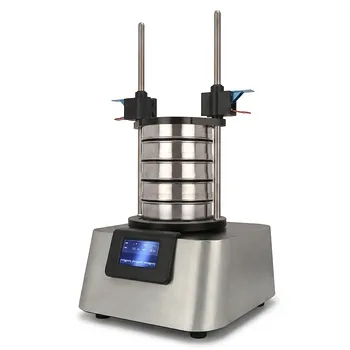
Vibratory Sieve Shaker Electromagnetic 3D Motion Powder Particle Size Analyzer for Dry and Wet Sieving
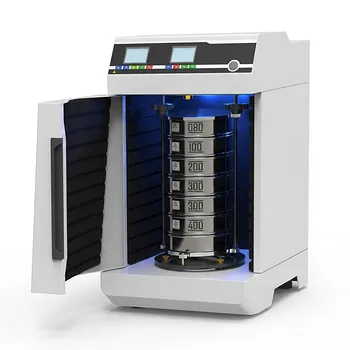
Laboratory Dry and Wet Three Dimensional Vibratory Sieve Shaker for Particle Analysis
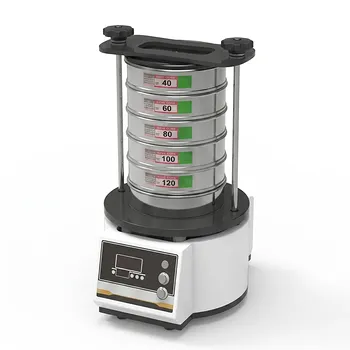
Dry Three Dimensional Vibratory Sieve Shaker
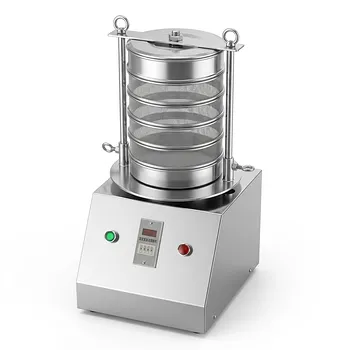
Stainless Steel Laboratory Vibratory Test Sieve Shaker
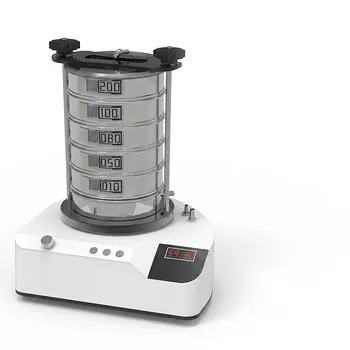
Heavy Duty Dry Three Dimensional Vibratory Sieve Shaker for Particle Separation
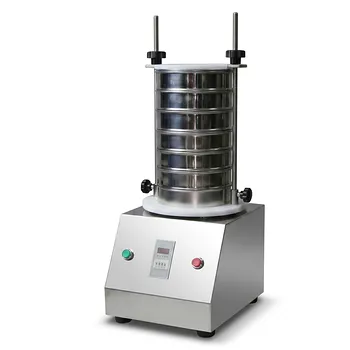
Small Laboratory Vibratory Sieve Shaker for Powder Gradation and Particle Size Analysis
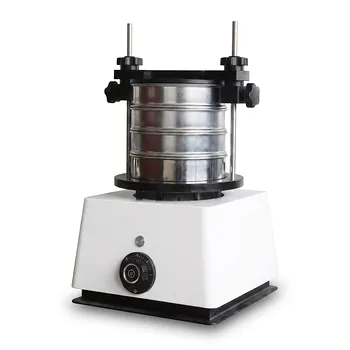
Small Laboratory Vibrating Sieve Shaker for Precise Particle Size Analysis
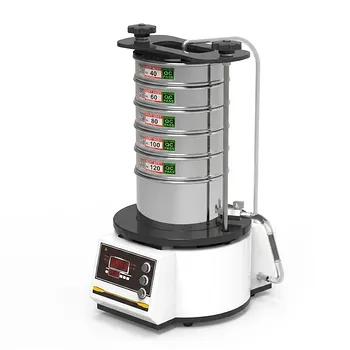
High Frequency Wet Three-Dimensional Vibrating Sieve Shaker for Dry and Wet Particle Size Analysis
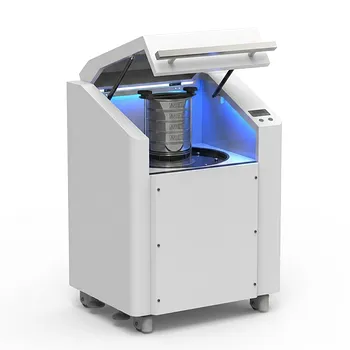
High Frequency Cabinet Type Three-Dimensional Rotary Vibrating Sieve Shaker for Dry Sieving and Particle Classification
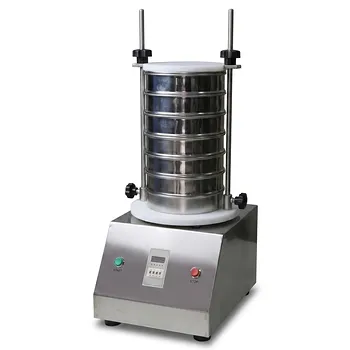
Laboratory Vibratory Test Sieve Shaker for Precision Particle Size Analysis and Powder Grading
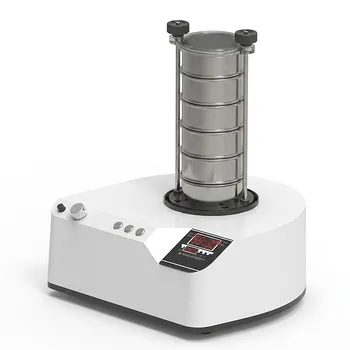
三维电磁微量振动筛分仪

Stainless Steel Rotary Vibrating Sieve High Precision Circular Vibratory Separator Industrial Powder Grading Machine Multi Layer Sifting Equipment
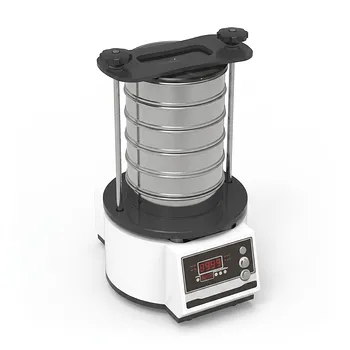
Tapping Oscillating Sieve Shaker for Dry and Wet Particle Size Analysis
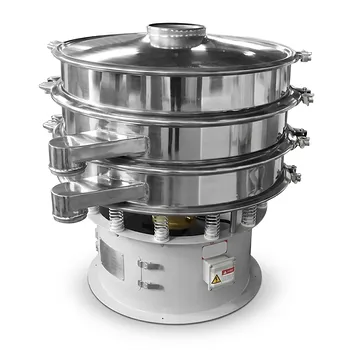
Three Dimensional Rotary Vibrating Sieve
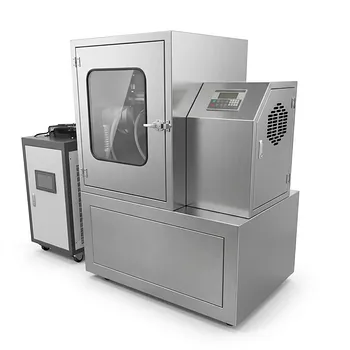
Vibratory Superfine Grinder for Ultra Fine Laboratory Powder Milling
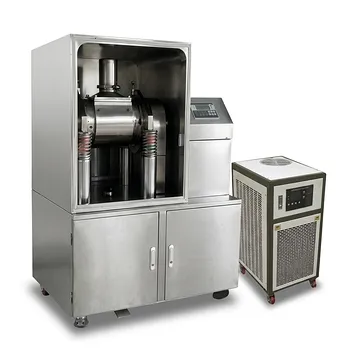
Small Vibrating Ultrafine Grinder for Traditional Chinese Medicine
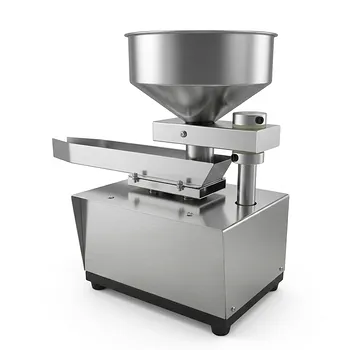
Automatic Vibrating Powder Feeder for Laboratory Material Processing Precision Vibratory Hopper Feeder for Granular and Powder Material Handling Industrial Grade Vibrating Tray Feeder for Consistent Material Sample Preparation