What is the importance of a vibratory sieve shaker in the fractionation process of Amaranth Seed Powder? Enhance Quality
Updated 5 months ago
The importance of a vibratory sieve shaker in amaranth fractionation lies in its ability to isolate specific particle size ranges, which directly dictates the functional properties of the resulting powder. By utilizing high-frequency mechanical vibration, the equipment separates ground amaranth into distinct fractions—such as large (>300 µm), medium (180–300 µm), and fine (<180 µm)—providing the essential foundation for studying dough rheology and optimizing bread quality.
The vibratory sieve shaker is the primary tool for transforming bulk amaranth powder into standardized, functional ingredients. It enables precise control over particle size distribution, which is the most critical variable in determining formulation consistency and final product performance.
The Mechanics of Precision Fractionation
High-Frequency Mechanical Separation
The shaker utilizes controlled mechanical vibration to induce motion in a stack of standard test sieves. This process forces particles to move across the mesh surfaces until they either pass through or are retained based on their minimum cross-sectional width.
Achieving Mass Equilibrium
A precise fractionation process typically requires 5 to 10 minutes of continuous operation. The process is considered complete when the sample mass on each sieve reaches a constant state, ensuring that the grading of particle widths is statistically accurate and repeatable.
Multi-Stage Classification
By using a series of nested sieves with varying aperture sizes, the shaker allows for simultaneous classification into multiple tiers. This provides a granular view of the powder's composition, ranging from coarse granules to ultrafine powders smaller than 125 µm.
The Impact on Product Quality and Formulation
Influence on Dough Rheology
Fractionation is a prerequisite for understanding how different particle sizes interact with water and proteins. Researchers use the isolated fractions to investigate specific impacts on dough elasticity and viscosity, which are vital for achieving the desired crumb structure in amaranth-based breads.
Maximizing Surface Area and Extraction
Consistent particle size distribution directly influences the total surface area available for chemical reactions or solvent interaction. In applications involving extraction, a uniform, fine fraction ensures deeper penetration and higher efficiency by standardizing the contact distance between the powder and the medium.
Ensuring Formulation Uniformity
A narrow and uniform particle size distribution is fundamental for achieving high filling precision and maintaining weight stability in final dosage forms. By removing oversized lumps or excessively fine "dust," the vibratory shaker prevents defects like stress concentration or uneven density in the final composite material.
Understanding the Trade-offs
The Limitation of Particle Shape
Vibratory sieving primarily classifies particles by their width (breadth) rather than their length. If the amaranth seeds are ground into needle-like shapes, the shaker may categorize them as "fine" even if they are physically long, which can occasionally skew rheological data.
Sieve Blinding and Clogging
During the fractionation of high-protein or oily seeds like amaranth, fine particles can adhere to the mesh, a phenomenon known as blinding. This reduces the effective open area of the sieve, potentially leading to inaccurate mass percentages if the equipment is not properly maintained or equipped with de-blinding aids.
Sample Loss and Attrition
Extended vibration times can lead to particle attrition, where fragile particles break down into smaller pieces during the test itself. This can result in a recorded distribution that is finer than the actual material produced by the initial grinding process.
How to Apply This to Your Project
To achieve the best results with amaranth seed powder fractionation, align your sieving parameters with your specific production or research objectives.
- If your primary focus is bread quality and rheology: Use the shaker to isolate the "fine" fraction (<180 µm) to ensure optimal hydration and a smooth dough texture.
- If your primary focus is process optimization: Calculate the uniformity index (Iθ) from your sieve data to evaluate the efficiency of your milling equipment and reduce energy waste.
- If your primary focus is industrial extraction: Focus on achieving a consistent 250 µm to 1 mm range to maximize solvent contact while preventing "fines" from clogging your filtration systems.
By mastering the use of the vibratory sieve shaker, you move from unpredictable bulk processing to precise, science-based ingredient engineering.
Summary Table:
| Key Feature | Impact on Amaranth Fractionation |
|---|---|
| Precise Size Grading | Isolates specific fractions (e.g., <180µm) to optimize dough elasticity and viscosity. |
| Multi-Stage Classification | Enables simultaneous separation into multiple tiers for detailed composition analysis. |
| Mass Equilibrium Control | Ensures repeatable results by processing samples until a stable mass state is reached. |
| Surface Area Optimization | Standardizes particle distribution to maximize efficiency in chemical or solvent extraction. |
Elevate Your Material Research with Precision Sample Prep
Achieving the perfect particle size distribution is critical for the success of your material science and food engineering projects. We provide complete laboratory sample preparation solutions tailored to your specific needs. Our extensive product line includes high-performance vibratory and air-jet sieve shakers, high-precision test sieves, and advanced grinding equipment like planetary ball mills and cryogenic grinders.
Whether you are optimizing amaranth dough rheology or developing new composite materials, our equipment ensures accuracy and repeatability. We also manufacture a full spectrum of hydraulic presses, including Cold Isostatic Presses (CIP) and vacuum hot presses, to support your material compaction requirements.
Ready to optimize your fractionation process? Contact our technical experts today to find the ideal equipment for your laboratory and experience the difference in quality and performance.
References
- Ionica Coțovanu, Silvia Mironeasa. Effects of molecular characteristics and microstructure of amaranth particle sizes on dough rheology and wheat bread characteristics. DOI: 10.1038/s41598-022-12017-7
Mentioned Products
- Vibratory Sieve Shaker Electromagnetic 3D Motion Powder Particle Size Analyzer for Dry and Wet Sieving
- Laboratory Dry and Wet Three Dimensional Vibratory Sieve Shaker for Particle Analysis
- Dry Three Dimensional Vibratory Sieve Shaker
- Stainless Steel Laboratory Vibratory Test Sieve Shaker
- Heavy Duty Dry Three Dimensional Vibratory Sieve Shaker for Particle Separation
People Also Ask
- How does a vibratory sieve shaker contribute to optimizing the performance of activated carbon? Enhance Adsorption Precision
- Why is a laboratory vibratory sieve shaker necessary for processing magnesium-based borate precursor powders? Boost Activity
- Why use a vibratory sieve shaker to verify coarse aggregate grading in rubberized concrete? Ensure Structural Integrity
- What function do vibratory sieve shakers and standard test sieves serve in the preparation of adsorbents? Key Guide
- What role does a vibratory sieve shaker play in the particle size analysis of ground corn products? Enhance QC Precision

Tech Team · PowderPreparation
Last updated on May 14, 2026
Related Products
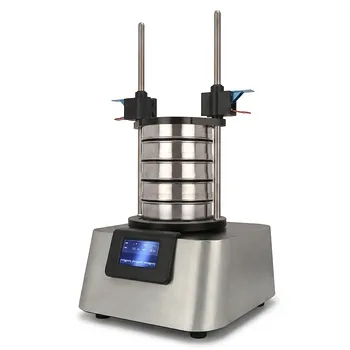
Vibratory Sieve Shaker Electromagnetic 3D Motion Powder Particle Size Analyzer for Dry and Wet Sieving
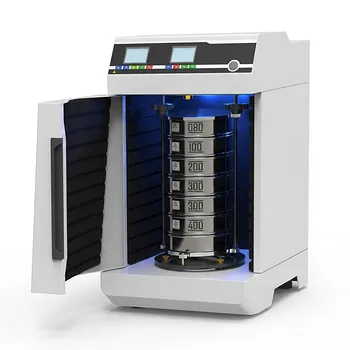
Laboratory Dry and Wet Three Dimensional Vibratory Sieve Shaker for Particle Analysis
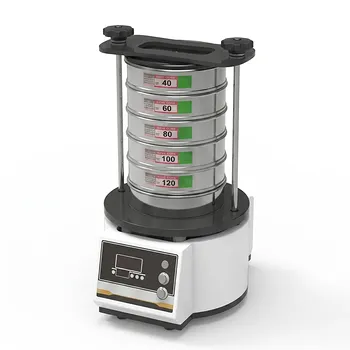
Dry Three Dimensional Vibratory Sieve Shaker
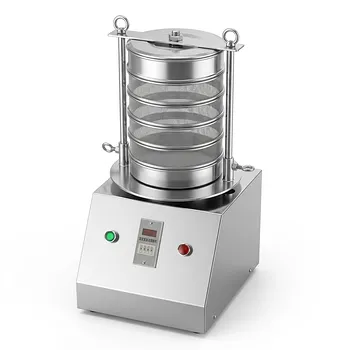
Stainless Steel Laboratory Vibratory Test Sieve Shaker
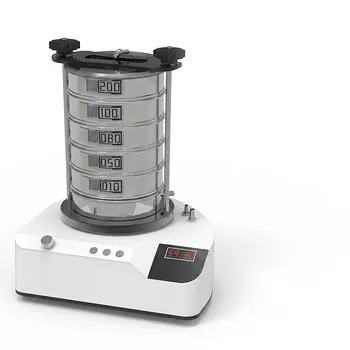
Heavy Duty Dry Three Dimensional Vibratory Sieve Shaker for Particle Separation
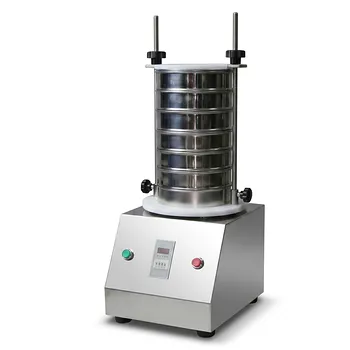
Small Laboratory Vibratory Sieve Shaker for Powder Gradation and Particle Size Analysis
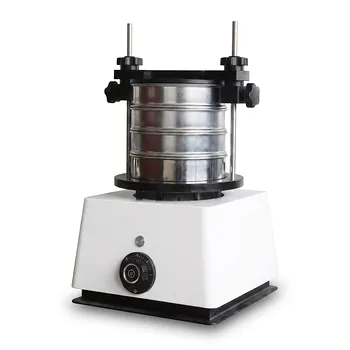
Small Laboratory Vibrating Sieve Shaker for Precise Particle Size Analysis
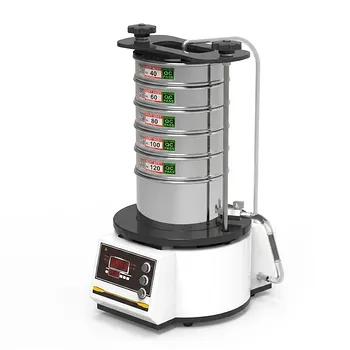
High Frequency Wet Three-Dimensional Vibrating Sieve Shaker for Dry and Wet Particle Size Analysis
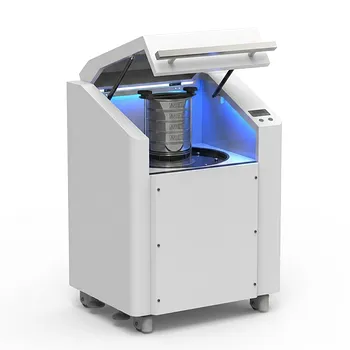
High Frequency Cabinet Type Three-Dimensional Rotary Vibrating Sieve Shaker for Dry Sieving and Particle Classification
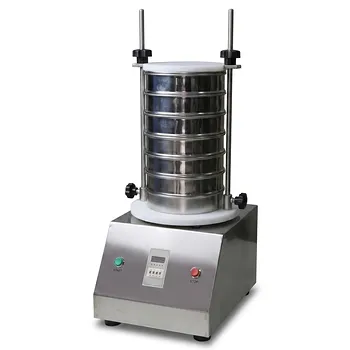
Laboratory Vibratory Test Sieve Shaker for Precision Particle Size Analysis and Powder Grading
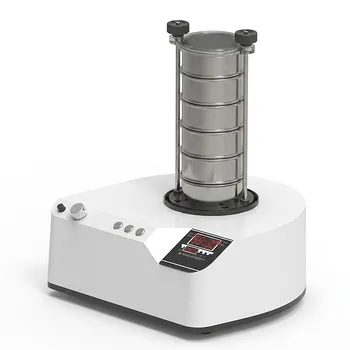
三维电磁微量振动筛分仪
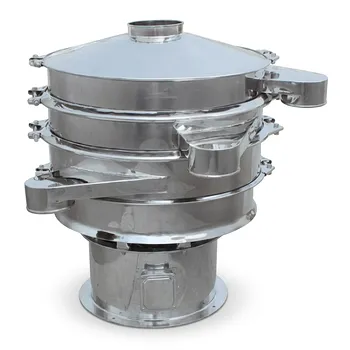
Stainless Steel Rotary Vibrating Sieve High Precision Circular Vibratory Separator Industrial Powder Grading Machine Multi Layer Sifting Equipment
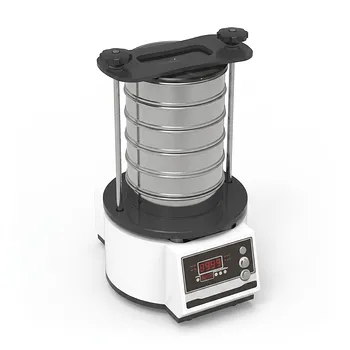
Tapping Oscillating Sieve Shaker for Dry and Wet Particle Size Analysis
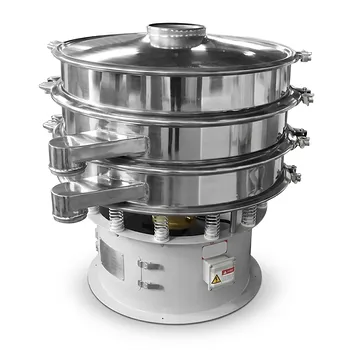
Three Dimensional Rotary Vibrating Sieve
Vibratory Superfine Grinder for Ultra Fine Laboratory Powder Milling
Small Vibrating Ultrafine Grinder for Traditional Chinese Medicine
Automatic Vibrating Powder Feeder for Laboratory Material Processing Precision Vibratory Hopper Feeder for Granular and Powder Material Handling Industrial Grade Vibrating Tray Feeder for Consistent Material Sample Preparation