What is the impact of laboratory hydraulic press pressure precision on BaO–MgO–ZrO2 ceramic quality? Ensure Uniform Density
Updated 4 months ago
Pressure precision in laboratory hydraulic presses is the determining factor for achieving the density uniformity required to produce high-quality BaO–MgO–ZrO2 ceramic green bodies. High-precision pressure control ensures that composite powder particles rearrange tightly and uniformly within the mold, eliminating internal voids and local density gradients. This structural consistency is critical for preventing cracking, warping, or delamination during the subsequent high-temperature sintering process.
Core Takeaway: Precision pressure control in a laboratory hydraulic press creates a uniform internal density distribution, which is the essential foundation for preventing structural failure and ensuring the geometric accuracy of BaO–MgO–ZrO2 dielectric ceramics.
Achieving Structural Integrity Through Particle Rearrangement
The Role of Uniform Particle Packing
A laboratory hydraulic press applies axial pressure—often ranging from specific loads of 2 to 4 tons or pressures up to 100 MPa—to force BaO–MgO–ZrO2 particles into a tightly packed structure. High-precision control during this phase ensures that the particles overcome internal friction and rearrange themselves without leaving irregular gaps.
Eliminating Internal Voids and Micro-Pores
Stable pressure application is essential for expelling air trapped between powder particles and eliminating micro-pores. If the pressure fluctuates, the green body may retain internal voids that act as stress concentrators, leading to structural weaknesses before the ceramic even enters the furnace.
Enhancing Green Strength for Handling
Precision pressing significantly increases the green strength of the body, making it robust enough for manual handling and transport. This strength is derived from the close contact between particles established during the high-pressure forming stage, which facilitates better solid-state diffusion later.
Preventing Structural Failures During Sintering
Mitigating Local Density Gradients
The most critical impact of pressure precision is the elimination of density gradients. When pressure is applied unevenly, some areas of the green body become denser than others, leading to uneven shrinkage rates when the ceramic is heated to temperatures between 1250 and 1500 degrees Celsius.
Reducing Deformation and Cracking
Uniformity in the green body is vital for preventing deformation or cracking caused by uneven internal stresses. Without high-precision pressing, the BaO–MgO–ZrO2 composite may warp or develop surface cracks as it densifies, rendering the final component useless for precision engineering.
Stable Pathways for Advanced Sintering
In advanced techniques like Field-Assisted Sintering (FAST), a high-density green body with uniform contact is necessary to establish stable conductive pathways. This reduces initial contact resistance and ensures a more controlled phase transformation during the sintering cycle.
Ensuring Geometric and Functional Accuracy
Geometric Precision for Radio Engineering
BaO–MgO–ZrO2 ceramics are frequently used in precision telecommunications and radio engineering, where exact dimensions are non-negotiable. High-precision hydraulic pressing ensures that the final ceramic disk or component achieves the correct geometric shape with minimal shrinkage deviation.
Consistency in Physical and Dielectric Properties
Precision pressure control ensures that the physical density remains consistent across different production batches. This consistency is directly linked to the dielectric properties of the ceramic, as fluctuations in density can alter the material's performance in high-frequency electronic applications.
Understanding the Trade-offs and Pitfalls
Pressure Overload vs. Precision
Applying more pressure is not always better; excessive pressure can lead to "spring-back" effects or delamination when the load is released. The goal of a laboratory press is not just raw power, but the ability to maintain a specific, calculated load consistently.
The Risk of Pressure Fluctuations
Even minor fluctuations during the pressure-holding stage can disrupt the particle matrix. If the press cannot maintain a stable load, the green body may develop internal "layering," which often results in catastrophic failure (delamination) during the cooling phase of sintering.
Mold Friction and Uniaxial Limitations
Because laboratory presses typically use uniaxial pressure, friction between the powder and the steel mold walls can still create slight density variations. High-precision equipment helps mitigate this, but it cannot entirely replace the need for proper mold lubrication and powder granulation.
How to Apply This to Your Ceramic Project
Achieving the highest quality BaO–MgO–ZrO2 green bodies requires matching your pressing parameters to your specific material goals.
- If your primary focus is geometric accuracy: Use high-precision pressure holding (e.g., 40 MPa) to minimize shrinkage deviations and ensure the final part fits tight tolerances.
- If your primary focus is preventing sintering cracks: Prioritize the elimination of density gradients by using a press with stable, repeatable load applications to ensure uniform internal stress.
- If your primary focus is electronic performance: Focus on achieving maximum green density to facilitate smooth solid-state diffusion and consistent dielectric constants across the material.
Precision in the pressing stage is the single most effective way to guarantee that a BaO–MgO–ZrO2 green body survives the rigors of high-temperature sintering.
Summary Table:
| Impact Factor | Effect on Green Body | Benefit for Final Ceramic |
|---|---|---|
| Pressure Precision | Uniform particle rearrangement | Prevents warping & delamination |
| Load Stability | Elimination of internal voids | High green strength for handling |
| Repeatability | Consistent density gradients | Stable dielectric & physical properties |
| Geometric Control | Minimal shrinkage deviation | High accuracy for radio engineering |
Elevate Your Ceramic Material Research with Precision Engineering
Achieving the perfect BaO–MgO–ZrO2 ceramic starts with the right equipment. At our core, we provide complete laboratory sample preparation solutions for material science, specializing in advanced powder processing and compaction. Our high-precision hydraulic presses—including Cold/Warm Isostatic Presses (CIP/WIP), standard lab presses, XRF pellet presses, and vacuum hot presses—are engineered to deliver the exact pressure precision necessary to eliminate density gradients and prevent sintering failure.
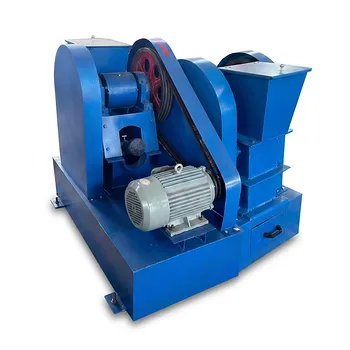
Beyond pressing, we offer a comprehensive suite of equipment to refine your workflow, including jaw/roll crushers, cryogenic grinders, planetary ball mills, jet mills, and sieve shakers, as well as powder and defoaming mixers. Whether you are focused on geometric accuracy for radio engineering or consistent dielectric properties, our tools ensure your material research reaches its full potential.
Ready to optimize your sample preparation? Contact our technical experts today to find the perfect equipment to enhance your lab's efficiency and achieve superior material performance!
References
- О. Н. Борисенко, Oleksandr Tymchenko. SUBSOLIDUS STRUCTURE OF THE SYSTEM BaO – MgO – ZrO2. DOI: 10.20998/2413-4295.2025.03.06
Mentioned Products
- 6-Ton Small Single-Punch Tablet Press — Laboratory Powder & Granule Tableting Equipment / Tablet Forming Machine
- 5 Ton Single Punch Tablet Press Laboratory Small Batch Production
- Manual Tablet Press with Dual Scale Pressure Gauge for Pharmaceutical Food Chemical Laboratory Sample Preparation
- 6 Ton Variable Frequency Single Punch Tablet Press
- High Shear Laboratory Emulsifier for Mixing and Homogenization
People Also Ask
- What is the function of a laboratory press in Cr-Ti alloy evaluation? Quantify Fracture Stress & Strength
- What is the function of a laboratory press in assessing the hydrophobic performance of modified vermiculite fillers?
- What is the core function of a laboratory press in the forming of ceramic filter element green bodies? Maximize Density.
- What is the function of a laboratory press in the preparation of ceramic feed rods? Master Density and Precision
- Why is vacuum sealing and flexible packaging necessary for Aluminum Titanate powders during CIP? Ensure Peak Density

Tech Team · PowderPreparation
Last updated on Jun 03, 2026
Related Products
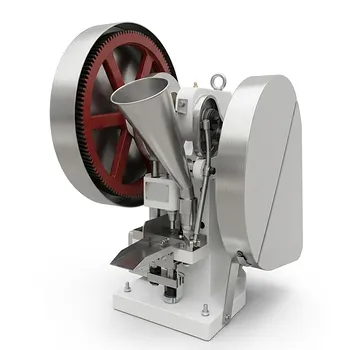
6-Ton Small Single-Punch Tablet Press — Laboratory Powder & Granule Tableting Equipment / Tablet Forming Machine
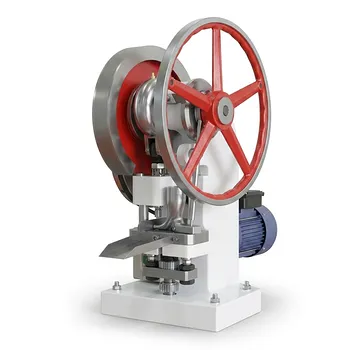
5 Ton Single Punch Tablet Press Laboratory Small Batch Production
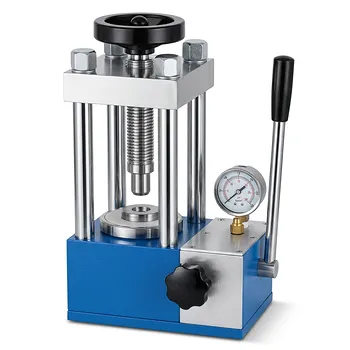
Manual Tablet Press with Dual Scale Pressure Gauge for Pharmaceutical Food Chemical Laboratory Sample Preparation
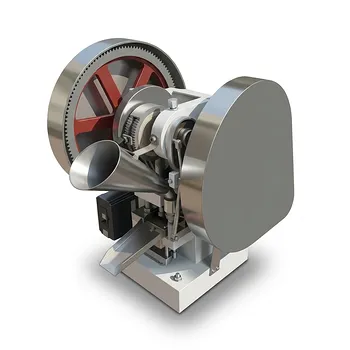
6 Ton Variable Frequency Single Punch Tablet Press
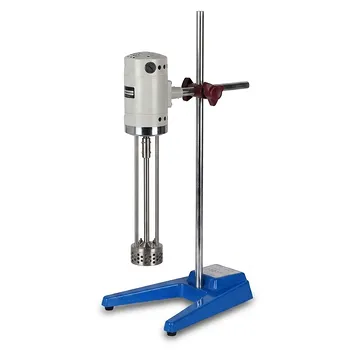
High Shear Laboratory Emulsifier for Mixing and Homogenization
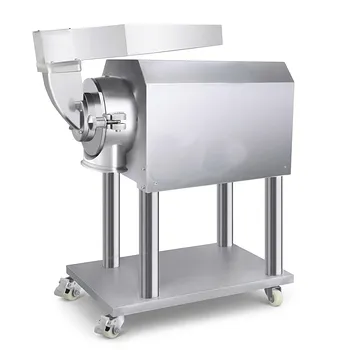
High Speed Small Laboratory Crusher for Dry Material Sample Preparation
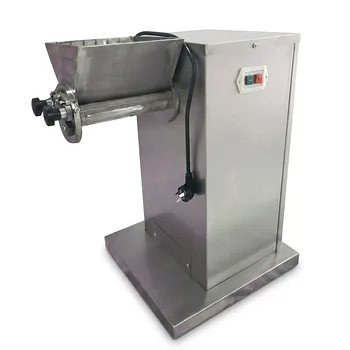
Small Laboratory Oscillating Granulator for Wet and Dry Granulation Processing
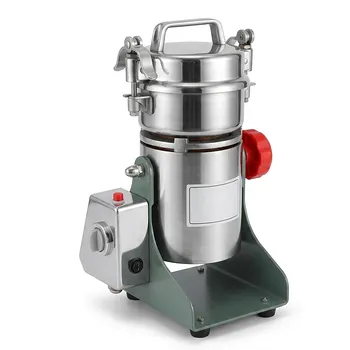
High Speed Swing Type Laboratory Pulverizer for Fine Powder Grinding and Sample Preparation