What is the function of vibratory sieve shakers and standard test sieves in the grading of LMO-SrTiO3? Optimize Density
Updated 5 months ago
Precision particle size control is the cornerstone of high-performance composite fabrication. In the grading of LMO-SrTiO3 materials, vibratory sieve shakers and standard test sieves function as the primary tools for isolating specific ceramic powder fractions. By mechanically segregating SrTiO3 into distinct ranges—such as sub-40 micrometers or 200–500 micrometers—these tools enable the application of the Furnas packing model. This scientific approach ensures that smaller particles accurately fill the gaps between larger ones, resulting in a matrix with maximum packing density and minimal room-temperature porosity.
The fundamental role of vibratory sieving in LMO-SrTiO3 production is to provide the granular building blocks necessary for optimized particle packing. By achieving a precise distribution of large, medium, and small particles, manufacturers can significantly enhance the material's structural density and interfacial integrity.
Achieving Structural Integrity through Precision Grading
Implementation of the Furnas Packing Model
The primary function of sieving in this context is to facilitate the Furnas packing model, a mathematical approach to minimizing voids. Standard test sieves allow researchers to isolate the exact particle sizes required to satisfy the model’s ratios. Without this precise classification, the scientific optimization of the composite matrix would be impossible.
Minimizing Interstitial Porosity
By using a vibratory shaker to grade SrTiO3 powders, smaller particles are prepared to fill the interstices (gaps) between larger particles. This reduces the overall porosity of the LMO-SrTiO3 composite at room temperature. A denser matrix typically translates to improved mechanical properties and more predictable electrical performance.
Ensuring Uniform Reinforcement Distribution
Precise grading ensures that the reinforcement phase is distributed evenly throughout the composite. Uniformity prevents stress concentration points that often lead to material failure. This level of control is essential for maintaining consistent interfacial bonding across the entire volume of the material.
The Mechanics of Material Classification
High-Frequency Vibratory Action
Vibratory sieve shakers use controlled amplitudes and cycle times to ensure that particles find the mesh openings efficiently. This mechanical energy overcomes inter-particle friction, allowing for a more accurate separation than manual sieving. For LMO-SrTiO3, this ensures that the fraction designated as "fine" is truly free of oversized contaminants.
Standardized Mesh Precision
Standard test sieves provide a calibrated reference for particle dimensions. Because these sieves are manufactured to strict tolerances, they ensure that a 40-micrometer fraction is consistent across different batches. This repeatability is vital for industrial scaling and quality control of advanced ceramic composites.
Quantitative Characterization
Beyond simple separation, these tools allow for the quantitative analysis of the powder’s size distribution. By weighing the material retained on each sieve, engineers can calculate the Fineness Modulus and other metrics. This data is used to adjust the grinding or synthesis process to meet specific material requirements.
Understanding the Trade-offs
The Challenge of Cohesive Fine Powders
While sieving is highly effective for coarse grains, extremely fine particles (those under 53 μm) often exhibit cohesive behavior. These small particles can clump together or adhere to the sieve mesh, leading to "blinding" or clogging. This requires specialized vibratory settings or wet-sieving techniques to ensure accuracy.
Mechanical Degradation Risks
Extended sieving times or excessive vibration amplitudes can cause particle attrition. If the ceramic particles are brittle, the mechanical action of the shaker may inadvertently break them down into smaller fragments. This alters the original size distribution and can lead to errors in the final Furnas model calculations.
Equipment Wear and Calibration
Sieve meshes are subject to physical wear and deformation over time, especially when processing abrasive ceramic powders. Regular calibration and inspection are required to ensure the apertures remain within specified tolerances. Failure to maintain equipment leads to "drift" in particle sizing, compromising the density of the final composite.
How to Apply This to Your Project
Making the Right Choice for Your Goal
To optimize your LMO-SrTiO3 grading process, choose your equipment and parameters based on your primary material objective.
- If your primary focus is maximum material density: Prioritize the use of a wide range of sieve sizes to strictly adhere to the Furnas packing model ratios.
- If your primary focus is processing speed and throughput: Optimize the vibratory amplitude and cycle time to minimize the residence time of the powder on the mesh.
- If your primary focus is minimizing particle damage: Utilize lower vibration amplitudes and shorter durations to protect the morphology of brittle ceramic grains.
By mastering the precise grading of SrTiO3 powders, you provide the foundational architecture required for superior composite material performance.
Summary Table:
| Process Component | Primary Function | Key Benefit for LMO-SrTiO3 |
|---|---|---|
| Standard Test Sieves | Calibrated particle fractioning | Enables precise Furnas packing model ratios |
| Vibratory Action | High-frequency mechanical separation | Overcomes friction for accurate classification |
| Particle Grading | Segregation of fine vs. coarse grains | Minimizes porosity and improves matrix density |
| Quantitative Analysis | Size distribution characterization | Ensures repeatable quality and structural integrity |
Elevate Your Material Research with Precision Powder Solutions
Achieving the perfect particle distribution for LMO-SrTiO3 composites requires equipment that delivers repeatability and accuracy. At [Company Name], we provide complete laboratory sample preparation solutions tailored for advanced material science.
Our expertise in powder processing and compaction ensures your research moves from the lab to industrial scaling with ease. Our extensive product range includes:
- Grading & Analysis: High-performance vibratory and air-jet sieve shakers with a full range of calibrated test sieves.
- Milling & Grinding: Planetary ball mills, jet mills, and cryogenic grinders for achieving sub-micron particles.
- Crushing: Industrial-grade jaw and roll crushers for initial material reduction.
- Advanced Compaction: A full spectrum of hydraulic presses, including Cold/Warm Isostatic Presses (CIP/WIP), vacuum hot presses, and XRF pellet presses.
Whether you are focused on minimizing interstitial porosity or maximizing structural integrity, our tools are designed to meet the strictest tolerances.
Ready to optimize your powder grading process? Contact our technical team today to discuss your specific application!
References
- Nina Kuzmić, Matjaž Spreitzer. Dielectric Properties of Upside-Down SrTiO3/Li2MoO4 Composites Fabricated at Room Temperature. DOI: 10.3389/fmats.2021.669421
Mentioned Products
- Vibratory Sieve Shaker Electromagnetic 3D Motion Powder Particle Size Analyzer for Dry and Wet Sieving
- Laboratory Dry and Wet Three Dimensional Vibratory Sieve Shaker for Particle Analysis
- Dry Three Dimensional Vibratory Sieve Shaker
- Stainless Steel Laboratory Vibratory Test Sieve Shaker
- Heavy Duty Dry Three Dimensional Vibratory Sieve Shaker for Particle Separation
People Also Ask
- How does a vibratory sieve shaker contribute to optimizing the performance of activated carbon? Enhance Adsorption Precision
- Why is a laboratory vibratory sieve shaker necessary for processing magnesium-based borate precursor powders? Boost Activity
- Why use a vibratory sieve shaker to verify coarse aggregate grading in rubberized concrete? Ensure Structural Integrity
- What function do vibratory sieve shakers and standard test sieves serve in the preparation of adsorbents? Key Guide
- What role does a vibratory sieve shaker play in the particle size analysis of ground corn products? Enhance QC Precision

Tech Team · PowderPreparation
Last updated on May 14, 2026
Related Products
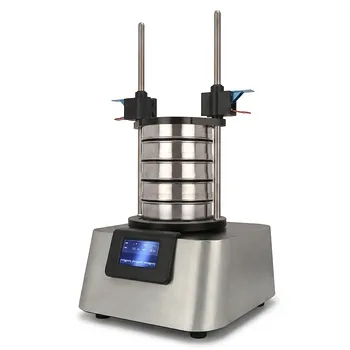
Vibratory Sieve Shaker Electromagnetic 3D Motion Powder Particle Size Analyzer for Dry and Wet Sieving
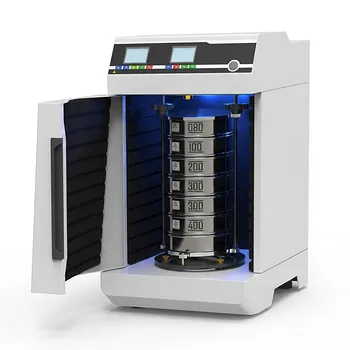
Laboratory Dry and Wet Three Dimensional Vibratory Sieve Shaker for Particle Analysis
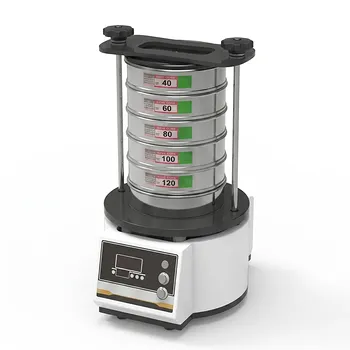
Dry Three Dimensional Vibratory Sieve Shaker
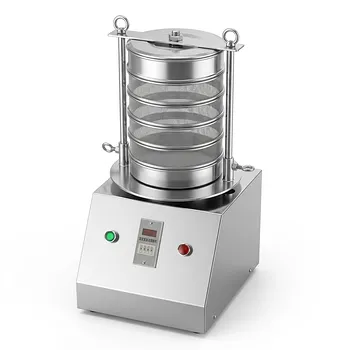
Stainless Steel Laboratory Vibratory Test Sieve Shaker

Heavy Duty Dry Three Dimensional Vibratory Sieve Shaker for Particle Separation
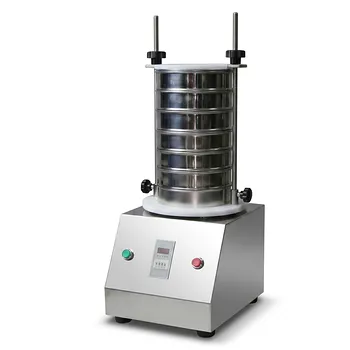
Small Laboratory Vibratory Sieve Shaker for Powder Gradation and Particle Size Analysis

Small Laboratory Vibrating Sieve Shaker for Precise Particle Size Analysis
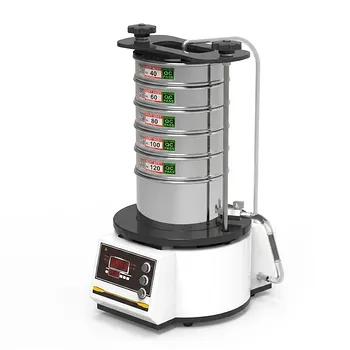
High Frequency Wet Three-Dimensional Vibrating Sieve Shaker for Dry and Wet Particle Size Analysis
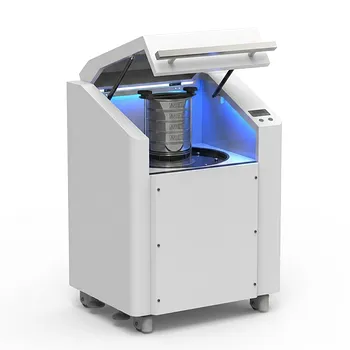
High Frequency Cabinet Type Three-Dimensional Rotary Vibrating Sieve Shaker for Dry Sieving and Particle Classification

Laboratory Vibratory Test Sieve Shaker for Precision Particle Size Analysis and Powder Grading
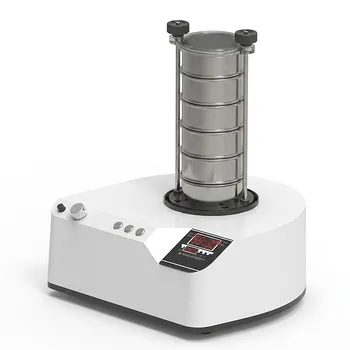
三维电磁微量振动筛分仪

Stainless Steel Rotary Vibrating Sieve High Precision Circular Vibratory Separator Industrial Powder Grading Machine Multi Layer Sifting Equipment
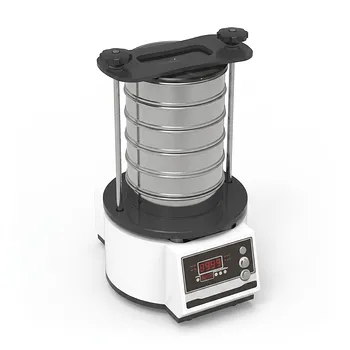
Tapping Oscillating Sieve Shaker for Dry and Wet Particle Size Analysis

Three Dimensional Rotary Vibrating Sieve
Vibratory Superfine Grinder for Ultra Fine Laboratory Powder Milling
Small Vibrating Ultrafine Grinder for Traditional Chinese Medicine
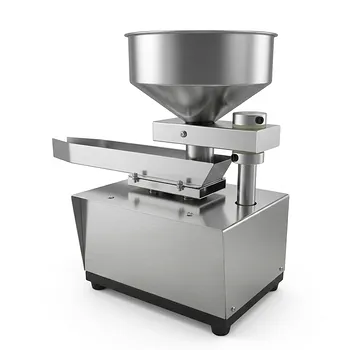
Automatic Vibrating Powder Feeder for Laboratory Material Processing Precision Vibratory Hopper Feeder for Granular and Powder Material Handling Industrial Grade Vibrating Tray Feeder for Consistent Material Sample Preparation