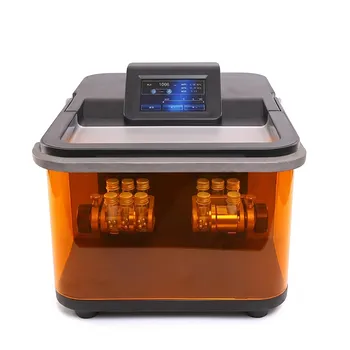
What is the function of using ethanol as a PCA in AlZrTi ball milling? Enhance nanostructured powder quality.
Updated 4 months ago
Ethanol serves as a critical surfactant and Process Control Agent (PCA). In the preparation of AlZrTi nanostructured powders, it adsorbs onto particle surfaces to lower surface energy and inhibit excessive cold welding. This mechanism prevents the powder from adhering to the milling equipment, ensuring a high recovery rate and a uniform, fine particle size distribution.
Ethanol acts as a chemical buffer that balances the opposing forces of cold welding and fracturing during high-energy ball milling. By reducing surface energy, it prevents ductile AlZrTi alloys from clumping or sticking to the mill, enabling the efficient production of refined nanostructured powders.
Surface Energy and Cold Welding Inhibition
Lowering Surface Tension
Ethanol molecules adsorb onto the surface of the AlZrTi alloy powders during the milling process. This adsorption creates a thin film that significantly reduces the surface energy and tension of the metal particles.
Preventing Material Adhesion
Aluminum and titanium-based alloys are notoriously ductile and "sticky" under high-energy impacts. By reducing surface energy, ethanol prevents the powder from cold welding to the grinding balls and the inner walls of the milling jar.
Inhibiting Agglomeration
Without a PCA, these ductile particles would fuse together into large, unusable clumps. Ethanol acts as a physical spacer, inhibiting the particles from bonding with each other upon impact.
Facilitating Nanostructural Refinement
Balancing the Milling Cycle
High-energy ball milling relies on a continuous cycle of cold welding and fracturing. Ethanol regulates this balance, ensuring that the rate of fracturing exceeds the rate of welding so the powder can be reduced to the nanometer scale.
Ensuring Particle Uniformity
The presence of ethanol allows for a more even distribution of impact energy across the powder mass. This results in a finished product with a narrow particle size distribution and improved flowability.
Maximizing Powder Recovery
Because the powder does not stick to the grinding media or the container, the final yield is significantly higher. This is crucial for maintaining the stoichiometry of complex alloys like AlZrTi.
Understanding the Trade-offs
The Risk of Chemical Contamination
The primary downside of using an organic PCA like ethanol is the potential for impurity introduction. High-energy milling can cause the PCA to decompose, leading to the pickup of carbon, oxygen, or hydrogen in the alloy.
Impact on Subsequent Sintering
Residual ethanol or its decomposition products can influence the sintering behavior of the powder. If impurities are trapped within the nanostructure, they may lead to the formation of undesirable phases or porosity in the final consolidated component.
Handling and Evaporation
Ethanol is volatile and flammable, requiring strict control over the milling temperature and atmosphere. Excessive heat during milling can vaporize the PCA, causing pressure build-up within the jar and loss of the protective surface film.
How to Apply This to Your Process
When integrating ethanol as a PCA in your AlZrTi powder production, consider your primary objective to determine the optimal concentration and milling duration.
- If your primary focus is maximum particle refinement: Use a higher ratio of ethanol to powder to ensure every new surface created during fracturing is immediately coated, preventing any re-welding.
- If your primary focus is high chemical purity: Minimize the volume of ethanol to the lowest effective amount and use a cooling cycle to prevent the PCA from decomposing and contaminating the alloy.
- If your primary focus is high-volume recovery: Prioritize the "wet milling" approach where ethanol acts as a dispersion medium, ensuring the powder remains in a slurry state that is easy to extract from the mill.
By precisely controlling the interaction between the ethanol and the metal surfaces, you can transform a chaotic milling process into a predictable path toward high-quality nanostructured materials.
Summary Table:
| Key Function | Mechanism of Action | Main Benefits | Potential Drawbacks |
|---|---|---|---|
| Cold Welding Inhibition | Lowers surface energy by adsorbing onto particles. | Prevents powder from sticking to jars and balls. | Risk of C, O, or H contamination. |
| Particle Refinement | Balances fracturing and welding cycles. | Produces uniform, nanometer-scale powders. | PCA decomposition at high temperatures. |
| Yield Optimization | Reduces material adhesion to equipment. | Maximizes powder recovery and stoichiometry. | Volatility requires temperature control. |
Elevate Your Material Research with Expert Powder Solutions
Achieving the perfect nanostructured AlZrTi powder requires more than just the right Process Control Agent—it requires precision equipment. At [Your Brand Name], we provide complete laboratory sample preparation solutions tailored for advanced material science.
From high-energy planetary ball mills, jet mills, and rotor mills designed for superior refinement, to our full spectrum of hydraulic presses (CIP/WIP, hot presses, and XRF pellet presses) for material consolidation, we offer the tools you need to ensure consistency and purity. Whether you are crushing raw materials or mixing specialized powders, our equipment ensures high recovery rates and optimal particle distribution.
Ready to optimize your milling and compaction workflow? Contact our technical team today to find the ideal equipment for your laboratory's unique requirements!
References
- Orsolya Molnárová, P. Málek. Bimodal Microstructure in an AlZrTi Alloy Prepared by Mechanical Milling and Spark Plasma Sintering. DOI: 10.3390/ma13173756
Mentioned Products
- Heavy Duty Horizontal Planetary Ball Mill for Efficient Industrial Grinding and Sample Preparation
- Vertical Semi Circular Planetary Ball Mill for Laboratory Precision Grinding
- Vertical Production Planetary Ball Mill for High Throughput Powder Processing
- Vertical Square Planetary Ball Mill for Laboratory Sample Preparation and Nanoscale Grinding
- High Energy Planetary Ball Mill for Nano Scale Grinding and Mechanical Alloying
People Also Ask
- Why grind lime-pozzolan specimens for TG/DTA for 3 mins? Master sample prep for high-precision thermal analysis.
- What is the role of a planetary ball mill in the mechanical activation of ZTA powder? Boost Sintering Performance
- What is the function of a planetary ball mill in wollastonite ceramic prep? Achieve Molecular Homogenization & Reactivity
- How does a planetary ball mill contribute to the homogenization of trace elements? Achieve Sub-Micron Uniformity
- What is the function of a high-performance planetary ball mill in AMZ laminates? Master Ceramic Homogenization.

Tech Team · PowderPreparation
Last updated on Jun 03, 2026
Related Products

Heavy Duty Horizontal Planetary Ball Mill for Efficient Industrial Grinding and Sample Preparation

Vertical Semi Circular Planetary Ball Mill for Laboratory Precision Grinding

Vertical Production Planetary Ball Mill for High Throughput Powder Processing

Vertical Square Planetary Ball Mill for Laboratory Sample Preparation and Nanoscale Grinding

High Energy Planetary Ball Mill for Nano Scale Grinding and Mechanical Alloying

Dual Station Planetary Ball Mill 24L
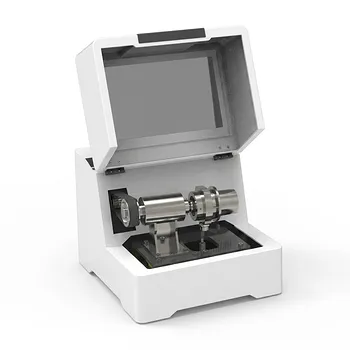
Single Tank High Energy Vibratory Ball Mill for Laboratory Grinding and Mixing

Miniature Planetary Ball Mill with Vacuum Grinding and High Efficiency for Laboratory Sample Preparation

High Energy Laboratory Planetary Ball Mill for Nano Grinding and Material Science Sample Preparation

High Energy Omnidirectional Planetary Ball Mill 16L

High Energy Planetary Ball Mill for Nano Scale Grinding and Colloidal Mixing in Material Science Research

360° Rotating Omnidirectional Laboratory Planetary Ball Mill for Homogeneous Ultra-Fine Grinding and Mixing
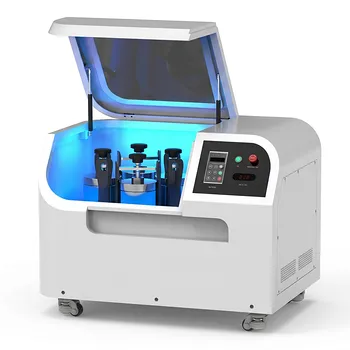
Planetary Ball Mill 12L

High Energy Laboratory Planetary Ball Mill for Nano Grinding and Colloidal Mixing of Hard and Brittle Materials
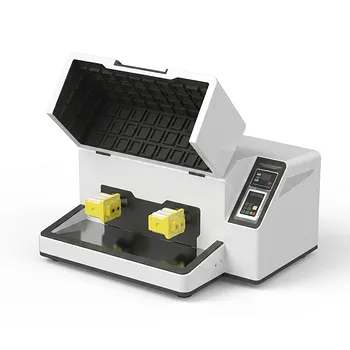
Multi-Platform Nanoscale High-Energy Vibratory Ball Mill
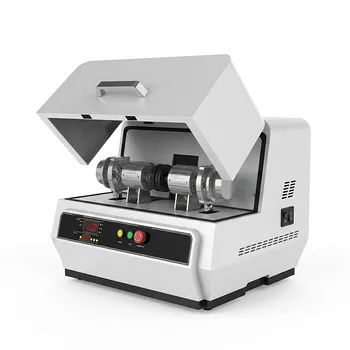
Dual Jar High Energy Vibratory Ball Mill

High Energy Omnidirectional Planetary Ball Mill 20L

8L Planetary Ball Mill for Laboratory Grinding and Sample Preparation
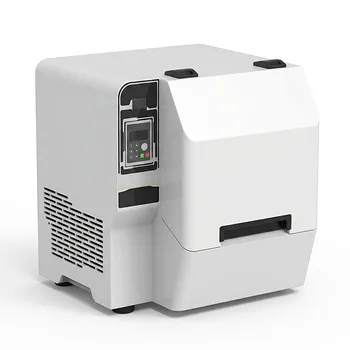
Nano High Energy Vibratory Ball Mill for Laboratory Sample Preparation