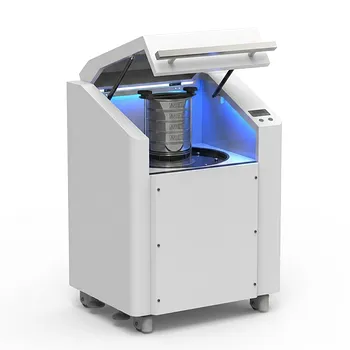
What is the function of test sieves and sieve shakers in ZTA processing? Achieve Superior Powder Uniformity
Updated 4 months ago
Test sieves and sieve shakers are the primary tools used to refine dried Zirconia Toughened Alumina (ZTA) powders by breaking down hard agglomerates and removing oversized particles. This process ensures the material achieves a consistent particle size distribution and high fluidity, which are critical prerequisites for the molding and pressing stages.
The core function of sieving in ZTA processing is to transform raw, dried material into a standardized powder that guarantees microscopic density uniformity. By eliminating structural inconsistencies at the powder level, manufacturers can prevent defects and maximize the final mechanical strength of the ceramic component.
Eliminating Structural Inhomogeneity
Breaking Down Hard Agglomerates
During the drying of ZTA ceramic slurry, the material naturally tends to form hard agglomerates or loose blocks. Sieve shakers provide the necessary vibratory energy to force these clusters through the mesh, effectively grinding them back into individual particles.
Removing Oversized Particles
Even in high-quality mixtures, oversized particles can persist after drying or calcination. The test sieve acts as a final gatekeeper, ensuring that any particle exceeding the specified mesh size is removed from the production line to prevent internal flaws.
Optimizing Material Behavior for Manufacturing
Enhancing Powder Fluidity
For ZTA to fill a mold accurately, the powder must behave almost like a liquid. Sieving ensures excellent fluidity, allowing the powder to flow into complex mold geometries without leaving air pockets or gaps.
Precise Particle Size Distribution (PSD)
Sieve shakers allow for the classification of powders into narrow ranges, often between 0.2 and 0.5 μm for fine powders or 50 to 300 microns for granules. A narrow PSD is essential for achieving the highest possible packing density in the ceramic "green body" before it is fired.
Preventing Processing Failures
In specialized applications like filament extrusion, sieving prevents material clogging. By ensuring uniform particle diameters, the process maintains consistent filament dimensions and prevents interruptions in automated manufacturing.
Impact on Final Ceramic Performance
Microscopic Density Uniformity
The mechanical integrity of ZTA depends on how well the particles pack together. Consistent sieving ensures microscopic density uniformity, which leads to even shrinkage and predictable behavior during the sintering process.
Reducing Stress Concentrations
In functionally graded materials where different layers are joined, sieving ensures flat interfaces between layers. This uniformity reduces local stress concentrations that could otherwise lead to cracks or structural failure under load.
Understanding the Trade-offs
The Challenge of Mesh Blinding
Extremely fine ZTA powders can lead to mesh blinding, where particles become lodged in the sieve openings. This requires careful selection of vibratory frequency and, in some cases, the use of ultrasonic de-blinding accessories to maintain efficiency.
Abrasive Wear and Contamination
ZTA is a highly abrasive material that can cause accelerated wear on standard stainless steel sieves. Over time, this wear can lead to mesh enlargement or, more critically, the introduction of metallic contaminants into the high-purity ceramic powder.
Making the Right Choice for Your Goal
- If your primary focus is dry pressing or molding: Utilize a vibratory shaker with a 60 or 65-mesh sieve to ensure optimal flowability and uniform mold filling.
- If your primary focus is high-strength structural components: Focus on achieving a narrow particle size distribution (0.2–0.5 μm) to maximize green body packing density and sintering uniformity.
- If your primary focus is multi-layer or functionally graded materials: Prioritize the removal of all hard agglomerates to ensure perfectly flat, low-stress interfaces between material layers.
- If your primary focus is filament extrusion: Use fine-mesh screening to eliminate any particles that exceed the nozzle diameter to prevent clogging and diameter fluctuations.
Through rigorous sieving protocols, the inherent properties of ZTA are translated into a reliable, high-performance engineering material.
Summary Table:
| Core Function | Key Action | Manufacturing Impact |
|---|---|---|
| De-agglomeration | Breaks down hard clusters from drying | Ensures microscopic density uniformity |
| Oversize Removal | Filters out large, non-conforming grains | Prevents internal structural flaws and cracks |
| Fluidity Optimization | Improves powder flow characteristics | Enables precise mold filling and dry pressing |
| PSD Classification | Controls narrow particle size distribution | Maximizes packing density and sintering strength |
Optimize Your ZTA Processing with Expert Solutions
Achieving the perfect particle size distribution is critical for high-performance Zirconia Toughened Alumina. We provide complete laboratory sample preparation solutions tailored for advanced material science, specializing in high-precision powder processing and compaction equipment.
Our extensive product line supports your entire ZTA workflow:
- Size Reduction: Jaw/roll crushers and advanced mills (planetary ball, jet, and cryogenic grinders).
- Classification: Vibratory and air-jet sieve shakers with high-precision test sieves to eliminate agglomerates.
- Mixing & Preparation: Specialized powder and defoaming mixers for uniform slurry and dry blends.
- Compaction: A full spectrum of hydraulic presses, including Cold/Warm Isostatic Presses (CIP/WIP), hot presses, and vacuum hot presses for superior green body density.
Ready to elevate your ceramic manufacturing? Contact our technical team today to find the ideal equipment for your laboratory or production line.
References
- <p>Dan Liu, Dongsheng Li, Ya’nan Zhang, Junyi Ma, Guisheng Liang, Huiyao Wang</p>. Research on the Influence of Additives on the Mechanical Properties of Zirconia-Toughened Alumina Ceramics. DOI: 10.25236/ijfet.2025.070105
Mentioned Products
- Laboratory Vibratory Test Sieve Shaker for Precision Particle Size Analysis and Powder Grading
- Small Laboratory Vibratory Sieve Shaker for Powder Gradation and Particle Size Analysis
- Small Laboratory Vibrating Sieve Shaker for Precise Particle Size Analysis
- Stainless Steel Laboratory Vibratory Test Sieve Shaker
- Vibratory Sieve Shaker Electromagnetic 3D Motion Powder Particle Size Analyzer for Dry and Wet Sieving
People Also Ask
- What role does a laboratory sieve shaker play in determining PDI? Achieve Precision in Biomass Quality Testing
- What are the functions of sieve shakers for coconut shell powder? Achieve Precise Particle Size & Quality Control.
- What function does a laboratory sieve shaker perform in the PSD analysis of residual soil? Ensure Precise Grading
- What is the role of a laboratory sieve shaker in the preparation of plantain peel adsorbents? Standardize Particle Size
- What is the function of a laboratory vibratory sieve shaker? Enhance Coal Particle Size Distribution (PSD) Analysis

Tech Team · PowderPreparation
Last updated on Jun 03, 2026
Related Products
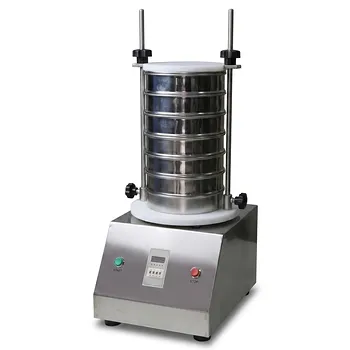
Laboratory Vibratory Test Sieve Shaker for Precision Particle Size Analysis and Powder Grading
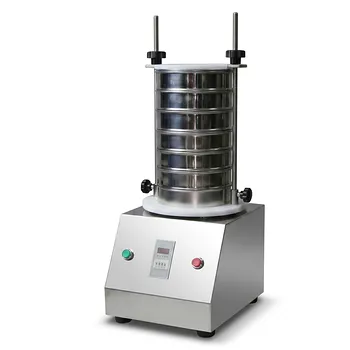
Small Laboratory Vibratory Sieve Shaker for Powder Gradation and Particle Size Analysis
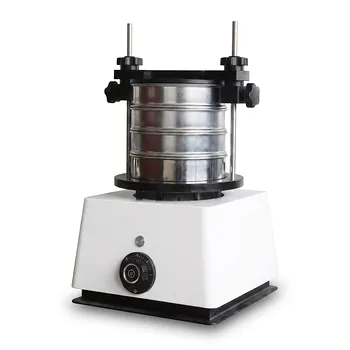
Small Laboratory Vibrating Sieve Shaker for Precise Particle Size Analysis
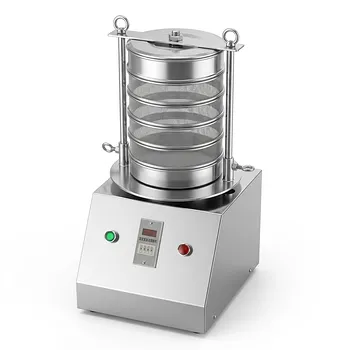
Stainless Steel Laboratory Vibratory Test Sieve Shaker
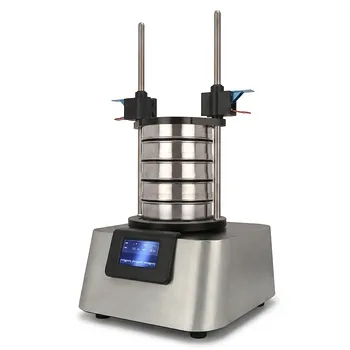
Vibratory Sieve Shaker Electromagnetic 3D Motion Powder Particle Size Analyzer for Dry and Wet Sieving
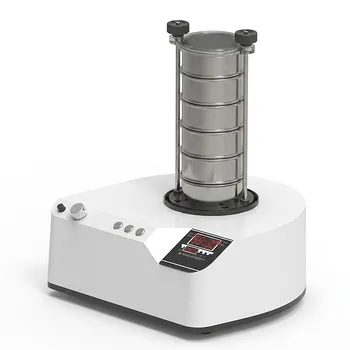
三维电磁微量振动筛分仪
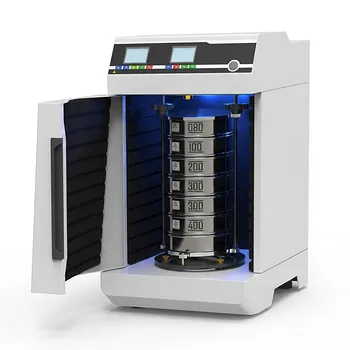
Laboratory Dry and Wet Three Dimensional Vibratory Sieve Shaker for Particle Analysis
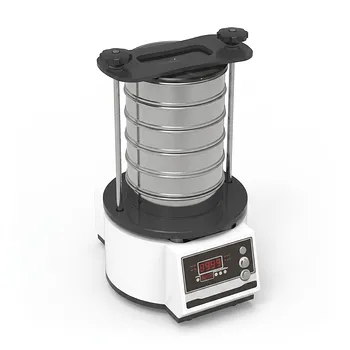
Tapping Oscillating Sieve Shaker for Dry and Wet Particle Size Analysis
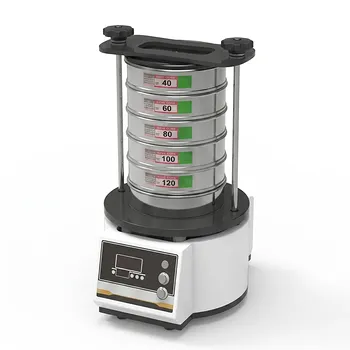
Dry Three Dimensional Vibratory Sieve Shaker
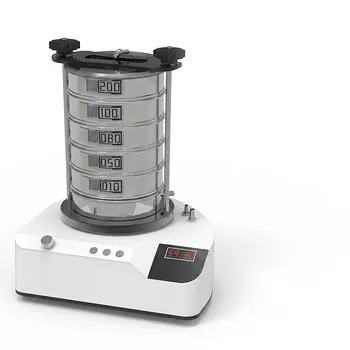
Heavy Duty Dry Three Dimensional Vibratory Sieve Shaker for Particle Separation
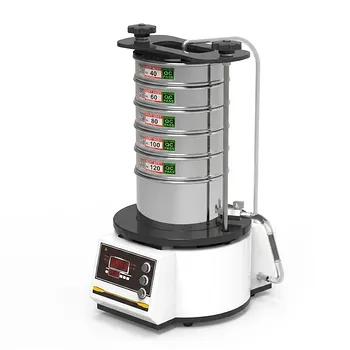
High Frequency Wet Three-Dimensional Vibrating Sieve Shaker for Dry and Wet Particle Size Analysis
Laboratory Air Jet Sieving Machine for Fine Powder Particle Size Analysis and Deagglomeration
Three Dimensional Rotary Vibrating Sieve