What is the function of laboratory vibratory sieve shakers and standard test sieves in magnetite grinding kinetics research?
Updated 3 months ago
Laboratory vibratory sieve shakers and standard test sieves provide the precise physical classification required to quantify magnetite breakage behavior. By segregating magnetite powder into narrow-range particle size fractions—typically between 0.600 mm and 0.106 mm—these tools enable researchers to calculate specific breakage rate functions and cumulative breakage distribution functions. This data is the fundamental requirement for constructing Population Balance Models (PBM), which predict how ore will respond to industrial grinding over time.
Core Takeaway: In magnetite research, sieve shakers transform a bulk sample into discrete data points. This allows for the mathematical modeling of grinding kinetics, ensuring that the energy spent on crushing translates directly into the optimal mineral liberation needed for efficient magnetic separation.
Precise Classification for Kinetic Modeling
Enabling the Population Balance Model (PBM)
The primary role of a vibratory sieve shaker is to isolate mono-size grain fractions. This isolation is a prerequisite for the Austin kinetic method, where researchers measure the specific breakage rate ($S_i$) for each size class independently.
Without this granular classification, it is impossible to determine how quickly a specific particle size reduces or how it populates smaller size fractions. This data allows for the creation of mathematical models that simulate real-world grinding circuits.
Quantifying Breakage and Distribution Functions
By weighing the material retained on each sieve after a set grinding interval, technicians determine the breakage rate function. This reveals the probability of a particle being broken during a specific period.
Simultaneously, sieving defines the cumulative breakage distribution function, which describes the suite of smaller particles produced from the initial parent size. These two metrics are the "DNA" of grinding kinetics research.
Evaluating Grinding Efficiency and Liberation
Determining Particle Size Distribution (PSD)
Sieve shakers provide the foundational data needed to calculate the Geometric Mean Diameter (GMD) and Geometric Standard Deviation (GSD). These quantitative values allow researchers to evaluate the uniformity and intensity of the grinding process.
A tight PSD indicates a controlled process, whereas a wide distribution might suggest inefficient energy use or over-grinding. Accurate PSD mapping is essential for plotting the relationship between grinding time and particle size.
Optimizing Mineral Liberation
In magnetite processing, the ultimate goal of grinding is mineral liberation—separating the valuable magnetite from non-magnetic gangue. Sieving helps determine the optimal grinding fineness required for this separation.
If the ore is not ground fine enough, the gangue remains attached; if over-ground, energy is wasted and downstream flotation or magnetic separation becomes less efficient. Sieving identifies the "sweet spot," such as a 65 percent passing rate through a 75μm sieve.
Understanding the Trade-offs and Limitations
Dry vs. Wet Sieving Dynamics
While vibratory shakers are highly efficient, researchers must choose between dry and wet sieving. Dry sieving is faster and easier for coarser materials but can lead to "blinding" (clogging) of the mesh when dealing with very fine magnetite or high moisture content.
Mechanical Wear and Calibration
The accuracy of kinetic data depends entirely on the integrity of the standard test sieves. Over time, the abrasive nature of magnetite can wear down wire apertures, leading to inaccurate size classification.
Material Density Challenges
Magnetite is significantly denser than many other minerals. This requires careful adjustment of the vibration amplitude and duration on the shaker to ensure particles have enough energy to pass through the mesh without causing excessive "bounce" that bypasses open apertures.
How to Apply This to Your Research
Making the Right Choice for Your Goal
To maximize the value of your grinding kinetics study, tailor your sieving approach to your specific research objective:
- If your primary focus is mathematical modeling (PBM): Prioritize narrow-range sieve intervals (e.g., 0.600 mm to 0.106 mm) to isolate the behavior of specific grain fractions.
- If your primary focus is industrial throughput optimization: Use a wider range of sieves (up to 5600 micrometers) to quickly map the overall Particle Size Distribution and identify bottlenecks in the grinding circuit.
- If your primary focus is downstream separation efficiency: Focus on the "fines" end of the spectrum (e.g., 75μm to 45μm) to ensure the target mineral liberation size is consistently achieved.
Precise physical classification is the bridge that connects raw mechanical grinding to the predictable, mathematical world of mineral processing kinetics.
Summary Table:
| Key Function | Role in Research | Impact on Outcome |
|---|---|---|
| Particle Classification | Isolates mono-size grain fractions | Enables Austin kinetic method & PBM modeling |
| Breakage Quantification | Determines specific breakage rate functions | Reveals probability of particle reduction |
| PSD Mapping | Calculates GMD and GSD values | Evaluates grinding uniformity & energy use |
| Liberation Optimization | Identifies the "sweet spot" for fineness | Enhances separation efficiency & reduces waste |
Elevate Your Mineral Processing Research with Precision Equipment
Accurate grinding kinetics data depends on high-performance laboratory tools. At [Company Name], we provide complete laboratory sample preparation solutions for material science, specializing in advanced powder processing and compaction equipment.
Whether you are conducting magnetite research or developing new alloys, our extensive product line ensures precision at every step:
- Size Reduction: Heavy-duty jaw/roll crushers and high-efficiency mills (planetary ball, jet, sand/bead, disc, rotor).
- Classification: Precision vibratory and air-jet sieve shakers with a full range of standard test sieves.
- Sample Preparation: Liquid nitrogen cryogenic grinders and specialized powder/defoaming mixers.
- Compaction: A full spectrum of hydraulic presses, including Cold/Warm Isostatic Presses (CIP/WIP), standard lab presses, and vacuum hot presses.
Ready to optimize your lab’s efficiency and data accuracy? Contact our technical experts today to find the perfect solution for your specific material processing needs.
References
- Chengfang Yuan, Jingkun Tian. Ceramic Grinding Kinetics of Fine Magnetite Ores in the Batch Ball Mill. DOI: 10.3390/min13091188
Mentioned Products
- Vibratory Sieve Shaker Electromagnetic 3D Motion Powder Particle Size Analyzer for Dry and Wet Sieving
- Laboratory Dry and Wet Three Dimensional Vibratory Sieve Shaker for Particle Analysis
- Dry Three Dimensional Vibratory Sieve Shaker
- Stainless Steel Laboratory Vibratory Test Sieve Shaker
- Heavy Duty Dry Three Dimensional Vibratory Sieve Shaker for Particle Separation
People Also Ask
- How does a vibratory sieve shaker contribute to optimizing the performance of activated carbon? Enhance Adsorption Precision
- Why is a laboratory vibratory sieve shaker necessary for processing magnesium-based borate precursor powders? Boost Activity
- Why use a vibratory sieve shaker to verify coarse aggregate grading in rubberized concrete? Ensure Structural Integrity
- What function do vibratory sieve shakers and standard test sieves serve in the preparation of adsorbents? Key Guide
- What role does a vibratory sieve shaker play in the particle size analysis of ground corn products? Enhance QC Precision

Tech Team · PowderPreparation
Last updated on Jun 03, 2026
Related Products
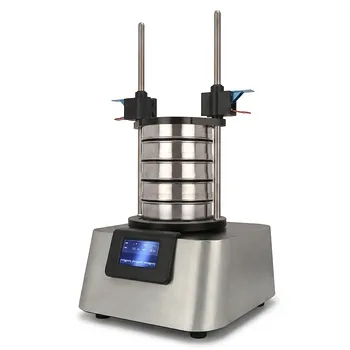
Vibratory Sieve Shaker Electromagnetic 3D Motion Powder Particle Size Analyzer for Dry and Wet Sieving
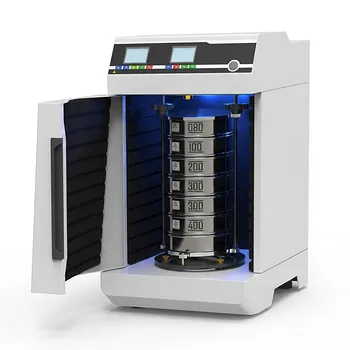
Laboratory Dry and Wet Three Dimensional Vibratory Sieve Shaker for Particle Analysis
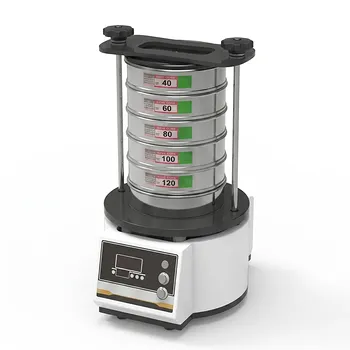
Dry Three Dimensional Vibratory Sieve Shaker
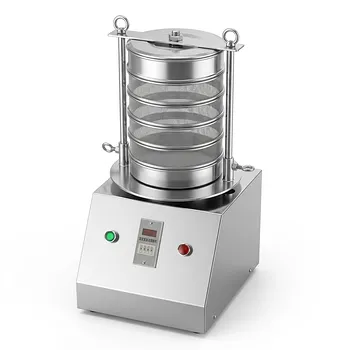
Stainless Steel Laboratory Vibratory Test Sieve Shaker
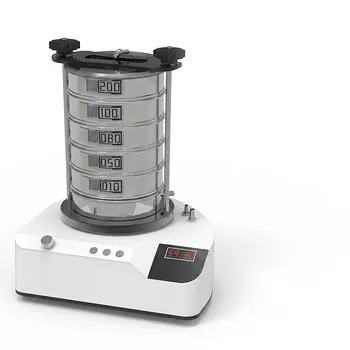
Heavy Duty Dry Three Dimensional Vibratory Sieve Shaker for Particle Separation
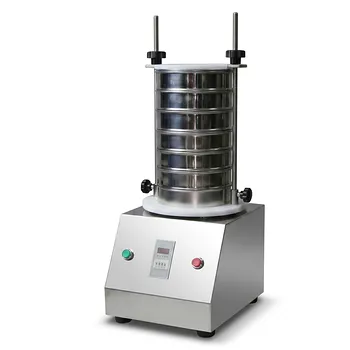
Small Laboratory Vibratory Sieve Shaker for Powder Gradation and Particle Size Analysis
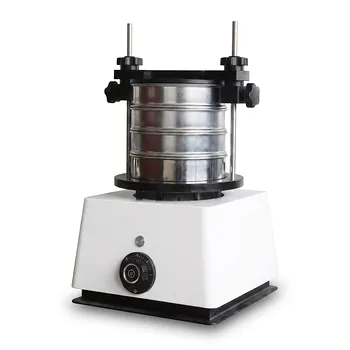
Small Laboratory Vibrating Sieve Shaker for Precise Particle Size Analysis
High Frequency Wet Three-Dimensional Vibrating Sieve Shaker for Dry and Wet Particle Size Analysis
High Frequency Cabinet Type Three-Dimensional Rotary Vibrating Sieve Shaker for Dry Sieving and Particle Classification
Laboratory Vibratory Test Sieve Shaker for Precision Particle Size Analysis and Powder Grading
三维电磁微量振动筛分仪
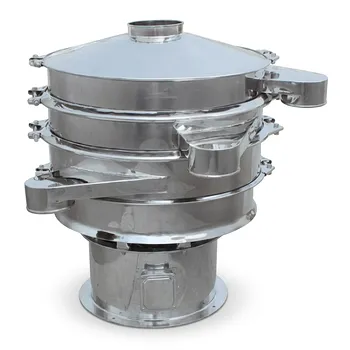
Stainless Steel Rotary Vibrating Sieve High Precision Circular Vibratory Separator Industrial Powder Grading Machine Multi Layer Sifting Equipment
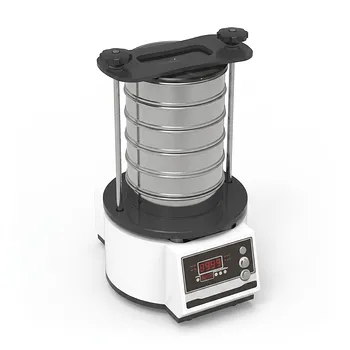
Tapping Oscillating Sieve Shaker for Dry and Wet Particle Size Analysis
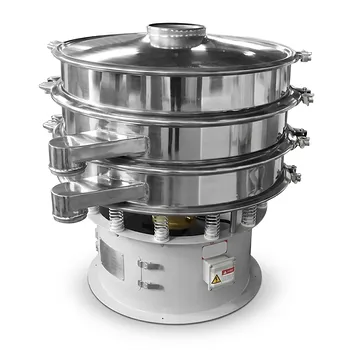
Three Dimensional Rotary Vibrating Sieve
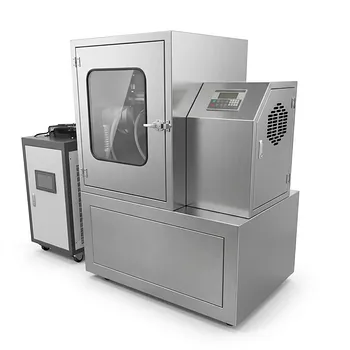
Vibratory Superfine Grinder for Ultra Fine Laboratory Powder Milling
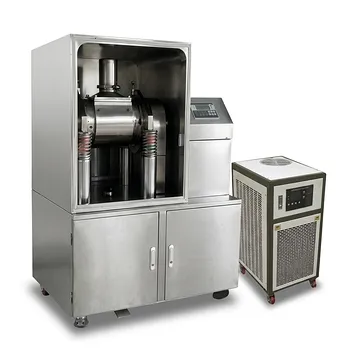
Small Vibrating Ultrafine Grinder for Traditional Chinese Medicine
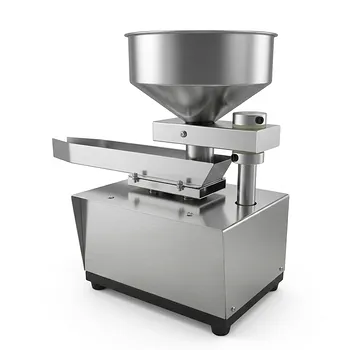
Automatic Vibrating Powder Feeder for Laboratory Material Processing Precision Vibratory Hopper Feeder for Granular and Powder Material Handling Industrial Grade Vibrating Tray Feeder for Consistent Material Sample Preparation