How do vibratory sieve shakers and square-hole sieves assist in aggregate analysis? Optimize Your Concrete Mix Design
Updated 3 months ago
Vibratory sieve shakers and square-hole sieves are the primary tools used to mechanically separate and classify concrete aggregates by size. By applying consistent mechanical vibration to a stacked column of sieves with decreasing aperture sizes, these tools allow engineers to determine the particle size distribution (grading) of crushed stone and sand. This data is essential for calculating the fineness modulus and creating grading curves, which ensure the aggregate forms a dense skeletal structure within the concrete.
Core Takeaway: The combination of vibratory shakers and standardized sieves transforms raw bulk material into quantifiable data. This process is the foundation for optimizing packing density, which directly reduces cement consumption and maximizes the mechanical strength of the final concrete composite.
The Mechanics of Particle Classification
Precise Separation through Mechanical Vibration
Vibratory sieve shakers use controlled, high-frequency movements to ensure that every aggregate particle has multiple opportunities to pass through the square-hole mesh. This mechanical action prevents the "blinding" or clogging of the sieve openings, which is common when dealing with fine materials like river sand.
The Stacked Sieve Hierarchy
Standard test sieves are arranged in a vertical stack, with the largest apertures at the top and the smallest at the bottom. As the shaker operates, the material is sorted into discrete size fractions, allowing for an accurate measurement of the cumulative residue on each layer.
Quantifying Aggregate Quality
Generating Grading Curves and Modulus
The data gathered from the sieving process is used to plot grading curves and calculate the fineness modulus. These mathematical representations help engineers determine if the aggregate falls within acceptable "grading zones" required for high-quality concrete.
Calculating Coefficients of Uniformity and Curvature
Beyond simple sizing, this analysis allows for the calculation of the uniformity coefficient ($C_u$) and the curvature coefficient ($C_c$). These metrics provide a deeper understanding of the aggregate’s distribution, indicating whether the material is well-graded or gap-graded.
Optimizing Concrete Performance
Maximizing Packing Density
By analyzing the particle size distribution, researchers can optimize the mix proportions so that smaller particles effectively fill the voids between larger ones. This maximal packing density reduces the overall porosity of the fresh concrete, leading to a more durable hardened material.
Reducing Cement Paste Requirements
A well-graded aggregate skeletal structure requires less cement paste to coat the particles and fill the remaining gaps. Because cement is the most expensive and carbon-intensive component of concrete, using sieve analysis to optimize grading provides significant economic and environmental benefits.
Understanding the Trade-offs
Equipment Calibration and Vibration Intensity
If the vibration frequency is too low, the material will not be adequately separated; if it is too high, fragile aggregates may degrade during the test. Finding the balance is critical to ensure the sample remains representative of the bulk material.
Limitations of Square-Hole Geometry
While square-hole sieves are the industry standard, they primarily measure the intermediate dimension of a particle. Flaky or elongated particles may pass through a mesh size that does not accurately reflect their true volume, potentially skewing the grading curve if the aggregate shape is highly irregular.
How to Apply This to Your Project
Making the Right Choice for Your Goal
To get the most out of your particle size analysis, align your methodology with your primary project objective:
- If your primary focus is maximizing structural strength: Use the sieve data to follow the Dreux-Gorisse mix design method, ensuring a dense skeletal structure that minimizes internal voids.
- If your primary focus is cost reduction: Focus on optimizing the fineness modulus to reduce the volume of cement paste required without compromising the workability of the mix.
- If your primary focus is regulatory compliance: Ensure your sieve stack and shaker settings align strictly with technical standards such as DIN 4187-8 or equivalent regional benchmarks.
Precise particle size analysis is the fundamental link between raw material selection and the predictable performance of high-strength, durable concrete.
Summary Table:
| Component | Primary Function | Key Output Metric | Impact on Final Concrete |
|---|---|---|---|
| Vibratory Shaker | Mechanical separation & anti-blinding | Consistent particle distribution | Improved workability & density |
| Square-Hole Sieves | Size classification & grading | Fineness Modulus (FM) | Optimized skeletal structure |
| Grading Curves | Visualizing distribution zones | $C_u$ (Uniformity) & $C_c$ (Curvature) | Reduced porosity & voids |
| Sieve Analysis Data | Mix design optimization | Cement-to-aggregate ratio | Lower costs & higher strength |
Optimize Your Material Research with Precision Equipment
Elevate your laboratory testing and material characterization with [Brand Name]. We provide complete laboratory sample preparation solutions, specializing in high-performance powder processing and compaction equipment for material science.
Our extensive product line is designed to ensure accuracy and repeatability in your workflows:
- Sieving & Classification: High-precision vibratory and air-jet sieve shakers with a comprehensive range of standardized test sieves and meshes.
- Size Reduction: Jaw and roll crushers, liquid nitrogen cryogenic grinders, and various mills (planetary ball, jet, sand/bead, disc, rotor).
- Mixing & Homogenization: Advanced powder mixers and specialized defoaming mixers.
- Compaction & Forming: A full spectrum of hydraulic presses, including Cold/Warm Isostatic Presses (CIP/WIP), XRF pellet presses, and vacuum hot presses.
Whether you are refining concrete aggregate grading or developing advanced ceramics, our equipment delivers the durability and precision you require. Contact our technical experts today to discuss your specific application and find the perfect solution for your laboratory!
References
- J. I Enem, D. C Ugwuanyi. Effect of Plantain Leaf Ash-Saw Dust Ash Composite on the Compressive Strength of Concrete under Prolonged Curing. DOI: 10.36347/sjet.2022.v10i09.005
Mentioned Products
- Vibratory Sieve Shaker Electromagnetic 3D Motion Powder Particle Size Analyzer for Dry and Wet Sieving
- Laboratory Dry and Wet Three Dimensional Vibratory Sieve Shaker for Particle Analysis
- Dry Three Dimensional Vibratory Sieve Shaker
- Stainless Steel Laboratory Vibratory Test Sieve Shaker
- Heavy Duty Dry Three Dimensional Vibratory Sieve Shaker for Particle Separation
People Also Ask
- How does a vibratory sieve shaker contribute to optimizing the performance of activated carbon? Enhance Adsorption Precision
- Why is a laboratory vibratory sieve shaker necessary for processing magnesium-based borate precursor powders? Boost Activity
- Why use a vibratory sieve shaker to verify coarse aggregate grading in rubberized concrete? Ensure Structural Integrity
- What function do vibratory sieve shakers and standard test sieves serve in the preparation of adsorbents? Key Guide
- What role does a vibratory sieve shaker play in the particle size analysis of ground corn products? Enhance QC Precision

Tech Team · PowderPreparation
Last updated on Jun 03, 2026
Related Products
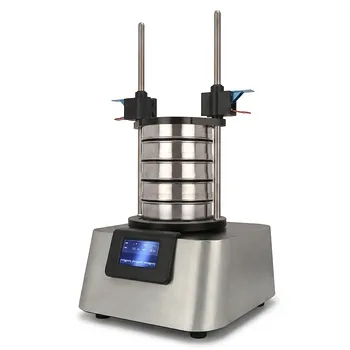
Vibratory Sieve Shaker Electromagnetic 3D Motion Powder Particle Size Analyzer for Dry and Wet Sieving
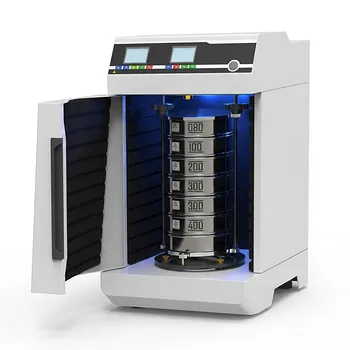
Laboratory Dry and Wet Three Dimensional Vibratory Sieve Shaker for Particle Analysis
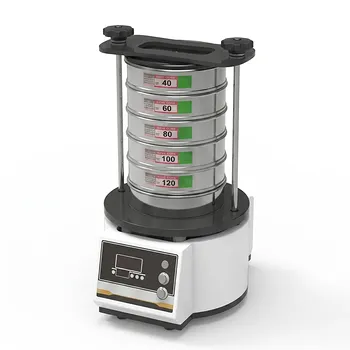
Dry Three Dimensional Vibratory Sieve Shaker
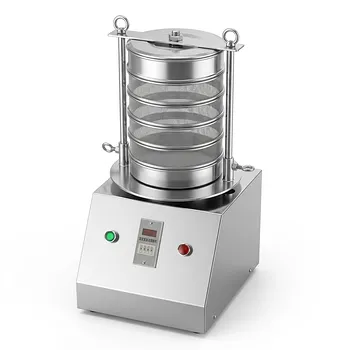
Stainless Steel Laboratory Vibratory Test Sieve Shaker
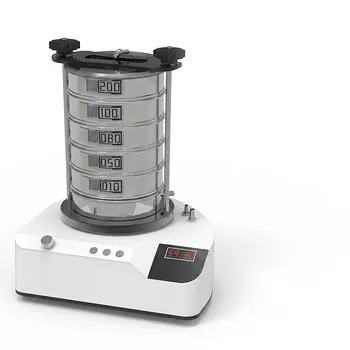
Heavy Duty Dry Three Dimensional Vibratory Sieve Shaker for Particle Separation
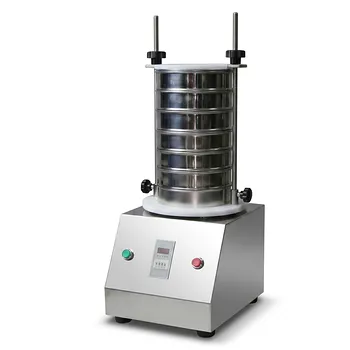
Small Laboratory Vibratory Sieve Shaker for Powder Gradation and Particle Size Analysis
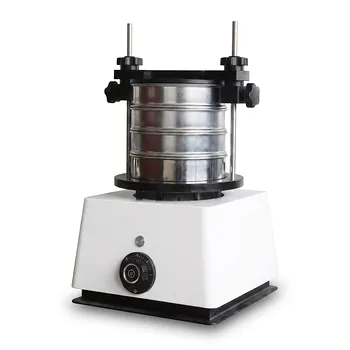
Small Laboratory Vibrating Sieve Shaker for Precise Particle Size Analysis
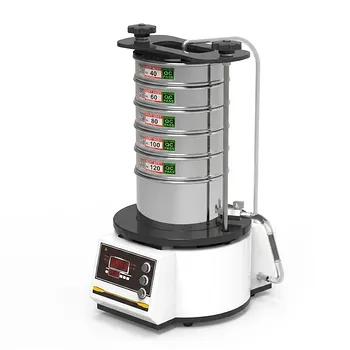
High Frequency Wet Three-Dimensional Vibrating Sieve Shaker for Dry and Wet Particle Size Analysis
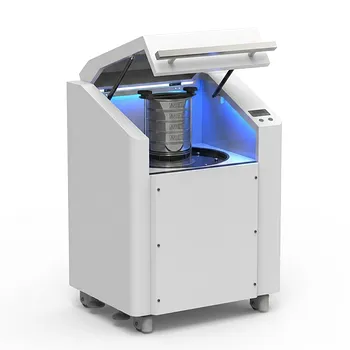
High Frequency Cabinet Type Three-Dimensional Rotary Vibrating Sieve Shaker for Dry Sieving and Particle Classification
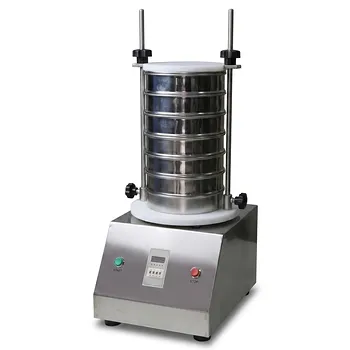
Laboratory Vibratory Test Sieve Shaker for Precision Particle Size Analysis and Powder Grading
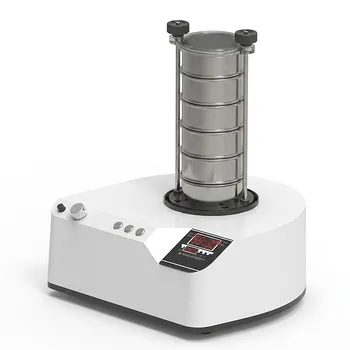
三维电磁微量振动筛分仪
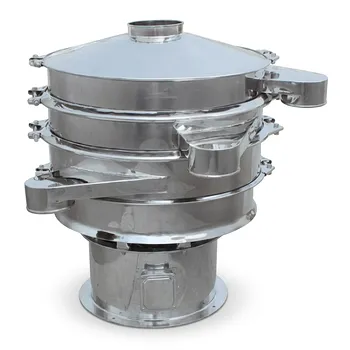
Stainless Steel Rotary Vibrating Sieve High Precision Circular Vibratory Separator Industrial Powder Grading Machine Multi Layer Sifting Equipment
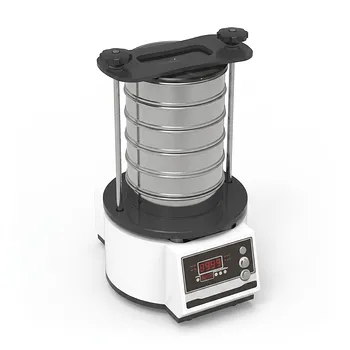
Tapping Oscillating Sieve Shaker for Dry and Wet Particle Size Analysis
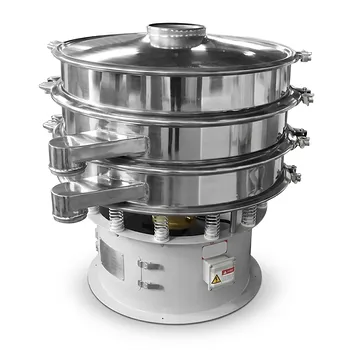
Three Dimensional Rotary Vibrating Sieve
Vibratory Superfine Grinder for Ultra Fine Laboratory Powder Milling
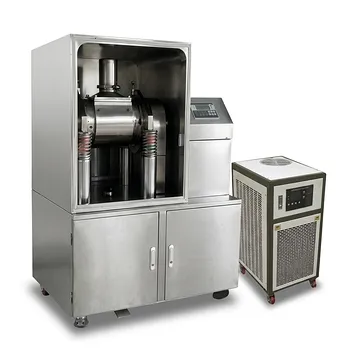
Small Vibrating Ultrafine Grinder for Traditional Chinese Medicine
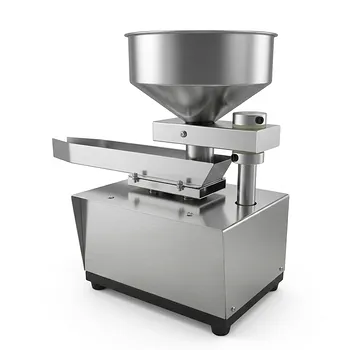
Automatic Vibrating Powder Feeder for Laboratory Material Processing Precision Vibratory Hopper Feeder for Granular and Powder Material Handling Industrial Grade Vibrating Tray Feeder for Consistent Material Sample Preparation