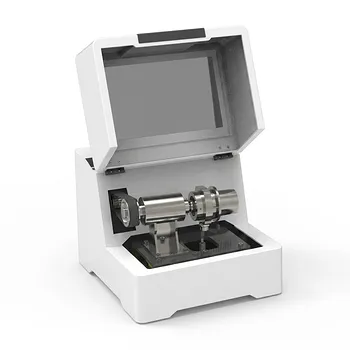
What is the function of high-energy planetary ball milling in Fe:SrTiO3 preparation? Key to Atomic-Level Homogeneity
Updated 3 months ago
High-energy planetary ball milling is the critical process for achieving atomic-level homogeneity and optimal reactivity in iron-doped strontium titanate (Fe:SrTiO3) ceramic target synthesis. This technique utilizes powerful impact and shear forces to refine raw material powders and ensure the iron dopant is uniformly integrated into the strontium titanate matrix. Without this step, the final ceramic would lack the phase purity and structural consistency required for high-performance applications.
High-energy planetary ball milling transforms raw powders into an ultra-fine, homogenized mixture that facilitates complete solid-state reactions. By maximizing the specific surface area and ensuring uniform component distribution, this process directly determines the density and phase purity of the final ceramic target.
Achieving Microscopic Homogeneity and Uniform Doping
Atomic-Scale Distribution of Iron
The primary function of the ball mill is to ensure that iron-doping elements are uniformly distributed within the strontium titanate (SrTiO3) matrix. This high-energy mechanical stirring prevents "clumping" of dopants, ensuring that the electrical and magnetic properties remain consistent throughout the entire volume of the ceramic target.
Preventing Component Segregation
High-speed rotation generates intense friction and impact, which forces multiple cations—such as Sr, Ti, and Fe—into a highly blended state. This atomic-level mixing is essential to prevent component segregation during the subsequent high-temperature stages, ensuring a stable solid solution.
Refining Particle Size
The process refines conventional ceramic particles down to the micron or nanometer scale. By reducing the grain size, the ball mill creates a powder with an ideal Particle Size Distribution (PSD), which is the fundamental physical prerequisite for high-quality material formation.
Enhancing Material Reactivity and Phase Purity
Increasing Specific Surface Area
As particles are crushed and refined, their specific surface area increases significantly. This increased surface area exposes more active sites on the powder particles, which drastically enhances the chemical reactivity of the mixture.
Facilitating Solid-State Reactions
The high reactivity of the milled powder ensures the completeness of the solid-state reaction during calcination. This allows for the formation of phase-pure SrTiO3 at lower temperatures or shorter durations, preventing the formation of unwanted secondary phases or intermediate compounds like aluminum silicates or unreacted oxides.
Mechanical Activation
Beyond simple mixing, the high-frequency collisions provide mechanical energy to the powder system. This energy can lower the activation barrier for chemical reactions, helping the iron atoms integrate more easily into the perovskite lattice structure.
Impact on Sintering and Final Density
Achieving High Densification
The uniformity achieved through ball milling is the primary driver of densification during the final sintering process. Well-mixed, fine powders pack more efficiently and react more uniformly, leading to ceramic targets with minimal porosity and high theoretical density.
Microstructural Uniformity
By ensuring that the raw materials—such as SrCO3, TiO2, and iron oxides—are homogenized at the microscopic scale, the milling process determines the final microstructural uniformity. This results in a target with consistent grain sizes, which is vital for stable performance during thin-film deposition or sensing applications.
Understanding the Trade-offs and Limitations
Risk of Milling Media Contamination
While high energy is required for refinement, it increases the wear on the grinding balls and jars. This can introduce trace impurities (such as alumina or zirconia from the milling media) into the Fe:SrTiO3 powder, potentially altering its electronic properties.
Heat Generation and Phase Changes
The intense friction of planetary milling generates significant heat within the milling vial. If not managed through intermittent milling cycles, this heat can cause premature phase transitions or unwanted oxidation of the iron dopant before the formal calcination step.
Balancing Milling Time
Extended milling times generally improve homogeneity but eventually reach a point of diminishing returns. Excessive milling can lead to powder agglomeration, where fine particles stick together due to Van der Waals forces, actually making the subsequent sintering process more difficult.
How to Apply This to Your Project
Recommendations for Material Synthesis
Depending on your specific goals for the Fe:SrTiO3 target, your milling strategy should shift:
- If your primary focus is Phase Purity: Prioritize longer milling times at moderate speeds to ensure the stoichiometric mixture of SrCO3 and TiO2 is perfectly homogenized before calcination.
- If your primary focus is High Target Density: Focus on achieving a sub-micron particle size distribution by using high-density milling media (like YSZ) to maximize impact forces.
- If your primary focus is Dopant Precision: Utilize wet milling with an anhydrous solvent to prevent the agglomeration of iron oxide and ensure a truly atomic-level distribution within the matrix.
The success of a ceramic target is determined long before the sintering furnace; it is rooted in the precision and energy of the initial ball milling process.
Summary Table:
| Key Function | Physical/Chemical Impact | Benefit to Final Ceramic |
|---|---|---|
| Homogenization | Atomic-scale distribution of iron dopants | Consistent electrical and magnetic properties |
| Particle Refinement | Reduction to micron or nanometer scale | Optimized Particle Size Distribution (PSD) |
| Mechanical Activation | Increased specific surface area | Enhanced reactivity and lower reaction barriers |
| Densification | Efficient powder packing | High theoretical density with minimal porosity |
Elevate Your Material Synthesis with Precision Equipment
Achieving the perfect Fe:SrTiO3 ceramic target requires more than just raw materials—it requires the right processing energy. We provide complete laboratory sample preparation solutions for material science, specializing in advanced powder processing and compaction equipment.
Whether you need high-energy planetary ball mills, jet mills, or rotor mills to achieve atomic-level homogeneity, or require a full spectrum of hydraulic presses—including Cold/Warm Isostatic Presses (CIP/WIP) and vacuum hot presses—to ensure maximum densification, we have the tools for your success.
Ready to optimize your powder processing workflow? Contact our technical experts today to discuss how our specialized crushers, mills, and presses can enhance your research and production efficiency.
References
- Astrid Marchewka, Rainer Waser. Determination of the electrostatic potential distribution in Pt/Fe:SrTiO3/Nb:SrTiO3 thin-film structures by electron holography. DOI: 10.1038/srep06975
Mentioned Products
- High Energy Planetary Ball Mill for Nano Scale Grinding and Mechanical Alloying
- High Energy Laboratory Planetary Ball Mill for Nano Grinding and Colloidal Mixing of Hard and Brittle Materials
- High Energy Planetary Ball Mill for Nano Scale Grinding and Colloidal Mixing in Material Science Research
- High Energy Omnidirectional Planetary Ball Mill 16L
- High Energy Laboratory Planetary Ball Mill for Nano Grinding and Material Science Sample Preparation
People Also Ask
- Why is a high-energy planetary ball mill used for nano-milling As4Se3? Achieve Expert Structural Transformation
- What role do high-energy planetary ball mills play in FDM composite filament preparation? Optimize Material Performance
- What is the role of a high-energy planetary ball mill in the exfoliation of modified WSe2? Achieve Nano-Precision
- What is the function of a planetary ball mill in glass-ceramic sintering? Optimize Reactivity and Uniformity
- What is the role of a high-energy planetary ball mill in the preparation of high-performance nano-ceramics? Key Guide

Tech Team · PowderPreparation
Last updated on Jun 03, 2026
Related Products
High Energy Planetary Ball Mill for Nano Scale Grinding and Mechanical Alloying
High Energy Laboratory Planetary Ball Mill for Nano Grinding and Colloidal Mixing of Hard and Brittle Materials
High Energy Planetary Ball Mill for Nano Scale Grinding and Colloidal Mixing in Material Science Research
High Energy Omnidirectional Planetary Ball Mill 16L
High Energy Laboratory Planetary Ball Mill for Nano Grinding and Material Science Sample Preparation
High Energy Omnidirectional Planetary Ball Mill 20L
Vertical Square Planetary Ball Mill for Laboratory Sample Preparation and Nanoscale Grinding

8L Planetary Ball Mill for Laboratory Grinding and Sample Preparation
Miniature Planetary Ball Mill with Vacuum Grinding and High Efficiency for Laboratory Sample Preparation
Vertical Production Planetary Ball Mill for High Throughput Powder Processing
Planetary Ball Mill 12L
Dual Station Planetary Ball Mill 24L
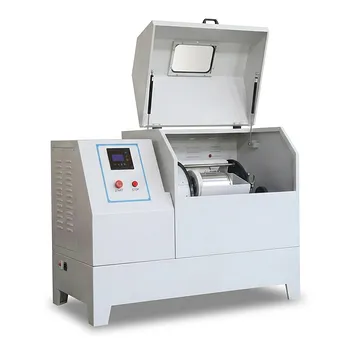
Heavy Duty Horizontal Planetary Ball Mill for Efficient Industrial Grinding and Sample Preparation
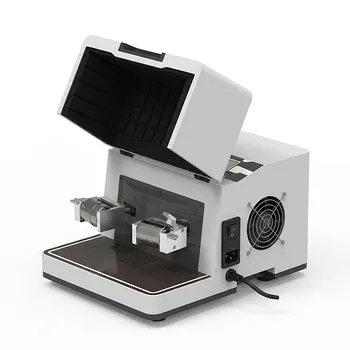
High Energy Hybrid Vibratory Ball Mill for Grinding Mixing and Cell Disruption
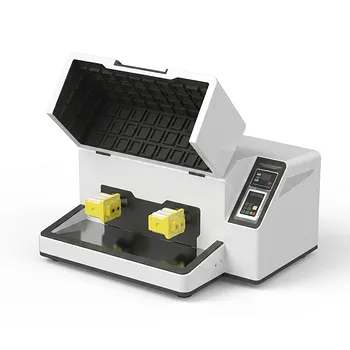
Multi-Platform Nanoscale High-Energy Vibratory Ball Mill
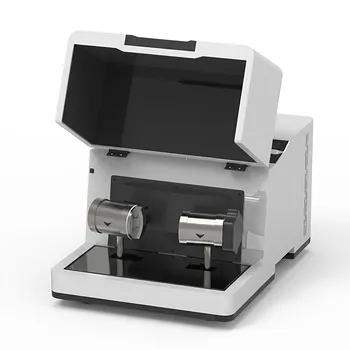
Ultra-Low Temperature Cryogenic High-Energy Vibratory Ball Mill
Nanoscale High-Energy Vibratory Ball Mill for Laboratory Sample Preparation, Mechanochemistry, and Mechanical Alloying
Vertical Semi Circular Planetary Ball Mill for Laboratory Precision Grinding

Nano High Energy Vibratory Ball Mill with Heating and Temperature Control