What is the function of axial pressure provided by hot pressing equipment? Achieve High-Density Nanocrystalline Copper
Updated 5 months ago
The application of axial pressure is the critical driver for achieving full densification in nanocrystalline materials. In hot pressing, this mechanical force induces plastic yielding and particle rearrangement, allowing consolidation to occur at significantly lower temperatures and shorter durations than conventional sintering. By coupling pressure with heat, engineers can achieve near-theoretical density while successfully preserving the ultra-fine grain structure that gives nanocrystalline copper its superior properties.
Axial pressure acts as a mechanical catalyst that forces particle bonding and pore elimination through plastic deformation. This "thermo-mechanical coupling" enables the creation of high-strength bulk copper while preventing the grain growth that typically occurs during prolonged high-temperature exposure.
The Mechanics of Axial Consolidation
Inducing Plastic Deformation
Axial pressure provides the mechanical energy necessary to trigger plastic yielding within the copper particles. This force physically deforms the nanocrystalline powder, forcing individual grains into closer contact than thermal energy alone could achieve.
Accelerating Particle Rearrangement
The compressive stress forces particles to slide and rotate into a more efficient packing configuration. This physical rearrangement within the mold cavity is the first step in eliminating large gaps between particles before diffusion takes over.
Facilitating Atomic Diffusion
By maintaining constant mechanical contact between particles, axial pressure lowers the energy barrier for atomic diffusion. This allows for the formation of strong metallurgical bonds and "necks" between grains at temperatures far below the melting point of copper.
Microstructural Preservation
Reducing Thermal Exposure
One of the primary functions of axial pressure is to substitute mechanical energy for thermal energy. Because the pressure drives densification, the process requires lower temperatures, which is vital for maintaining the "nano" scale of the copper grains.
Minimizing Grain Coarsening
High temperatures naturally cause grains to grow, or "coarsen," which destroys the unique properties of nanocrystalline copper. Axial pressure allows for a shorter consolidation time, effectively "freezing" the microstructure before significant grain growth can occur.
Eliminating Internal Porosity
The continuous application of force ensures that internal pores are collapsed and filled through plastic flow. This high-density result is essential for establishing continuous paths for electrical and thermal conductivity within the final copper bulk.
Understanding the Trade-offs
Equipment Stress and Tooling Wear
Applying high axial pressure (often exceeding several hundred MPa) puts significant stress on the mold and plunger materials. This can lead to accelerated wear or deformation of the tooling, increasing the cost of production over time.
Risk of Density Gradients
Unlike isostatic pressing, axial pressure is applied from a single direction, which can sometimes result in non-uniform density. Friction between the powder and the mold walls can cause the center or bottom of a sample to be less dense than the top.
Balance of Pressure and Temperature
If the pressure is too low, the copper will not reach full density; if the temperature is too high to compensate, the nanocrystalline structure will be lost. Finding the "sweet spot" of thermo-mechanical coupling requires precise control over both variables simultaneously.
How to Apply This to Your Project
- If your primary focus is preserving the smallest possible grain size: Prioritize higher axial pressure at the lowest possible temperature to minimize thermal grain growth.
- If your primary focus is maximizing mechanical strength: Ensure the pressure is sufficient to eliminate all internal porosity, as residual pores act as failure points under load.
- If your primary focus is high electrical conductivity: Use the pressure to achieve near-theoretical density, ensuring a continuous path for electron flow without grain boundary interference.
The strategic use of axial pressure transforms a simple heating process into a high-precision consolidation technique capable of producing advanced nanocrystalline copper.
Summary Table:
| Function | Mechanism | Key Benefit |
|---|---|---|
| Plastic Yielding | Mechanical energy triggers particle deformation | Initiates bonding at lower temperatures |
| Rearrangement | Particles slide and rotate into efficient packing | Eliminates large voids before diffusion |
| Diffusion Control | Constant contact lowers energy barriers | Achieves density without grain coarsening |
| Pore Elimination | Mechanical force collapses internal porosity | Maximizes electrical & thermal conductivity |
Elevate Your Material Research with Precision Engineering
Achieving the perfect balance of pressure and temperature is vital for advanced material synthesis. At our facility, we provide complete laboratory sample preparation solutions tailored for material science. We specialize in high-performance powder processing and compaction equipment, including:
- Hydraulic Presses: A full spectrum featuring Hot Presses, Vacuum Hot Presses, and Cold/Warm Isostatic Presses (CIP/WIP) for superior densification.
- Milling & Grinding: Planetary ball mills, jet mills, and liquid nitrogen cryogenic grinders for ultra-fine powder preparation.
- Processing Tools: Crushers, sieve shakers (vibratory/air-jet), and high-efficiency powder or defoaming mixers.
Whether you are working with nanocrystalline copper or advanced ceramics, our equipment ensures near-theoretical density while preserving critical microstructures. Contact us today to discover how our specialized solutions can enhance your laboratory’s efficiency and results!
References
- Mark A. Tschopp, K. Darling. “Bulk” Nanocrystalline Metals: Review of the Current State of the Art and Future Opportunities for Copper and Copper Alloys. DOI: 10.1007/s11837-014-0978-z
Mentioned Products
- 6-Ton Small Single-Punch Tablet Press — Laboratory Powder & Granule Tableting Equipment / Tablet Forming Machine
- Enhanced 9 Punch Rotary Tablet Press for Powder Compaction
- Heating Temperature Controlled High Energy Vibratory Ball Mill
- Ordinary Type Rotary Tablet Press for Pharmaceutical Chemical Food Electronic Industries
- 5 Ton Single Punch Tablet Press Laboratory Small Batch Production
People Also Ask
- What is the function of a laboratory press in Cr-Ti alloy evaluation? Quantify Fracture Stress & Strength
- What is the function of a laboratory press in assessing the hydrophobic performance of modified vermiculite fillers?
- What is the core function of a laboratory press in the forming of ceramic filter element green bodies? Maximize Density.
- What is the function of a laboratory press in the preparation of ceramic feed rods? Master Density and Precision
- Why is vacuum sealing and flexible packaging necessary for Aluminum Titanate powders during CIP? Ensure Peak Density

Tech Team · PowderPreparation
Last updated on May 14, 2026
Related Products
6-Ton Small Single-Punch Tablet Press — Laboratory Powder & Granule Tableting Equipment / Tablet Forming Machine
Enhanced 9 Punch Rotary Tablet Press for Powder Compaction
Heating Temperature Controlled High Energy Vibratory Ball Mill
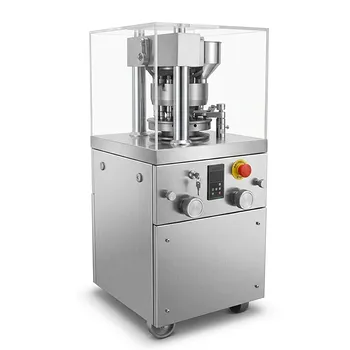
Ordinary Type Rotary Tablet Press for Pharmaceutical Chemical Food Electronic Industries
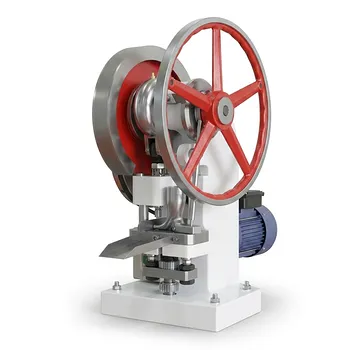
5 Ton Single Punch Tablet Press Laboratory Small Batch Production
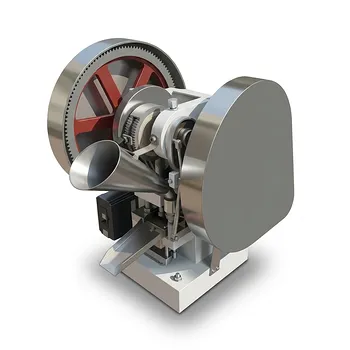
6 Ton Variable Frequency Single Punch Tablet Press
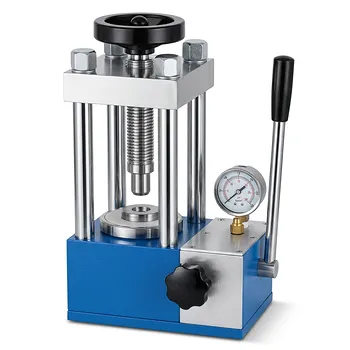
Manual Tablet Press with Dual Scale Pressure Gauge for Pharmaceutical Food Chemical Laboratory Sample Preparation
Vertical Production Planetary Ball Mill for High Throughput Powder Processing
Small High-Speed Laboratory Grinder for Powder Processing
Laboratory Sealed Hammer Blade Crusher Divider for High Hardness Sample Preparation
Water Cooled Pulse Jet Ultrafine Grinder
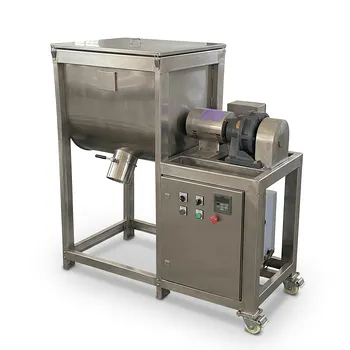
Horizontal Ribbon Mixer for Dry Powder and Slurry Blending
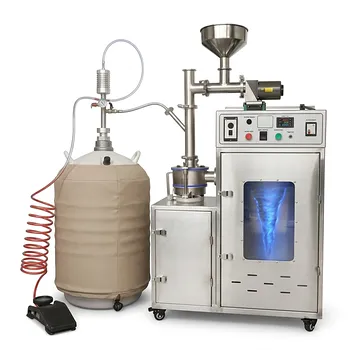
Small Liquid Nitrogen Cryogenic Grinder for Ultrafine Grinding of Heat-Sensitive Materials in Laboratories
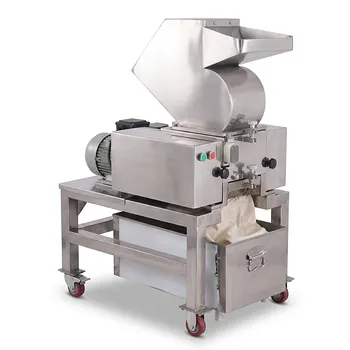
Stainless Steel Coarse Crusher for Pharmaceutical Food and Plastic Material Processing
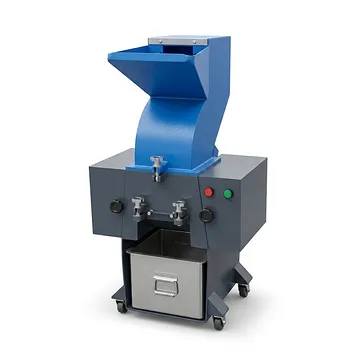
Heavy-Duty Crusher for Laboratory and Industrial Material Size Reduction
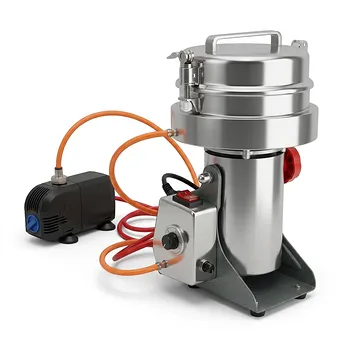
Water Cooled High Speed Grinder with Cryogenic Option for Laboratory Sample Preparation
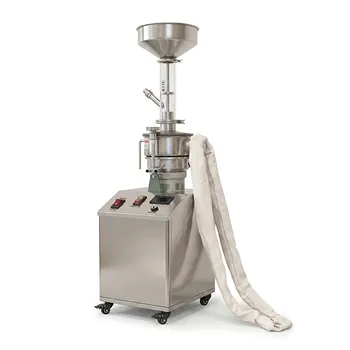
Small Liquid Nitrogen Cryogenic Grinder for Plastic and Heat-Sensitive Material Sample Preparation
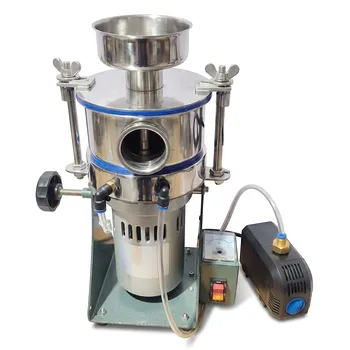
Water Cooled Airflow Ultra Fine Grinder for Low Temperature Material Processing
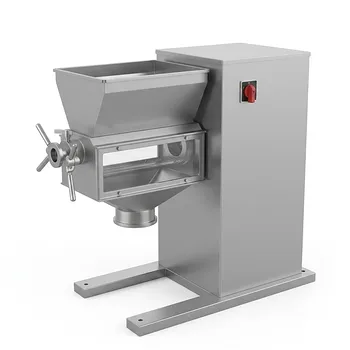
Industrial Swing Granulator for Powder Processing in Pharma Food and Chemical Industries