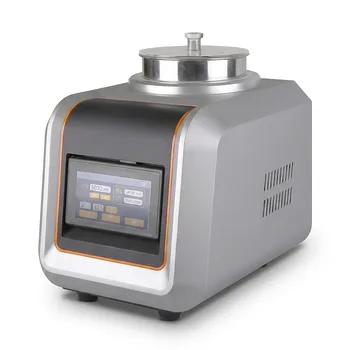
What is the function of an industrial vibratory sieve shaker? Optimize Sand Quality for Bimetallic Aluminum Casting
Updated 5 months ago
The industrial vibratory sieve shaker serves as the precision gatekeeper for molding sand quality. It performs multi-stage sieve analysis on raw sand—typically river or silica sand—to determine its Grain Fineness Number (GFN). By precisely classifying particle sizes, the equipment ensures that the molding sand achieves the specific permeability and surface finish required for high-quality bimetallic aluminum alloy castings.
The core function of a vibratory sieve shaker is to establish an ideal particle size distribution that balances gas escape with surface smoothness. This precise control is the primary defense against casting defects like blowholes, pinholes, and excessive surface roughness.
Quantifying Sand Quality Through GFN
Determining the Grain Fineness Number
The sieve shaker utilizes a stack of standard test sieves to break down sand samples into specific size fractions. By weighing the sand retained on each layer, technicians calculate the Grain Fineness Number (GFN), a critical metric for sand consistency.
Establishing the Ideal Medium Range
For aluminum alloy casting, an ideal range is often between GFN 55 and 60. This medium fineness ensures the sand is neither too coarse (which ruins the finish) nor too fine (which blocks gas flow).
Ensuring Batch Consistency
Industrial shakers allow for standardized vibration times and frequencies. This repeatability ensures that every batch of molding sand provides a uniform foundation for the casting process, regardless of the raw material source.
Impact on Casting Integrity and Surface Finish
Optimizing Gas Permeability
Bimetallic casting involves complex thermal interactions that generate significant gases. A precise grain distribution created by the sieve shaker allows these gases to escape through the mold, preventing blowholes and pinholes.
Controlling Surface Roughness
The sieve shaker removes oversized, coarse particles that would otherwise create a pitted or uneven surface on the aluminum part. By maintaining a tight particle range, the equipment ensures the dimensional accuracy of the final product.
Managing Reinforcement Particles
In advanced bimetallic composites, these shakers are also used to grade reinforcement materials like silicon carbide (SiC) or alumina. Proper grading prevents particle agglomeration, ensuring a homogeneous distribution within the aluminum matrix.
Understanding the Trade-offs
Permeability vs. Surface Detail
There is an inherent conflict between a smooth finish and high permeability. Finer sand (higher GFN) produces superior surface detail but increases the risk of gas entrapment due to reduced pore space.
Equipment Wear and Sieve Blinding
Continuous industrial use can lead to "blinding," where particles become lodged in the mesh. If sieves are not regularly cleaned or replaced, the accuracy of the GFN calculation will drift, leading to inconsistent mold quality.
Mechanical Stress on Sand Grains
Excessive vibration time can actually degrade the sand grains, breaking them into smaller sub-particles. This "artificial fining" can skew your data and lead to a mold that lacks the necessary structural stability.
Making the Right Choice for Your Process
How to Apply This to Your Project
Selecting the right sieving protocol depends heavily on the specific requirements of your bimetallic casting.
- If your primary focus is reducing gas defects: Prioritize a grain distribution that favors slightly coarser particles to maximize gas permeability.
- If your primary focus is high-precision surface detail: Utilize a tighter sieve stack to isolate finer sand fractions, ensuring a smooth interface at the mold wall.
- If your primary focus is material reinforcement: Use the shaker to strictly grade additives to a size below 50-90μm to prevent clumping in the melt.
Precise particle classification is not merely a preparation step; it is the fundamental technical requirement for predictable, defect-free bimetallic castings.
Summary Table:
| Key Parameter | Role in Casting Preparation | Benefit to Final Product |
|---|---|---|
| GFN Control | Determines Grain Fineness Number via multi-stage analysis. | Ensures batch-to-batch sand consistency. |
| Permeability | Balances grain size distribution to allow gas escape. | Prevents defects like blowholes and pinholes. |
| Surface Finish | Filters out coarse particles and contaminants. | Achieves high dimensional accuracy and smoothness. |
| Reinforcement | Grades additives like SiC or Alumina (50-90μm). | Ensures homogeneous particle distribution in the matrix. |
Elevate Your Casting Precision with Professional Sieve Analysis
Achieving the perfect Grain Fineness Number (GFN) is critical for defect-free bimetallic aluminum alloy castings. At [Company Name], we provide complete laboratory sample preparation solutions for material science, specializing in high-precision powder processing and compaction equipment.
Our extensive product line includes:
- Sieve Analysis: Vibratory and air-jet sieve shakers with a full range of standard test sieves.
- Milling & Grinding: Planetary ball mills, jet mills, and cryogenic grinders for fine material refinement.
- Compaction Solutions: A full spectrum of hydraulic presses, including Cold/Warm Isostatic Presses (CIP/WIP), vacuum hot presses, and XRF pellet presses.
Whether you are optimizing molding sand permeability or grading reinforcement particles, our equipment ensures the repeatability and accuracy your process demands. Contact our technical experts today to discuss your specific application and find the ideal solution for your laboratory or production line.
References
- Babatunde Victor Omidiji, Dare Aderibigbe Adetan. Green Sand Mould Production of Aluminum Alloy Bimetallic Castings. DOI: 10.36224/ijes.130302
Mentioned Products
- Vibratory Sieve Shaker Electromagnetic 3D Motion Powder Particle Size Analyzer for Dry and Wet Sieving
- Stainless Steel Laboratory Vibratory Test Sieve Shaker
- Heavy Duty Dry Three Dimensional Vibratory Sieve Shaker for Particle Separation
- Laboratory Dry and Wet Three Dimensional Vibratory Sieve Shaker for Particle Analysis
- Dry Three Dimensional Vibratory Sieve Shaker
People Also Ask
- How does a vibratory sieve shaker contribute to optimizing the performance of activated carbon? Enhance Adsorption Precision
- Why is a laboratory vibratory sieve shaker necessary for processing magnesium-based borate precursor powders? Boost Activity
- Why use a vibratory sieve shaker to verify coarse aggregate grading in rubberized concrete? Ensure Structural Integrity
- What function do vibratory sieve shakers and standard test sieves serve in the preparation of adsorbents? Key Guide
- What role does a vibratory sieve shaker play in the particle size analysis of ground corn products? Enhance QC Precision

Tech Team · PowderPreparation
Last updated on May 14, 2026
Related Products
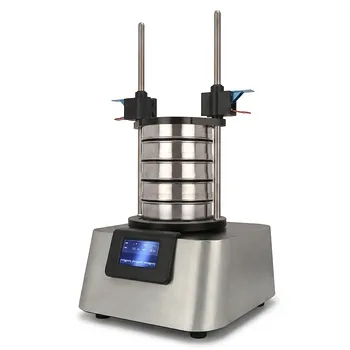
Vibratory Sieve Shaker Electromagnetic 3D Motion Powder Particle Size Analyzer for Dry and Wet Sieving
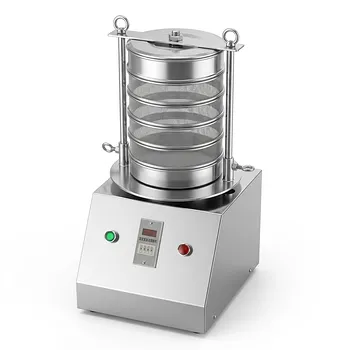
Stainless Steel Laboratory Vibratory Test Sieve Shaker
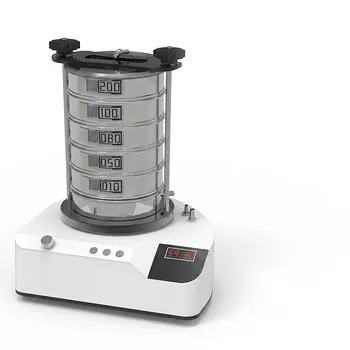
Heavy Duty Dry Three Dimensional Vibratory Sieve Shaker for Particle Separation
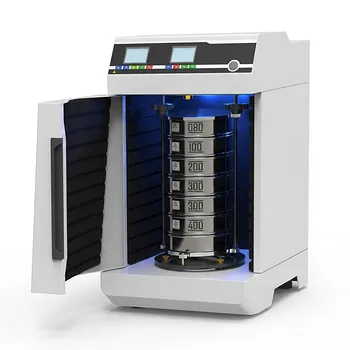
Laboratory Dry and Wet Three Dimensional Vibratory Sieve Shaker for Particle Analysis
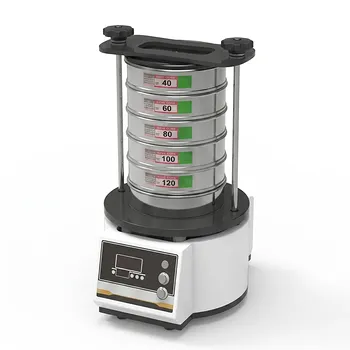
Dry Three Dimensional Vibratory Sieve Shaker
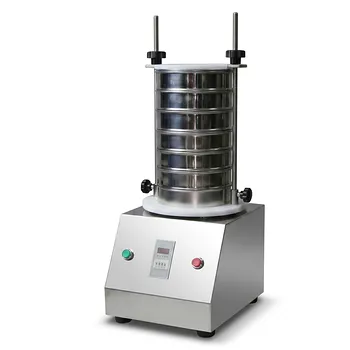
Small Laboratory Vibratory Sieve Shaker for Powder Gradation and Particle Size Analysis
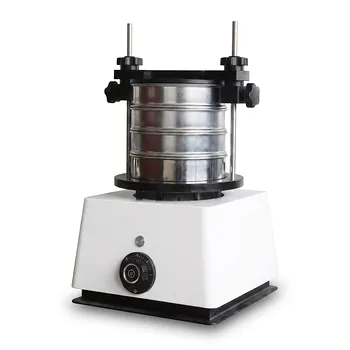
Small Laboratory Vibrating Sieve Shaker for Precise Particle Size Analysis
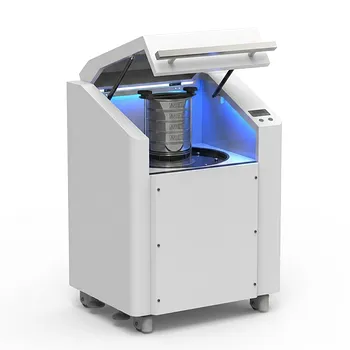
High Frequency Cabinet Type Three-Dimensional Rotary Vibrating Sieve Shaker for Dry Sieving and Particle Classification
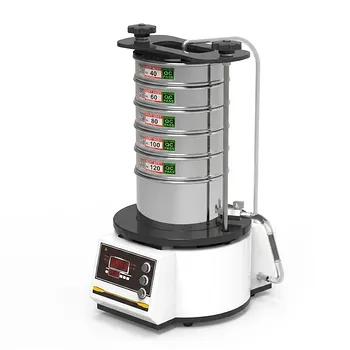
High Frequency Wet Three-Dimensional Vibrating Sieve Shaker for Dry and Wet Particle Size Analysis
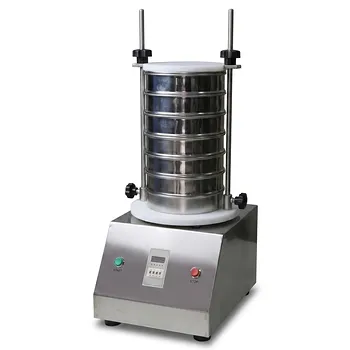
Laboratory Vibratory Test Sieve Shaker for Precision Particle Size Analysis and Powder Grading

Stainless Steel Rotary Vibrating Sieve High Precision Circular Vibratory Separator Industrial Powder Grading Machine Multi Layer Sifting Equipment
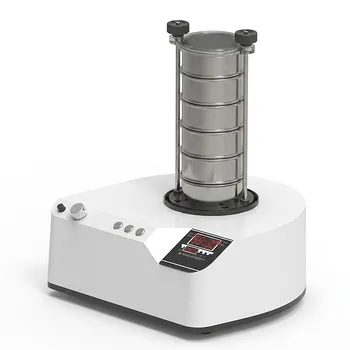
三维电磁微量振动筛分仪
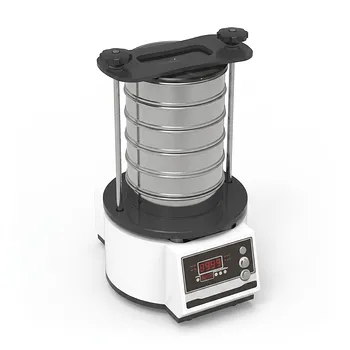
Tapping Oscillating Sieve Shaker for Dry and Wet Particle Size Analysis
Automatic Vibrating Powder Feeder for Laboratory Material Processing Precision Vibratory Hopper Feeder for Granular and Powder Material Handling Industrial Grade Vibrating Tray Feeder for Consistent Material Sample Preparation
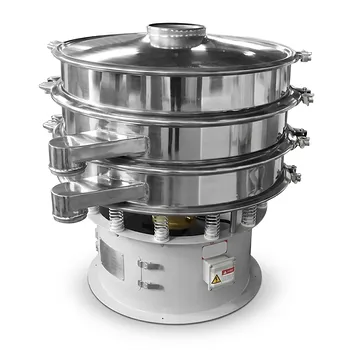
Three Dimensional Rotary Vibrating Sieve
Vibratory Superfine Grinder for Ultra Fine Laboratory Powder Milling
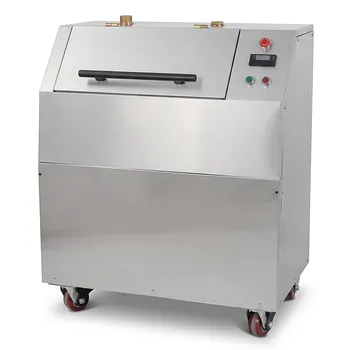
Vibratory Disc Mill for Rapid Fine Grinding and High Throughput Sample Preparation of Hard and Brittle Materials
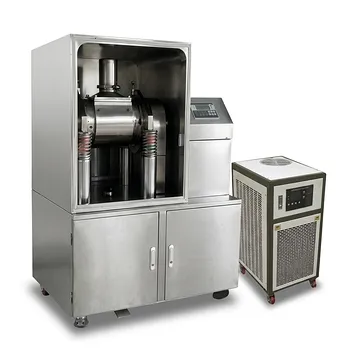
Small Vibrating Ultrafine Grinder for Traditional Chinese Medicine