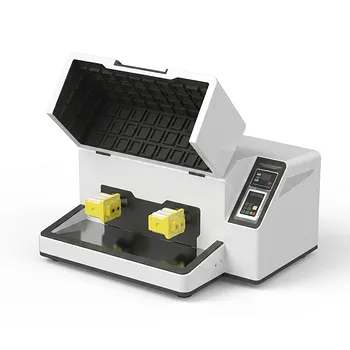
What is the function of an industrial ball mill in the preparation of composite oxide powders like CGO20-FCO?
Updated 5 months ago
The primary function of an industrial ball mill in preparing composite oxide powders is to facilitate micro-homogenization and mechanical activation. In the context of CGO20-FCO, the ball mill utilizes continuous collision and shear forces to reduce raw material particle size (typically Ce0.8Gd0.2O2-δ, Fe2O3, and Co3O4) and ensure a uniform chemical distribution. This process significantly increases the specific surface area and reactivity of the powder, providing the essential foundation for subsequent solid-state reaction sintering (SSRS).
The ball mill serves as a dual-purpose tool for mechanical refinement and chemical homogenization. By transforming coarse raw materials into high-surface-area, uniformly mixed sub-micron powders, it creates the essential precursor state required for successful solid-state reactions and high-performance ceramic synthesis.
Driving Micro-Homogenization and Component Distribution
Achieving Chemical Uniformity
The ball mill ensures that secondary phases, such as iron oxide and cobalt oxide, are deeply integrated into the ceria matrix. This uniform spatial distribution is critical because any local chemical imbalances can lead to secondary phase segregation during sintering.
Breaking Up Agglomerates
Nanoscale and micron-scale powders often form tight clusters or agglomerates that hinder uniform mixing. High-energy milling provides the mechanical force necessary to break these clusters, ensuring each particle is individually accessible for the reaction.
Facilitating Multi-Phase Integration
For composite powders like CGO20-FCO, the mill facilitates the continuous collision of disparate raw materials. This ensures that the reactive species are in direct physical contact at the microscopic level, which is a prerequisite for the formation of new phases.
Mechanical Activation and Particle Refinement
Increasing Specific Surface Area
By applying intense physical shear forces, the ball mill pulverizes raw materials into sub-micron dimensions. This reduction in particle size exponentially increases the total surface area available for atomic diffusion.
Enhancing Reactivity for Sintering
The milling process imparts high levels of mechanical energy to the powder, creating defects in the crystal lattice. This "mechanical activation" lowers the energy barrier for the subsequent solid-state reactions that occur during heating.
Controlling Particle Size Distribution
Modern industrial mills allow for the optimization of the particle size distribution (PSD). A well-managed PSD is essential for achieving high packing density and controlled shrinkage during the final consolidation of the composite.
Understanding the Trade-offs and Risks
Potential for Media Contamination
The most significant drawback of extended ball milling is the wear and tear of the grinding media (e.g., zirconia or alumina balls). This wear can introduce impurities into the CGO20-FCO powder, which may degrade the electrical or mechanical properties of the final ceramic.
Risk of Excessive Aggregation
If milling cycles are too long or energy levels too high, particles may begin to re-agglomerate due to increased surface energy. This phenomenon, sometimes called cold welding, can result in larger, hard clusters that negatively impact the sintering process.
Thermal Sensitivity of Raw Materials
High-energy milling generates significant heat through friction and impact. For certain sensitive oxides, this thermal rise must be managed (often through wet milling in media like ethanol) to prevent premature phase changes or unwanted oxidation.
Optimizing Milling for Your Material Goals
Successfully preparing CGO20-FCO requires balancing milling energy with material purity. The choice of milling parameters should align with the desired final microstructure of the composite.
- If your primary focus is maximum chemical purity: Utilize high-purity grinding media and consider wet milling in a protective medium like ethanol to minimize wear and oxidation.
- If your primary focus is rapid sintering kinetics: Prioritize high-energy milling to maximize the specific surface area and lattice strain, even if it requires shorter processing cycles to avoid contamination.
- If your primary focus is high-density packing: Optimize the rotational speed and media-to-powder ratio to produce a specific particle size distribution that favors high green body density.
By mastering the mechanical and chemical dynamics of the ball mill, you ensure a high-quality precursor powder that is ready for precision engineering.
Summary Table:
| Key Function | Mechanical Impact | Impact on Sintering |
|---|---|---|
| Micro-Homogenization | Deep integration of secondary phases | Prevents phase segregation |
| Particle Refinement | Sub-micron reduction & high surface area | Increases atomic diffusion rates |
| Mechanical Activation | Creation of crystal lattice defects | Lowers sintering energy barrier |
| De-agglomeration | Breaking of tight powder clusters | Improves packing density & shrinkage |
| PSD Control | Optimized particle size distribution | Controlled shrinkage & high density |
Optimize Your Composite Powder Synthesis
Achieving the perfect precursor state for CGO20-FCO requires precision equipment. We provide complete laboratory sample preparation solutions for material science, specializing in advanced powder processing and compaction technology.
Our extensive product lines include:
- Milling & Grinding: High-energy planetary ball mills, jet mills, and cryogenic grinders for sub-micron refinement.
- Powder Compaction: A full spectrum of hydraulic presses, including Cold/Warm Isostatic Presses (CIP/WIP), vacuum hot presses, and XRF pellet presses.
- Classification: Sieve shakers and mixers to ensure uniform particle distribution.
Enhance your material reactivity and research efficiency today. Contact our technical experts for a tailored equipment solution that meets your specific chemical purity and sintering goals!
References
- Liudmila Fischer, Wilhelm A. Meulenberg. Impact of the sintering parameters on the microstructural and transport properties of 60 wt% Ce<sub>0.8</sub>Gd<sub>0.2</sub>O<sub>2−<i>δ</i></sub>–40 wt% FeCo<sub>2</sub>O<sub>4</sub> composites. DOI: 10.1039/d3ma01095c
Mentioned Products
- Vertical Production Planetary Ball Mill for High Throughput Powder Processing
- Heavy Duty Horizontal Planetary Ball Mill for Efficient Industrial Grinding and Sample Preparation
- Dual Station Planetary Ball Mill 24L
- Single Tank High Energy Vibratory Ball Mill for Laboratory Grinding and Mixing
- Vertical Square Planetary Ball Mill for Laboratory Sample Preparation and Nanoscale Grinding
People Also Ask
- What is the function of a high-performance planetary ball mill in AMZ laminates? Master Ceramic Homogenization.
- What is the role of a planetary ball mill in Al–Si3N4 nanocomposite prep? Achieve Uniform Homogenization
- What is the function of a planetary ball mill in lanthanum hexaaluminate synthesis? Master Micron-Level Homogenization
- What role does a planetary ball mill play in the synthesis of Er-doped PMN-PT ceramics? Enhancing Homogeneity & Purity
- What are the advantages of using a planetary ball mill for the fine grinding of barium silicate glass powder? Peak Results

Tech Team · PowderPreparation
Last updated on May 14, 2026
Related Products
Vertical Production Planetary Ball Mill for High Throughput Powder Processing
Heavy Duty Horizontal Planetary Ball Mill for Efficient Industrial Grinding and Sample Preparation
Dual Station Planetary Ball Mill 24L
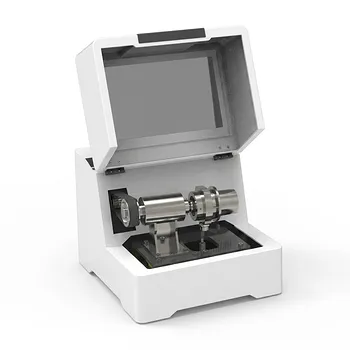
Single Tank High Energy Vibratory Ball Mill for Laboratory Grinding and Mixing
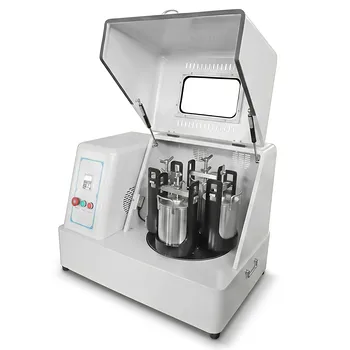
Vertical Square Planetary Ball Mill for Laboratory Sample Preparation and Nanoscale Grinding
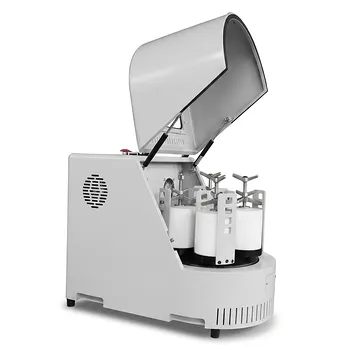
Vertical Semi Circular Planetary Ball Mill for Laboratory Precision Grinding
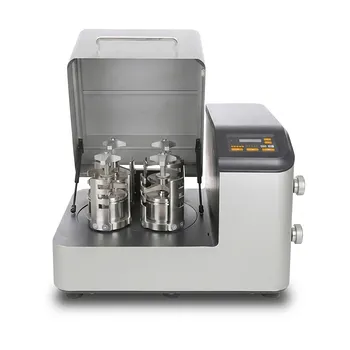
High Energy Planetary Ball Mill for Nano Scale Grinding and Colloidal Mixing in Material Science Research
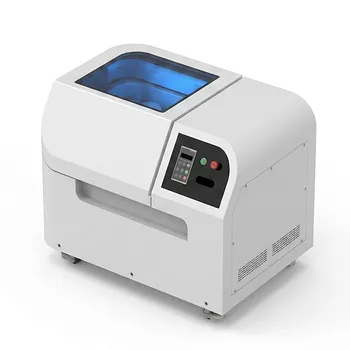
8L Planetary Ball Mill for Laboratory Grinding and Sample Preparation
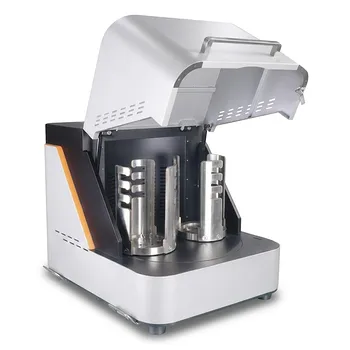
High Energy Laboratory Planetary Ball Mill for Nano Grinding and Colloidal Mixing of Hard and Brittle Materials
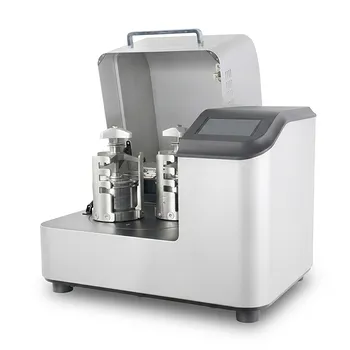
High Energy Planetary Ball Mill for Nano Scale Grinding and Mechanical Alloying
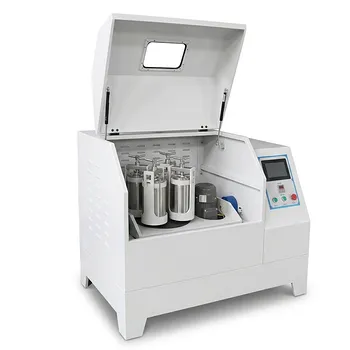
360° Rotating Omnidirectional Laboratory Planetary Ball Mill for Homogeneous Ultra-Fine Grinding and Mixing
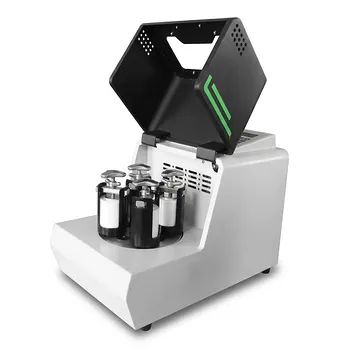
Miniature Planetary Ball Mill with Vacuum Grinding and High Efficiency for Laboratory Sample Preparation
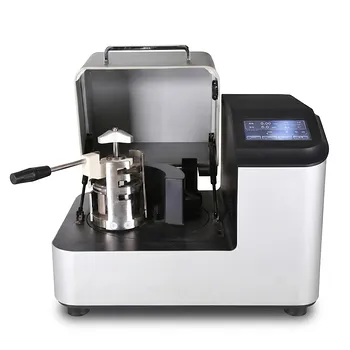
High Energy Laboratory Planetary Ball Mill for Nano Grinding and Material Science Sample Preparation
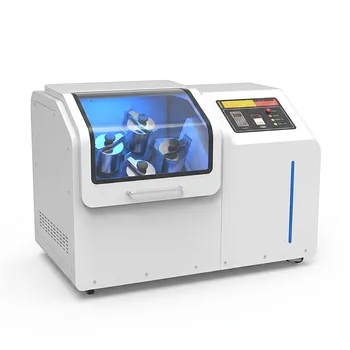
High Energy Omnidirectional Planetary Ball Mill 16L
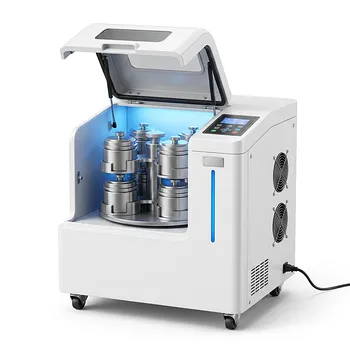
High Energy Omnidirectional Planetary Ball Mill 20L
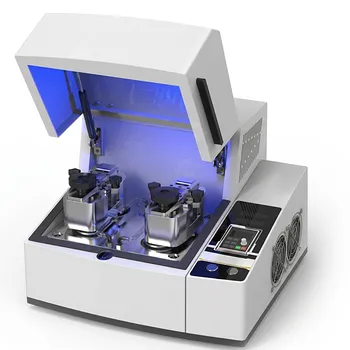
Laboratory Nano High Energy Ball Mill Ultrafine Grinding Mechanical Alloying
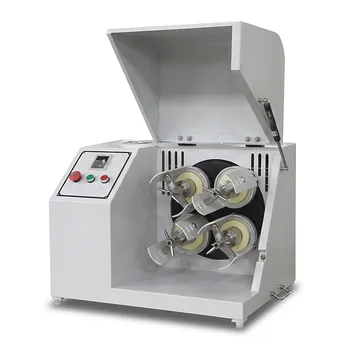
Horizontal Light Duty Planetary Ball Mill for Laboratory Sample Preparation
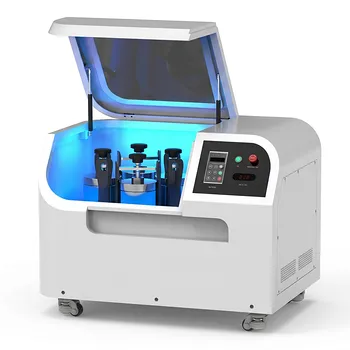
Planetary Ball Mill 12L
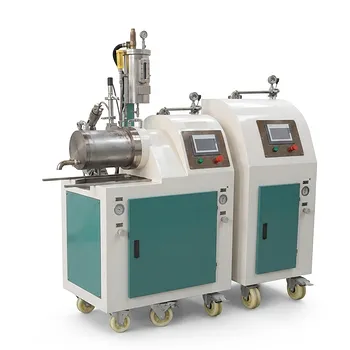
Mass Production Nano Sand Mill for Industrial Nanomaterial Grinding and Dispersion