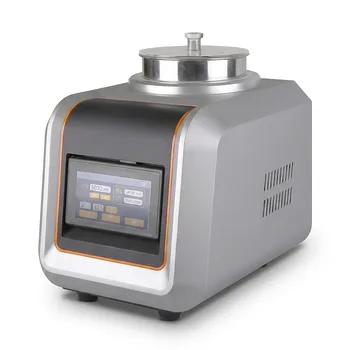
What is the function of a vibratory sieve shaker in EICP sand pretreatment? Achieve Precision in Biocementation
Updated 5 months ago
The vibratory sieve shaker is the primary tool for achieving particle size uniformity in sand pretreatment.
In Enzyme-Induced Calcium Carbonate Precipitation (EICP) research, its function is to mechanically classify raw sand into precise particle size ranges, such as 125–250 µm or 250–425 µm. This process eliminates experimental interference caused by non-uniform grain sizes, allowing for an isolated study of how specific particle dimensions influence consolidation strength and the distribution of calcium carbonate precipitation.
By standardizing the physical matrix of the sand, the vibratory sieve shaker ensures that variations in EICP results are attributable to the chemical treatment rather than unpredictable grain size heterogeneity.
Mechanical Classification and Precision Grading
Achieving Specific Particle Fractions
The shaker utilizes high-frequency, three-dimensional vibrations to move sand samples across a stack of standard test sieves. This mechanical action ensures that particles are fully distributed across the sieve surface, passing through specific mesh apertures until they reach their corresponding size fraction.
Eliminating Non-Uniformity and Aggregates
By isolating specific ranges, the shaker removes large aggregates and oversized clastic particles that could skew data. This creates a uniform raw material base, which is a fundamental requirement for obtaining representative statistical data during subsequent analysis, such as micro-CT scanning.
Quantifying Particle Size Distribution
Beyond simple separation, the device allows researchers to calculate the weight percentage of various fractions. This quantification is essential for evaluating the initial porosity of the sand matrix and predicting how the EICP solution will permeate the sample.
Enhancing Experimental Validity for EICP
Isolating Variables for Consolidation Strength
EICP performance is highly sensitive to the contact morphology between sand grains. Using a sieve shaker to ensure a uniform grain size allows researchers to precisely measure how the "bridge" of calcium carbonate forms between particles of a specific diameter.
Ensuring Repeatability in Fluid Flow
Uniform particle size ensures a consistent porous medium, which is critical for the repeatability of fluid flow experiments. In EICP, the enzyme and urea solution must permeate the sand evenly; the sieve shaker prevents particle size segregation, which would otherwise create irregular flow paths and uneven precipitation.
Stability for Mineralogical Analysis
Precise grading provides a consistent feed for subsequent characterization steps. Whether performing gravity separation or chemical extraction, starting with a known, uniform particle size ensures the stability and efficiency of the entire mineral processing workflow.
Understanding the Trade-offs and Limitations
Risk of Particle Attrition
The high-frequency vibration required for effective separation can cause mechanical wear on fragile sand grains. Excessive shaking duration may lead to the "grinding" of particles, unintentionally creating "fines" that alter the sample's original properties.
Sieve Blinding and Efficiency
Fine particles, particularly those near the mesh aperture size, can become lodged in the sieve, a phenomenon known as blinding. This reduces the effective screening area and can lead to inaccurate grading if the sieves are not properly maintained or if vibration amplitudes are set incorrectly.
Dry vs. Wet Sieving Limitations
While dry sieving is standard for many sand types, highly cohesive samples or those with high clay content may require wet sieving. Relying solely on dry vibratory sieving for samples with significant fine-particle adhesion can result in incomplete separation and masked grain-size data.
Optimizing Your Pretreatment Protocol
To achieve the highest degree of accuracy in your EICP experiments, the use of the vibratory sieve shaker should be tailored to your specific research goals.
- If your primary focus is mechanical strength testing: Use the shaker to isolate narrow, mid-range fractions (e.g., 250–425 µm) to ensure that calcium carbonate bridges are the primary variable affecting shear strength.
- If your primary focus is permeability and flow dynamics: Focus on removing all "fines" below 45 micrometers to prevent the clogging of pore throats, ensuring the enzyme solution can circulate freely.
- If your primary focus is mineralogical heterogeneity: Utilize a full stack of sieves to quantify the entire distribution range, ensuring that your sub-samples are statistically representative of the bulk source material.
Precise particle classification is the foundation of reliable geotechnical data, providing the control necessary to master the complexities of enzyme-induced biocementation.
Summary Table:
| Core Function | Key Benefit | Impact on EICP Research |
|---|---|---|
| Precision Grading | Eliminates grain size heterogeneity | Standardizes the physical matrix for accurate testing |
| Variable Isolation | Uniform contact morphology | Isolates chemical treatment effects from physical variables |
| Porosity Control | Consistent pore throat structure | Ensures repeatable fluid flow and even mineral precipitation |
| Quantification | Detailed size distribution data | Provides essential data for representative micro-CT analysis |
Master Your EICP Research with Precision Sample Prep
In the demanding field of material science and geotechnical engineering, the reliability of your findings depends on the precision of your sample pretreatment. A minor inconsistency in grain size can compromise your entire EICP data set.
Our Complete Laboratory Solutions Include:
- Sieving & Grading: High-performance vibratory and air-jet sieve shakers with a wide range of test sieves.
- Powder Processing: Precision mills (planetary, jet, sand, disc, rotor), cryogenic grinders, and jaw/roll crushers.
- Mixing: High-efficiency powder mixers and defoaming mixers for uniform sample preparation.
- Compaction & Pressing: A full spectrum of hydraulic presses, including Cold/Warm Isostatic Presses (CIP/WIP), standard lab presses, XRF pellet presses, and vacuum hot presses.
Ready to elevate your lab's performance? Contact our experts today to find the perfect equipment match for your research goals and experience the benefits of standardized, high-quality sample preparation.
References
- Kamal Omarov, Manar M. AlAhmari. Sand consolidation using enzyme-induced carbonate precipitation: new insights on temperature and particle size effects. DOI: 10.1038/s41598-023-42792-w
Mentioned Products
- Vibratory Sieve Shaker Electromagnetic 3D Motion Powder Particle Size Analyzer for Dry and Wet Sieving
- Laboratory Dry and Wet Three Dimensional Vibratory Sieve Shaker for Particle Analysis
- Stainless Steel Laboratory Vibratory Test Sieve Shaker
- Heavy Duty Dry Three Dimensional Vibratory Sieve Shaker for Particle Separation
- Dry Three Dimensional Vibratory Sieve Shaker
People Also Ask
- How does a vibratory sieve shaker contribute to optimizing the performance of activated carbon? Enhance Adsorption Precision
- Why is a laboratory vibratory sieve shaker necessary for processing magnesium-based borate precursor powders? Boost Activity
- Why use a vibratory sieve shaker to verify coarse aggregate grading in rubberized concrete? Ensure Structural Integrity
- What function do vibratory sieve shakers and standard test sieves serve in the preparation of adsorbents? Key Guide
- What role does a vibratory sieve shaker play in the particle size analysis of ground corn products? Enhance QC Precision

Tech Team · PowderPreparation
Last updated on May 14, 2026
Related Products

Vibratory Sieve Shaker Electromagnetic 3D Motion Powder Particle Size Analyzer for Dry and Wet Sieving
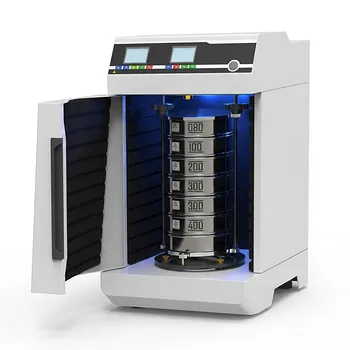
Laboratory Dry and Wet Three Dimensional Vibratory Sieve Shaker for Particle Analysis

Stainless Steel Laboratory Vibratory Test Sieve Shaker

Heavy Duty Dry Three Dimensional Vibratory Sieve Shaker for Particle Separation
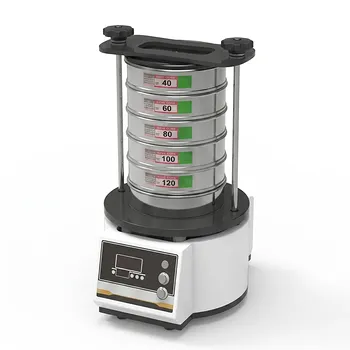
Dry Three Dimensional Vibratory Sieve Shaker

Small Laboratory Vibratory Sieve Shaker for Powder Gradation and Particle Size Analysis

High Frequency Wet Three-Dimensional Vibrating Sieve Shaker for Dry and Wet Particle Size Analysis

Small Laboratory Vibrating Sieve Shaker for Precise Particle Size Analysis
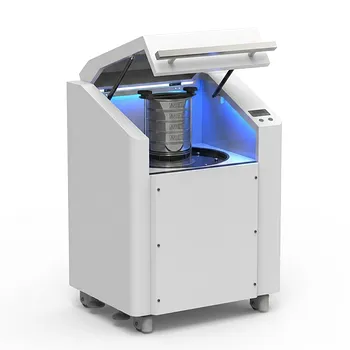
High Frequency Cabinet Type Three-Dimensional Rotary Vibrating Sieve Shaker for Dry Sieving and Particle Classification

Laboratory Vibratory Test Sieve Shaker for Precision Particle Size Analysis and Powder Grading

三维电磁微量振动筛分仪
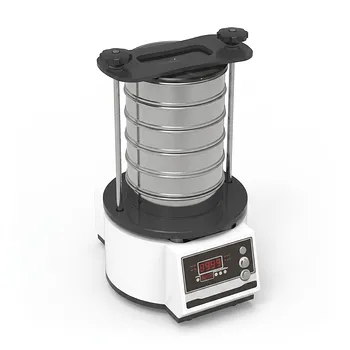
Tapping Oscillating Sieve Shaker for Dry and Wet Particle Size Analysis

Stainless Steel Rotary Vibrating Sieve High Precision Circular Vibratory Separator Industrial Powder Grading Machine Multi Layer Sifting Equipment

Three Dimensional Rotary Vibrating Sieve
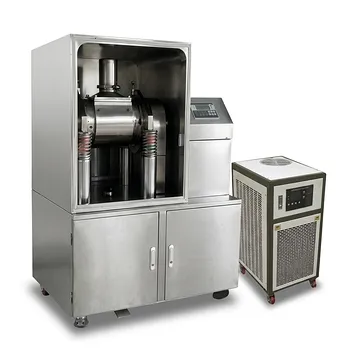
Small Vibrating Ultrafine Grinder for Traditional Chinese Medicine
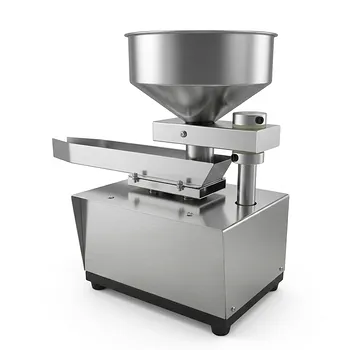
Automatic Vibrating Powder Feeder for Laboratory Material Processing Precision Vibratory Hopper Feeder for Granular and Powder Material Handling Industrial Grade Vibrating Tray Feeder for Consistent Material Sample Preparation
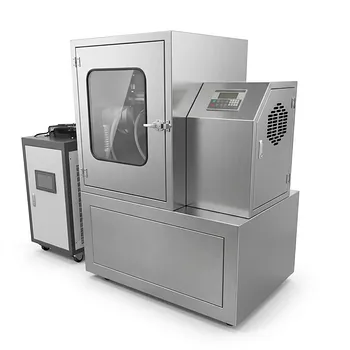
Vibratory Superfine Grinder for Ultra Fine Laboratory Powder Milling
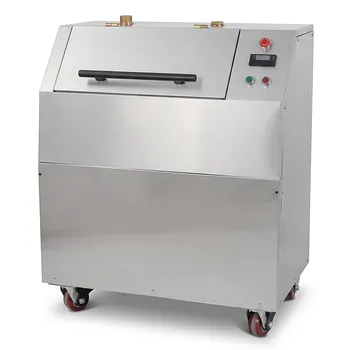
Vibratory Disc Mill for Rapid Fine Grinding and High Throughput Sample Preparation of Hard and Brittle Materials