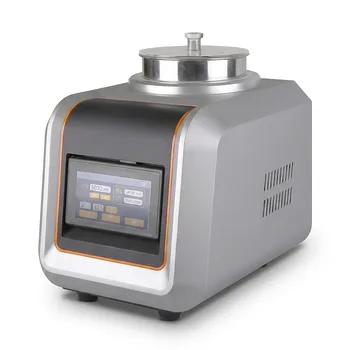
What is the function of a vibratory sieve shaker in kenaf fiber pretreatment? Enhance Nanocomposite Strength & Bonding
Updated 4 months ago
The vibratory sieve shaker serves as a precision classification tool in fiber pretreatment. Its primary role is to isolate crushed kenaf fiber powder into specific micron-scale fractions, typically using aperture sizes less than 500 μm. This standardization ensures that the fibers have uniform dimensions and an increased effective specific surface area, which is critical for achieving a stable and high-performance nanocomposite.
By enforcing strict particle size control, the vibratory sieve shaker eliminates oversized reinforcements that act as structural weak points. This process facilitates superior dispersion and interfacial bonding between the kenaf fibers, xGNP (exfoliated graphite nanoplatelets), and the polypropylene matrix.
Optimizing the Fiber-Matrix Interface
Maximizing Effective Specific Surface Area
A vibratory sieve shaker mechanically forces pulverized kenaf fibers through standardized mesh screens to achieve a uniform micron-scale profile. By reducing the fiber size to a consistent range (such as <500 μm or even 90 μm), the equipment significantly increases the specific surface area available for bonding. This allows the polypropylene matrix and any secondary reinforcements, like xGNP, to achieve more thorough physical contact with the fiber surfaces.
Enhancing Dispersion During Melt Extrusion
Uniformly sized fibers are less prone to agglomeration during high-shear processes like melt extrusion. The shaker ensures that the "fillers" added to the polymer matrix are homogenous, preventing the clumping that often occurs with irregular, unscreened raw materials. This results in a more isotropic distribution of fibers throughout the xGNP-polypropylene nanocomposite.
Improving Interfacial Bonding Quality
The quality of a composite depends heavily on how well the resin grips the reinforcement. Precise particle size control maximizes the contact area between the fibers and the polymer chains. When the fibers are uniform, the resin can coat each particle more effectively, leading to optimized interfacial bonding and more efficient load transfer across the material.
Ensuring Structural Integrity and Performance
Mitigating Stress Concentrations
One of the most critical functions of sieving is the elimination of oversized particles. Large, irregular fibers often act as "stress concentrators" within a polymer matrix, serving as the initiation points for cracks and structural failure. By filtering these out, the vibratory sieve shaker ensures the overall performance uniformity of the composite material.
Standardizing Mechanical Properties
The consistency provided by the shaker directly influences the tensile and impact strength of the final product. Using specific test sieves (such as 40 to 100 mesh) allows researchers to isolate exact powder fractions that correlate with desired mechanical outcomes. This level of control is essential for producing nanocomposites with stable and predictable stability in industrial applications.
Controlling Packing Density and Surface Finish
Particle size classification influences how tightly the fibers can pack within the matrix, which affects the packing density of the composite. Additionally, finer, sieved fibers result in a lower surface roughness in the finished part. This is particularly important for applications where the aesthetic or aerodynamic quality of the polypropylene component is a requirement.
Understanding the Trade-offs
Throughput vs. Precision
While smaller mesh sizes (e.g., 90 μm) provide superior surface area and bonding, they significantly reduce the throughput of the pretreatment stage. Finer sieving requires more time and can lead to screen blinding, where particles clog the mesh apertures. Balancing the need for precision with production volume is a constant challenge in industrial fiber processing.
Fiber Aspect Ratio Preservation
Pulverizing and sieving fibers into very small micron-scale powders can sometimes destroy the aspect ratio (length-to-diameter ratio) of the kenaf. While smaller particles disperse better, the loss of long-fiber reinforcement can potentially lower the overall tensile modulus compared to composites using slightly larger, oriented fibers.
Applying Pretreatment Standards to Your Project
Recommendations for Goal-Oriented Processing
- If your primary focus is Maximum Tensile Strength: Use a vibratory shaker with a 90-micron to 125-micrometer mesh to eliminate large stress concentrators and maximize bonding surface.
- If your primary focus is Production Efficiency: Opt for a 300 μm to 500 μm aperture to maintain a higher throughput while still removing the most damaging oversized fragments.
- If your primary focus is xGNP Integration: Ensure fiber particles are consistently small enough to allow the nanoplatelets to occupy the interstitial spaces without being shielded by large fiber bundles.
Precise vibratory sieving is the foundational step that transforms raw botanical waste into a high-performance engineering reinforcement.
Summary Table:
| Function | Key Mechanism | Impact on Nanocomposite |
|---|---|---|
| Particle Classification | Isolating fractions <500 μm | Ensures uniform fiber distribution & homogeneity |
| Surface Area Control | Standardizing micron-scale profile | Increases effective specific surface area for bonding |
| Structural Integrity | Eliminating oversized particles | Mitigates stress concentrations and crack initiation |
| Dispersion Quality | Preventing agglomeration | Facilitates isotropic distribution during melt extrusion |
| Performance Stability | Precise mesh sizing (40-100 mesh) | Standardizes tensile strength and impact resistance |
Elevate Your Material Research with Precision Sample Preparation
Achieving superior nanocomposite performance starts with exact particle size control. At [Your Brand Name], we provide complete laboratory sample preparation solutions tailored for material science. Our expertise in powder processing and compaction equipment ensures that your raw materials—from botanical fibers like kenaf to advanced reinforcements like xGNP—are prepared to the highest standards.
Our extensive product line includes:
- Precision Sieve Shakers: Vibratory and air-jet models with a wide range of test sieves for perfect classification.
- Advanced Milling & Grinding: Planetary ball mills, jet mills, and liquid nitrogen cryogenic grinders for micron-scale reduction.
- Crushing Solutions: High-durability jaw and roll crushers for initial pretreatment.
- Compaction Excellence: A full spectrum of hydraulic presses, including Cold/Warm Isostatic Presses (CIP/WIP), vacuum hot presses, and XRF pellet presses.
Whether you are focusing on interfacial bonding or mechanical stability, our equipment delivers the consistency your research demands.
Contact Our Technical Experts Today to find the ideal solution for your laboratory workflow!
References
- Christopher Igwe Idumah, Viola Obiana. Influence of chemical modification of kenaf fiber on xGNP-PP nano-biocomposites. DOI: 10.1007/s42452-019-1319-1
Mentioned Products
- Vibratory Sieve Shaker Electromagnetic 3D Motion Powder Particle Size Analyzer for Dry and Wet Sieving
- Laboratory Dry and Wet Three Dimensional Vibratory Sieve Shaker for Particle Analysis
- Stainless Steel Laboratory Vibratory Test Sieve Shaker
- Heavy Duty Dry Three Dimensional Vibratory Sieve Shaker for Particle Separation
- Dry Three Dimensional Vibratory Sieve Shaker
People Also Ask
- How does a vibratory sieve shaker contribute to optimizing the performance of activated carbon? Enhance Adsorption Precision
- Why is a laboratory vibratory sieve shaker necessary for processing magnesium-based borate precursor powders? Boost Activity
- Why use a vibratory sieve shaker to verify coarse aggregate grading in rubberized concrete? Ensure Structural Integrity
- What function do vibratory sieve shakers and standard test sieves serve in the preparation of adsorbents? Key Guide
- What role does a vibratory sieve shaker play in the particle size analysis of ground corn products? Enhance QC Precision

Tech Team · PowderPreparation
Last updated on May 14, 2026
Related Products
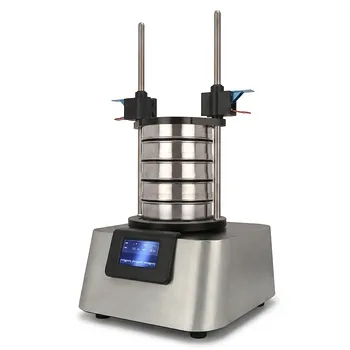
Vibratory Sieve Shaker Electromagnetic 3D Motion Powder Particle Size Analyzer for Dry and Wet Sieving
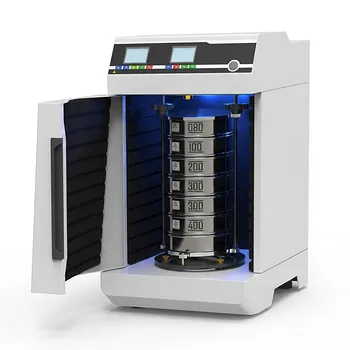
Laboratory Dry and Wet Three Dimensional Vibratory Sieve Shaker for Particle Analysis
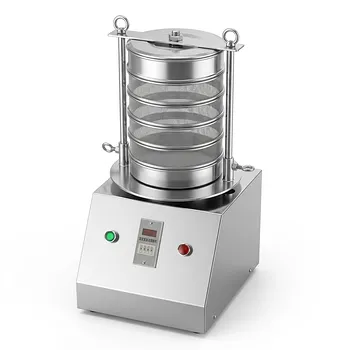
Stainless Steel Laboratory Vibratory Test Sieve Shaker
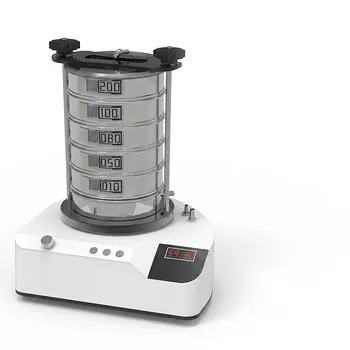
Heavy Duty Dry Three Dimensional Vibratory Sieve Shaker for Particle Separation
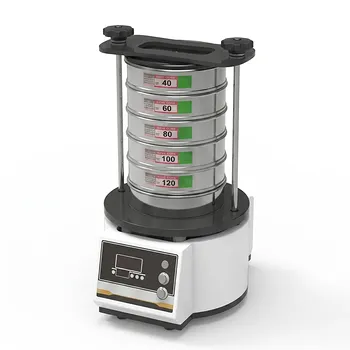
Dry Three Dimensional Vibratory Sieve Shaker
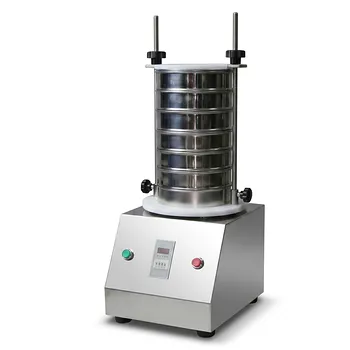
Small Laboratory Vibratory Sieve Shaker for Powder Gradation and Particle Size Analysis
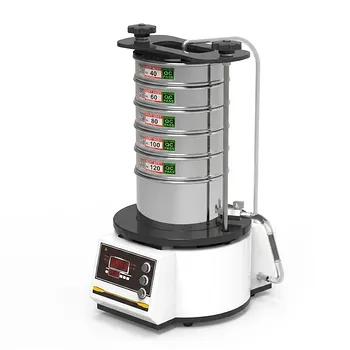
High Frequency Wet Three-Dimensional Vibrating Sieve Shaker for Dry and Wet Particle Size Analysis

Small Laboratory Vibrating Sieve Shaker for Precise Particle Size Analysis
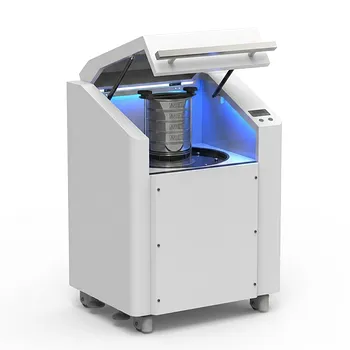
High Frequency Cabinet Type Three-Dimensional Rotary Vibrating Sieve Shaker for Dry Sieving and Particle Classification

Laboratory Vibratory Test Sieve Shaker for Precision Particle Size Analysis and Powder Grading
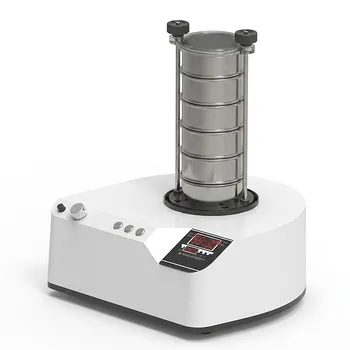
三维电磁微量振动筛分仪
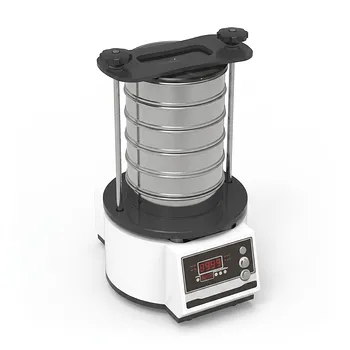
Tapping Oscillating Sieve Shaker for Dry and Wet Particle Size Analysis

Stainless Steel Rotary Vibrating Sieve High Precision Circular Vibratory Separator Industrial Powder Grading Machine Multi Layer Sifting Equipment
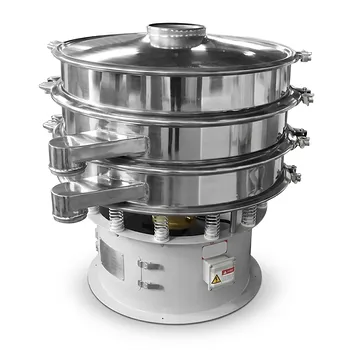
Three Dimensional Rotary Vibrating Sieve
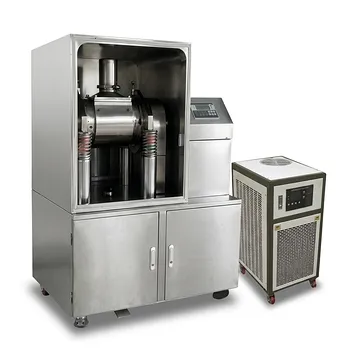
Small Vibrating Ultrafine Grinder for Traditional Chinese Medicine

Automatic Vibrating Powder Feeder for Laboratory Material Processing Precision Vibratory Hopper Feeder for Granular and Powder Material Handling Industrial Grade Vibrating Tray Feeder for Consistent Material Sample Preparation
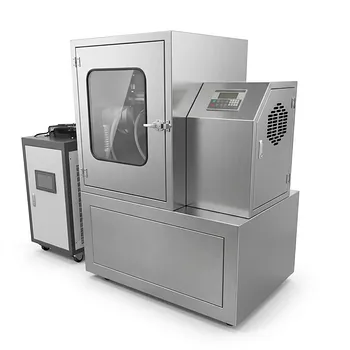
Vibratory Superfine Grinder for Ultra Fine Laboratory Powder Milling
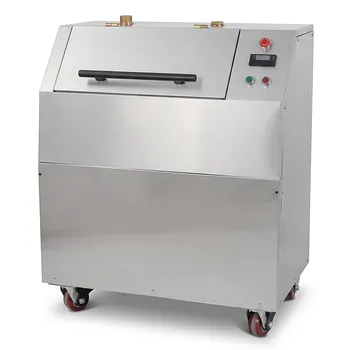
Vibratory Disc Mill for Rapid Fine Grinding and High Throughput Sample Preparation of Hard and Brittle Materials