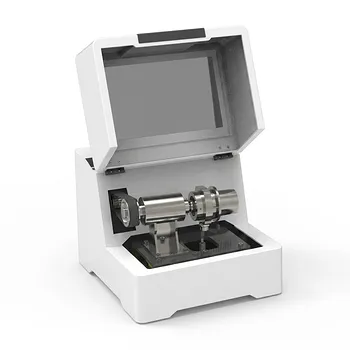
What is the function of a planetary ball mill in BNT ceramic preparation? Enhance homogeneity & reactivity.
Updated 3 months ago
The planetary ball mill serves as the primary mechanism for mechanical activation and homogenization. It utilizes high-speed impact and shear forces to reduce raw powders to sub-micron dimensions while ensuring an atomic-level distribution of chemical components in an ethanol medium.
Core Takeaway: By providing intense mechanical energy, the planetary ball mill transforms coarse precursors into a highly reactive, sub-micron mixture. This process is essential for lowering the energy barriers of subsequent solid-phase reactions, ensuring the formation of a pure-phase perovskite structure.
Achieving Sub-Micron Refinement
Particle Size Reduction
The high-speed rotation of the mill generates powerful centrifugal forces that drive milling balls into the raw materials. This mechanical energy effectively breaks down coarse particles and raw material agglomerates into sub-micron scales.
Increased Specific Surface Area
Reducing the particle size significantly increases the total surface area of the powder. This increased surface energy provides the necessary reactivity for the powders to interact efficiently during the high-temperature calcination stage.
Mechanochemical Activation
The grinding process does more than just resize particles; it can introduce defects and strain into the crystal lattice. This mechanical activation lowers the temperature required for chemical reactions to occur in the solid state.
Ensuring Atomic-Level Homogeneity
Molecular-Level Mixing
In multi-component systems like Sodium Bismuth Titanate (BNT), components such as Bi2O3 and TiO2 must be perfectly interspersed. The mill ensures a highly uniform distribution of these elements at the atomic level, preventing localized chemical imbalances.
The Role of the Wet Milling Medium
Using an ethanol or acetone medium during milling prevents the powder from clumping due to static or heat. This wet grinding environment facilitates a more fluid movement of particles, leading to a more consistent and fine-grained slurry.
Stabilization of High-Entropy Systems
For complex BNT-based ceramics involving multiple dopants, the mill is critical for integrating diverse elements into a single phase. It ensures that even trace amounts of additives are homogeneously dispersed throughout the matrix.
Understanding the Trade-offs
Risk of Media Contamination
The intense impact and friction used to refine the powder can also cause wear on the milling balls and the jar lining. This may introduce impurities (such as Alumina or Zirconia) into the BNT powder, which can degrade the final dielectric or piezoelectric properties.
Processing Time and Energy
Achieving sub-micron refinement typically requires long durations, often reaching 24 hours of continuous operation. This high energy consumption and extended processing time increase the overall cost and complexity of the production cycle.
Solvent Interaction
While ethanol is a common medium, the choice of solvent must be carefully balanced with the chemistry of the precursors. Some carbonates or oxides may have minor solubility issues or react with specific solvents, potentially shifting the stoichiometric ratio.
How to Apply This to Your Project
To maximize the effectiveness of a planetary ball mill in BNT preparation, you must align your milling parameters with your specific material requirements.
- If your primary focus is phase purity: Ensure a long milling duration (at least 24 hours) to achieve the microscopic homogeneity required for a complete solid-state reaction.
- If your primary focus is minimizing contamination: Use milling media and jars made of the same material as your major ceramic component, or use high-hardness Yttria-stabilized Zirconia (YSZ) to reduce wear.
- If your primary focus is reactivity for sintering: Prioritize high-speed settings to maximize the specific surface area and surface energy of the powder before the calcination step.
Mastering the milling process is the foundational step in ensuring that the final BNT ceramic exhibits the precise stoichiometry and dense microstructure required for high-performance applications.
Summary Table:
| Key Mill Function | Role in BNT Preparation | Impact on Ceramic Quality |
|---|---|---|
| Particle Size Reduction | Breaks agglomerates to sub-micron level | Increases surface energy & reactivity |
| Chemical Homogeneity | Atomic-level distribution of Bi2O3, TiO2 | Ensures pure-phase perovskite formation |
| Mechanical Activation | Introduces lattice defects/strain | Lowers required calcination temperature |
| Wet Milling Medium | Prevents clumping & dissipates heat | Produces consistent, fine-grained slurry |
Elevate Your Ceramic Research with Precision Engineering
Achieving the perfect stoichiometry in Sodium Bismuth Titanate (BNT) requires more than just a mill—it requires a complete sample preparation strategy. We specialize in providing comprehensive laboratory solutions for material science, focusing on high-efficiency powder processing and compaction.
Whether you need to minimize contamination during grinding or achieve maximum density in your final ceramic, our equipment is designed for precision:
- Advanced Milling: High-performance planetary ball mills, jet mills, and cryogenic grinders for sub-micron refinement.
- Expert Mixing: Powder and defoaming mixers to ensure absolute homogeneity.
- Superior Compaction: A full range of hydraulic presses, including Cold/Warm Isostatic Presses (CIP/WIP), standard lab presses, and vacuum hot presses.
Ready to optimize your material processing workflow? Contact our technical team today to find the ideal equipment for your specific research goals.
References
- Jiaqi Li, Genshui Wang. Enhanced energy-storage in lead-free multilayer capacitors via entropy-assisted polymorphic domain engineering. DOI: 10.1038/s41467-025-63584-y
Mentioned Products
- Vertical Semi Circular Planetary Ball Mill for Laboratory Precision Grinding
- High Energy Planetary Ball Mill for Nano Scale Grinding and Mechanical Alloying
- Vertical Production Planetary Ball Mill for High Throughput Powder Processing
- Heavy Duty Horizontal Planetary Ball Mill for Efficient Industrial Grinding and Sample Preparation
- 360° Rotating Omnidirectional Laboratory Planetary Ball Mill for Homogeneous Ultra-Fine Grinding and Mixing
People Also Ask
- What role does a planetary ball mill play in the synthesis of Li6PS5Cl (LPSCl)? Unlock High Ionic Conductivity
- Why is a planetary ball mill essential for SiBCN-rGO wet-spinning? Achieve Superior Dispersion and Spinnability
- Why is an intermittent grinding process required for perovskites in a planetary ball mill? Ensure Stability & Purity
- Why is a planetary ball mill required for PET micronization? Ensure Accurate Chemical Analysis of Reprocessed PET
- How does mechanized planetary ball milling compare to manual agate grinding? Optimize sulfide standard material precision.

Tech Team · PowderPreparation
Last updated on Jun 03, 2026
Related Products
Vertical Semi Circular Planetary Ball Mill for Laboratory Precision Grinding

High Energy Planetary Ball Mill for Nano Scale Grinding and Mechanical Alloying

Vertical Production Planetary Ball Mill for High Throughput Powder Processing

Heavy Duty Horizontal Planetary Ball Mill for Efficient Industrial Grinding and Sample Preparation
360° Rotating Omnidirectional Laboratory Planetary Ball Mill for Homogeneous Ultra-Fine Grinding and Mixing

Vertical Square Planetary Ball Mill for Laboratory Sample Preparation and Nanoscale Grinding

Miniature Planetary Ball Mill with Vacuum Grinding and High Efficiency for Laboratory Sample Preparation
High Energy Laboratory Planetary Ball Mill for Nano Grinding and Material Science Sample Preparation

High Energy Omnidirectional Planetary Ball Mill 16L
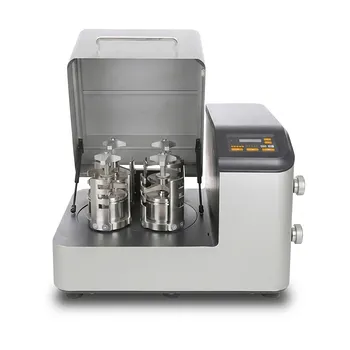
High Energy Planetary Ball Mill for Nano Scale Grinding and Colloidal Mixing in Material Science Research
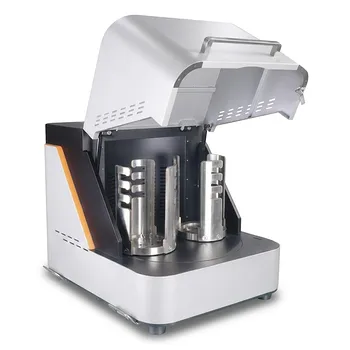
High Energy Laboratory Planetary Ball Mill for Nano Grinding and Colloidal Mixing of Hard and Brittle Materials
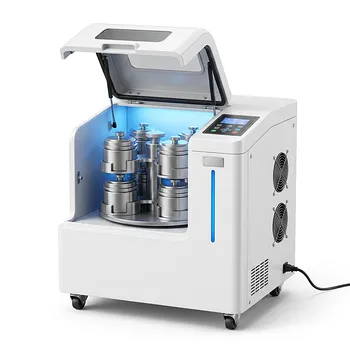
High Energy Omnidirectional Planetary Ball Mill 20L
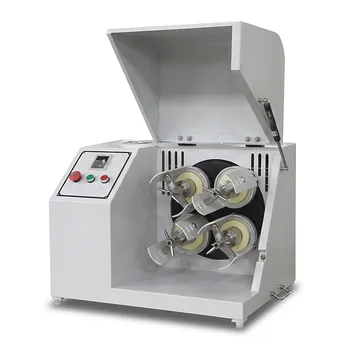
Horizontal Light Duty Planetary Ball Mill for Laboratory Sample Preparation
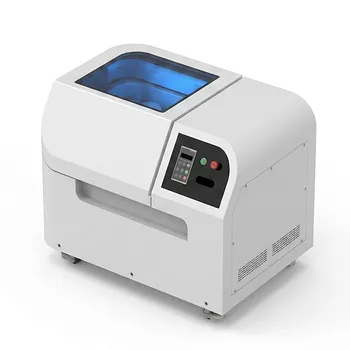
8L Planetary Ball Mill for Laboratory Grinding and Sample Preparation
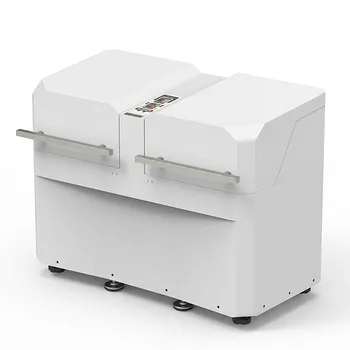
Dual Station Planetary Ball Mill 24L
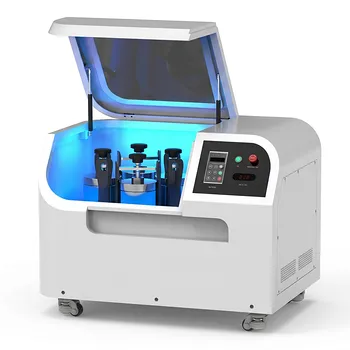
Planetary Ball Mill 12L
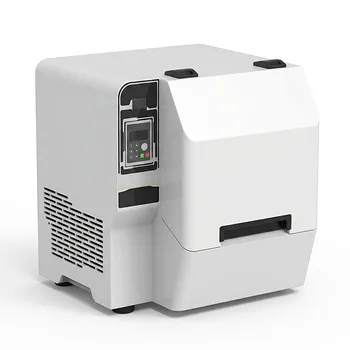
Nano High Energy Vibratory Ball Mill for Laboratory Sample Preparation
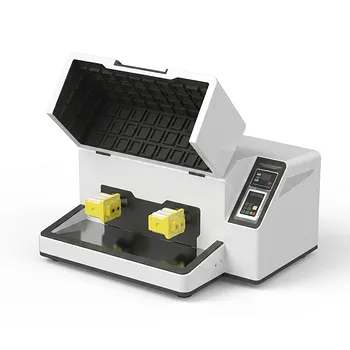
Multi-Platform Nanoscale High-Energy Vibratory Ball Mill
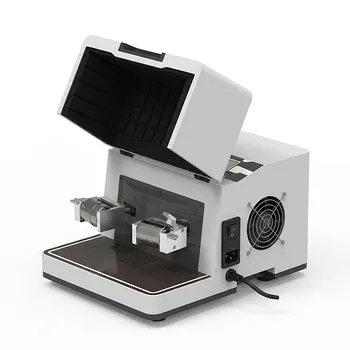
High Energy Hybrid Vibratory Ball Mill for Grinding Mixing and Cell Disruption