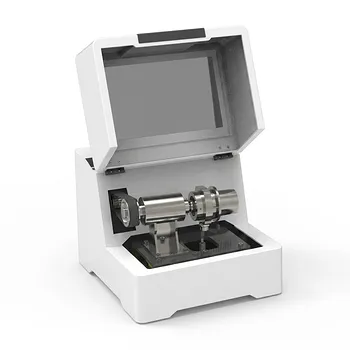
What is the function of a planetary ball mill in ternary boron-based compounds? Achieve Atomic-Level Homogenization
Updated 3 months ago
The planetary ball mill is a critical high-energy processing tool used to achieve atomic-level homogenization and particle refinement in ternary boron-based mixtures. By subjecting metal elements and boron powder to intense impact and friction forces, the mill ensures that the raw materials are perfectly distributed for subsequent chemical reactions. This process is foundational for ensuring that different elements occupy their intended positions within the complex ternary crystal lattice.
Core Takeaway: The planetary ball mill functions as more than a simple mixer; it is a high-energy mechanical activator that reduces particle size and increases surface energy to facilitate low-temperature sintering and precise stoichiometric control in ternary boron compounds.
Mechanisms of High-Energy Mechanical Milling
The core function of a planetary ball mill is driven by the complex motion of grinding jars that rotate on their own axes while revolving around a central sun wheel. This dual-rotation creates overlapping centrifugal fields that propel grinding media with extreme velocity.
Intense Impact and Friction
The grinding balls within the jars generate high-frequency impact and shear forces as they collide with the raw material. In the context of ternary boron systems, these forces are necessary to break the strong bonds of elemental boron and incorporate metal powders. This mechanical energy physically deforms the powder, leading to a continuous process of fracturing and cold-welding.
Achieving Atomic-Level Homogeneity
For ternary compounds, where three different elements must interact, traditional mixing is insufficient. The planetary mill achieves a uniform atomic-level distribution, ensuring that the metal elements and boron are in intimate contact. This microscopic uniformity is the prerequisite for forming a single-phase structure during the final synthesis stages.
Enhancing Material Reactivity for Sintering
Beyond simple mixing, the planetary ball mill alters the physical state of the powder to improve its behavior during high-temperature processing. This is often referred to as mechanical activation.
Increasing Surface Energy and Specific Surface Area
By refining particles to sub-micron or even nanometer scales, the mill significantly increases the specific surface area of the mixture. This accumulation of surface energy acts as a driving force for subsequent solid-state reactions. The high energy stored in the refined powder allows for lower sintering temperatures, reducing the thermal budget of the production process.
Inducing Lattice Distortion
The high-energy environment can induce lattice distortion and structural defects in the raw material powders. These defects facilitate faster diffusion of atoms when the mixture is heated. By shortening the diffusion paths between components, the milling process ensures a faster and more complete transition into the desired ternary boron-based phase.
Understanding the Trade-offs and Challenges
While planetary ball milling is highly effective, it introduces specific technical challenges that must be managed to maintain material purity.
Contamination from Grinding Media
The intense friction required for particle refinement inevitably leads to some wear and tear on the grinding jars and balls. This can introduce trace impurities into the ternary boron mixture, which may alter the final electrical or mechanical properties of the compound. Choosing media materials that are compatible with the final product (such as tungsten carbide or zirconia) is essential.
Heat Generation and Atmospheric Control
The high-energy impacts generate significant heat, which can lead to unwanted oxidation or premature reactions if not controlled. Many ternary boron processes require milling in an inert gas atmosphere or with specific cooling intervals. Failing to manage the temperature can result in a loss of stoichiometric precision or the formation of secondary oxide phases.
How to Apply This to Your Synthesis Goal
When configuring your planetary ball milling process, your parameters should align with the specific requirements of your ternary system.
- If your primary focus is phase purity: Utilize longer milling times at moderate speeds to ensure maximum atomic-level distribution without excessive media wear.
- If your primary focus is lowering sintering costs: Prioritize high-speed rotation to maximize surface energy and particle refinement, which creates a more reactive precursor.
- If your primary focus is preventing oxidation: Perform the milling in an airtight jar charged with argon or another inert gas to protect the boron and metal powders from reactive oxygen.
By precisely controlling the mechanical energy input, you can transform raw elemental powders into a highly active, homogeneous precursor ready for advanced material synthesis.
Summary Table:
| Key Function | Mechanism | Impact on Synthesis |
|---|---|---|
| Homogenization | Dual-rotation impact/shear | Atomic-level element distribution |
| Mechanical Activation | Increased surface energy | Lower sintering temperatures |
| Particle Refinement | Sub-micron scaling | Enhanced reactivity and faster diffusion |
| Structural Control | Induced lattice distortion | Facilitates single-phase formation |
| Atmospheric Control | Sealed inert gas milling | Prevents oxidation and maintains purity |
Optimize Your Advanced Material Synthesis with Expert Prep Solutions
Achieving the perfect stoichiometric balance in ternary boron-based compounds requires more than just mixing—it requires precision engineering. We provide complete laboratory sample preparation solutions for material science, specializing in high-performance powder processing and compaction equipment designed to meet the rigors of advanced R&D.
Our extensive product lines include:
- Advanced Milling: Planetary ball mills, jet mills, disc mills, and cryogenic grinders for nanometer-scale refinement.
- Powder Processing: Sieve shakers, powder mixers, and defoaming mixers to ensure material consistency.
- Superior Compaction: A full spectrum of hydraulic presses, including Cold/Warm Isostatic Presses (CIP/WIP), vacuum hot presses, and XRF pellet presses.
Whether you are focusing on phase purity or lowering production costs, our equipment delivers the reliability and control your research demands.
Ready to elevate your lab's capabilities?
Contact our technical team today to discuss your application!
References
- Adam Carlsson, Martin Dahlqvist. When Two Becomes Three: Predicting Stable Ternary Boron‐Based Compounds by Populating Unique Lattice Sites in Binary Prototype Structures. DOI: 10.1002/adts.202400759
Mentioned Products
- Vertical Semi Circular Planetary Ball Mill for Laboratory Precision Grinding
- High Energy Planetary Ball Mill for Nano Scale Grinding and Mechanical Alloying
- Vertical Production Planetary Ball Mill for High Throughput Powder Processing
- Heavy Duty Horizontal Planetary Ball Mill for Efficient Industrial Grinding and Sample Preparation
- 360° Rotating Omnidirectional Laboratory Planetary Ball Mill for Homogeneous Ultra-Fine Grinding and Mixing
People Also Ask
- What role does a planetary ball mill play in the synthesis of Li6PS5Cl (LPSCl)? Unlock High Ionic Conductivity
- Why is a planetary ball mill essential for SiBCN-rGO wet-spinning? Achieve Superior Dispersion and Spinnability
- Why is an intermittent grinding process required for perovskites in a planetary ball mill? Ensure Stability & Purity
- Why is a planetary ball mill required for PET micronization? Ensure Accurate Chemical Analysis of Reprocessed PET
- How does mechanized planetary ball milling compare to manual agate grinding? Optimize sulfide standard material precision.

Tech Team · PowderPreparation
Last updated on Jun 03, 2026
Related Products
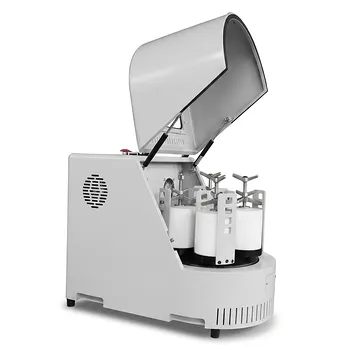
Vertical Semi Circular Planetary Ball Mill for Laboratory Precision Grinding
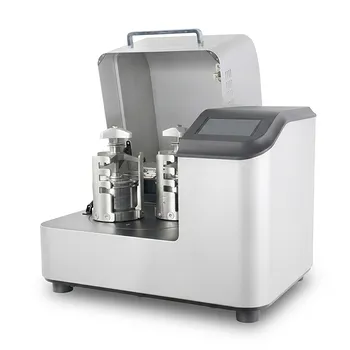
High Energy Planetary Ball Mill for Nano Scale Grinding and Mechanical Alloying
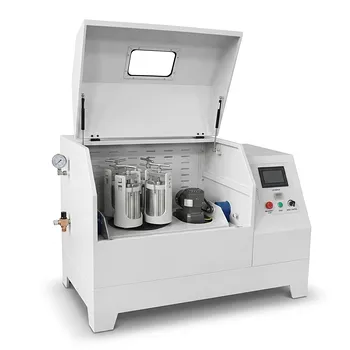
Vertical Production Planetary Ball Mill for High Throughput Powder Processing
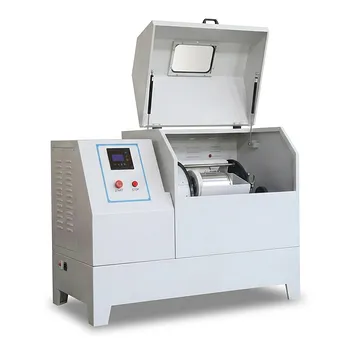
Heavy Duty Horizontal Planetary Ball Mill for Efficient Industrial Grinding and Sample Preparation
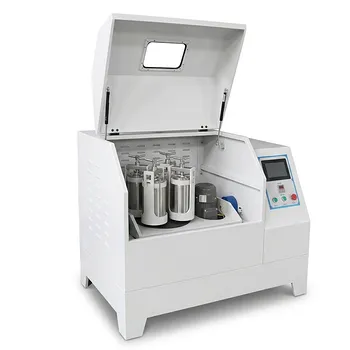
360° Rotating Omnidirectional Laboratory Planetary Ball Mill for Homogeneous Ultra-Fine Grinding and Mixing
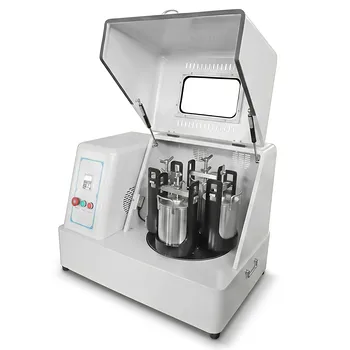
Vertical Square Planetary Ball Mill for Laboratory Sample Preparation and Nanoscale Grinding
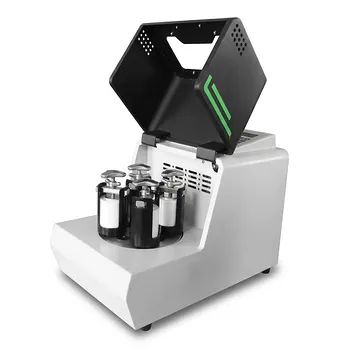
Miniature Planetary Ball Mill with Vacuum Grinding and High Efficiency for Laboratory Sample Preparation
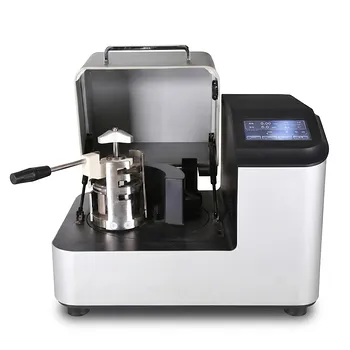
High Energy Laboratory Planetary Ball Mill for Nano Grinding and Material Science Sample Preparation
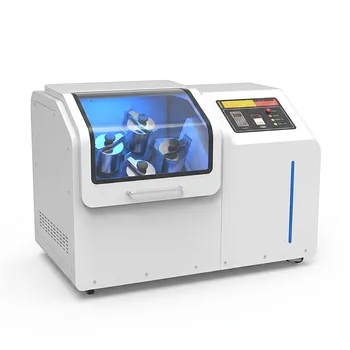
High Energy Omnidirectional Planetary Ball Mill 16L
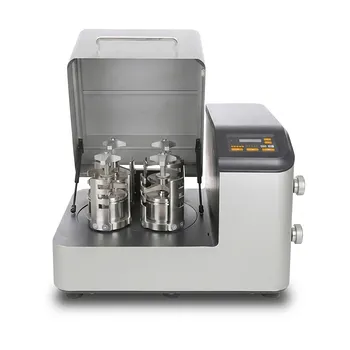
High Energy Planetary Ball Mill for Nano Scale Grinding and Colloidal Mixing in Material Science Research
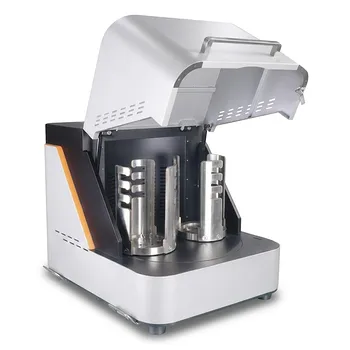
High Energy Laboratory Planetary Ball Mill for Nano Grinding and Colloidal Mixing of Hard and Brittle Materials
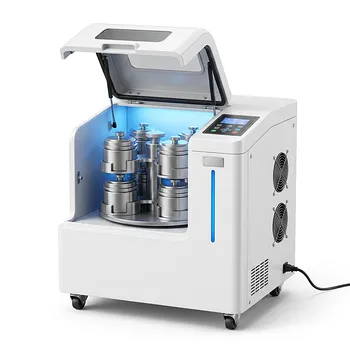
High Energy Omnidirectional Planetary Ball Mill 20L
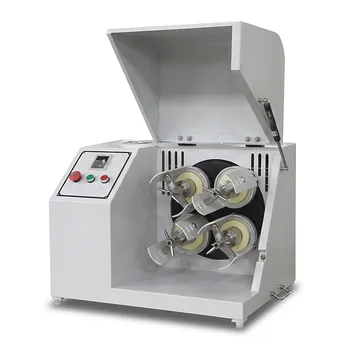
Horizontal Light Duty Planetary Ball Mill for Laboratory Sample Preparation
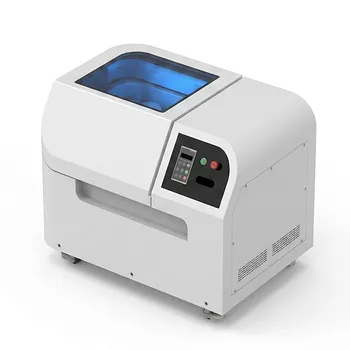
8L Planetary Ball Mill for Laboratory Grinding and Sample Preparation
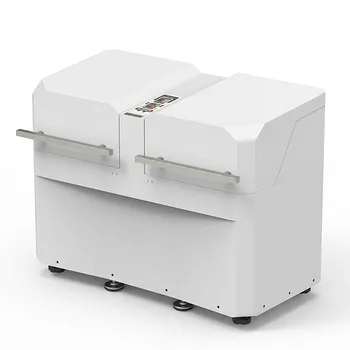
Dual Station Planetary Ball Mill 24L
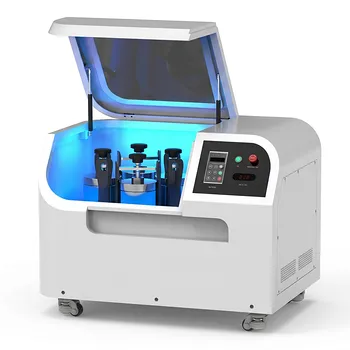
Planetary Ball Mill 12L

Nano High Energy Vibratory Ball Mill for Laboratory Sample Preparation
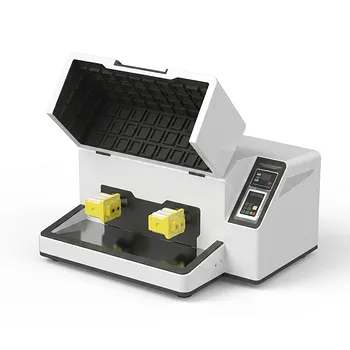
Multi-Platform Nanoscale High-Energy Vibratory Ball Mill
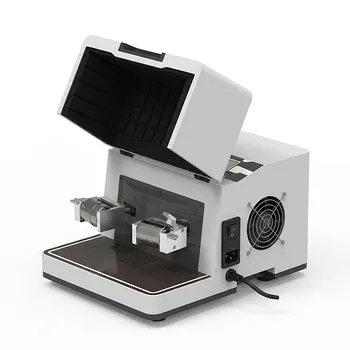
High Energy Hybrid Vibratory Ball Mill for Grinding Mixing and Cell Disruption