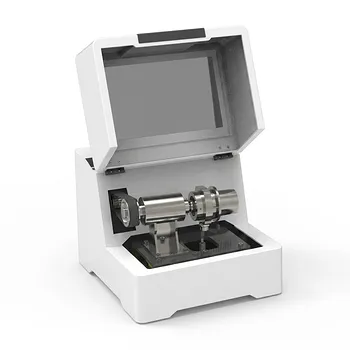
What is the function of a planetary ball mill in lead-free piezoceramic powder prep? Enhance BTO, KNN & NBT Purity
Updated 5 months ago
A planetary ball mill serves as the primary mechanism for particle refinement and molecular-level homogenization in lead-free piezoceramic production. It utilizes high-speed rotation to generate intense centrifugal, impact, and shear forces that reduce synthesized ceramic powders to micron or sub-micron scales. This high-energy mechanical input is essential for increasing the specific surface area and reactivity of powders like Barium Titanate (BTO), Potassium Sodium Niobate (KNN), and Sodium Bismuth Titanate (NBT).
The core function of the planetary ball mill is to transform raw precursors into a highly reactive, homogenous state that ensures stoichiometric precision and facilitates the formation of a pure perovskite phase during subsequent thermal processing.
The Mechanism of High-Energy Milling
Force Generation and Impact
The planetary ball mill operates by rotating a grinding jar in one direction while the supporting sun disk rotates in the opposite direction. This motion creates a complex field of centrifugal forces, friction, and high-impact collisions between the grinding media (balls) and the powder.
Particle Size Reduction
These mechanical forces effectively crush initial oxide and carbonate raw materials into micron- or nano-sized particles. By reducing the powder to sub-micron sizes, the mill significantly increases the specific surface area, which is a critical factor for the kinetics of subsequent solid-state reactions.
Molecular-Level Homogenization
Beyond simple grinding, the mill ensures a molecular-level uniform distribution of various components. For complex lead-free systems like KNN or KNLN, this atomic-level mixing is necessary to lower the activation energy required for the subsequent calcination reaction.
Impact on Material Characteristics
Enhancement of Powder Reactivity
The high-energy input increases the surface energy of the powder, providing optimal kinetic conditions for chemical reactions. This reactivity is vital for ensuring that the matrix powder can effectively undergo epitaxial growth around seed templates in textured ceramics.
Phase Purity and Stoichiometry
In BTO and NBT systems, the mill deeply mixes raw materials according to specific stoichiometric ratios. This thorough mixing is the core technical stage that prevents the formation of secondary phases and ensures the production of a pure perovskite phase.
Dispersion in Advanced Manufacturing
For applications like 3D printing, the mill improves the dispersion of the powder within organic monomers. This ensures the uniformity of photocurable slurries, which is necessary to maintain optimal photosensitive characteristics during the printing process.
Understanding the Trade-offs and Pitfalls
Contamination Risks
The high-energy nature of planetary milling can lead to media wear, where material from the grinding jars or balls leaches into the ceramic powder. This contamination can degrade the dielectric and piezoelectric properties of the final BTO or KNN component.
Heat Generation and Volatilization
Extensive milling (often up to 12 hours) generates significant heat, which can lead to the agglomeration of fine particles. In systems containing volatile elements like Potassium (K) or Sodium (Na), excessive heat must be managed to prevent shifts in the desired chemical composition.
Medium Selection
The choice of a milling medium, such as anhydrous ethanol, is critical to prevent hydration and ensure a uniform slurry. Improper medium selection can lead to poor powder quality or incomplete reactions during high-temperature calcination.
Optimizing Your Milling Strategy
How to Apply This to Your Process
When preparing lead-free piezoceramic powders, your milling parameters should align with your specific material system and final manufacturing method.
- If your primary focus is pure-phase formation (e.g., BTO/NBT): Prioritize long-duration (10-12 hour) milling to ensure stoichiometric uniformity and atomic-level mixing of raw carbonates and oxides.
- If your primary focus is 3D printing/additive manufacturing: Focus on high-energy refinement to improve powder dispersion in organic monomers, ensuring the slurry remains stable and photosensitive.
- If your primary focus is textured KNN ceramics: Use the mill to achieve sub-micron particle sizes to maximize surface energy, which facilitates uniform grain growth along template directions during sintering.
By mastering the mechanical energy of the planetary ball mill, you establish the foundational material properties required for high-performance, lead-free piezoelectric devices.
Summary Table:
| Key Function | Impact on Material Properties | Industrial Benefit |
|---|---|---|
| Particle Refinement | Reduces particles to sub-micron scales | Increases specific surface area & reaction kinetics |
| Molecular Homogenization | Ensures atomic-level distribution of components | Lowers activation energy for calcination |
| High-Energy Milling | Increases surface energy and reactivity | Facilitates epitaxial growth & pure phase formation |
| Stoichiometric Mixing | Prevents secondary phase formation | Ensures high-quality perovskite phase (BTO/KNN/NBT) |
Elevate Your Piezoceramic Research with KinTek Precision
Achieving the perfect perovskite phase in lead-free ceramics like BTO, KNN, and NBT requires more than just mixing—it requires stoichiometric precision and superior particle refinement.
At KinTek, we provide complete laboratory sample preparation solutions tailored for material science. Our high-energy planetary ball mills, jet mills, and disc mills are engineered to deliver molecular-level homogenization, while our extensive range of Cold/Warm Isostatic Presses (CIP/WIP) and vacuum hot presses ensure optimal compaction for your advanced ceramics.
Ready to optimize your powder processing workflow? Contact KinTek Today for a Custom Solution
References
- А. А. Тихонов, И. Шишковский. Определение глубин полимеризации бессвинцовых пьезокерамических паст для УФ 3D печати. DOI: 10.21883/os.2022.10.53625.3825-22
Mentioned Products
- Vertical Semi Circular Planetary Ball Mill for Laboratory Precision Grinding
- High Energy Planetary Ball Mill for Nano Scale Grinding and Mechanical Alloying
- Vertical Production Planetary Ball Mill for High Throughput Powder Processing
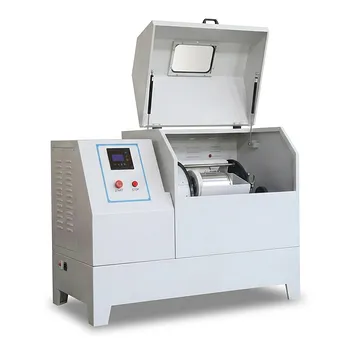
- Heavy Duty Horizontal Planetary Ball Mill for Efficient Industrial Grinding and Sample Preparation
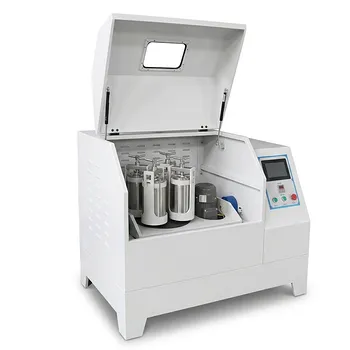
- 360° Rotating Omnidirectional Laboratory Planetary Ball Mill for Homogeneous Ultra-Fine Grinding and Mixing
People Also Ask
- What role does a planetary ball mill play in the synthesis of Li6PS5Cl (LPSCl)? Unlock High Ionic Conductivity
- Why is a planetary ball mill essential for SiBCN-rGO wet-spinning? Achieve Superior Dispersion and Spinnability
- Why is an intermittent grinding process required for perovskites in a planetary ball mill? Ensure Stability & Purity
- Why is a planetary ball mill required for PET micronization? Ensure Accurate Chemical Analysis of Reprocessed PET
- How does mechanized planetary ball milling compare to manual agate grinding? Optimize sulfide standard material precision.

Tech Team · PowderPreparation
Last updated on May 14, 2026
Related Products
Vertical Semi Circular Planetary Ball Mill for Laboratory Precision Grinding
High Energy Planetary Ball Mill for Nano Scale Grinding and Mechanical Alloying
Vertical Production Planetary Ball Mill for High Throughput Powder Processing
Heavy Duty Horizontal Planetary Ball Mill for Efficient Industrial Grinding and Sample Preparation
360° Rotating Omnidirectional Laboratory Planetary Ball Mill for Homogeneous Ultra-Fine Grinding and Mixing
Vertical Square Planetary Ball Mill for Laboratory Sample Preparation and Nanoscale Grinding
Miniature Planetary Ball Mill with Vacuum Grinding and High Efficiency for Laboratory Sample Preparation
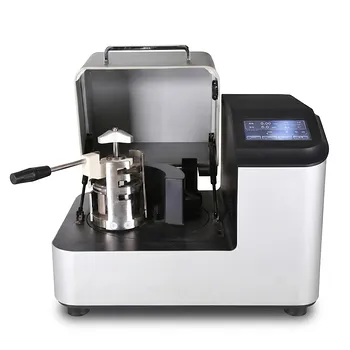
High Energy Laboratory Planetary Ball Mill for Nano Grinding and Material Science Sample Preparation
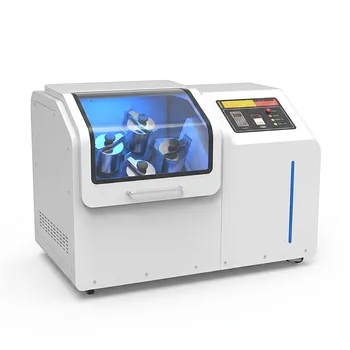
High Energy Omnidirectional Planetary Ball Mill 16L
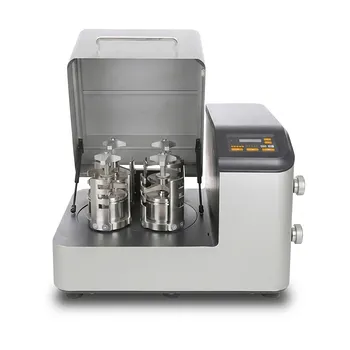
High Energy Planetary Ball Mill for Nano Scale Grinding and Colloidal Mixing in Material Science Research
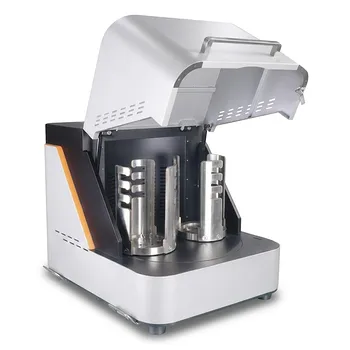
High Energy Laboratory Planetary Ball Mill for Nano Grinding and Colloidal Mixing of Hard and Brittle Materials
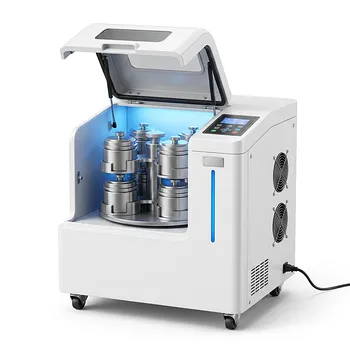
High Energy Omnidirectional Planetary Ball Mill 20L
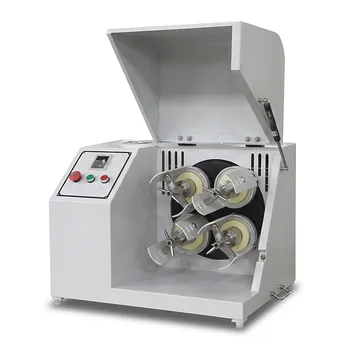
Horizontal Light Duty Planetary Ball Mill for Laboratory Sample Preparation
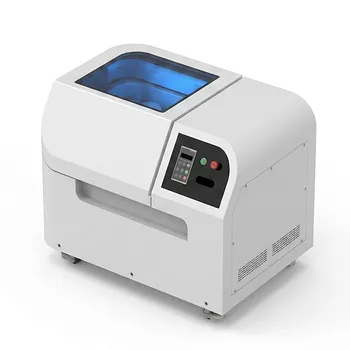
8L Planetary Ball Mill for Laboratory Grinding and Sample Preparation
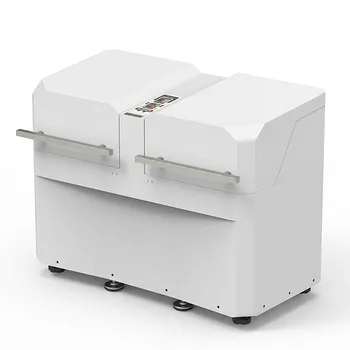
Dual Station Planetary Ball Mill 24L
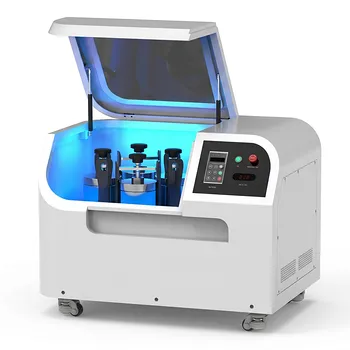
Planetary Ball Mill 12L

Nano High Energy Vibratory Ball Mill for Laboratory Sample Preparation

Multi-Platform Nanoscale High-Energy Vibratory Ball Mill
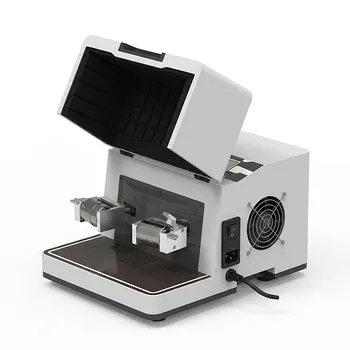
High Energy Hybrid Vibratory Ball Mill for Grinding Mixing and Cell Disruption