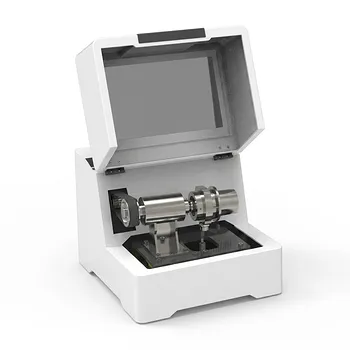
What is the function of a planetary ball mill in the preparation of alumina ceramic lithography slurries? Enhance Slurry Quality
Updated 3 months ago
The planetary ball mill is the primary mechanical tool used to achieve a stable, high-solid-loading suspension for ceramic 3D printing. By applying intense impact and shear forces through high-speed rotation, it ensures that alumina powders, sintering additives, and dispersants are uniformly distributed within a photosensitive resin matrix. This process is essential for breaking down powder agglomerates and creating a homogeneous slurry that possesses the fluidity and chemical consistency required for precision lithography.
The core function of a planetary ball mill in this context is to transform raw, clustered powders into a de-agglomerated, sub-micron suspension. This mechanical homogenization allows for high solid content—often exceeding 70 wt.%—while maintaining a low enough viscosity for successful layer-by-layer printing.
Achieving Physical and Chemical Homogeneity
Breaking Down Powder Agglomerates
Ceramic powders naturally tend to form "soft" agglomerates due to surface energy. The high-energy collisions between the milling media and the material forcefully break these clusters, ensuring that individual sub-micron particles are liberated. This step is vital because even small clusters can cause defects in the final printed part or block the light during the curing process.
Ensuring Chemical Uniformity
Lithography slurries contain complex mixtures of photosensitive resins, dispersants, and sintering aids. The planetary ball mill ensures molecular-level mixing of these components. This prevents localized concentrations of additives, which is critical for achieving a dense microstructure and uniform shrinkage during the subsequent sintering phase.
Optimizing Slurry Fluidity and Viscosity
For effective 3D printing, a slurry must have high solid loading but remain fluid enough to be spread into thin, even layers. The milling process uses mechanical action to improve slurry fluidity, often achieving stable viscosities (such as 176 cP) suitable for processing. By ensuring particles are coated with dispersants, the mill reduces internal friction within the liquid.
Enhancing Final Material Properties
Refinement of Particle Size
High-speed rotation and revolution generate significant friction and impact, which can refine alumina powder to sub-micron levels. Increasing the specific surface area of the powder in this manner increases its reactivity. This refinement leads to better densification and a more refined grain structure in the final ceramic product.
Integration of Reinforcing Phases
When preparing advanced ceramic tools, the mill ensures the uniform coating of nanoparticles (such as nano-zirconia) onto the larger alumina matrix. This creates intragranular structures that refine the final microstructure. These structures are responsible for enhancing the flexural strength and fracture toughness of the finished component.
Understanding the Trade-offs and Pitfalls
Material Contamination Risks
The intensity of planetary milling can lead to wear on the grinding jars and media. To prevent metallic impurity contamination, which would degrade the electrical or mechanical properties of the alumina, operators must use high-purity alumina jars and balls. Matching the media material to the powder material is a standard industry requirement for maintaining high purity.
Heat Generation and Resin Stability
The high-energy nature of the process generates significant heat over extended milling periods, sometimes lasting up to 15 hours. This heat can potentially trigger premature polymerization of the photosensitive resin or degrade the dispersants. Monitoring temperature and implementing cooling intervals are often necessary to preserve the chemical integrity of the slurry.
How to Apply This to Your Project
Making the Right Choice for Your Goal
To optimize your slurry preparation, you must align your milling parameters with your final production requirements.
- If your primary focus is maximizing part density: Use extended milling times with sub-micron media to increase the powder reactivity and ensure the perfect distribution of sintering aids.
- If your primary focus is printing speed and reliability: Prioritize the de-agglomeration phase to achieve the lowest possible viscosity at high solid loadings, ensuring smooth layer recoating.
- If your primary focus is mechanical toughness: Utilize high-energy settings to embed nano-reinforcing phases into the ceramic matrix, creating the subgrain boundaries necessary for fracture resistance.
The planetary ball mill is the bridge between raw chemical components and a high-performance, printable material, dictating both the ease of manufacturing and the quality of the final ceramic part.
Summary Table:
| Function | Key Benefit | Impact on 3D Printing |
|---|---|---|
| De-agglomeration | Breaks powder clusters | Prevents printing defects and ensures smooth light curing |
| Homogenization | Uniform resin/additive mixing | Ensures consistent shrinkage and a dense microstructure |
| Viscosity Control | Reduces internal friction | Enables thin, even layer recoating at high solid loadings |
| Size Refinement | Produces sub-micron particles | Increases reactivity for better densification and toughness |
Elevate Your Material Research with Precision Engineering
Achieving the perfect high-solid-loading slurry requires more than just chemistry—it requires the right mechanical precision. At [Brand Name], we provide complete laboratory sample preparation solutions for material science, specializing in high-performance powder processing and compaction equipment.
Our extensive lineup is designed to support your entire workflow:
- Slurry Preparation: High-energy planetary ball mills, jet mills, and defoaming mixers for air-free, homogeneous suspensions.
- Material Processing: Jaw/roll crushers, cryogenic grinders, and vibratory sieve shakers for precise particle size control.
- Advanced Compaction: A full spectrum of hydraulic presses, including Cold/Warm Isostatic Presses (CIP/WIP), vacuum hot presses, and XRF pellet presses.
Ready to optimize your alumina ceramic 3D printing results? Contact our technical experts today to find the ideal equipment solution for your laboratory’s specific needs.
References
- Guoqian LIU, Rujie He. Effect of Solid Loading on the Property of Al<sub>2</sub>O<sub>3</sub> Ceramics in Stereolithographic Additive Manufacturing. DOI: 10.15541/jim20210636
Mentioned Products
- Vertical Semi Circular Planetary Ball Mill for Laboratory Precision Grinding
- High Energy Planetary Ball Mill for Nano Scale Grinding and Mechanical Alloying
- Vertical Production Planetary Ball Mill for High Throughput Powder Processing
- Heavy Duty Horizontal Planetary Ball Mill for Efficient Industrial Grinding and Sample Preparation
- 360° Rotating Omnidirectional Laboratory Planetary Ball Mill for Homogeneous Ultra-Fine Grinding and Mixing
People Also Ask
- What role does a planetary ball mill play in the synthesis of Li6PS5Cl (LPSCl)? Unlock High Ionic Conductivity
- Why is a planetary ball mill essential for SiBCN-rGO wet-spinning? Achieve Superior Dispersion and Spinnability
- Why is an intermittent grinding process required for perovskites in a planetary ball mill? Ensure Stability & Purity
- Why is a planetary ball mill required for PET micronization? Ensure Accurate Chemical Analysis of Reprocessed PET
- How does mechanized planetary ball milling compare to manual agate grinding? Optimize sulfide standard material precision.

Tech Team · PowderPreparation
Last updated on Jun 03, 2026
Related Products
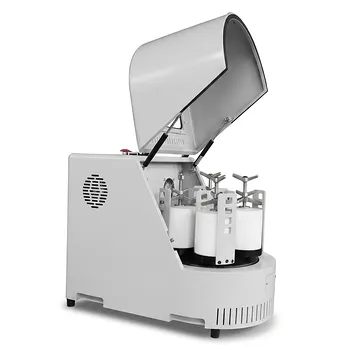
Vertical Semi Circular Planetary Ball Mill for Laboratory Precision Grinding
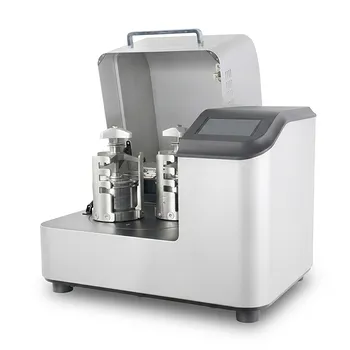
High Energy Planetary Ball Mill for Nano Scale Grinding and Mechanical Alloying

Vertical Production Planetary Ball Mill for High Throughput Powder Processing
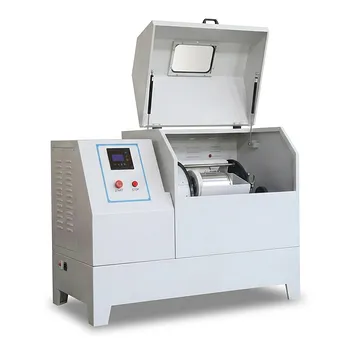
Heavy Duty Horizontal Planetary Ball Mill for Efficient Industrial Grinding and Sample Preparation
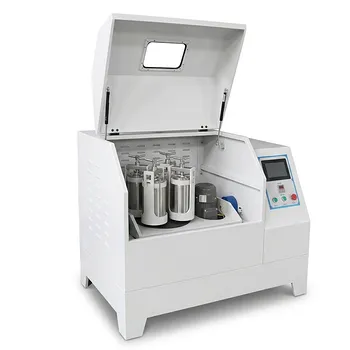
360° Rotating Omnidirectional Laboratory Planetary Ball Mill for Homogeneous Ultra-Fine Grinding and Mixing
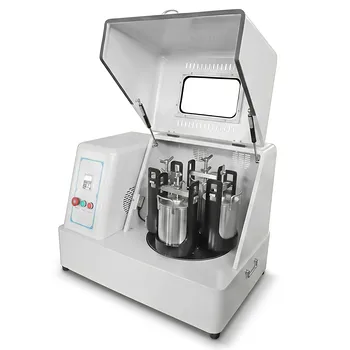
Vertical Square Planetary Ball Mill for Laboratory Sample Preparation and Nanoscale Grinding
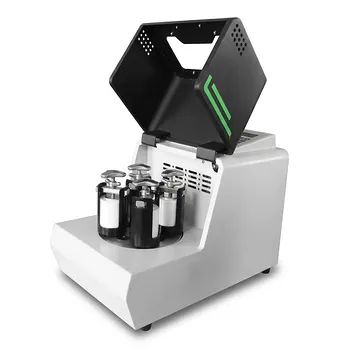
Miniature Planetary Ball Mill with Vacuum Grinding and High Efficiency for Laboratory Sample Preparation
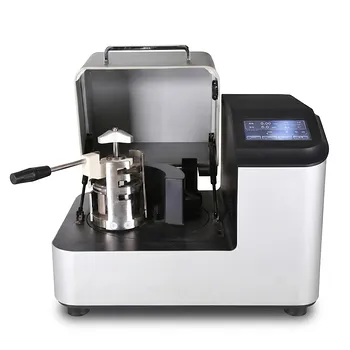
High Energy Laboratory Planetary Ball Mill for Nano Grinding and Material Science Sample Preparation

High Energy Omnidirectional Planetary Ball Mill 16L
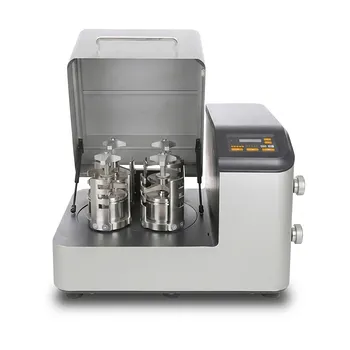
High Energy Planetary Ball Mill for Nano Scale Grinding and Colloidal Mixing in Material Science Research
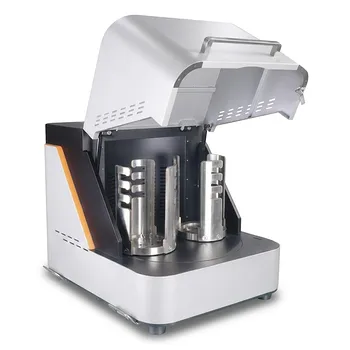
High Energy Laboratory Planetary Ball Mill for Nano Grinding and Colloidal Mixing of Hard and Brittle Materials
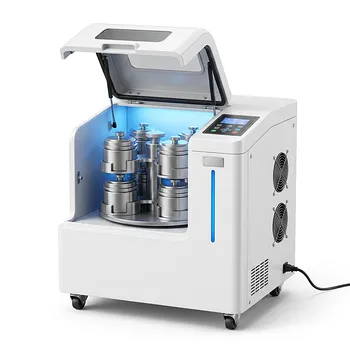
High Energy Omnidirectional Planetary Ball Mill 20L
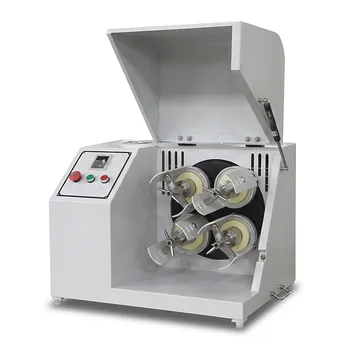
Horizontal Light Duty Planetary Ball Mill for Laboratory Sample Preparation
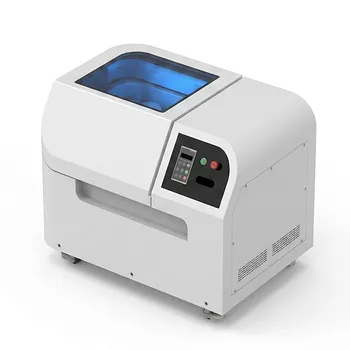
8L Planetary Ball Mill for Laboratory Grinding and Sample Preparation
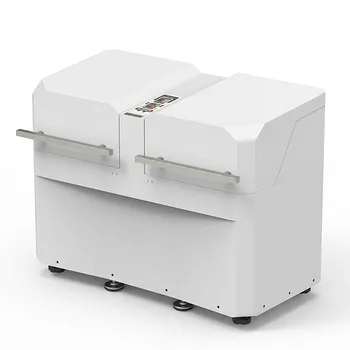
Dual Station Planetary Ball Mill 24L
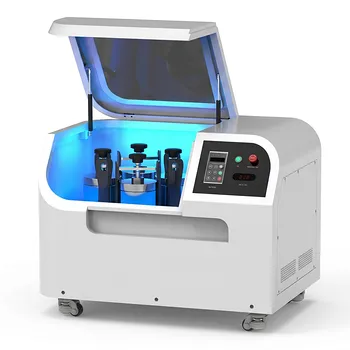
Planetary Ball Mill 12L

Nano High Energy Vibratory Ball Mill for Laboratory Sample Preparation
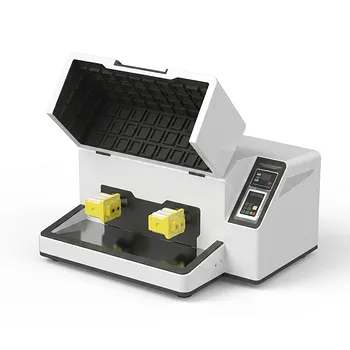
Multi-Platform Nanoscale High-Energy Vibratory Ball Mill
High Energy Hybrid Vibratory Ball Mill for Grinding Mixing and Cell Disruption