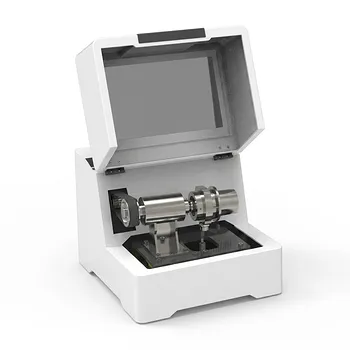
What is the function of a planetary ball mill in the preparation of AlFeNiCoCr high-entropy alloy powders? Master HEAs
Updated 5 months ago
The planetary ball mill serves as the primary engine for mechanical alloying, transforming discrete elemental metal powders into a singular, homogeneous composite. By utilizing high-energy impact and shear forces, the mill induces repeated deformation, cold welding, and fragmentation, which are essential for achieving the atomic-level mixing required for AlFeNiCoCr high-entropy alloys (HEAs).
Core Takeaway: The planetary ball mill is not merely a mixer; it is a high-energy reactor that facilitates solid-state diffusion and grain refinement, ensuring the AlFeNiCoCr powder reaches the microscopic uniformity necessary for high-performance applications like laser cladding.
The Mechanics of High-Energy Milling
Generation of Impact and Shear Forces
The mill operates through high-speed planetary motion, imparting significant kinetic energy to the grinding balls. These balls collide with the elemental powders, creating intense impact and shear forces that far exceed those of conventional mixing methods.
Deformation, Cold Welding, and Fragmentation
Under these forces, metal particles undergo a continuous cycle of plastic deformation and cold welding. As the process continues, these welded particles are subjected to fragmentation, which exposes fresh surfaces and further promotes the integration of aluminum, iron, nickel, cobalt, and chromium.
Initial Mixing and Mechanical Alloying
This repetitive cycle facilitates mechanical alloying, where elements are forced into a solid solution at the atomic level. This transition from a simple physical mixture to an alloyed state is a critical prerequisite for forming the stable solid solution structures characteristic of HEAs.
Achieving Microscopic Homogeneity
Atomic-Level Diffusion
The high energy of the planetary mill drives solid-state diffusion, allowing different metallic atoms to migrate across particle boundaries. This ensures that the five primary elements are distributed equiatomically throughout the entire powder volume.
Grain Refinement and Reactive Activity
The milling process significantly refines grain size and increases the surface area of the powder particles. This heightened reactive activity is essential for subsequent thermal processes, such as laser melting deposition, as it aids in the formation of stable phases.
Prevention of Macroscopic Segregation
By achieving a high degree of physical blending, the mill prevents macroscopic segregation during subsequent processing. This uniformity ensures that the final coating or component possesses consistent mechanical and chemical properties across its entire structure.
Understanding the Trade-offs and Pitfalls
Risk of Powder Contamination
High-energy milling involves constant contact between the grinding media and the powder, which can introduce impurities from the balls or the vial walls. Selecting the appropriate grinding media material (such as zirconia or stainless steel) is crucial to minimize unwanted chemical alterations.
Oxidation and Environmental Control
The increased surface activity of refined powders makes them highly susceptible to oxidation. To maintain the integrity of the AlFeNiCoCr alloy, milling must often be conducted in an inert gas atmosphere or with specific process control agents.
Managing Powder Flowability
While fragmentation refines the particles, excessive milling can lead to irregular shapes or extreme fineness that hampers powder flowability. Precise control over rotation speeds and milling duration is required to ensure the powder remains suitable for automated feeding systems in laser cladding.
How to Optimize Milling for Your Project
Implementation Guidelines
Success in HEA powder preparation depends on aligning the milling parameters with your specific manufacturing goals.
- If your primary focus is atomic-level solid solution: Prioritize longer milling durations and higher rotation speeds to maximize solid-state diffusion and element integration.
- If your primary focus is powder flowability for laser cladding: Focus on optimizing the ball-to-material ratio and using process control agents to maintain spherical particle morphology and prevent excessive fracturing.
- If your primary focus is minimizing contamination: Utilize grinding media that match the alloy composition or employ high-hardness ceramic vials to reduce wear-induced impurities.
Through precise control of mechanical energy, the planetary ball mill transforms raw elemental powders into a sophisticated, reactive material ready for advanced metallurgical fabrication.
Summary Table:
| Milling Process Phase | Primary Function | Impact on AlFeNiCoCr Powder |
|---|---|---|
| High-Energy Impact | Deformation & Fragmentation | Breaks down elemental particles and creates fresh, reactive surfaces. |
| Mechanical Alloying | Cold Welding & Mixing | Forces discrete elements into a single-phase solid solution at the atomic level. |
| Solid-State Diffusion | Atomic Migration | Ensures equiatomic distribution and prevents macroscopic segregation. |
| Grain Refinement | Particle Size Reduction | Increases surface area and reactivity for subsequent laser cladding or sintering. |
Elevate Your HEA Research with Precision Powder Solutions
Achieving the perfect AlFeNiCoCr high-entropy alloy requires more than just mixing—it requires high-energy precision. As a leader in material science laboratory sample preparation, we provide the specialized equipment needed to transform raw elements into high-performance powders.
Our Comprehensive Solutions Include:
- Advanced Milling: High-energy planetary ball mills, jet mills, and cryogenic grinders for superior grain refinement.
- Material Processing: Robust jaw/roll crushers and sieve shakers for precise particle size control.
- Advanced Compaction: A full spectrum of hydraulic presses, including Cold/Warm Isostatic Presses (CIP/WIP), vacuum hot presses, and XRF pellet presses.
- Homogenization: Specialized powder and defoaming mixers for consistent material integrity.
Whether you are focusing on atomic-level diffusion or optimizing powder flowability for laser cladding, our equipment ensures reliable, repeatable results.
Contact our technical experts today to optimize your HEA production workflow!
References
- Huaqing Yi, Yi Yang. Molten Aluminum-Induced Corrosion and Wear-Resistance Properties of ZrB2-Based Cermets Improved by Sintering-Temperature Manipulation. DOI: 10.3390/ma17184451
Mentioned Products
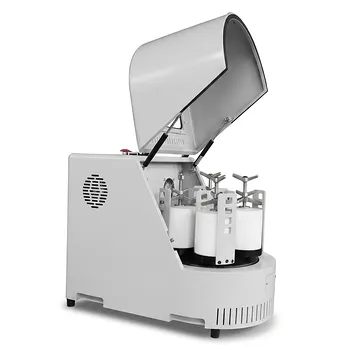
- Vertical Semi Circular Planetary Ball Mill for Laboratory Precision Grinding
- High Energy Planetary Ball Mill for Nano Scale Grinding and Mechanical Alloying
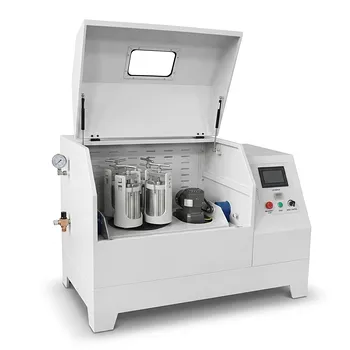
- Vertical Production Planetary Ball Mill for High Throughput Powder Processing
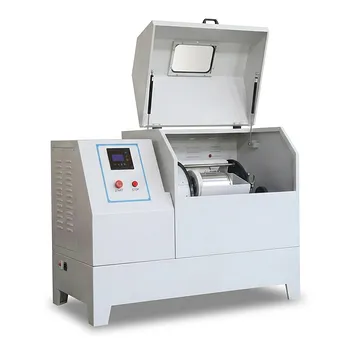
- Heavy Duty Horizontal Planetary Ball Mill for Efficient Industrial Grinding and Sample Preparation
- 360° Rotating Omnidirectional Laboratory Planetary Ball Mill for Homogeneous Ultra-Fine Grinding and Mixing
People Also Ask
- What role does a planetary ball mill play in the synthesis of Li6PS5Cl (LPSCl)? Unlock High Ionic Conductivity
- Why is a planetary ball mill essential for SiBCN-rGO wet-spinning? Achieve Superior Dispersion and Spinnability
- Why is an intermittent grinding process required for perovskites in a planetary ball mill? Ensure Stability & Purity
- Why is a planetary ball mill required for PET micronization? Ensure Accurate Chemical Analysis of Reprocessed PET
- How does mechanized planetary ball milling compare to manual agate grinding? Optimize sulfide standard material precision.

Tech Team · PowderPreparation
Last updated on May 14, 2026
Related Products
Vertical Semi Circular Planetary Ball Mill for Laboratory Precision Grinding

High Energy Planetary Ball Mill for Nano Scale Grinding and Mechanical Alloying
Vertical Production Planetary Ball Mill for High Throughput Powder Processing
Heavy Duty Horizontal Planetary Ball Mill for Efficient Industrial Grinding and Sample Preparation
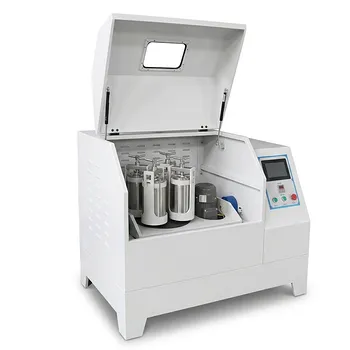
360° Rotating Omnidirectional Laboratory Planetary Ball Mill for Homogeneous Ultra-Fine Grinding and Mixing
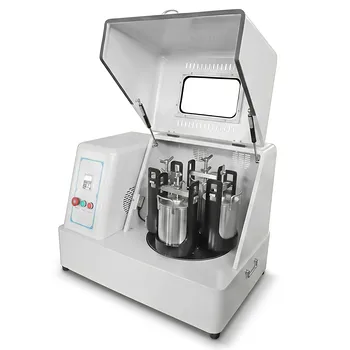
Vertical Square Planetary Ball Mill for Laboratory Sample Preparation and Nanoscale Grinding

Miniature Planetary Ball Mill with Vacuum Grinding and High Efficiency for Laboratory Sample Preparation

High Energy Laboratory Planetary Ball Mill for Nano Grinding and Material Science Sample Preparation
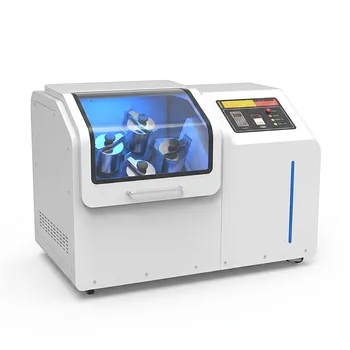
High Energy Omnidirectional Planetary Ball Mill 16L
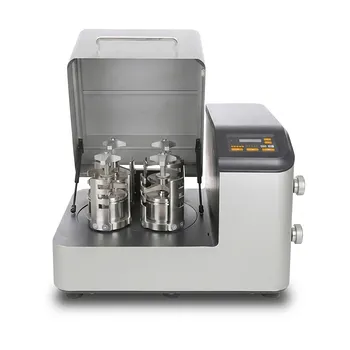
High Energy Planetary Ball Mill for Nano Scale Grinding and Colloidal Mixing in Material Science Research
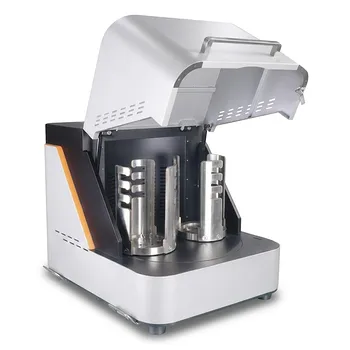
High Energy Laboratory Planetary Ball Mill for Nano Grinding and Colloidal Mixing of Hard and Brittle Materials
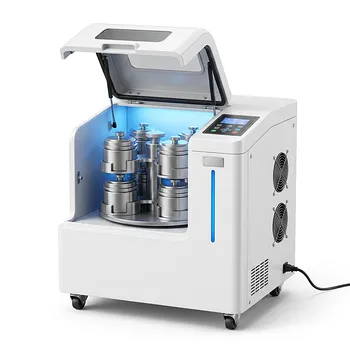
High Energy Omnidirectional Planetary Ball Mill 20L
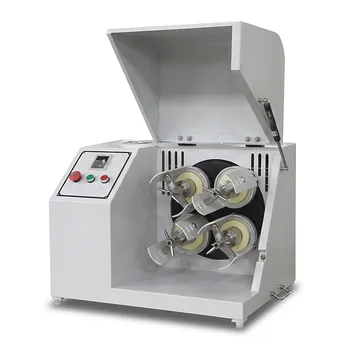
Horizontal Light Duty Planetary Ball Mill for Laboratory Sample Preparation

8L Planetary Ball Mill for Laboratory Grinding and Sample Preparation
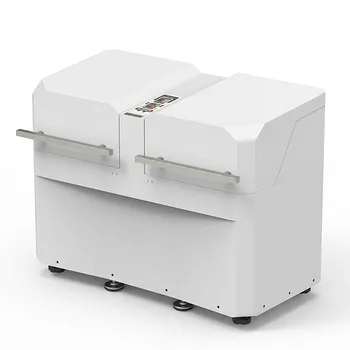
Dual Station Planetary Ball Mill 24L
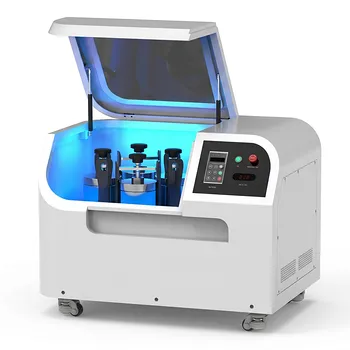
Planetary Ball Mill 12L

Nano High Energy Vibratory Ball Mill for Laboratory Sample Preparation

Multi-Platform Nanoscale High-Energy Vibratory Ball Mill

High Energy Hybrid Vibratory Ball Mill for Grinding Mixing and Cell Disruption