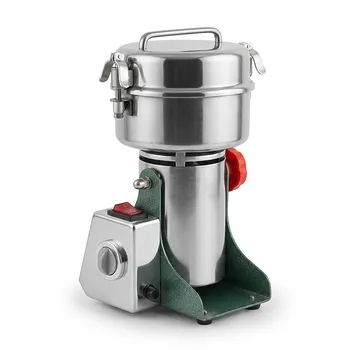
What is the function of a multi-stage laboratory vibratory sieve shaker in the preparation of fly ash-based rubber fillers?
Updated 4 months ago
The primary function of a multi-stage laboratory vibratory sieve shaker in fly ash-based rubber filler preparation is the precise classification of raw fly ash into specific particle size fractions. By utilizing standardized mechanical vibration, this equipment isolates fine segments—typically those smaller than 63 microns—which are essential for creating high-performance composite materials.
Central Takeaway: Laboratory vibratory sieve shakers provide the mechanized control necessary to isolate specific fly ash fractions, serving as the critical foundation for chemical modification and the analysis of particle-size-dependent reinforcing effects in rubber matrices.
Achieving Particle Size Precision
Segregation of Specific Fractions
The sieve shaker utilizes precision test sieves to accurately divide raw fly ash into distinct segments. Common target ranges include particles smaller than 63 microns or those between 63 and 125 microns.
Ensuring Material Consistency
Mechanized vibration ensures that the fly ash fully passes through the standard apertures, removing oversized impurities. This results in a narrowed particle size distribution, which is a prerequisite for repeatable laboratory results and industrial scaling.
Stable and High-Frequency Vibration
The equipment provides stable, high-frequency vibration that is far more reliable than manual sieving. This mechanical consistency ensures that the material grading and Fineness Modulus are determined with high accuracy.
Impact on Downstream Processing
Foundation for Chemical Modification
Obtaining fine fractions through physical sieving is the fundamental first step before chemical modification begins. These isolated particles provide a consistent baseline for surface treatments that improve the bond between the filler and the rubber.
Optimizing Reinforcing Performance
By controlling the particle size, researchers can study how different dimensions impact the reinforcing performance of the rubber. Finer particles generally provide better reinforcement and improved mechanical properties in the final vulcanized product.
Increasing Specific Surface Area
Reducing the powder size to below 90 microns significantly increases the specific surface area of the particles. A higher surface area allows for better dispersion and more effective interaction between the fly ash and the rubber matrix.
Enhancing Matrix Integration
Improving Dispersion Uniformity
Precise size control is critical for evaluating how fillers disperse within polymers like Styrene-Butadiene Rubber (SBR). Uniform particle sizes prevent clumping, ensuring that the filler is distributed evenly throughout the matrix.
Enhancing Reactivity and Density
In materials involving alkali-activation, such as geopolymer-coated fillers, fine particles increase reaction activity. This leads to a denser matrix and improved micro-density, which enhances the durability of the composite.
Understanding the Trade-offs
Mesh Blinding and Clogging
When dealing with ultra-fine fly ash (below 45 microns), mesh blinding can occur where particles become trapped in the sieve openings. This reduces sieving efficiency and requires careful maintenance or the use of specialized cleaning aids.
Vibration Intensity vs. Particle Attrition
While high-frequency vibration is necessary for separation, excessive intensity can lead to particle attrition. This occurs when particles collide with enough force to break apart, potentially skewing the results of the size distribution analysis.
Limitations of Dry Sieving
Vibratory shakers are highly effective for dry materials, but moisture content in fly ash can cause agglomeration. If the raw material is not properly dried, the shaker may fail to separate fine fractions effectively, leading to inaccurate grading.
Selecting Sieve Parameters for Your Application
Careful selection of sieve meshes and vibration settings is required to move from raw fly ash to a functional rubber filler.
- If your primary focus is Maximum Reinforcement: Use 45-micrometer meshes to isolate the finest fractions, as smaller particles offer the highest surface area for matrix bonding.
- If your primary focus is Chemical Modification: Ensure a narrow particle size distribution (e.g., 63–125 µm) to achieve uniform coating thickness and consistent reaction rates across the sample.
- If your primary focus is Dispersion Evaluation: Use multiple sieve stages to create controlled size blends, allowing you to identify the specific diameter that prevents agglomeration in your rubber compound.
By mastering the mechanical separation of fly ash, you establish the rigorous control required to transform industrial waste into a high-value reinforcing filler.
Summary Table:
| Key Function | Technical Detail | Impact on Rubber Preparation |
|---|---|---|
| Particle Classification | Segregation into <63µm or 63–125µm fractions | Ensures consistent reinforcing performance |
| Standardized Vibration | High-frequency mechanical control | Removes oversized impurities and ensures repeatability |
| Surface Area Control | Reducing particles below 90 microns | Increases specific surface area for better matrix bonding |
| Dispersion Optimization | Narrow particle size distribution | Prevents clumping and improves uniformity in polymers like SBR |
| Material Consistency | Accurate Fineness Modulus determination | Provides a stable baseline for chemical surface modification |
Optimize Your Material Preparation for Superior Research Results
Precision in particle size classification is the cornerstone of high-performance composite development. At our company, we specialize in helping researchers transform raw materials like fly ash into advanced rubber fillers through precise powder processing and compaction equipment.
Our extensive product line is designed to meet the rigorous demands of material science:
- Classification & Milling: Vibratory and air-jet sieve shakers for accurate grading, plus planetary ball mills, jet mills, and cryogenic grinders for ultra-fine processing.
- Compaction & Pressing: A complete spectrum of hydraulic presses, including standard lab presses, XRF pellet presses, and advanced Cold/Warm Isostatic Presses (CIP/WIP) or vacuum hot presses.
- Sample Pre-treatment: Jaw/roll crushers, powder mixers, and defoaming mixers for uniform material preparation.
Ready to enhance your lab’s efficiency and achieve repeatable, high-quality results? Contact us today to discuss your specific application and find the perfect solution for your powder processing and sample preparation needs!
References
- Wojciech Orczykowski, Agnieszka Wojteczko. Fly Ash from Lignite Combustion as a Filler for Rubber Mixes—Part II: Chemical Valorisation of Fly Ash. DOI: 10.3390/ma15175979
Mentioned Products
- Laboratory Dry and Wet Three Dimensional Vibratory Sieve Shaker for Particle Analysis
- Small Laboratory Vibratory Sieve Shaker for Powder Gradation and Particle Size Analysis
- Vibratory Sieve Shaker Electromagnetic 3D Motion Powder Particle Size Analyzer for Dry and Wet Sieving
- Stainless Steel Laboratory Vibratory Test Sieve Shaker
- Laboratory Vibratory Test Sieve Shaker for Precision Particle Size Analysis and Powder Grading
People Also Ask
- What is the role of laboratory vibratory sieve shakers in waste PUR foam recycling? Optimize Particle Size and Density
- What is the primary function of a laboratory vibratory sieve shaker in the evaluation of sand liquefaction potential?
- What role do laboratory vibratory sieve shakers and test sieves play before the molding of Nb-Cu composite powders?
- What function does a laboratory vibratory sieve shaker serve in the production process of metakaolin? Optimize Reactivity
- Why is a precision laboratory vibratory sieve shaker necessary for particle size control? Optimize Biomass Carbonization

Tech Team · PowderPreparation
Last updated on Jun 03, 2026
Related Products
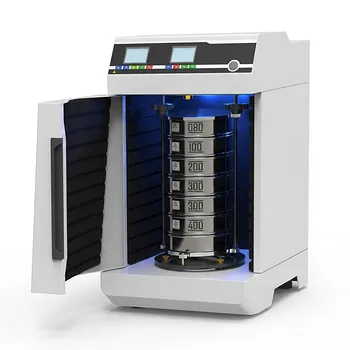
Laboratory Dry and Wet Three Dimensional Vibratory Sieve Shaker for Particle Analysis
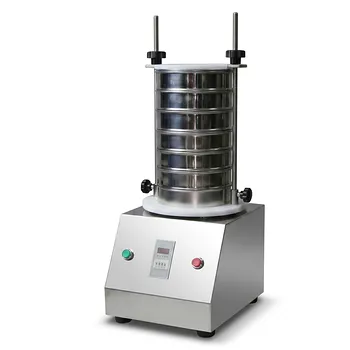
Small Laboratory Vibratory Sieve Shaker for Powder Gradation and Particle Size Analysis
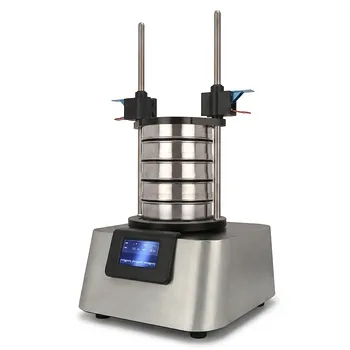
Vibratory Sieve Shaker Electromagnetic 3D Motion Powder Particle Size Analyzer for Dry and Wet Sieving
Stainless Steel Laboratory Vibratory Test Sieve Shaker

Laboratory Vibratory Test Sieve Shaker for Precision Particle Size Analysis and Powder Grading
High Frequency Wet Three-Dimensional Vibrating Sieve Shaker for Dry and Wet Particle Size Analysis
Dry Three Dimensional Vibratory Sieve Shaker

Small Laboratory Vibrating Sieve Shaker for Precise Particle Size Analysis

Heavy Duty Dry Three Dimensional Vibratory Sieve Shaker for Particle Separation
High Frequency Cabinet Type Three-Dimensional Rotary Vibrating Sieve Shaker for Dry Sieving and Particle Classification

Stainless Steel Rotary Vibrating Sieve High Precision Circular Vibratory Separator Industrial Powder Grading Machine Multi Layer Sifting Equipment

Three Dimensional Rotary Vibrating Sieve
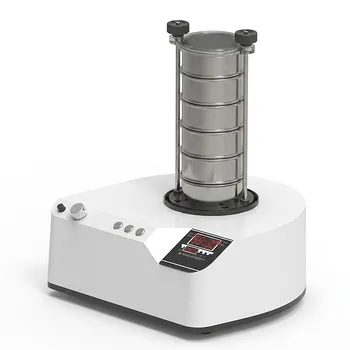
三维电磁微量振动筛分仪
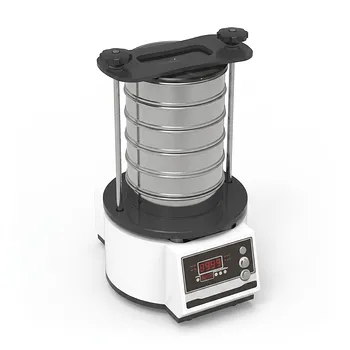
Tapping Oscillating Sieve Shaker for Dry and Wet Particle Size Analysis
Automatic Vibrating Powder Feeder for Laboratory Material Processing Precision Vibratory Hopper Feeder for Granular and Powder Material Handling Industrial Grade Vibrating Tray Feeder for Consistent Material Sample Preparation
Vibratory Superfine Grinder for Ultra Fine Laboratory Powder Milling
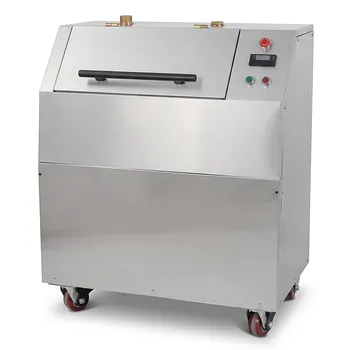
Vibratory Disc Mill for Rapid Fine Grinding and High Throughput Sample Preparation of Hard and Brittle Materials
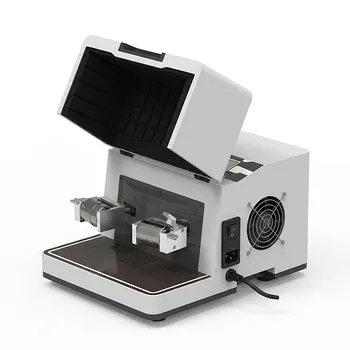
High Energy Hybrid Vibratory Ball Mill for Grinding Mixing and Cell Disruption
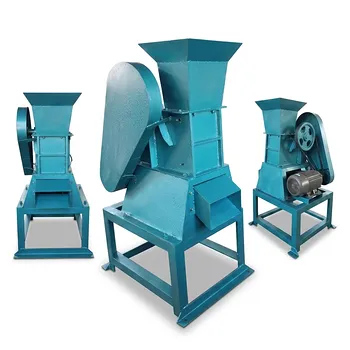
Custom Raised Height Laboratory Jaw Crusher for Precision Sample Preparation in Material Science