What is the function of a mechanical sieve shaker in the grading of Black Silicon Carbide powder? Ensure Precise Grading
Updated 5 months ago
The mechanical sieve shaker functions as a precision grading tool by providing standardized vertical vibration and periodic tapping to separate Black Silicon Carbide particles. This mechanical action forces particles to jump and reorient themselves on the mesh, ensuring that their axes align with the sieve apertures to pass through efficiently. By automating the process, it eliminates the inconsistencies of manual sieving, providing the repeatable energy and time control necessary for strict quality standards.
The core function of a mechanical sieve shaker is to provide a standardized, high-energy environment that ensures particle separation is based strictly on physical dimensions rather than human technique. This allows for precise particle size distribution (PSD) control, which is essential for the performance of silicon carbide in abrasive and industrial applications.
The Mechanics of Particle Orientation
Standardized Vibration and Tapping
A mechanical sieve shaker employs a combination of vertical vibration and periodic tapping to move the material. This specific motion prevents the powder from simply sitting on the mesh, instead forcing the particles to "dance" across the surface.
Alignment of the Particle Axis
Black Silicon Carbide particles are often irregular in shape. The shaker’s mechanical power ensures that particles attempt to pass through the mesh openings in multiple orientations. This allows the particle width—the critical parameter for effective screening—to accurately correspond with the sieve opening size.
Overcoming Particle Interlocking
Mechanical energy is vital for breaking up agglomerates or clusters of fine powder that might otherwise stay on top of the sieve. Constant vibration ensures that individual particles remain independent, allowing for a more accurate representation of the true particle size distribution.
Ensuring Repeatability and Precision
Eliminating Manual Inconsistency
Manual sieving is inherently subjective and varies significantly between operators. A mechanical shaker provides consistent frequency and amplitude, ensuring that every batch of Black Silicon Carbide is subjected to the exact same forces.
Time and Energy Control
Grading requires specific intervals to reach an "end-point" where separation is complete. Mechanical shakers allow for precise time control, which is fundamental for maintaining the integrity of experimental batches and production runs.
Data for Quantitative Evaluation
By using a stack of sieves, the shaker facilitates the collection of mass distribution data. This data is used to calculate the geometric mean diameter and standard deviation, providing a quantitative baseline for the uniformity of the silicon carbide powder.
Understanding the Trade-offs and Limitations
Sieve Blinding and Wear
High-frequency vibration can lead to sieve blinding, where particles become wedged in the apertures. Over time, the aggressive mechanical action required for Black Silicon Carbide—a very hard material—can cause mesh wear, potentially altering the accuracy of the grading results if sieves are not regularly calibrated.
Limits of Mechanical Sieving
While effective for coarse and moderately fine powders, mechanical sieving has limits when dealing with ultra-fine particles (typically below 38 microns). At these levels, electrostatic forces and air resistance can hinder passage through the mesh, sometimes requiring specialized methods like air jet sieving or wet sieving.
How to Apply Grading Results to Your Project
Making the Right Choice for Your Goal
- If your primary focus is consistent abrasive performance: Use standardized mechanical shaking to ensure a narrow particle size distribution, which prevents oversized grains from scratching surfaces.
- If your primary focus is downstream formulation (like pastes): Utilize high-precision sieves with the shaker to remove all coarse agglomerates, ensuring the density and integrity of the final sealed layers.
- If your primary focus is process monitoring: Use the mass distribution data generated by the shaker to calculate the geometric mean diameter, allowing you to detect and correct variations in the milling process.
The mechanical sieve shaker is the foundation of reliable powder grading, transforming a manual task into a scientific, repeatable process.
Summary Table:
| Key Feature | Function in Grading Black Silicon Carbide |
|---|---|
| Vertical Vibration | Forces particles to jump and reorient for efficient mesh passage. |
| Periodic Tapping | Prevents mesh blinding and breaks up particle agglomerates. |
| Standardized Control | Eliminates manual inconsistency with precise time and energy settings. |
| Data Collection | Facilitates mass distribution analysis for quantitative quality control. |
| Particle Alignment | Ensures the particle's critical axis aligns with sieve apertures accurately. |
Elevate Your Material Grading with Professional Lab Solutions
Achieving precise particle size distribution is critical for the performance of materials like Black Silicon Carbide. At our facility, we provide complete laboratory sample preparation solutions tailored for material science and industrial applications.
Our extensive product line supports your entire workflow:
- Grading & Analysis: High-precision vibratory and air-jet sieve shakers with various test meshes.
- Powder Processing: Advanced crushers (jaw/roll), planetary ball mills, jet mills, and specialized mixers.
- Compaction & Sintering: A full spectrum of hydraulic presses, including Cold/Warm Isostatic Presses (CIP/WIP), standard lab presses, and vacuum hot presses.
Whether you are refining abrasives or developing advanced ceramics, our equipment ensures repeatability and industry-leading accuracy. Contact our technical experts today to discuss how our solutions can optimize your powder processing and material testing results!
References
- В. А. Носенко, Aleksey Aleksandrov. DEPENDENCE OF THE MEAN AND DISPERSION OF GRAIN WIDTH OF SILICON CARBIDE BLACK GRINDING POWDERS ON THE MESH SIZE OF A PASS SIEVE. DOI: 10.12737/article_58f9c4d9ecb004.36348769
Mentioned Products
- 三维电磁微量振动筛分仪
- Vibratory Sieve Shaker Electromagnetic 3D Motion Powder Particle Size Analyzer for Dry and Wet Sieving
- Laboratory Dry and Wet Three Dimensional Vibratory Sieve Shaker for Particle Analysis
- Small Laboratory Vibrating Sieve Shaker for Precise Particle Size Analysis
- Stainless Steel Laboratory Vibratory Test Sieve Shaker
People Also Ask
- Why is a standard sieve shaker essential for CBA powders in geopolymers? Enhance Reactivity & Material Strength
- Why are standard metal sieves and sieve shakers necessary for 5-aminotetrazole mixtures? Optimize Thermal & Kinetic Data
- Why Use Sieve Shakers for Gangue Slurry Experiments? Optimize Particle Grading for Superior Results
- What are the advantages of mechanical vs. manual sieving for road dust analysis? Achieve Superior Data Standardization.
- How do high-precision sieve shakers and powder mixers facilitate material circularity in metal PBF? Optimize AM Cycles

Tech Team · PowderPreparation
Last updated on May 14, 2026
Related Products
三维电磁微量振动筛分仪
Vibratory Sieve Shaker Electromagnetic 3D Motion Powder Particle Size Analyzer for Dry and Wet Sieving
Laboratory Dry and Wet Three Dimensional Vibratory Sieve Shaker for Particle Analysis

Small Laboratory Vibrating Sieve Shaker for Precise Particle Size Analysis
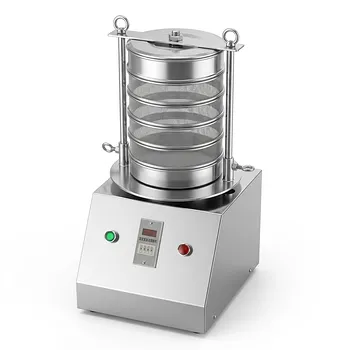
Stainless Steel Laboratory Vibratory Test Sieve Shaker

Heavy Duty Dry Three Dimensional Vibratory Sieve Shaker for Particle Separation
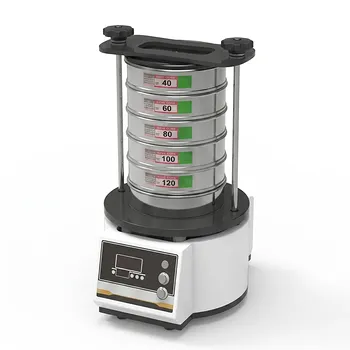
Dry Three Dimensional Vibratory Sieve Shaker
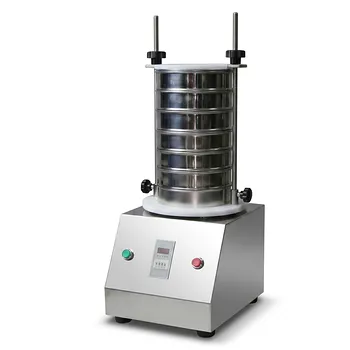
Small Laboratory Vibratory Sieve Shaker for Powder Gradation and Particle Size Analysis

Laboratory Vibratory Test Sieve Shaker for Precision Particle Size Analysis and Powder Grading
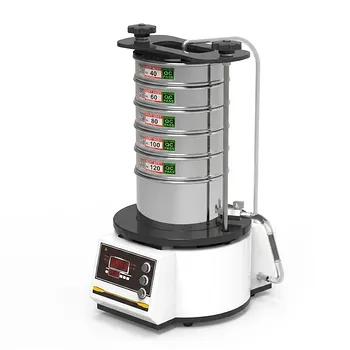
High Frequency Wet Three-Dimensional Vibrating Sieve Shaker for Dry and Wet Particle Size Analysis
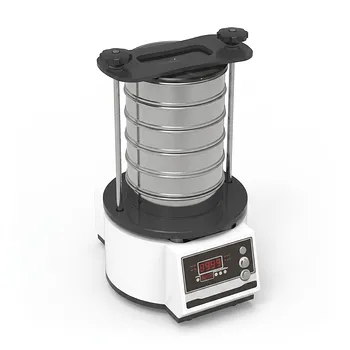
Tapping Oscillating Sieve Shaker for Dry and Wet Particle Size Analysis
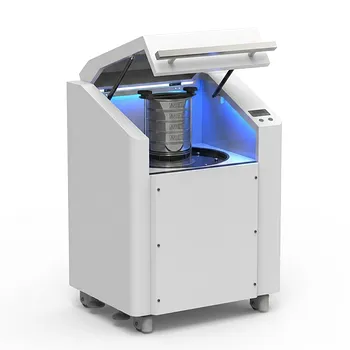
High Frequency Cabinet Type Three-Dimensional Rotary Vibrating Sieve Shaker for Dry Sieving and Particle Classification

Stainless Steel Rotary Vibrating Sieve High Precision Circular Vibratory Separator Industrial Powder Grading Machine Multi Layer Sifting Equipment

Three Dimensional Rotary Vibrating Sieve