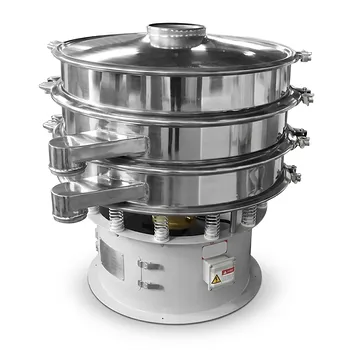
How is a sieve shaker employed in the characterization of piezoelectric energy harvesters? Precision Performance Testing
Updated 4 months ago
In the characterization of piezoelectric energy harvesters, a sieve shaker serves as a high-precision, controlled vibration source. It provides a stable and adjustable excitation environment that simulates specific mechanical conditions, such as fixed oscillation frequencies (e.g., 50 Hz) and precise velocities. This allows researchers to quantitatively measure the electrical output of a device under consistent mechanical stress to determine its harvesting efficiency.
Core Takeaway: The sieve shaker acts as a standardized mechanical stimulus to evaluate how specific design variables, such as electrode geometry, influence a harvester’s ability to convert vibration into electrical energy.
The Sieve Shaker as a Precision Vibration Platform
Simulating Controlled Mechanical Environments
A sieve shaker is repurposed in the laboratory to provide a stable and repeatable oscillation environment. By precisely controlling the oscillation frequency and velocity, it creates a "real-world" mechanical scenario that is measurable and reproducible.
This level of control is essential for establishing a baseline for the harvester's performance. Without a consistent vibration source, it is impossible to determine if changes in power output are due to the device design or fluctuations in the mechanical input.
Evaluating Electrode Design and Efficiency
Researchers use the shaker to observe how different Interdigitated Electrode (IDE) configurations, such as finger width and spacing, impact power generation. By keeping the mechanical excitation constant, any variance in the voltage or current produced can be directly attributed to the electrode architecture.
This comparative analysis is vital for optimizing the layout of the piezoelectric material. It ensures that the harvester is tuned to maximize its energy conversion efficiency before moving into final production.
Ensuring Material Consistency Through Particle Classification
Particle Size Distribution and Packing Density
While the shaker is a testing platform for the finished device, it also plays a critical role in the characterization of the raw ceramic powders used to build the harvester. A vibratory sieve shaker performs particle size classification after ball milling or calcination.
Precise control over the particle size distribution ensures uniform packing density during the pressing and molding phases. This uniformity is a prerequisite for creating a piezoelectric component that will perform reliably during mechanical testing.
Preventing Microstructural Defects
By isolating the correct particle sizes, the shaker helps prevent abnormal grain growth during the sintering process. This results in a dense, uniform microstructure within the ceramic component.
A dense microstructure is necessary for achieving stable electrical properties. If the material itself is inconsistent, its performance during vibration testing will be erratic, leading to false conclusions about the harvester's design.
Understanding the Trade-offs
Frequency and Amplitude Limitations
While sieve shakers provide excellent stability, they are often limited to specific, lower-frequency ranges (such as 50 Hz or 60 Hz). They may not be suitable for characterizing high-frequency harvesters designed for industrial machinery vibrations.
Motion Profiles and Accuracy
Sieve shakers are designed for material separation, meaning their motion may include vertical and horizontal components. For high-precision characterization, researchers must ensure the shaker's motion profile aligns exactly with the intended axis of the piezoelectric harvester to avoid inaccurate efficiency readings.
How to Apply This to Your Project
Recommendations Based on Your Research Goals
- If your primary focus is optimizing device geometry: Use the sieve shaker as a fixed vibration source to conduct comparative studies on IDE finger spacing and width under constant velocity.
- If your primary focus is material reliability: Employ the shaker to classify ceramic powders post-milling, ensuring a uniform particle size that will lead to a dense, defect-free piezoelectric element.
- If your primary focus is wide-band frequency response: Consider supplementing the sieve shaker with a dedicated electrodynamic shaker to test the harvester across a broader range of mechanical frequencies.
By integrating the sieve shaker as both a manufacturing control and a performance testing tool, you ensure the technical integrity of the entire piezoelectric development lifecycle.
Summary Table:
| Application Phase | Role of Sieve Shaker | Key Parameters Controlled |
|---|---|---|
| Performance Testing | Standardized vibration source | Oscillation frequency (50/60 Hz), velocity |
| Design Optimization | Evaluating electrode geometry | Voltage/current output per IDE configuration |
| Material Prep | Powder particle classification | Particle size distribution, packing density |
| Quality Control | Preventing structural defects | Sintering uniformity, grain growth control |
Elevate Your Piezoelectric Research with Precision Lab Solutions
Achieving peak efficiency in energy harvesting requires both a flawless material microstructure and rigorous mechanical testing. Contact us today to discover how our high-precision equipment can streamline your workflow.
At [Your Brand Name], we provide complete laboratory sample preparation solutions tailored for material science. Whether you are developing advanced ceramics or characterizing energy devices, our extensive product range ensures reproducible results:
- Vibratory & Air-Jet Sieve Shakers: For precise particle classification and stable vibration testing.
- Advanced Milling & Crushing: Planetary ball mills, jet mills, and cryogenic grinders for optimal powder preparation.
- Full Spectrum Hydraulic Presses: Standard lab presses, XRF pellet presses, and Cold/Warm Isostatic Presses (CIP/WIP) for high-density material molding.
- Mixing Solutions: High-performance powder and defoaming mixers for material uniformity.
Let our experts help you select the right tools for your specific piezoelectric characterization needs. Reach out now to request a quote or technical consultation!
References
- Khairul Azman Ahmad, Rozan Boudville. Characterization of Polyvinylidene Difluoride-based Energy Harvesting with IDE Circuit Flexible Cantilever Beam. DOI: 10.47836/pjst.30.1.33
Mentioned Products
- Vibratory Sieve Shaker Electromagnetic 3D Motion Powder Particle Size Analyzer for Dry and Wet Sieving
- 三维电磁微量振动筛分仪
- Stainless Steel Laboratory Vibratory Test Sieve Shaker
- Small Laboratory Vibrating Sieve Shaker for Precise Particle Size Analysis
- Heavy Duty Dry Three Dimensional Vibratory Sieve Shaker for Particle Separation
People Also Ask
- How does a vibratory sieve shaker contribute to optimizing the performance of activated carbon? Enhance Adsorption Precision
- Why is a laboratory vibratory sieve shaker necessary for processing magnesium-based borate precursor powders? Boost Activity
- Why use a vibratory sieve shaker to verify coarse aggregate grading in rubberized concrete? Ensure Structural Integrity
- What function do vibratory sieve shakers and standard test sieves serve in the preparation of adsorbents? Key Guide
- What role does a vibratory sieve shaker play in the particle size analysis of ground corn products? Enhance QC Precision

Tech Team · PowderPreparation
Last updated on Jun 03, 2026
Related Products
Vibratory Sieve Shaker Electromagnetic 3D Motion Powder Particle Size Analyzer for Dry and Wet Sieving
三维电磁微量振动筛分仪
Stainless Steel Laboratory Vibratory Test Sieve Shaker
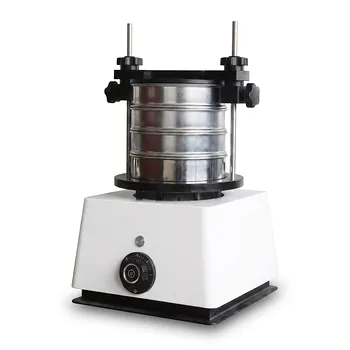
Small Laboratory Vibrating Sieve Shaker for Precise Particle Size Analysis
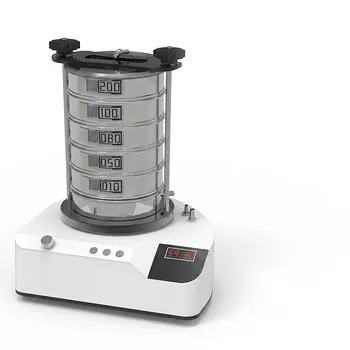
Heavy Duty Dry Three Dimensional Vibratory Sieve Shaker for Particle Separation
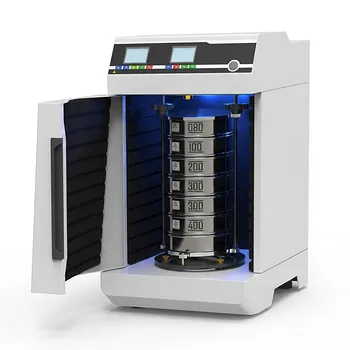
Laboratory Dry and Wet Three Dimensional Vibratory Sieve Shaker for Particle Analysis
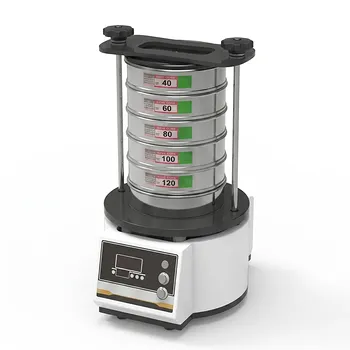
Dry Three Dimensional Vibratory Sieve Shaker
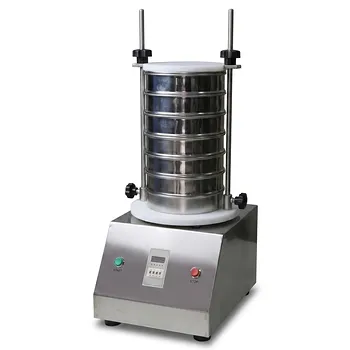
Laboratory Vibratory Test Sieve Shaker for Precision Particle Size Analysis and Powder Grading
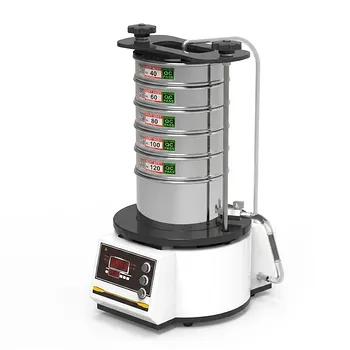
High Frequency Wet Three-Dimensional Vibrating Sieve Shaker for Dry and Wet Particle Size Analysis
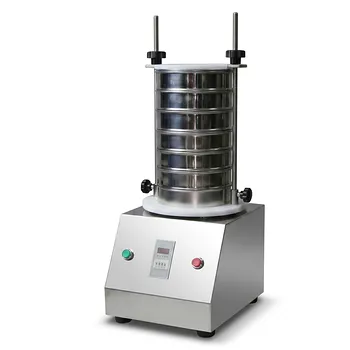
Small Laboratory Vibratory Sieve Shaker for Powder Gradation and Particle Size Analysis
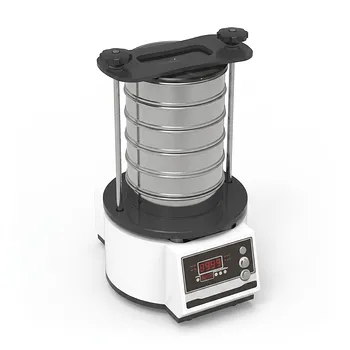
Tapping Oscillating Sieve Shaker for Dry and Wet Particle Size Analysis
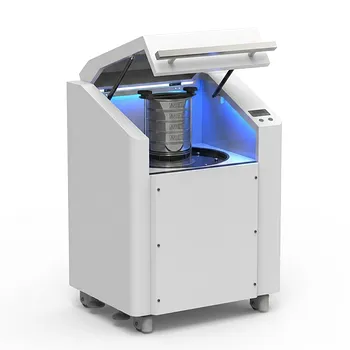
High Frequency Cabinet Type Three-Dimensional Rotary Vibrating Sieve Shaker for Dry Sieving and Particle Classification
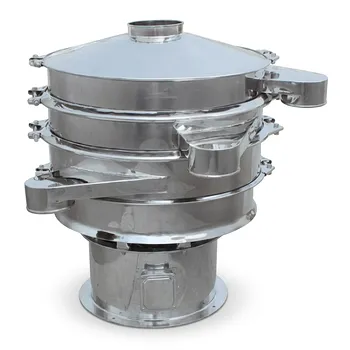
Stainless Steel Rotary Vibrating Sieve High Precision Circular Vibratory Separator Industrial Powder Grading Machine Multi Layer Sifting Equipment
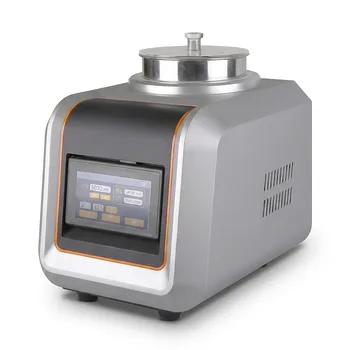
Laboratory Air Jet Sieving Machine for Fine Powder Particle Size Analysis and Deagglomeration