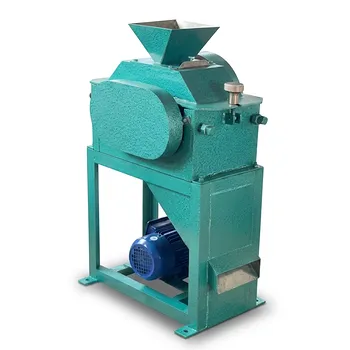
What is the function of a lab hydraulic press in CCTO production? Optimize Density and Sintering
Updated 5 months ago
The primary function of a laboratory hydraulic press in Calcium Copper Titanate (CCTO) production is to transform loose, pre-calcined powder into a dense, disc-shaped "green body." By applying significant uniaxial pressure, the press forces individual particles to rearrange and interlock, creating the high mechanical density and particle-to-particle contact required for successful sintering.
A laboratory hydraulic press provides the critical mechanical force necessary to minimize porosity and maximize the physical contact area in CCTO powders. This compact structure establishes the essential kinetic conditions for solid-phase diffusion and grain boundary migration during the subsequent sintering stage.
Defining the Physical Structure
Geometric Shaping and Integrity
The hydraulic press utilizes precision molds to compress CCTO powder into a specific, manageable form, such as a 10 mm diameter pellet. This process provides the material with the mechanical strength and structural integrity needed for handling and placement in a furnace.
Particle Rearrangement and Interlocking
Under high pressure—often reaching 392 MPa or higher—loose titanate particles undergo rearrangement and minor deformation. This mechanical force overcomes friction between particles, causing them to mechanically interlock and bond without the need for high heat at this stage.
Optimizing Kinetics for Sintering
Maximizing Particle Contact Area
The efficiency of ceramic sintering depends heavily on the physical contact area between individual particles. The press ensures that particles are packed tightly together, which is a prerequisite for atomic migration and grain growth during high-temperature processing.
Establishing Diffusion Pathways
By compressing the CCTO powder, the press creates the kinetic conditions necessary for solid-phase diffusion. These pathways allow the material to transition from a collection of loose particles into a dense ceramic structure during microwave-assisted or conventional sintering.
Enhancing Final Material Performance
Minimizing Internal Porosity
High-pressure compaction effectively eliminates trapped air and reduces large internal pores. Minimizing these voids is essential for improving the breakdown strength and final dielectric properties of the CCTO ceramic.
Ensuring Density Uniformity
Precise pressure control helps maintain a uniform internal density distribution throughout the green body. A consistent density profile reduces the risk of deformation or cracking that can occur due to uneven shrinkage during the firing process.
Understanding the Trade-offs
The Risk of Density Gradients
While high pressure is beneficial, friction between the powder and the mold walls can create density gradients. These gradients may lead to internal stresses, causing the pellet to warp or develop micro-cracks during the expansion and contraction phases of sintering.
Pressure Limits and "Spring-Back"
Applying excessive pressure can lead to a phenomenon known as elastic recovery or "spring-back" once the pressure is released. If the pressure exceeds the material's limits, the green body may laminate or crack immediately upon exiting the mold.
How to Apply This to Your Project
Recommendations for Optimal Compaction
- If your primary focus is maximizing final density: Ensure the use of high, consistent pressure (near 400 MPa) to minimize initial porosity before sintering.
- If your primary focus is preventing structural cracks: Use precision-ground stainless steel molds and apply pressure gradually to allow for air escape and uniform particle rearrangement.
- If your primary focus is high-yield production: Implement precise pressure-holding times to ensure the density is stabilized across the entire volume of the pellet.
The laboratory hydraulic press is the foundational tool that dictates the microstructural quality and structural reliability of the finished CCTO ceramic.
Summary Table:
| Key Function | Mechanical Effect | Impact on Material Performance |
|---|---|---|
| Geometric Shaping | Compresses powder into precise 10mm pellets | Provides structural integrity for furnace handling |
| Particle Interlocking | Rearranges particles under high pressure (>392 MPa) | Establishes kinetic pathways for solid-phase diffusion |
| Porosity Reduction | Eliminates trapped air and internal voids | Enhances breakdown strength and dielectric properties |
| Density Uniformity | Ensures consistent internal pressure distribution | Prevents warping or cracking during the firing process |
Elevate Your Ceramic Research with Precision Compaction
Achieving the perfect CCTO green body requires more than just pressure—it requires precision. At KinTek, we provide complete laboratory sample preparation solutions for material science, specializing in high-performance powder processing and compaction equipment.
Our expertise helps you overcome density gradients and "spring-back" issues with a full spectrum of hydraulic presses, including:
- Isostatic Presses: Cold/Warm Isostatic Presses (CIP/WIP) for uniform 3D compaction.
- Standard Lab Presses: Reliable uniaxial manual and electric solutions.
- Specialized Systems: XRF pellet presses, hot presses, and vacuum hot presses for advanced research.
Beyond compaction, we support your entire workflow with crushers, liquid nitrogen cryogenic grinders, planetary ball mills, and precision sieve shakers. Contact us today to optimize your lab’s efficiency!
References
- Muhammad Azwadi Sulaiman, Mohamad Najmi Masri. Zn-Doped Calcium Copper Titanate Synthesis via Microwave-Assisted Technique. DOI: 10.70464/mjbet.v1i1.1427
Mentioned Products
- 6-Ton Small Single-Punch Tablet Press — Laboratory Powder & Granule Tableting Equipment / Tablet Forming Machine
- 5 Ton Single Punch Tablet Press Laboratory Small Batch Production
- Manual Tablet Press with Dual Scale Pressure Gauge for Pharmaceutical Food Chemical Laboratory Sample Preparation
- 6 Ton Variable Frequency Single Punch Tablet Press
- High Shear Laboratory Emulsifier for Mixing and Homogenization
People Also Ask
- What is the function of a laboratory press in Cr-Ti alloy evaluation? Quantify Fracture Stress & Strength
- What is the function of a laboratory press in assessing the hydrophobic performance of modified vermiculite fillers?
- What is the core function of a laboratory press in the forming of ceramic filter element green bodies? Maximize Density.
- What is the function of a laboratory press in the preparation of ceramic feed rods? Master Density and Precision
- Why is vacuum sealing and flexible packaging necessary for Aluminum Titanate powders during CIP? Ensure Peak Density

Tech Team · PowderPreparation
Last updated on May 14, 2026
Related Products
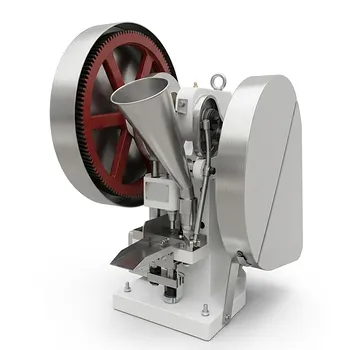
6-Ton Small Single-Punch Tablet Press — Laboratory Powder & Granule Tableting Equipment / Tablet Forming Machine
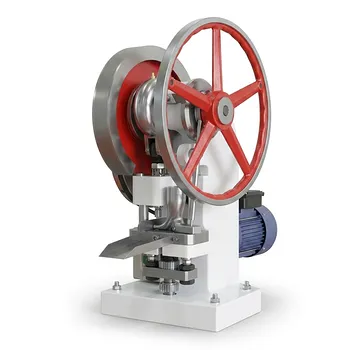
5 Ton Single Punch Tablet Press Laboratory Small Batch Production
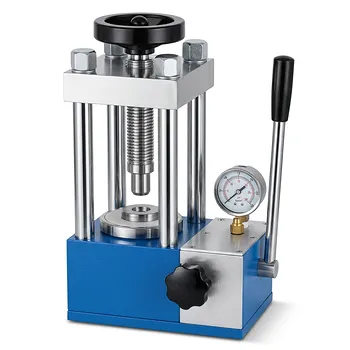
Manual Tablet Press with Dual Scale Pressure Gauge for Pharmaceutical Food Chemical Laboratory Sample Preparation
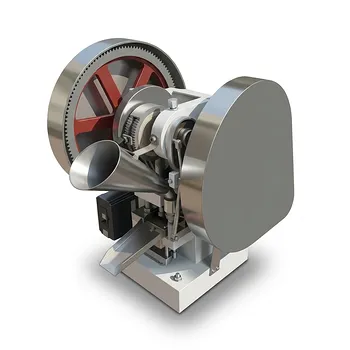
6 Ton Variable Frequency Single Punch Tablet Press
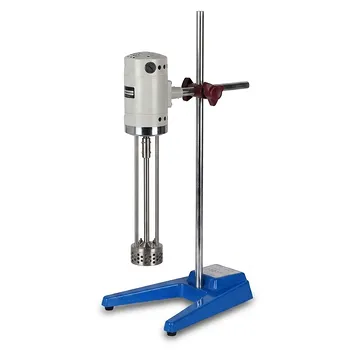
High Shear Laboratory Emulsifier for Mixing and Homogenization
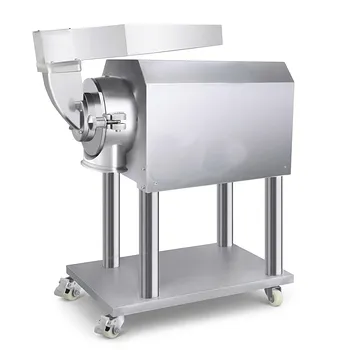
High Speed Small Laboratory Crusher for Dry Material Sample Preparation
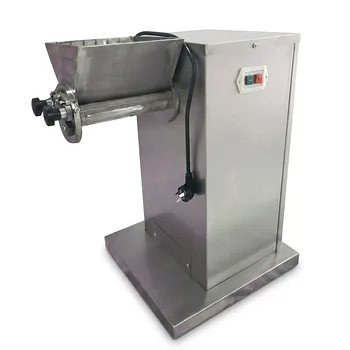
Small Laboratory Oscillating Granulator for Wet and Dry Granulation Processing
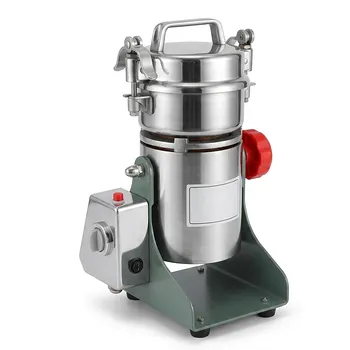
High Speed Swing Type Laboratory Pulverizer for Fine Powder Grinding and Sample Preparation
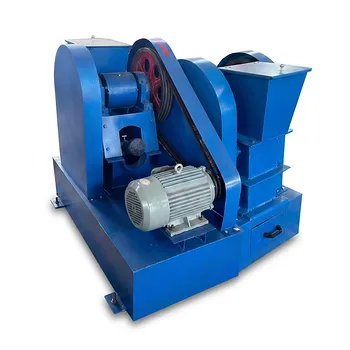
Horizontal Jaw Crusher Medium Hard Material Crushing Laboratory Sample Preparation Equipment