What is the function of a laboratory hydraulic press in solid-state battery prep? Enhance Density & Ion Transport
Updated 4 months ago
High-pressure densification is the core function of a laboratory hydraulic press in solid-state battery fabrication. It applies extreme axial pressure—typically ranging from 200 MPa to 400 MPa—to cathode, anode, and electrolyte powders within a mold. This force triggers plastic deformation and particle rearrangement, transforming loose materials into a dense, monolithic sheet with the structural integrity required for electrochemical performance.
The laboratory hydraulic press serves as the critical tool for overcoming the "solid-solid contact" challenge in all-solid-state batteries. By eliminating internal voids and maximizing interfacial contact, it creates the continuous ion transport pathways necessary for the battery to function.
Achieving Material Densification and Pore Elimination
The Mechanism of Particle Rearrangement
In the initial stages of preparation, electrode and electrolyte materials exist as loose, porous powders. The hydraulic press applies high axial pressure to force these particles to rearrange and fill existing gaps.
Plastic Deformation for Monolithic Structures
As pressure increases, particles undergo plastic deformation, essentially merging into one another. This process eliminates internal pores and creates a dense green body that acts as a solid, unified structure rather than a collection of individual grains.
Gas Expulsion and Uniformity
The pressing process effectively expels trapped gases that would otherwise create insulating pockets. Ensuring a uniform microstructural foundation is vital for preventing cracks during subsequent sintering or battery cycling.
Reducing Interfacial Impedance
Establishing Solid-Solid Contact
Unlike liquid electrolytes that naturally wet electrode surfaces, solid-state components require physical force to touch. The press establishes tight physical contact interfaces between the active materials, conductive agents, and solid electrolytes.
Optimizing Ion Transport Kinetics
By reducing the physical distance and resistance between particles, the press creates continuous ion transport channels. This is a fundamental requirement for achieving high rate performance and efficient lithium-ion movement.
Bonding to Current Collectors
The hydraulic press is also used to laminate electrode films onto current collectors, such as nickel mesh or foam. This strengthens the mechanical bond, ensuring efficient current collection and reducing contact resistance at the terminal interface.
Understanding the Trade-offs and Pitfalls
The Risk of Over-Pressurization
While high pressure is necessary for density, exceeding the material's structural limit can cause micro-cracking or delamination. Excessive force may also damage the mold or lead to "spring-back" effects where the material expands and cracks once pressure is released.
Pressure Distribution Inconsistency
Inadequate mold design or uneven powder loading can lead to non-uniform density across the electrode sheet. Areas of lower density will exhibit higher impedance, leading to "hot spots" and premature battery failure during cycling.
Maintaining Mechanical Integrity
A common pitfall is focusing solely on conductivity while ignoring structural brittleness. A pellet pressed at ultra-high pressure may be highly conductive but too fragile to handle or assemble without breaking.
Applying Pressing Techniques to Your Research
Making the Right Choice for Your Goal
To achieve the best results in your solid-state battery preparation, your pressing strategy should align with your specific research objectives:
- If your primary focus is Maximum Ionic Conductivity: Prioritize higher pressures (up to 400 MPa) to eliminate all possible voids and maximize particle-to-particle contact surface area.
- If your primary focus is Long-Term Cycling Stability: Use moderate, precisely controlled pressure to ensure structural integrity and prevent the micro-cracking that leads to delamination over time.
- If your primary focus is Commercial Scalability: Focus on the "dry-pressing" of standard planar samples to establish a consistent baseline for comparing mass-production techniques like 3D printing or roll-to-roll processing.
By mastering the precise application of axial force, researchers can bridge the gap between raw powder materials and high-performance solid-state energy storage.
Summary Table:
| Core Function | Mechanism & Process | Impact on Battery Performance |
|---|---|---|
| Material Densification | High axial pressure (200-400 MPa) triggers plastic deformation. | Eliminates internal pores; creates a dense, monolithic green body. |
| Interfacial Optimization | Establishes tight physical solid-solid contact interfaces. | Lowers impedance and creates continuous ion transport pathways. |
| Mechanical Bonding | Laminates active materials onto current collectors (mesh/foam). | Strengthens structural integrity and ensures efficient current collection. |
| Structural Uniformity | Expels trapped gases and rearranges powder particles. | Prevents micro-cracks and ensures stable electrochemical cycling. |
Elevate Your Battery Research with Precision Sample Preparation
Achieving the perfect solid-solid contact in all-solid-state batteries requires more than just pressure—it requires precision and reliability. We provide complete laboratory sample preparation solutions specifically designed for material science researchers and battery engineers.
Our specialized equipment range includes:
- Advanced Hydraulic Presses: Standard lab presses, XRF pellet presses, Hot presses, Vacuum hot presses, and Cold/Warm Isostatic Presses (CIP/WIP).
- Powder Processing: High-efficiency crushers (jaw/roll), liquid nitrogen cryogenic grinders, and diverse milling options (planetary ball, jet, sand, disc, and rotor mills).
- Precision Handling: Sieve shakers (vibratory/air-jet), powder mixers, and defoaming mixers.
Whether you are focusing on maximizing ionic conductivity or ensuring long-term cycling stability, our tools are engineered to help you bridge the gap from raw powder to high-performance energy storage.
Ready to optimize your electrode fabrication process?
Contact our experts today for a tailored solution!
References
- Hiroshi Nagata, Kunimitsu Kataoka. Affordable High-performance Sulfur Positive Composite Electrode for All-solid-state Li-S Batteries Prepared by One-step Mechanical Milling without Solid Electrolyte or Li<sub>2</sub>S. DOI: 10.5796/electrochemistry.25-00111
Mentioned Products
- 6-Ton Small Single-Punch Tablet Press — Laboratory Powder & Granule Tableting Equipment / Tablet Forming Machine
- 5 Ton Single Punch Tablet Press Laboratory Small Batch Production
- Manual Tablet Press with Dual Scale Pressure Gauge for Pharmaceutical Food Chemical Laboratory Sample Preparation
- 6 Ton Variable Frequency Single Punch Tablet Press
- High Shear Laboratory Emulsifier for Mixing and Homogenization
People Also Ask
- What is the function of a laboratory press in Cr-Ti alloy evaluation? Quantify Fracture Stress & Strength
- What is the function of a laboratory press in assessing the hydrophobic performance of modified vermiculite fillers?
- What is the core function of a laboratory press in the forming of ceramic filter element green bodies? Maximize Density.
- What is the function of a laboratory press in the preparation of ceramic feed rods? Master Density and Precision
- Why is vacuum sealing and flexible packaging necessary for Aluminum Titanate powders during CIP? Ensure Peak Density

Tech Team · PowderPreparation
Last updated on Jun 03, 2026
Related Products
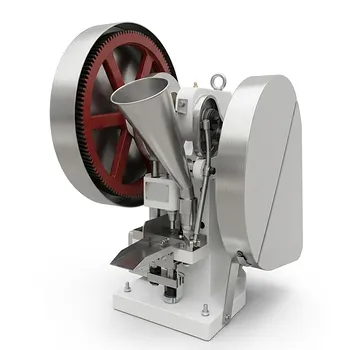
6-Ton Small Single-Punch Tablet Press — Laboratory Powder & Granule Tableting Equipment / Tablet Forming Machine
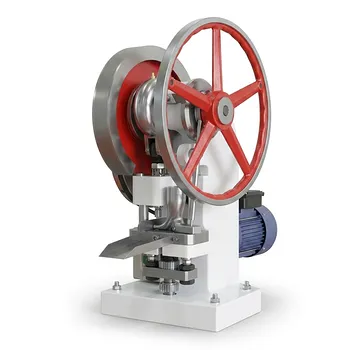
5 Ton Single Punch Tablet Press Laboratory Small Batch Production
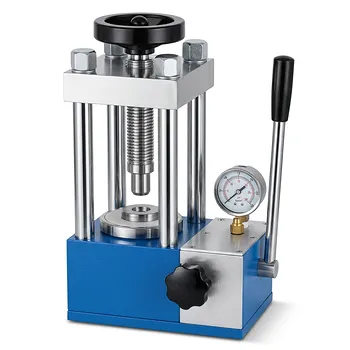
Manual Tablet Press with Dual Scale Pressure Gauge for Pharmaceutical Food Chemical Laboratory Sample Preparation
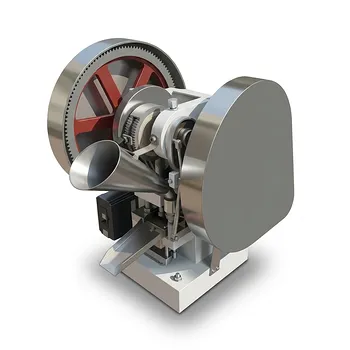
6 Ton Variable Frequency Single Punch Tablet Press
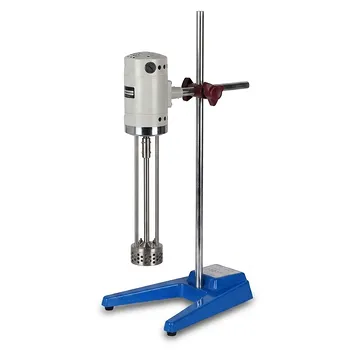
High Shear Laboratory Emulsifier for Mixing and Homogenization
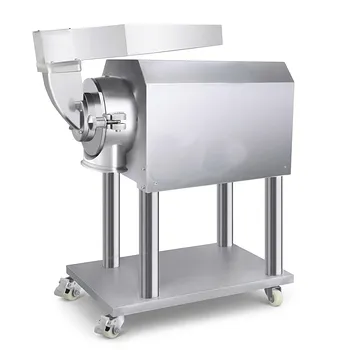
High Speed Small Laboratory Crusher for Dry Material Sample Preparation
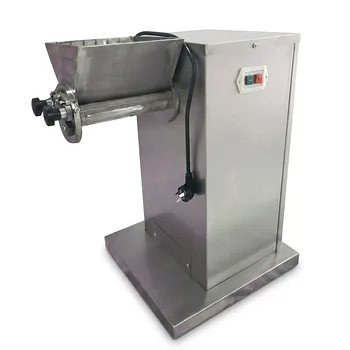
Small Laboratory Oscillating Granulator for Wet and Dry Granulation Processing
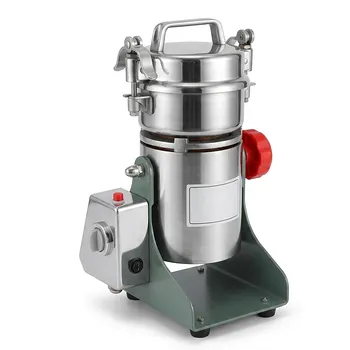
High Speed Swing Type Laboratory Pulverizer for Fine Powder Grinding and Sample Preparation