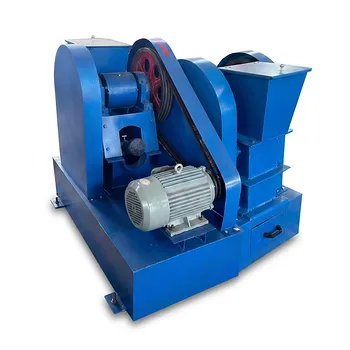
What is the function of a laboratory hydraulic press in the forming stage of reaction-sintered cemented carbide samples?
Updated 3 months ago
The laboratory hydraulic press is the primary tool for powder consolidation in cemented carbide production. It applies high-tonnage axial pressure to transform loose, unstable powder mixtures into "green compacts" that possess a specific geometric shape and sufficient structural integrity for handling and subsequent sintering.
The laboratory hydraulic press serves as the physical foundation for the entire sintering process by establishing the initial green density and particle contact required for atomic diffusion. Precise control over this stage is the only way to ensure dimensional accuracy and prevent internal defects in the final carbide product.
The Mechanisms of Powder Consolidation
Particle Rearrangement and Plastic Deformation
The press uses high pressure, often reaching 294 MPa, to force loose powder particles into a more efficient packing arrangement. As pressure increases beyond simple rearrangement, the particles undergo plastic deformation and mechanical interlocking, which bridges the gaps between individual grains.
Achieving Green Strength
By compressing the mixture within high-strength molds, the press creates a green compact with enough "green strength" to be handled without crumbling. This strength is derived from the intimate contact and mechanical bonding of the particles under load.
Reducing Porosity and Internal Voids
The primary function of the hydraulic load is to eliminate air pockets and reduce initial porosity. Minimizing these voids during the forming stage is critical because large internal pores are difficult or impossible to remove during the subsequent sintering phase.
The Role of Precise Pressure Control
Managing Dimensional Accuracy
Precise pressure control allows manufacturers to achieve a pre-defined geometric shape with high repeatability. This consistency is vital for managing sintering shrinkage, as the amount a part shrinks in the furnace is directly proportional to its initial green density.
Preventing Structural Defects
Inconsistent pressure application can lead to delamination (layer separation) or internal cracking within the green body. A laboratory press with accurate pressure-holding functions ensures that the density remains uniform, preventing the specimen from deforming or "springing back" when removed from the mold.
Shortening Diffusion Paths
For reaction-sintered materials, the press ensures that nano-additives and primary particles are in close proximity. This shortens diffusion paths, which facilitates faster chemical reactions and more uniform grain growth during heat treatment.
Understanding the Trade-offs and Pitfalls
The Risk of Density Gradients
Unidirectional pressing can lead to density gradients, where the top of the sample is denser than the bottom due to internal friction. This often results in "hourglassing" or warping during sintering as different zones shrink at different rates.
Mold Wear and Contamination
Using extremely high pressures to achieve maximum density increases the wear on high-strength molds. Over time, this can lead to dimensional drift or the introduction of trace metallic contaminants into the carbide mixture.
Over-Compaction Issues
Exceeding the optimal pressure can cause internal stresses that lead to "capping" or spontaneous cracking upon pressure release. Finding the balance between maximum density and structural stability is a key technical challenge in the forming stage.
How to Apply This to Your Project
When utilizing a laboratory hydraulic press for cemented carbide samples, your technical approach should shift based on your specific material requirements.
- If your primary focus is Maximum Hardness: Prioritize high-pressure consolidation to achieve the highest possible green density, which minimizes residual porosity in the final part.
- If your primary focus is Dimensional Precision: Focus on the repeatability of the pressure-holding phase to ensure uniform shrinkage rates across multiple batches.
- If your primary focus is Complex Geometries: Utilize bidirectional pressing methods or lubricants to minimize density gradients and prevent cracking during ejection.
The precision of the laboratory hydraulic press during the forming stage ultimately determines whether a cemented carbide sample reaches its theoretical density or fails due to avoidable structural flaws.
Summary Table:
| Key Function | Mechanism | Impact on Sintered Sample |
|---|---|---|
| Powder Consolidation | High-tonnage axial pressure (up to 294 MPa) | Creates stable "green compacts" for handling |
| Porosity Reduction | Elimination of air pockets & voids | Ensures theoretical density and high hardness |
| Structural Integrity | Particle rearrangement & plastic deformation | Prevents cracking and internal delamination |
| Dimensional Control | Precise pressure-holding & repeatability | Manages sintering shrinkage and final geometry |
| Kinetic Enhancement | Shortening of atomic diffusion paths | Facilitates faster reactions and uniform grain growth |
Achieve Perfect Green Density with Our Precision Compaction Solutions
Success in reaction-sintered cemented carbide starts with the perfect press. At Our Laboratory Solutions, we provide a complete spectrum of sample preparation equipment designed specifically for the rigorous demands of material science and powder metallurgy.
How We Add Value to Your Lab:
- Precision Compaction: Our full spectrum of hydraulic presses, including standard lab presses, XRF pellet presses, and vacuum hot presses, ensures uniform density and repeatable results.
- Advanced Technology: For complex geometries and maximum density, explore our Cold/Warm Isostatic Presses (CIP/WIP).
- End-to-End Workflow: We support your entire process with jaw/roll crushers, cryogenic grinders, and high-energy planetary ball mills for superior powder blending.
Don't let inconsistent consolidation ruin your sintering results. Contact our technical experts today to find the ideal pressing solution for your research and production needs.
References
- Victor Ioan Stanciu, Fabienne Delaunois. Reactive Sintering of Cemented Carbides. DOI: 10.3390/alloys4030015
Mentioned Products
- 6-Ton Small Single-Punch Tablet Press — Laboratory Powder & Granule Tableting Equipment / Tablet Forming Machine
- 5 Ton Single Punch Tablet Press Laboratory Small Batch Production
- Manual Tablet Press with Dual Scale Pressure Gauge for Pharmaceutical Food Chemical Laboratory Sample Preparation
- 6 Ton Variable Frequency Single Punch Tablet Press
- High Shear Laboratory Emulsifier for Mixing and Homogenization
People Also Ask
- What is the function of a laboratory press in Cr-Ti alloy evaluation? Quantify Fracture Stress & Strength
- What is the function of a laboratory press in assessing the hydrophobic performance of modified vermiculite fillers?
- What is the core function of a laboratory press in the forming of ceramic filter element green bodies? Maximize Density.
- What is the function of a laboratory press in the preparation of ceramic feed rods? Master Density and Precision
- Why is vacuum sealing and flexible packaging necessary for Aluminum Titanate powders during CIP? Ensure Peak Density

Tech Team · PowderPreparation
Last updated on Jun 03, 2026
Related Products
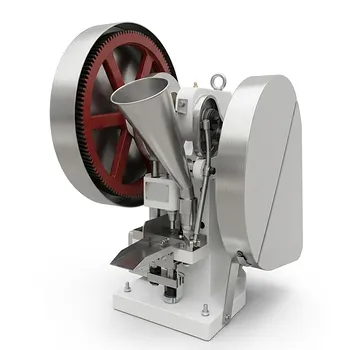
6-Ton Small Single-Punch Tablet Press — Laboratory Powder & Granule Tableting Equipment / Tablet Forming Machine
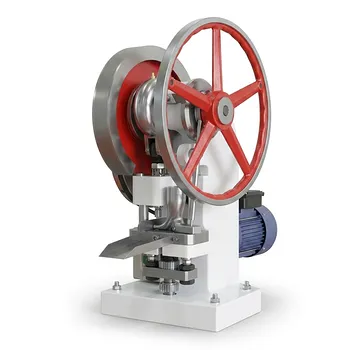
5 Ton Single Punch Tablet Press Laboratory Small Batch Production
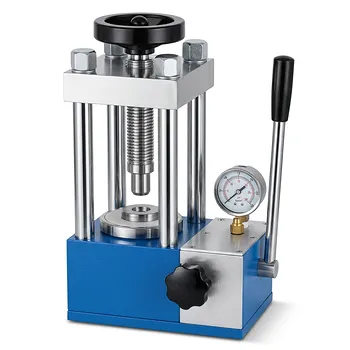
Manual Tablet Press with Dual Scale Pressure Gauge for Pharmaceutical Food Chemical Laboratory Sample Preparation
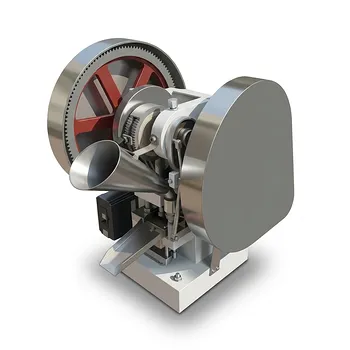
6 Ton Variable Frequency Single Punch Tablet Press
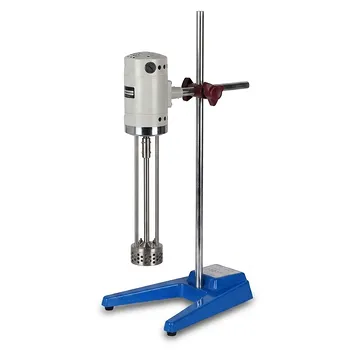
High Shear Laboratory Emulsifier for Mixing and Homogenization
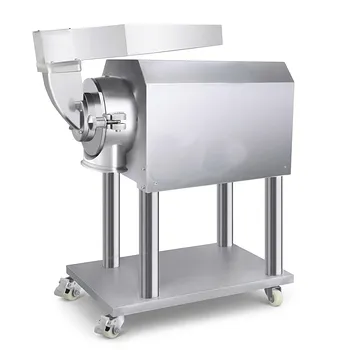
High Speed Small Laboratory Crusher for Dry Material Sample Preparation
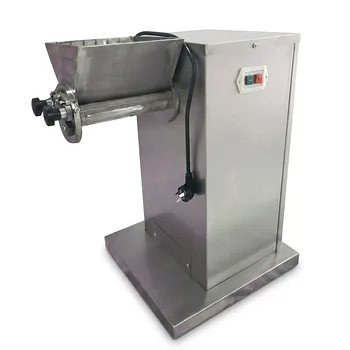
Small Laboratory Oscillating Granulator for Wet and Dry Granulation Processing
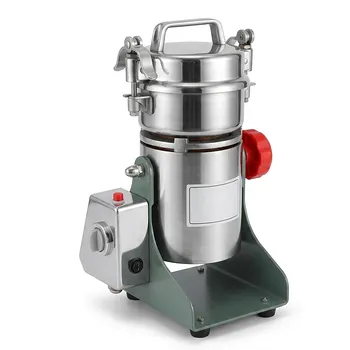
High Speed Swing Type Laboratory Pulverizer for Fine Powder Grinding and Sample Preparation