What is the function of a laboratory hydraulic press in forsterite ceramic green bodies? Optimize Your Consolidation
Updated 4 months ago
The laboratory hydraulic press is the critical instrument for dry-pressing forsterite powder into a cohesive "green body." It applies controlled uniaxial pressure—often through a specialized steel die—to transform loose particles into a compact solid with defined geometry and preliminary structural integrity. This stage establishes the particle-to-particle contact necessary for successful densification during subsequent isostatic pressing or high-temperature sintering.
The primary function of a hydraulic press is to consolidate forsterite powder into a dense, handleable shape by eliminating air voids and maximizing particle contact. This mechanical compaction creates the essential physical foundation for the chemical diffusion and grain growth required during final ceramic sintering.
The Mechanics of Powder Consolidation
Overcoming Friction and Voids
The hydraulic press applies significant axial pressure (frequently reaching up to 400 bar) to overcome the internal friction between forsterite particles. This force facilitates particle rearrangement, forcing the powder to fill voids and effectively eliminating trapped air that would otherwise lead to structural flaws.
Mechanical Interlocking and Shape Formation
As the pressure increases, the powder particles undergo deformation and mechanical interlocking. This process transforms the loose mixture into a green body—a ceramic block with a specific shape, such as a 20 mm diameter pellet, that possesses enough strength for handling and turnover.
Impact on Sintering and Final Density
Optimizing Diffusion Distances
By ensuring the particles are closely packed, the press creates a high green body density. This dense arrangement shortens the atomic diffusion distance, which allows the material to densify more efficiently and potentially at lower temperatures during the sintering phase.
Establishing the Foundational Structure
The hydraulic press sets the initial porosity and density distribution of the ceramic. A uniform distribution is vital because it minimizes large pores, directly improving the breakdown strength and final structural integrity of the sintered forsterite ceramic.
Understanding the Trade-offs
Uniaxial vs. Isostatic Limitations
While a laboratory press is excellent for creating initial shapes, uniaxial pressing can lead to non-uniform density gradients due to friction between the powder and the die walls. For high-performance ceramics, this is why the primary pressing is often viewed as a preliminary step before more uniform methods like isostatic pressing.
Risk of Pressure Flaws
Applying pressure too rapidly or exceeding the material's limits can cause internal laminations or cracking upon ejection from the die. Precise control of the hydraulic system is necessary to ensure the green body remains structurally sound throughout the transition from the mold to the kiln.
How to Apply This to Your Project
To achieve the best results with forsterite ceramic green bodies, tailor your pressing strategy to your final performance requirements:
- If your primary focus is maximum final density: Use the hydraulic press to establish a high-density green body (e.g., at 20 MPa or higher) to facilitate rapid sintering and grain growth.
- If your primary focus is structural uniformity: Follow the initial hydraulic pressing with cold isostatic pressing to resolve density gradients introduced by the uniaxial die.
- If your primary focus is ease of handling: Ensure the use of binders or sufficient pressure to achieve a "green strength" that allows for transport without chipping or crumbling.
Proper utilization of the hydraulic press ensures that your forsterite ceramic has the stable physical foundation required for advanced high-temperature solid-phase reactions.
Summary Table:
| Function | Mechanism | Key Benefit for Ceramics |
|---|---|---|
| Consolidation | Uniaxial Axial Pressure | Transforms loose powder into a cohesive, handleable "green body." |
| Void Elimination | Particle Rearrangement | Removes trapped air and internal friction to prevent structural flaws. |
| Structural Foundation | Mechanical Interlocking | Establishes initial porosity and density distribution for sintering. |
| Sintering Optimization | High Green Density | Shortens atomic diffusion distances for faster, efficient densification. |
Elevate Your Material Research with Precision Compaction
Achieving the perfect green body density is critical for high-performance ceramics. We provide complete laboratory sample preparation solutions for material science, specializing in professional powder processing and compaction equipment.
Our extensive product lines are designed to meet every stage of your workflow:
- Compaction Excellence: A full spectrum of hydraulic presses, including standard lab presses, XRF pellet presses, Hot Presses, and Vacuum Hot Presses.
- Advanced Uniformity: High-precision Cold/Warm Isostatic Presses (CIP/WIP) to eliminate density gradients.
- Powder Preparation: Industrial-grade crushers, cryogenic grinders, and various mills (planetary ball, jet, rotor) alongside powder mixers.
Whether you are forming forsterite ceramics or advanced composites, our equipment ensures the structural integrity and reliability your research demands. Contact us today to find your ideal laboratory solution!
References
- Hamza Milles, Khaled Toualbia. Hot corrosion behavior of Mg\(_{2}\)SiO\(_{4}\) ceramic exposed to molten Na\(_{2}\)SO\(_{4}\) at 900℃ to 1100℃. DOI: 10.55713/jmmm.v34i1.1777
Mentioned Products
- 6-Ton Small Single-Punch Tablet Press — Laboratory Powder & Granule Tableting Equipment / Tablet Forming Machine
- 5 Ton Single Punch Tablet Press Laboratory Small Batch Production
- Manual Tablet Press with Dual Scale Pressure Gauge for Pharmaceutical Food Chemical Laboratory Sample Preparation
- 6 Ton Variable Frequency Single Punch Tablet Press
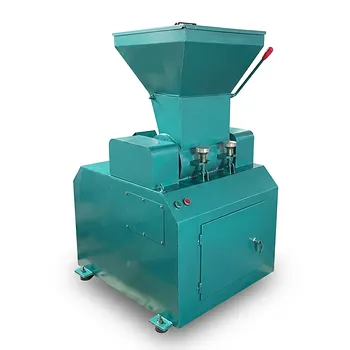
- High Speed Small Laboratory Crusher for Dry Material Sample Preparation
People Also Ask
- What is the function of a laboratory press in Cr-Ti alloy evaluation? Quantify Fracture Stress & Strength
- What is the function of a laboratory press in assessing the hydrophobic performance of modified vermiculite fillers?
- What is the core function of a laboratory press in the forming of ceramic filter element green bodies? Maximize Density.
- What is the function of a laboratory press in the preparation of ceramic feed rods? Master Density and Precision
- Why is vacuum sealing and flexible packaging necessary for Aluminum Titanate powders during CIP? Ensure Peak Density

Tech Team · PowderPreparation
Last updated on May 14, 2026
Related Products
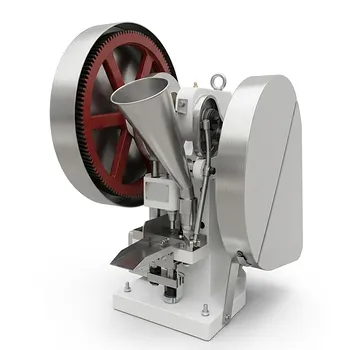
6-Ton Small Single-Punch Tablet Press — Laboratory Powder & Granule Tableting Equipment / Tablet Forming Machine
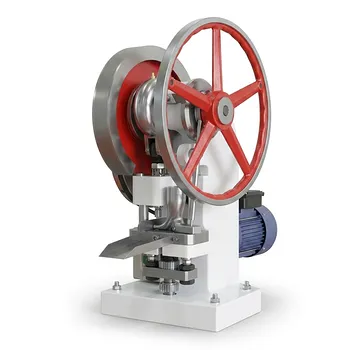
5 Ton Single Punch Tablet Press Laboratory Small Batch Production
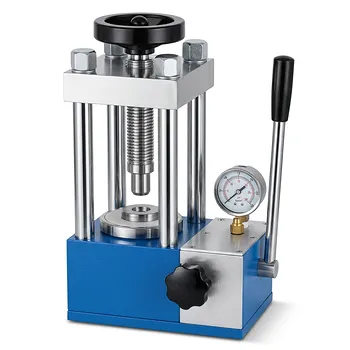
Manual Tablet Press with Dual Scale Pressure Gauge for Pharmaceutical Food Chemical Laboratory Sample Preparation
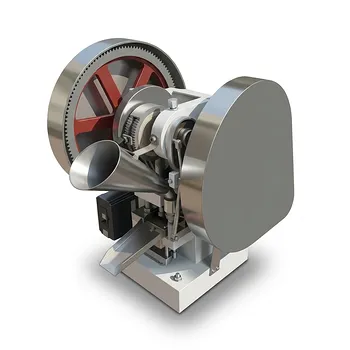
6 Ton Variable Frequency Single Punch Tablet Press
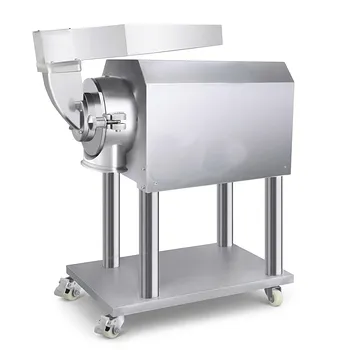
High Speed Small Laboratory Crusher for Dry Material Sample Preparation
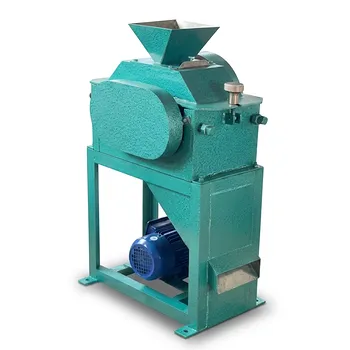
Laboratory Double Roll Crusher for Medium Hardness Materials Coal Ore Sample Preparation
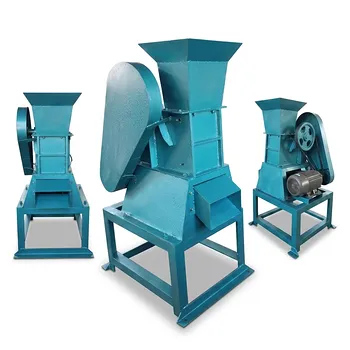
Custom Raised Height Laboratory Jaw Crusher for Precision Sample Preparation in Material Science
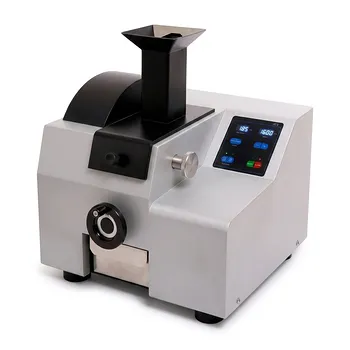
Laboratory Benchtop Jaw Crusher for Hard Brittle Materials Primary Size Reduction and Sample Preparation
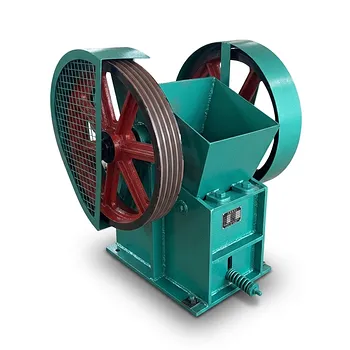
150x250mm Laboratory Jaw Crusher for Medium Hard Material Crushing and Sample Preparation
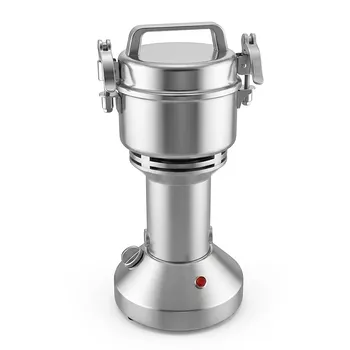
Small High Speed Upright Grinder for Laboratory Sample Preparation
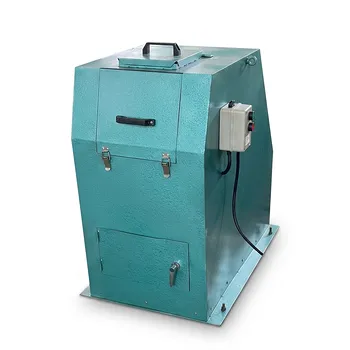
Environmentally Friendly Sealed Laboratory Jaw Crusher for Sample Preparation
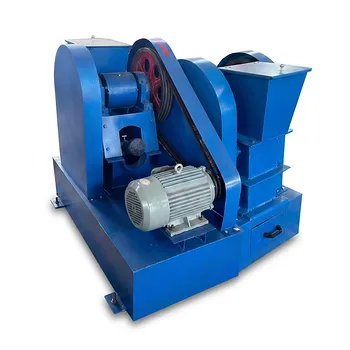
Horizontal Jaw Crusher Medium Hard Material Crushing Laboratory Sample Preparation Equipment
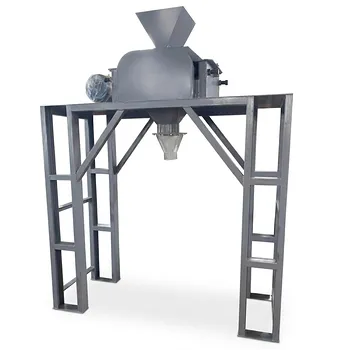
Heightened Customized Laboratory Double Roll Crusher for Coal Ore Rock Crushing
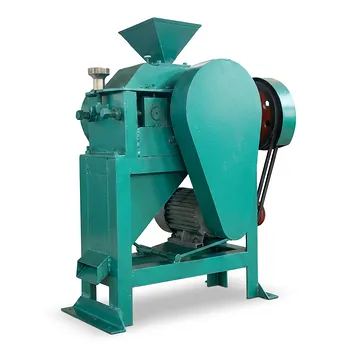
Laboratory Sealed Double Roll Crusher for Coal Ore Rock and Medium Hardness Materials Sample Preparation

Automatic Vibrating Powder Feeder for Laboratory Material Processing Precision Vibratory Hopper Feeder for Granular and Powder Material Handling Industrial Grade Vibrating Tray Feeder for Consistent Material Sample Preparation
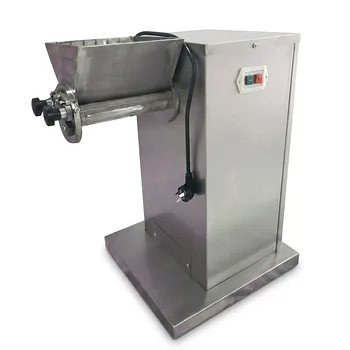
Small Laboratory Oscillating Granulator for Wet and Dry Granulation Processing
Industrial Knife Mill for Food and Biological Sample Preparation High Speed Laboratory Homogenizer
Sealed Laboratory Double Roll Crusher for Coal, Mineral, Ore Sample Preparation
Laboratory Sealed Hammer Crushers for Coal Sample Preparation and Medium Strength Material Crushing