What is the function of a laboratory hydraulic press in UCS tests? Enhancing Clay Stability Evaluation Accuracy
Updated 4 months ago
The laboratory hydraulic press is the critical instrument used to both form standardized soil specimens and quantify their ultimate load-bearing capacity. In Unconfined Compressive Strength (UCS) testing, the press applies controlled axial pressure to cylindrical clay specimens until failure occurs, recording the maximum pressure value ($q_u$) to evaluate how stabilizers improve soil cohesion.
The laboratory hydraulic press ensures the reliability of clay stability assessments by providing a standardized environment for both specimen preparation and failure analysis. It transforms raw soil mixtures into precise geometric forms and then subjects them to measurable stress to determine their engineering limits.
The Dual Role in Specimen Preparation
Creating Standardized Geometric Dimensions
The hydraulic press is used to compress modified clay into standardized cylindrical specimens, often with specific dimensions such as 38mm in diameter and 76mm in height. This precision ensures that every test subject has the same surface area and volume, making comparative data scientifically valid.
Ensuring Uniform Material Density
By applying constant high tonnage or static pressure, the press eliminates internal air pores and achieves a predefined maximum dry density. This process simulates the compaction conditions found at actual engineering sites, ensuring the lab results reflect real-world performance.
Eliminating Density Gradients
Precise molding via a hydraulic press ensures a uniform rearrangement of soil particles throughout the entire block. This eliminates density gradients and manual compaction errors, which is vital for ensuring that strength data obtained after curing cycles is both accurate and repeatable.
Quantifying Structural Integrity
Applying Controlled Axial Loading
During the actual UCS test, the press applies a controlled, constant loading rate to the specimen without any lateral confinement. This axial pressure is increased steadily until the soil structure can no longer support the weight and reaches a point of failure.
Determining the Peak Strength Value ($q_u$)
The press accurately records the maximum pressure value ($q_u$) at the exact moment the specimen fails. This value is a critical index used to determine if a specific stabilizer ratio, such as lime or fly ash, meets the necessary engineering requirements for a project.
Evaluating Chemical Stabilizer Effectiveness
The data generated by the press provides a direct reflection of internal friction and cohesion enhancement. It allows researchers to quantify how additives like volcanic ash or silica fume contribute to the bonding strength developed between clay particles.
Understanding the Trade-offs
Precision vs. Equipment Cost
While manual compaction tools are cheaper, they often introduce human error and inconsistent density. A high-precision hydraulic press offers superior repeatability but requires a higher initial investment and regular calibration to maintain accuracy.
Loading Rate Sensitivity
The speed at which the press applies weight significantly impacts results; a loading rate that is too fast may yield artificially high strength values. Maintaining a constant, standardized loading rate is essential, as fluctuations can lead to misleading data regarding the soil's stability.
Specimen Disturbance
If the hydraulic press is not used with high-quality molds, the process of extracting the specimen can cause micro-cracking. These internal flaws can weaken the specimen before the test even begins, resulting in a lower $q_u$ value that does not reflect the material's true potential.
How to Apply This to Your Project
Making the Right Choice for Your Goal
- If your primary focus is Research and Development: Use a hydraulic press with programmable dwell times and pressure settings to eliminate all variables associated with manual sample preparation.
- If your primary focus is Engineering Quality Control: Prioritize a press that can record peak pressure with high precision to ensure stabilized soil meets the minimum $q_u$ thresholds required by safety codes.
- If your primary focus is Field Simulation: Utilize the press to reach the specific maximum dry density identified in your Proctor tests to ensure lab specimens behave like the soil on-site.
The laboratory hydraulic press is the definitive tool for turning raw clay data into actionable engineering insights.
Summary Table:
| Stage | Key Function | Impact on Engineering Data |
|---|---|---|
| Specimen Preparation | Standardized molding & uniform compaction | Ensures consistent density & eliminates manual error. |
| Structural Testing | Controlled axial loading rate | Accurately identifies the peak failure point ($q_u$). |
| Evaluation | Quantifying stabilizer effectiveness | Provides measurable proof of chemical bonding & cohesion. |
Precision Equipment for Reliable Engineering Insights
Maximize the accuracy of your clay stability evaluations and material research with high-performance laboratory solutions. We provide complete laboratory sample preparation solutions for material science, specializing in professional powder processing and compaction equipment.
Whether you are conducting UCS tests or developing new composites, our extensive product line supports every stage of your workflow:
- Hydraulic Presses: A full spectrum including Cold/Warm Isostatic Presses (CIP/WIP), standard lab presses, XRF pellet presses, and vacuum hot presses.
- Milling & Grinding: Planetary ball mills, jet mills, and liquid nitrogen cryogenic grinders.
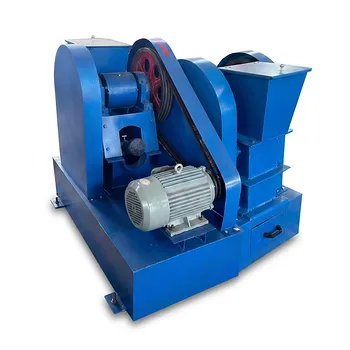
- Material Processing: Jaw/roll crushers, powder mixers, and vibratory sieve shakers.
Ready to upgrade your lab's testing capabilities? Contact our technical experts today to discuss how our specialized equipment can enhance your project's data reliability and efficiency.
References
- Ika Puji Hastuty, Muhammad Iqbal Abidin. The Utilization of Volcanic Ash and High Rusk Ash as Material Stabilization in Clay by Unconfined Compression Test (UCT) and California Bearing Ratio (CBR). DOI: 10.1088/1757-899x/180/1/012141
Mentioned Products
- 6-Ton Small Single-Punch Tablet Press — Laboratory Powder & Granule Tableting Equipment / Tablet Forming Machine
- 5 Ton Single Punch Tablet Press Laboratory Small Batch Production
- Manual Tablet Press with Dual Scale Pressure Gauge for Pharmaceutical Food Chemical Laboratory Sample Preparation
- 6 Ton Variable Frequency Single Punch Tablet Press
- High Shear Laboratory Emulsifier for Mixing and Homogenization
People Also Ask
- What is the function of a laboratory press in Cr-Ti alloy evaluation? Quantify Fracture Stress & Strength
- What is the function of a laboratory press in assessing the hydrophobic performance of modified vermiculite fillers?
- What is the core function of a laboratory press in the forming of ceramic filter element green bodies? Maximize Density.
- What is the function of a laboratory press in the preparation of ceramic feed rods? Master Density and Precision
- Why is vacuum sealing and flexible packaging necessary for Aluminum Titanate powders during CIP? Ensure Peak Density

Tech Team · PowderPreparation
Last updated on May 14, 2026
Related Products
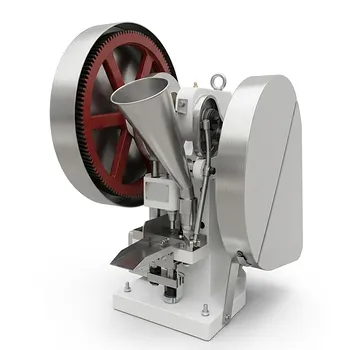
6-Ton Small Single-Punch Tablet Press — Laboratory Powder & Granule Tableting Equipment / Tablet Forming Machine
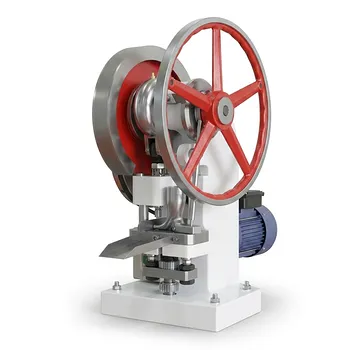
5 Ton Single Punch Tablet Press Laboratory Small Batch Production
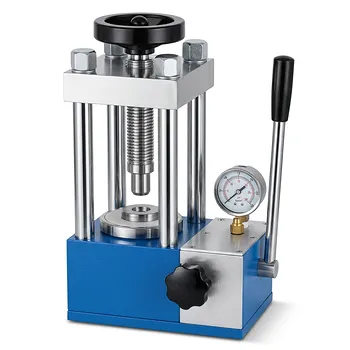
Manual Tablet Press with Dual Scale Pressure Gauge for Pharmaceutical Food Chemical Laboratory Sample Preparation
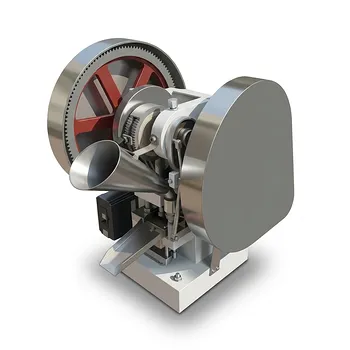
6 Ton Variable Frequency Single Punch Tablet Press
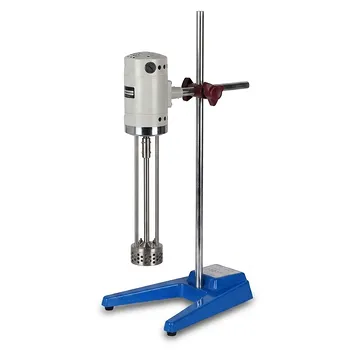
High Shear Laboratory Emulsifier for Mixing and Homogenization
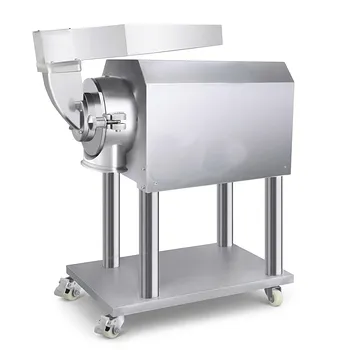
High Speed Small Laboratory Crusher for Dry Material Sample Preparation
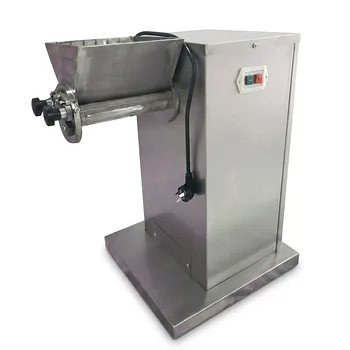
Small Laboratory Oscillating Granulator for Wet and Dry Granulation Processing
High Speed Swing Type Laboratory Pulverizer for Fine Powder Grinding and Sample Preparation