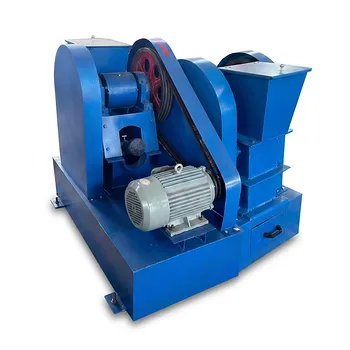
Lab Hydraulic Press in Biomass Pelleting: Ensure High Density & Sample Consistency
Updated 3 months ago
The primary function of a laboratory hydraulic press with a pressure gauge is to apply precise, constant axial force to biomass powder to achieve densification. This equipment forces air out from between particles, inducing physical rearrangement and interlocking of fibers to transform loose material into solid pellets. By providing a controlled pressure environment (often ranging from 10 MPa to over 400 MPa), it ensures that pellets possess uniform density, shape stability, and the high compressive strength required for quality analysis.
The laboratory hydraulic press acts as a precision instrument that overcomes the internal elastic resistance of biomass, facilitating particle bonding and plastic deformation. The integrated pressure gauge is critical for maintaining consistency across samples, allowing researchers to accurately simulate industrial-scale pelletization and study the relationship between molding force and pellet integrity.
Mechanics of Biomass Densification
Air Displacement and Particle Rearrangement
A hydraulic press applies high-pressure loads to biomass powder contained within a high-strength cylindrical mold. This force expels air trapped between material particles, allowing them to move into a tighter physical arrangement.
Overcoming Elastic Resistance
Biomass materials naturally possess internal elastic resistance that resists compaction. The hydraulic press provides the significant axial pressure necessary to overcome this elasticity, preventing the powder from simply springing back to its original loose state.
Establishing Uniform Density
By using a hydraulic system, the press ensures that the applied force is distributed evenly across the sample. This results in biomass pellets with a consistent bulk density, which is essential for ensuring that experimental results are repeatable and scientifically valid.
Chemical and Physical Bonding Mechanisms
Activating Natural Binders
The high-pressure environment induced by the press causes natural components like lignin and cellulose to act as binders. Under pressure, these fibers undergo physical interlocking, which is often enhanced by the addition of external binders or charcoal powder to ensure a permanent bond.
Inducing Plastic Deformation
When biomass is subjected to intense pressure, the woody fibers undergo plastic deformation. This permanent change in shape allows the particles to mold around one another, creating a dense, solid cylindrical structure that maintains its shape after being removed from the die.
Establishing Solid-Solid Interfaces
The press eliminates internal pores and forces particles into close contact. This creates the physical foundation for atomic diffusion and grain rearrangement, which are critical for the mechanical strength of the final pellet.
The Role of the Pressure Gauge in Quality Control
Eliminating Variable Fluctuations
The pressure gauge allows the operator to monitor and maintain a constant molding force (such as 30 to 40 bar) throughout the compression cycle. Without this precise control, fluctuations in force could lead to inconsistent pellet quality, compromising the accuracy of subsequent strength tests.
Simulating Industrial Production
Laboratory presses allow researchers to study the effects of different pressure conditions on a small scale. By precisely adjusting the force, scientists can replicate the conditions found in industrial pellet mills to predict how biomass will behave during mass production.
Mathematical Modeling of Density
The stability of the hydraulic system is critical for researching the mathematical relationship between molding pressure and specific density. Precise gauge readings enable the creation of data models that define the optimal pressure required for various biomass types.
Understanding the Trade-offs and Limitations
The Challenge of Elastic Recovery
Even with high-pressure application, some materials exhibit elastic recovery or "spring-back" once the pressure is released. If the pressure is not held for a sufficient duration, or if the material is too resilient, the pellet may crack or lose its structural integrity immediately after ejection.
Mold Wear and Pressure Limits
Applying ultra-high pressures, such as those exceeding 400 MPa, can lead to accelerated wear and tear on the molds and dies. Operators must balance the need for high density with the physical limitations of the high-strength steel components to avoid equipment failure.
Heat Generation During Compression
The intense friction caused by particle rearrangement under high pressure can generate localized heat. While this can help soften lignin, excessive heat without proper cooling or lubrication can sometimes lead to the pellet sticking to the mold walls.
Applying Hydraulic Press Technology to Your Project
To achieve the best results in biomass pellet formation, you must align the pressure settings and equipment usage with your specific research or production goals.
- If your primary focus is industrial simulation: Use the pressure gauge to maintain lower, consistent pressures (30-40 bar) to mimic the continuous compression cycles of large-scale pellet mills.
- If your primary focus is maximizing structural strength: Utilize higher pressure ranges (100+ MPa) to ensure complete plastic deformation and the activation of all natural binding agents within the fibers.
- If your primary focus is mathematical density modeling: Ensure the hydraulic system has high pressure-holding stability to eliminate variables when measuring the correlation between force and unit density.
By mastering the precise control offered by a laboratory hydraulic press, you ensure that every biomass pellet is a stable, high-quality representation of the material's potential.
Summary Table:
| Mechanism | Action | Impact on Pellet Quality |
|---|---|---|
| Pressure Application | Expels air and overcomes elasticity | Increases bulk density and stability |
| Lignin Activation | Triggers natural binding agents | Enhances structural integrity and strength |
| Plastic Deformation | Permanently reshapes woody fibers | Ensures uniform shape and size |
| Gauge Monitoring | Maintains constant molding force | Guarantees repeatable research data |
Elevate Your Material Research with Professional Sample Preparation
To achieve scientifically valid results in biomass densification, you need equipment that offers precision and reliability. At KINTEK, we provide complete laboratory sample preparation solutions for material science, specializing in high-performance powder processing and compaction equipment.
Our extensive product line is designed to support every stage of your workflow:
- Size Reduction: Jaw/roll crushers, liquid nitrogen cryogenic grinders, and various mills (planetary ball, jet, sand/bead, disc, rotor).
- Classification & Mixing: Sieve shakers (vibratory/air-jet) and advanced powder or defoaming mixers.
- Precision Pressing: A full spectrum of hydraulic presses, including Cold/Warm Isostatic Presses (CIP/WIP), standard lab presses, XRF pellet presses, and vacuum hot presses.
Whether you are a researcher simulating industrial pelletization or a distributor looking for reliable OEM/ODM support, we deliver the tools needed for superior structural integrity and uniform density.
Contact us today to find the perfect solution for your lab!
References
- Hendri Nurdin, Yoszi Mingsi Anaperta. Evaluation and characterization of charcoal briquettes using damar binder for sustainable energy. DOI: 10.24036/teknomekanik.v8i1.33672
Mentioned Products
- 6-Ton Small Single-Punch Tablet Press — Laboratory Powder & Granule Tableting Equipment / Tablet Forming Machine
- 5 Ton Single Punch Tablet Press Laboratory Small Batch Production
- Manual Tablet Press with Dual Scale Pressure Gauge for Pharmaceutical Food Chemical Laboratory Sample Preparation
- 6 Ton Variable Frequency Single Punch Tablet Press
- High Shear Laboratory Emulsifier for Mixing and Homogenization
People Also Ask
- What is the function of a laboratory press in Cr-Ti alloy evaluation? Quantify Fracture Stress & Strength
- What is the function of a laboratory press in assessing the hydrophobic performance of modified vermiculite fillers?
- What is the core function of a laboratory press in the forming of ceramic filter element green bodies? Maximize Density.
- What is the function of a laboratory press in the preparation of ceramic feed rods? Master Density and Precision
- Why is vacuum sealing and flexible packaging necessary for Aluminum Titanate powders during CIP? Ensure Peak Density

Tech Team · PowderPreparation
Last updated on Jun 03, 2026
Related Products
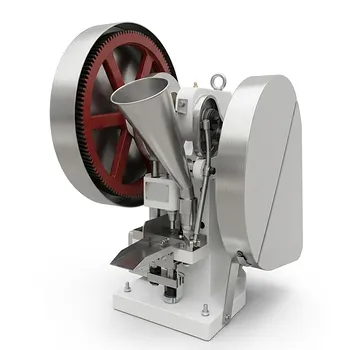
6-Ton Small Single-Punch Tablet Press — Laboratory Powder & Granule Tableting Equipment / Tablet Forming Machine
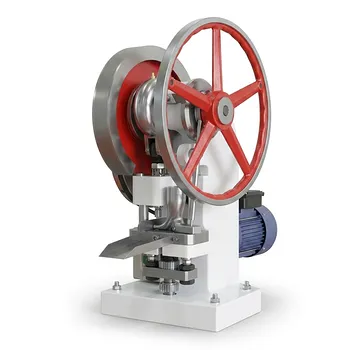
5 Ton Single Punch Tablet Press Laboratory Small Batch Production
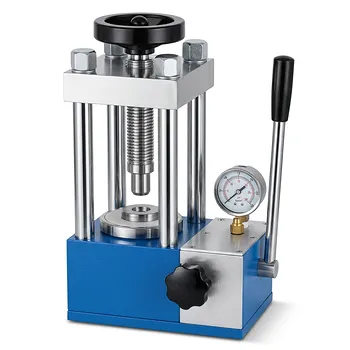
Manual Tablet Press with Dual Scale Pressure Gauge for Pharmaceutical Food Chemical Laboratory Sample Preparation
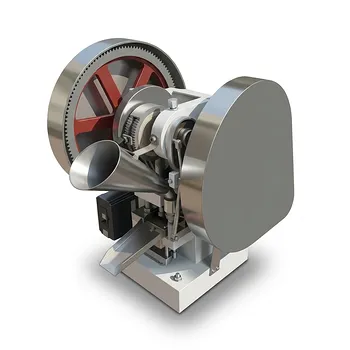
6 Ton Variable Frequency Single Punch Tablet Press
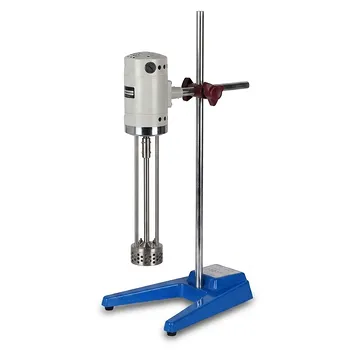
High Shear Laboratory Emulsifier for Mixing and Homogenization
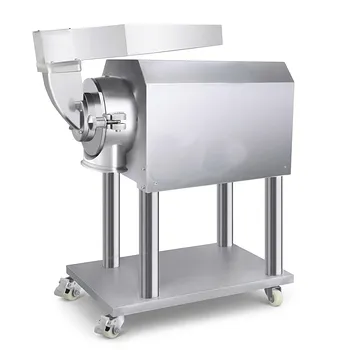
High Speed Small Laboratory Crusher for Dry Material Sample Preparation
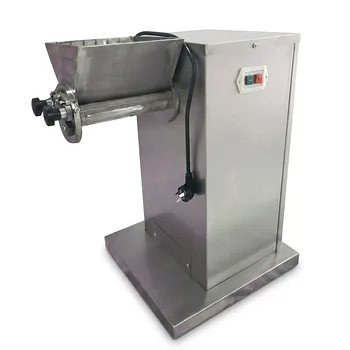
Small Laboratory Oscillating Granulator for Wet and Dry Granulation Processing
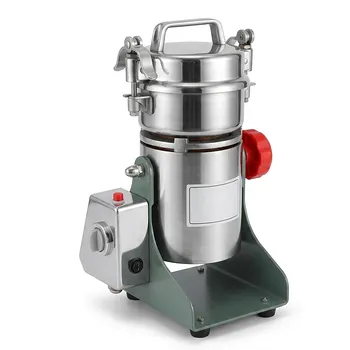
High Speed Swing Type Laboratory Pulverizer for Fine Powder Grinding and Sample Preparation