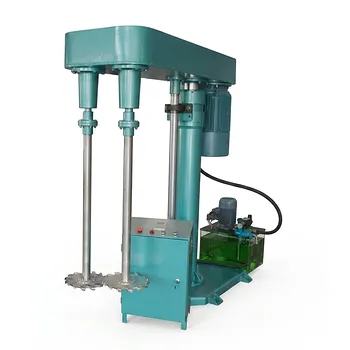
What is the function of a high-speed mixer in the slurry preparation of fly ash-based aerated concrete? Enhance Homogeneity
Updated 5 months ago
The high-speed mixer's primary function is to achieve the rapid, uniform dispersion of solid components—specifically cement, fly ash, and hemihydrate gypsum—within water. By operating at high rotational speeds, typically around 410 rpm, it generates the intense mechanical shear necessary to break down particle agglomerates. This ensures the formation of a highly homogeneous slurry, which is the critical prerequisite for a stable gas-evolution reaction and a uniform pore structure in the final concrete.
The high-speed mixer acts as the mechanical foundation for aerated concrete quality, transforming raw powders into a consistent, lump-free suspension. This homogeneity ensures that subsequent chemical reactions occur evenly, preventing structural defects and maximizing mechanical performance.
Engineering Homogeneity through High-Intensity Mixing
Breaking Down Particle Agglomerates
Fly ash and cement particles possess a natural tendency to cluster together when they first contact water. The high-speed mixer utilizes powerful shear forces to physically tear these clusters apart, ensuring every individual particle is thoroughly wetted.
This mechanical breaking action eliminates "dry spots" within the slurry that could otherwise lead to structural weaknesses. By preventing agglomeration, the mixer creates a stable base material with the necessary fluidity for the next stages of production.
Establishing the Foundation for Pore Uniformity
The "aerated" quality of the concrete depends entirely on the even distribution of gas bubbles. A high-speed mixer ensures the slurry is perfectly uniform before the gas-forming agent (such as aluminum powder) is introduced.
If the slurry is not homogeneous, the gas-evolution reaction will occur unevenly, leading to large, irregular voids. This consistency is vital for creating a uniform pore structure, which directly dictates the insulation properties and compressive strength of the finished block.
Facilitating Predictable Chemical Kinetics
The mixer ensures that secondary additives, like hemihydrate gypsum, are intimately blended with the primary cementitious materials. This thorough dispersion allows for consistent hydration reactions across the entire batch of slurry.
By precisely controlling the stirring sequence and speed, manufacturers can ensure that the chemical components reach the required degree of reactivity at the same time. This synchronization is essential for the slurry to gain enough strength to support its own weight during the rising process.
Understanding the Trade-offs and Pitfalls
The Risk of Thermal Acceleration
While high speed is necessary for dispersion, the friction generated by 410 rpm mixing can cause a significant temperature rise in the slurry. If the temperature is not monitored, it can accelerate the hydration of cement prematurely.
This premature setting can interfere with the gas-evolution process, potentially "trapping" the gas or causing the slurry to crack as it expands. Operators must balance mixing intensity with thermal management to maintain the slurry's workability.
Mechanical Wear and Maintenance
The abrasive nature of fly ash and other mineral additives puts extreme stress on the high-speed mixer's impellers and liners. High-speed operation accelerates this surface erosion compared to low-speed mixing methods.
Failure to maintain the sharp edges of the mixing blades can lead to a drop in shear efficiency. This results in a gradual decline in slurry quality, often manifesting as inconsistent density in the final concrete products.
How to Optimize Your Mixing Process
Effective slurry preparation requires more than just high RPM; it requires a strategic approach to timing and component introduction.
- If your primary focus is maximizing mechanical strength: Prioritize the sequence of addition, ensuring cementitious materials are fully dispersed before adding finer mineral additives to prevent "clumping" of the active binders.
- If your primary focus is achieving a superior pore structure: Closely monitor the slurry viscosity post-mixing, as the high-speed mixer's efficiency directly determines how stably the pre-made foam or gas bubbles will be held in suspension.
Mastering the high-speed mixing phase transforms a collection of raw waste materials into a precision-engineered structural product with consistent physical properties.
Summary Table:
| Key Aspect | Function in Slurry Preparation | Impact on Final Product |
|---|---|---|
| Particle Dispersion | Breaks down agglomerates of fly ash and cement | Eliminates structural weak spots/dry spots |
| Shear Intensity | High RPM (~410) generates mechanical shear | Ensures every particle is thoroughly wetted |
| Pore Foundation | Uniformly distributes gas-forming agents | Creates a consistent, insulating pore structure |
| Chemical Kinetics | Blends additives like hemihydrate gypsum | Synchronizes hydration and gas-evolution |
| Thermal Control | Manages friction-induced temperature rise | Prevents premature setting and cracking |
Elevate Your Material Research with Precision Mixing Solutions
Achieving the perfect slurry consistency is critical for the performance of advanced materials. At [Company Name], we provide complete laboratory sample preparation solutions for material science, specializing in high-performance powder processing and compaction equipment.
Whether you are optimizing fly ash-based concrete or developing novel ceramics, our extensive product line supports your entire workflow:
- Advanced Mixing: Precision powder mixers and defoaming mixers for air-free, homogeneous results.
- Size Reduction: Crushers (jaw/roll), liquid nitrogen cryogenic grinders, and mills (planetary ball, jet, sand/bead, disc, rotor).
- Sieving & Analysis: Vibratory and air-jet sieve shakers with comprehensive mesh options.
- Material Compaction: A full spectrum of hydraulic presses, including Cold/Warm Isostatic Presses (CIP/WIP), standard lab presses, and vacuum hot presses.
Ready to improve your slurry quality and mechanical performance? Contact our experts today to find the ideal equipment for your laboratory or production line!
References
- STUDY OF THE INFLUENCE OF TECHNOLOGICAL FACTORS ON THE DENSITY AND STRENGTH OF ASH-GAS CONCRETE. DOI: 10.32014/2024.2518-170x.364
Mentioned Products
- 非介入式材料均质机真空脱泡行星搅拌高粘度混合设备
- Horizontal Ribbon Mixer for Dry Powder and Slurry Blending
- Horizontal Ribbon Mixer for Uniform Powder and Slurry Mixing
- Small High Speed Grinder for Laboratory Sample Preparation
- High Speed Vacuum Planetary Centrifugal Mixer and Defoamer for Industrial Paste Processing
People Also Ask
- How does a planetary vacuum defoaming mixer help magnesium calcium phosphate slurries? Achieve Flawless 3D Printed Bone
- Why is vacuum defoaming necessary for PDMS mixtures before microwave irradiation curing? Key to Structural Integrity
- What role does a vacuum defoaming mixer play in BNT MLCC slurry? Ensure High Dielectric Strength & Pinhole-Free Prep
- Why is a vacuum defoaming mixer essential for DLP 3D printing ceramic slurries? Key to Structural Integrity
- What is the purpose of using a high-vacuum defoaming mixer for SiC/Cf composites? Optimize Density and Strength

Tech Team · PowderPreparation
Last updated on May 14, 2026
Related Products
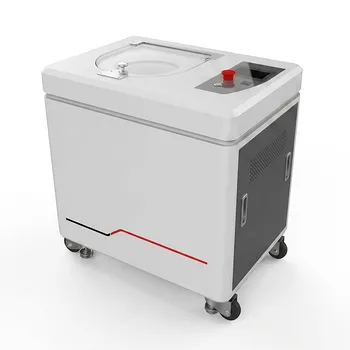
非介入式材料均质机真空脱泡行星搅拌高粘度混合设备
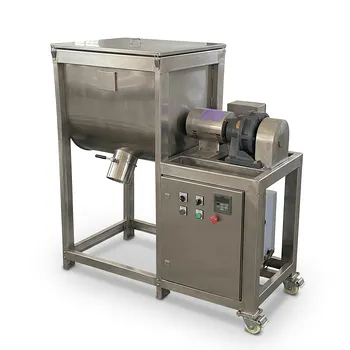
Horizontal Ribbon Mixer for Dry Powder and Slurry Blending
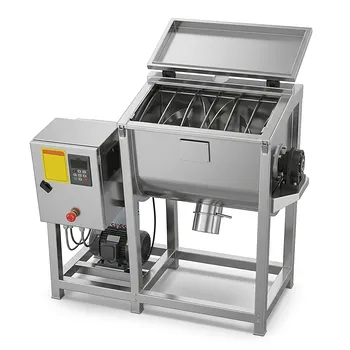
Horizontal Ribbon Mixer for Uniform Powder and Slurry Mixing
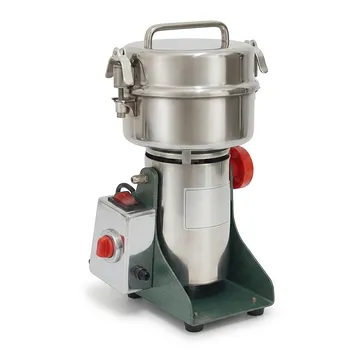
Small High Speed Grinder for Laboratory Sample Preparation
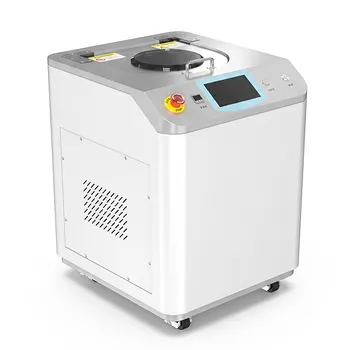
High Speed Vacuum Planetary Centrifugal Mixer and Defoamer for Industrial Paste Processing
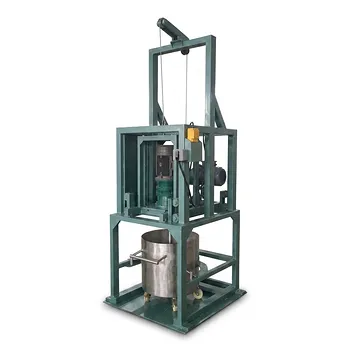
High-Speed Simple Disperser for Efficient Mixing, Dispersion, and Emulsification
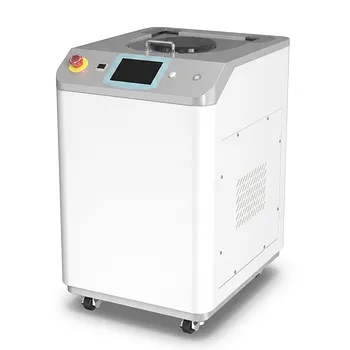
High Viscosity Planetary Centrifugal Mixing and Vacuum Defoaming Machine for Laboratory Material Preparation
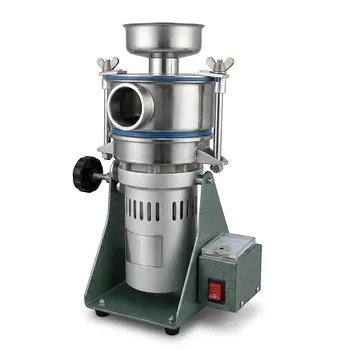
Small Airflow Ultra-Fine Grinder for Laboratory Sample Preparation
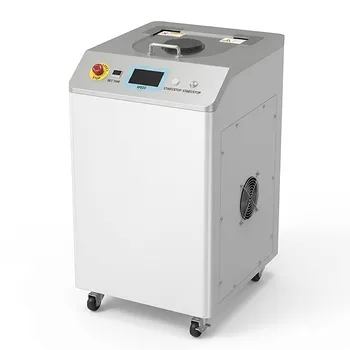
High Viscosity Planetary Centrifugal Vacuum Mixer for Material Defoaming and Uniform Mixing
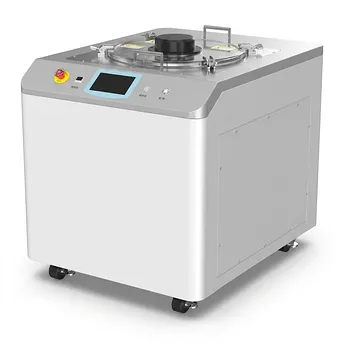
Industrial Planetary Centrifugal Vacuum Defoaming Mixer for High Viscosity Paste and Powder Homogenization
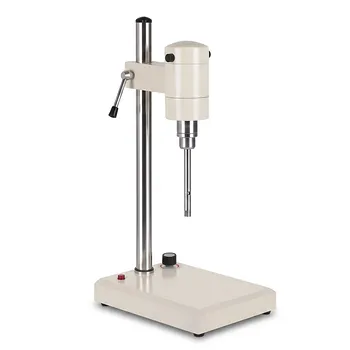
High Speed Dispersing Homogenizer for Laboratory Emulsification Dispersion and Cell Disruption
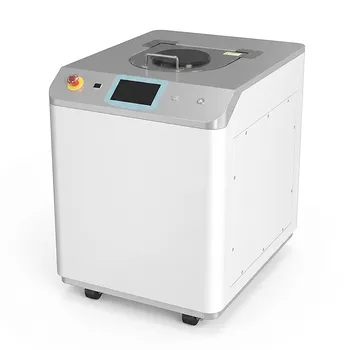
Industrial Planetary Centrifugal Vacuum Defoaming Mixer for High Viscosity Paste and Advanced Material Science
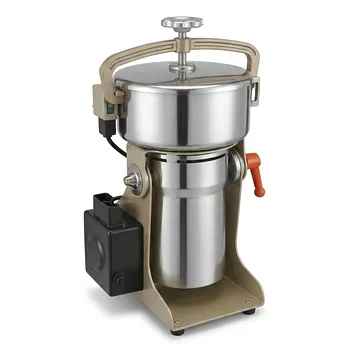
Multifunctional High Efficiency High Speed Laboratory Grinder
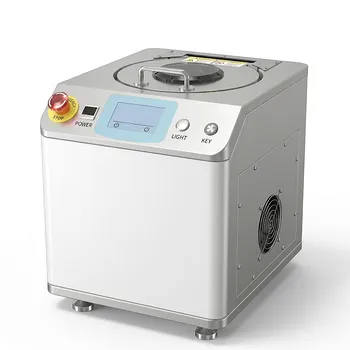
High Efficiency Vacuum Planetary Centrifugal Mixer and Defoaming Machine for Industrial Material Research and Precise Laboratory Powder Dispersion
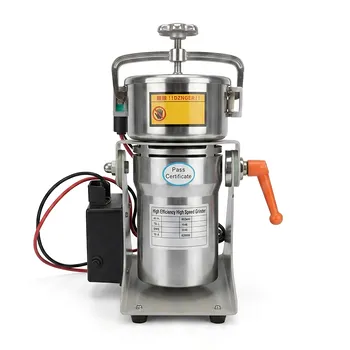
High Efficiency High Speed Grinder Laboratory Mill 1300W 25000rpm
Laboratory Ultrafine Impact and Airflow Grinder for Precise Particle Size Control