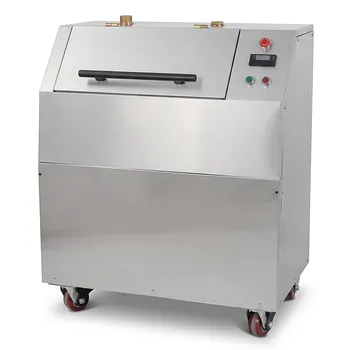
What is the function of a sieve shaker in wood frass 3D printing prep? Achieve Perfect Particle Size Distribution
Updated 3 months ago
High-precision vibratory sieve shakers are the primary technical tools used to standardize the particle size distribution of wood frass for additive manufacturing. By classifying raw material into narrow intervals—typically between 45μm and 100μm—these devices remove oversized and undersized particles that would otherwise compromise the printing process. This precise classification is essential for ensuring consistent flowability and layering uniformity, which are the fundamental requirements for successful binder jetting and other powder-based 3D printing technologies.
The core function of a vibratory sieve shaker is to transform heterogeneous wood waste into a standardized engineering feedstock. This process ensures that the resulting powder bed is uniform, leading to superior interlayer bonding, predictable mechanical properties, and high-fidelity surface finishes.
Optimizing Material Flow and Layering
The success of 3D printing with wood frass depends heavily on how the powder behaves as it is spread across the build platform.
Enhancing Powder Flowability
Vibratory sieve shakers use specific amplitudes and durations to isolate particles within a tight size range. Removing extremely fine "dust" and oversized chunks reduces internal friction and prevents clumping, allowing the powder to flow smoothly through the printer’s delivery system.
Ensuring Uniform Layering
In binder jetting, each layer must be perfectly flat and consistent in thickness. By ensuring a narrow size distribution, the sieve shaker allows for a more stable powder bed where particles pack together efficiently, preventing gaps or ridges that could cause print failure.
Enhancing Structural Integrity and Surface Quality
Beyond the immediate printing process, the precision of the raw material directly dictates the physical characteristics of the finished part.
Improving Interlayer Bonding Strength
Uniform particle sizes facilitate even distribution of the liquid binder or adhesive across the wood frass. This leads to more consistent internal bonding strength, as there are no large voids or "dead zones" where the binder cannot effectively bridge the gaps between particles.
Controlling Surface Precision
The "step effect" and surface roughness of a 3D-printed part are largely determined by the size of the raw particles. Using a sieve shaker to obtain finer fractions, such as those below 53 micrometers, allows for higher resolution prints with significantly smoother surfaces and sharper details.
Influencing Physical and Mechanical Properties
The sieve shaker acts as a gatekeeper for the mechanical performance and durability of the final wood composite.
Standardizing Packing Density and Porosity
By controlling the particle size, engineers can predict the packing density of the powder bed. A uniform distribution ensures that the porosity of the final part is consistent throughout, which is critical for preventing weak spots and ensuring the part behaves predictably under stress.
Minimizing Mechanical Fluctuations
Consistency in raw material leads to reproducibility in experimental and production results. When particle sizes are standardized (e.g., to a 1.4 mm or 100 μm specification depending on the application), the fluctuations in tensile and flexural strength are minimized, ensuring the composite structure is stable.
Understanding the Trade-offs
While high-precision sieving is necessary, it involves technical compromises that must be managed.
Precision vs. Processing Time
Achieving a very narrow particle size distribution requires longer sieving durations and specific vibration amplitudes. While this increases material quality, it can reduce throughput and, in some cases, cause particle attrition, where the wood fibers break down into even smaller, unintended fragments.
Mesh Blinding and Maintenance
Wood frass can be fibrous or resinous, leading to "blinding" where the sieve mesh becomes clogged. This requires regular maintenance and the use of high-precision shakers equipped with self-cleaning mechanisms or ultrasonic assistance to maintain accuracy over time.
How to Apply This to Your Project
To achieve the best results with wood frass 3D printing, your sieving strategy should align with your specific performance goals.
- If your primary focus is Surface Detail: Utilize multiple sieve layers to isolate the finest particles (e.g., 0 to 53μm) to minimize surface roughness and maximize resolution.
- If your primary focus is Mechanical Strength: Focus on a medium-range uniform distribution (e.g., 40-60 mesh) to ensure optimal adhesive coverage and high internal bonding strength.
- If your primary focus is Processing Speed: Opt for a slightly wider size interval to improve flowability and reduce the time required for the sieving phase itself.
By mastering the particle size distribution through high-precision sieving, you ensure that wood frass is transformed from a waste product into a high-performance 3D printing material.
Summary Table:
| Key Sieving Function | Impact on 3D Printing | Target Specification |
|---|---|---|
| Particle Classification | Ensures uniform layering & packing | 45μm – 100μm |
| Fine Removal (Dust) | Enhances flowability; prevents clumping | Reduced friction |
| Fraction Isolation | Improves surface resolution & detail | < 53μm |
| Density Control | Predictable mechanical strength | Consistent porosity |
Master Your Material Preparation with Our Precision Equipment
Achieving high-fidelity 3D prints starts with the perfect powder feedstock. At [Company Name], we specialize in providing complete laboratory sample preparation solutions for material science, ensuring your raw materials meet the most rigorous standards for additive manufacturing.
Our extensive product line supports every stage of the powder processing workflow:
- Classification & Analysis: High-precision vibratory and air-jet sieve shakers for exact particle size distribution.
- Size Reduction: Advanced crushers (jaw/roll), liquid nitrogen cryogenic grinders, and planetary ball/jet mills.
- Homogenization: Specialized powder mixers and defoaming mixers for consistent material blends.
- Compaction & Testing: A full spectrum of hydraulic presses, including Cold/Warm Isostatic Presses (CIP/WIP), XRF pellet presses, and vacuum hot presses.
Whether you are refining wood frass or advanced technical ceramics, our equipment delivers the reliability and precision your research demands.
Contact our technical experts today to find the ideal solution for your laboratory!
References
- Rudy Plarre, Jens Günster. Searching for biological feedstock material: 3D printing of wood particles from house borer and drywood termite frass. DOI: 10.1371/journal.pone.0246511
Mentioned Products
- Vibratory Sieve Shaker Electromagnetic 3D Motion Powder Particle Size Analyzer for Dry and Wet Sieving
- Laboratory Dry and Wet Three Dimensional Vibratory Sieve Shaker for Particle Analysis
- Dry Three Dimensional Vibratory Sieve Shaker
- Stainless Steel Laboratory Vibratory Test Sieve Shaker
- Heavy Duty Dry Three Dimensional Vibratory Sieve Shaker for Particle Separation
People Also Ask
- How does a vibratory sieve shaker contribute to optimizing the performance of activated carbon? Enhance Adsorption Precision
- Why is a laboratory vibratory sieve shaker necessary for processing magnesium-based borate precursor powders? Boost Activity
- Why use a vibratory sieve shaker to verify coarse aggregate grading in rubberized concrete? Ensure Structural Integrity
- What function do vibratory sieve shakers and standard test sieves serve in the preparation of adsorbents? Key Guide
- What role does a vibratory sieve shaker play in the particle size analysis of ground corn products? Enhance QC Precision

Tech Team · PowderPreparation
Last updated on Jun 03, 2026
Related Products
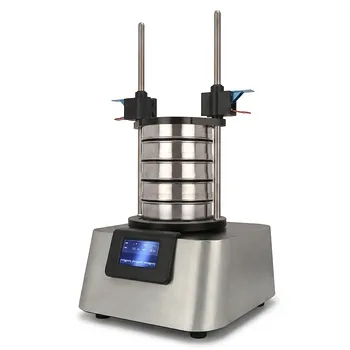
Vibratory Sieve Shaker Electromagnetic 3D Motion Powder Particle Size Analyzer for Dry and Wet Sieving
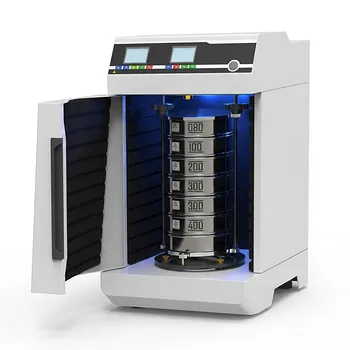
Laboratory Dry and Wet Three Dimensional Vibratory Sieve Shaker for Particle Analysis
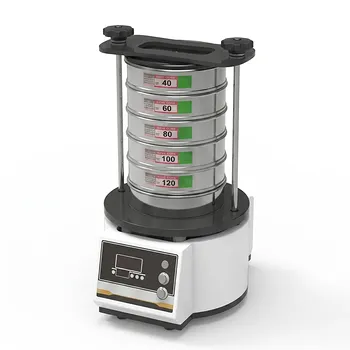
Dry Three Dimensional Vibratory Sieve Shaker
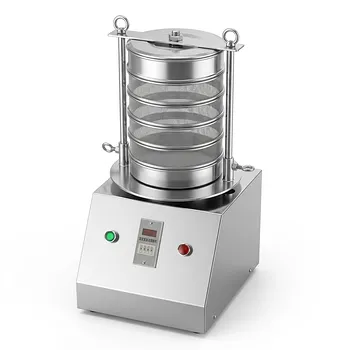
Stainless Steel Laboratory Vibratory Test Sieve Shaker
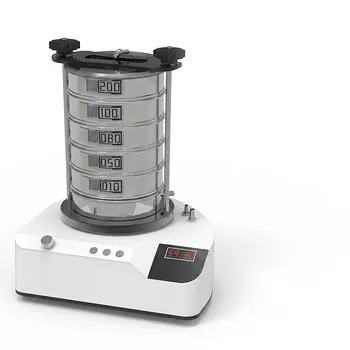
Heavy Duty Dry Three Dimensional Vibratory Sieve Shaker for Particle Separation
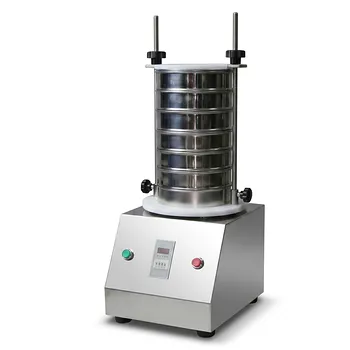
Small Laboratory Vibratory Sieve Shaker for Powder Gradation and Particle Size Analysis
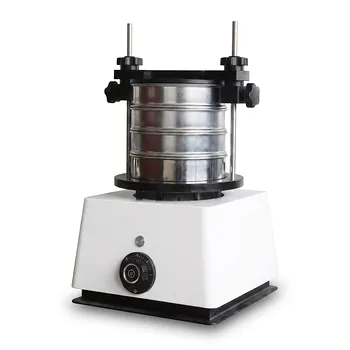
Small Laboratory Vibrating Sieve Shaker for Precise Particle Size Analysis
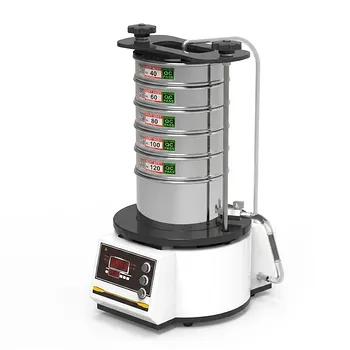
High Frequency Wet Three-Dimensional Vibrating Sieve Shaker for Dry and Wet Particle Size Analysis
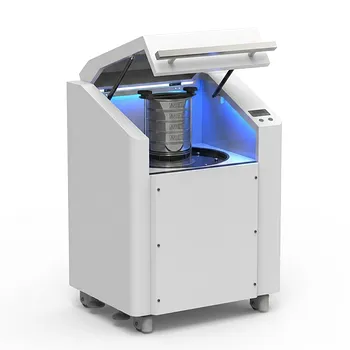
High Frequency Cabinet Type Three-Dimensional Rotary Vibrating Sieve Shaker for Dry Sieving and Particle Classification
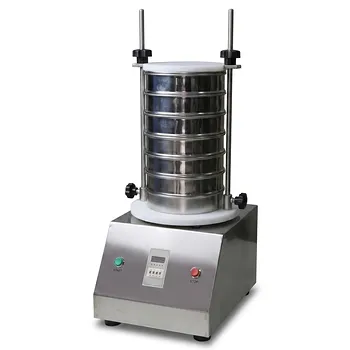
Laboratory Vibratory Test Sieve Shaker for Precision Particle Size Analysis and Powder Grading
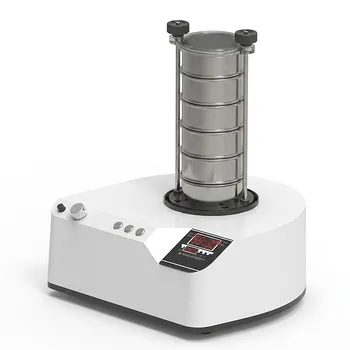
三维电磁微量振动筛分仪
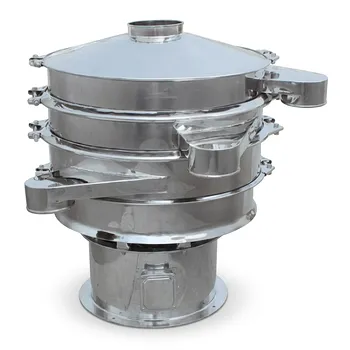
Stainless Steel Rotary Vibrating Sieve High Precision Circular Vibratory Separator Industrial Powder Grading Machine Multi Layer Sifting Equipment
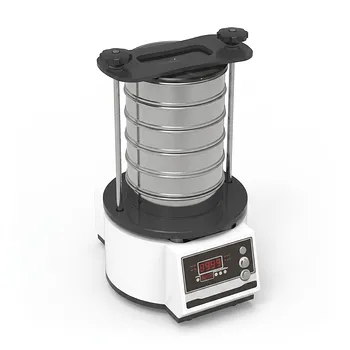
Tapping Oscillating Sieve Shaker for Dry and Wet Particle Size Analysis
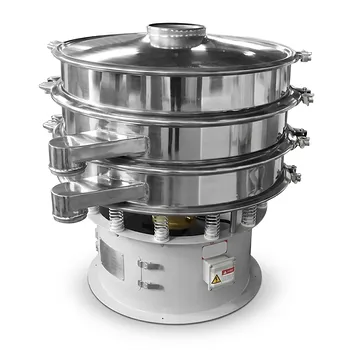
Three Dimensional Rotary Vibrating Sieve
Vibratory Superfine Grinder for Ultra Fine Laboratory Powder Milling
Small Vibrating Ultrafine Grinder for Traditional Chinese Medicine

Automatic Vibrating Powder Feeder for Laboratory Material Processing Precision Vibratory Hopper Feeder for Granular and Powder Material Handling Industrial Grade Vibrating Tray Feeder for Consistent Material Sample Preparation