What is the function of a ball mill in the preparation of silicate ceramic raw materials? Boost Reactivity & Uniformity
Updated 4 months ago
The primary function of a ball mill in silicate ceramic preparation is the simultaneous refinement of particle size and the homogenization of chemical components. By utilizing the high-energy collision and attrition of grinding media, the mill reduces raw materials like kaolin, quartz, and feldspar into a fine powder or slurry. This process increases the specific surface area of the materials, which significantly enhances their chemical reactivity during the subsequent sintering stage.
The ball mill acts as a critical mechanical processor that transforms heterogeneous raw minerals into a uniform, high-activity precursor. It ensures that additives and base materials are distributed at a sub-micron level, which is the fundamental requirement for achieving a stable and defect-free ceramic microstructure.
Mechanical Refinement and Surface Activity
Deep Particle Size Reduction
The ball mill utilizes mechanical force to break down the crystalline structure of raw materials such as quartz and bentonite. Through constant impact and friction from grinding media, the material reaches a state of deep refinement that cannot be achieved by simple mixing. This reduction in size is essential for creating the fine-grained texture required in high-quality silicate ceramics.
Increasing Reaction Kinetic Potential
Smaller particles possess a much higher specific surface area compared to their original bulk form. This increased surface area allows chemical reactions to occur more rapidly and at lower temperatures during the firing process. In advanced ceramics, such as silicon nitride or alumina, this heightened reactivity is vital for the proper formation of the liquid phase during sintering.
Elimination of Powder Agglomeration
Raw materials often form clusters or "agglomerates" that can create structural weak points in the final product. High-energy ball milling effectively shears these clusters apart, ensuring each individual grain is available for reaction. This de-agglomeration is particularly important when preparing slurries for injection molding or tape casting.
Achieving Chemical and Physical Homogenization
Molecular-Level Uniformity
The ball mill ensures that various phases, such as fused silica and zircon sand, are blended into a single, consistent mixture. This "deep mixing" prevents the formation of localized chemical imbalances that could lead to cracking or uneven shrinkage. For laminated ceramics, milling for 24 to 48 hours is often required to ensure additives like yttrium oxide are distributed at a molecular level.
Stabilization of Slurry Rheology
When milling in a liquid medium (wet grinding), the process produces a highly mobile slurry with stable flow properties. The uniform distribution of sub-micron particles ensures the slurry maintains consistent viscosity and density. This stability is critical for industrial processes like spray drying or the production of ceramic green tapes.
Pre-Refinement of Chemical Reagents
In applications like soda-lime-silica glass production, the mill pre-refines reagents like sodium carbonate and calcium carbonate. This high level of homogenization allows the components to react quickly and uniformly during high-temperature melting. The result is a final glass body with a consistent chemical composition and fewer optical defects.
Understanding the Trade-offs and Limitations
Media Contamination Risks
The constant collision between the grinding balls and the mill walls can introduce impurities into the ceramic batch. If the hardness of the grinding media is not correctly matched to the raw material, "wear-off" particles can alter the chemical purity of the final ceramic. Selecting high-purity porcelain or alumina jars and media is often necessary to mitigate this risk in sensitive applications.
Energy Inefficiency and Heat Generation
Ball milling is an energy-intensive process where a significant portion of the energy is lost as heat and sound. Prolonged milling can lead to excessive heat buildup, which may prematurely trigger chemical reactions or alter the properties of organic binders. Operators must carefully balance milling duration with the desired particle size to avoid unnecessary energy expenditure and material degradation.
Tailoring the Milling Process to Your Objectives
How to Apply This to Your Project
To achieve the best results in silicate ceramic preparation, the milling strategy must align with the specific requirements of the end product.
- If your primary focus is high mechanical strength: Prioritize longer milling durations to eliminate all agglomerates and achieve sub-micron particle distribution for a dense microstructure.
- If your primary focus is chemical purity: Utilize high-alumina or specialized ceramic grinding media and jars to minimize metallic or silica contamination during the refinement process.
- If your primary focus is processing speed (high throughput): Opt for wet milling over dry milling, as the liquid medium facilitates higher impact frequency and faster homogenization of multi-component raw materials.
- If your primary focus is complex shaping (injection molding): Focus on achieving a stable rheological profile by precisely controlling the energy input to ensure a consistent particle size distribution.
By mastering the mechanical and chemical dynamics of the ball mill, you establish the essential foundation for high-performance ceramic manufacturing.
Summary Table:
| Core Function | Mechanism | Impact on Ceramic Quality |
|---|---|---|
| Particle Refinement | Mechanical impact & attrition | Increases surface area and chemical reactivity during sintering. |
| Homogenization | Molecular-level blending | Prevents localized imbalances, reducing cracking and shrinkage. |
| De-agglomeration | Shearing of powder clusters | Eliminates structural weak points for higher mechanical strength. |
| Slurry Stabilization | Wet grinding & energy input | Ensures consistent viscosity for spray drying and tape casting. |
Optimize Your Material Preparation with Professional Lab Solutions
Achieving the perfect sub-micron particle distribution is the foundation of high-performance ceramics. At Our Laboratory Solutions, we provide complete sample preparation equipment designed for precision and purity.
Whether you are refining minerals or preparing advanced ceramic slurries, our extensive range supports your entire workflow:
- Advanced Milling: Planetary ball mills, jet mills, and cryogenic grinders for superior refinement.
- Powder Processing: Sieve shakers, powder mixers, and defoaming mixers to ensure uniformity.
- Precision Compaction: A full spectrum of hydraulic presses, including Cold/Warm Isostatic Presses (CIP/WIP), vacuum hot presses, and XRF pellet presses.
Ready to enhance your lab's efficiency and material quality? Contact our technical team today to find the ideal equipment for your material science applications!
References
- Liao Shu. ULTRASOUND-ASSISTED CONVENTIONAL SINTERING OF SILICATE CERAMICS. DOI: 10.13168/cs.2022.0053
Mentioned Products
- Heavy Duty Horizontal Planetary Ball Mill for Efficient Industrial Grinding and Sample Preparation
- Vertical Semi Circular Planetary Ball Mill for Laboratory Precision Grinding
- Vertical Production Planetary Ball Mill for High Throughput Powder Processing
- Vertical Square Planetary Ball Mill for Laboratory Sample Preparation and Nanoscale Grinding
- High Energy Planetary Ball Mill for Nano Scale Grinding and Mechanical Alloying
People Also Ask
- Why grind lime-pozzolan specimens for TG/DTA for 3 mins? Master sample prep for high-precision thermal analysis.
- What is the role of a planetary ball mill in the mechanical activation of ZTA powder? Boost Sintering Performance
- What is the function of a planetary ball mill in wollastonite ceramic prep? Achieve Molecular Homogenization & Reactivity
- How does a planetary ball mill contribute to the homogenization of trace elements? Achieve Sub-Micron Uniformity
- What is the function of a high-performance planetary ball mill in AMZ laminates? Master Ceramic Homogenization.

Tech Team · PowderPreparation
Last updated on Jun 03, 2026
Related Products

Heavy Duty Horizontal Planetary Ball Mill for Efficient Industrial Grinding and Sample Preparation
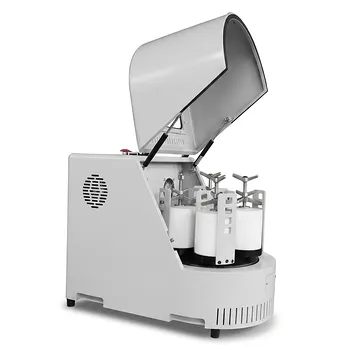
Vertical Semi Circular Planetary Ball Mill for Laboratory Precision Grinding

Vertical Production Planetary Ball Mill for High Throughput Powder Processing

Vertical Square Planetary Ball Mill for Laboratory Sample Preparation and Nanoscale Grinding

High Energy Planetary Ball Mill for Nano Scale Grinding and Mechanical Alloying
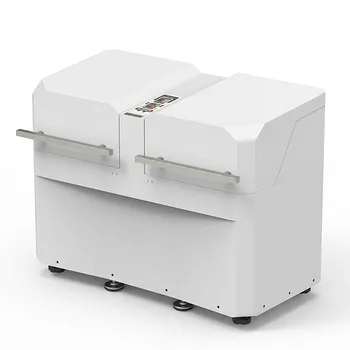
Dual Station Planetary Ball Mill 24L
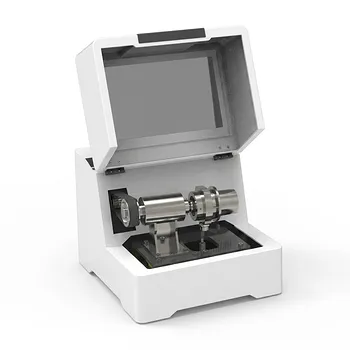
Single Tank High Energy Vibratory Ball Mill for Laboratory Grinding and Mixing

High Energy Laboratory Planetary Ball Mill for Nano Grinding and Material Science Sample Preparation

Miniature Planetary Ball Mill with Vacuum Grinding and High Efficiency for Laboratory Sample Preparation

High Energy Omnidirectional Planetary Ball Mill 16L
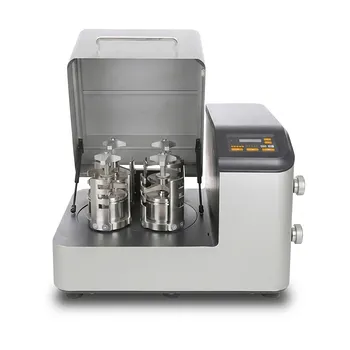
High Energy Planetary Ball Mill for Nano Scale Grinding and Colloidal Mixing in Material Science Research
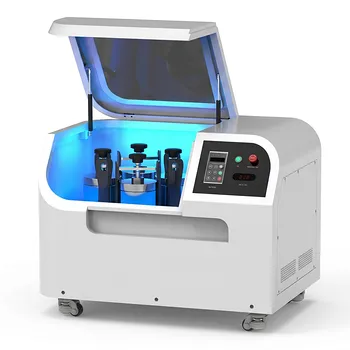
Planetary Ball Mill 12L

360° Rotating Omnidirectional Laboratory Planetary Ball Mill for Homogeneous Ultra-Fine Grinding and Mixing
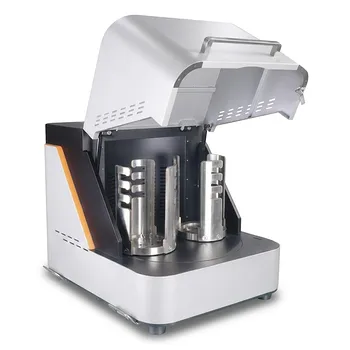
High Energy Laboratory Planetary Ball Mill for Nano Grinding and Colloidal Mixing of Hard and Brittle Materials
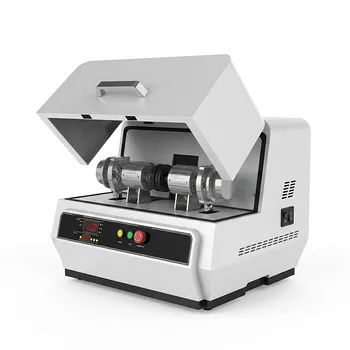
Dual Jar High Energy Vibratory Ball Mill
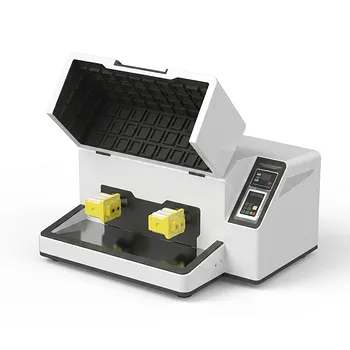
Multi-Platform Nanoscale High-Energy Vibratory Ball Mill

High Energy Omnidirectional Planetary Ball Mill 20L
8L Planetary Ball Mill for Laboratory Grinding and Sample Preparation
Nano High Energy Vibratory Ball Mill for Laboratory Sample Preparation