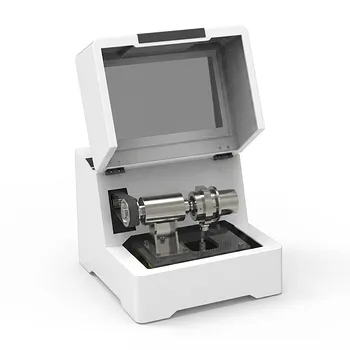
What is the core role of a planetary ball mill in AOD steel slag carbonation? Boost CO2 Sequestration & Efficiency
Updated 4 months ago
The planetary ball mill acts as a high-energy mechanochemical reactor that drives the mineral carbonation of Argon Oxygen Decarburization (AOD) steel slag by physically crushing particles and continuously stripping away inert reaction layers. This process breaks the "reaction plateau" by removing the amorphous silica and calcium carbonate shells that typically shield the slag's core, ensuring a high and sustained rate of CO2 absorption.
Core Takeaway: In AOD slag carbonation, the planetary ball mill serves as a dual-purpose tool: it provides the mechanical energy to refine particle size and the "in-situ" cleaning required to expose fresh, reactive surfaces, thereby overcoming the diffusion limits that usually stall carbonation kinetics.
Overcoming the Shell-Layer Diffusion Limit
The Problem of Inert Passivation
During mineral carbonation, a layer of amorphous silica (SiO2) and calcium carbonate (CaCO3) naturally forms on the surface of AOD slag particles. This inert shell acts as a physical barrier, preventing carbon dioxide from reaching the unreacted silicate core and causing the reaction to stall prematurely.
Continuous In-Situ Stripping
The high-energy collisions within a planetary ball mill provide the necessary shear and impact forces to continuously strip away these product layers. By mechanically removing the "dead" shell as it forms, the mill ensures that fresh silicate surfaces are constantly exposed to the CO2, maintaining high reaction kinetics throughout the process.
Breaking the Reaction Plateau
Without the mechanical intervention of the mill, carbonation efficiency typically hits a plateau once the initial surface area is consumed. The planetary mill's ability to refresh the material surface allows the process to break this plateau, leading to significantly higher final carbonation yields and more efficient CO2 sequestration.
Mechanochemical Activation and Structural Disruption
Surface Area and Lattice Defects
Beyond simple crushing, the planetary ball mill introduces lattice defects into the crystalline structure of the steel slag. These high-frequency collisions disrupt the mineral's internal order, creating high-energy sites that are chemically more susceptible to carbonation than stable, undisturbed crystals.
Material Amorphization
The intense mechanical energy promotes material amorphization, turning crystalline phases into disordered, non-crystalline structures. This transition increases the overall chemical reactivity of the slag, making it easier for the calcium-bearing minerals to react with dissolved CO2 in the aqueous phase.
Synergy with Chemical Grinding Aids
Planetary milling often works in tandem with chemical agents, such as EDIPA, to further enhance reactivity. The mill’s centrifugal forces facilitate a deep composite interaction between the slag and these aids, ensuring that the chemical effects are uniformly distributed across the newly exposed surfaces.
Understanding the Trade-offs
Energy Intensity vs. Chemical Yield
While planetary ball mills are exceptionally effective at driving reactions, they are high-energy consumers. The cost of the electricity required to maintain high-speed revolution and rotation must be carefully balanced against the value of the CO2 sequestered and the resulting mineral products.
Heat Generation and Material Stability
The intense mechanical energy often generates significant heat within the grinding jars. If not managed, this temperature rise can potentially influence the stability of certain carbonation products or affect the efficiency of temperature-sensitive chemical grinding aids.
Equipment Wear and Contamination
The high-frequency "ball-powder-wall" collisions lead to abrasive wear on the milling media and liners. This not only increases maintenance costs but can also introduce trace impurities into the treated slag, which may be a consideration if the end product is intended for high-purity applications.
How to Apply This to Your Project
Optimizing the Carbonation Workflow
When integrating a planetary ball mill into an AOD slag treatment process, your configuration should be dictated by your specific output requirements.
- If your primary focus is maximum CO2 sequestration: Prioritize longer milling times or higher rotational speeds to ensure the continuous removal of inert shells and total dissociation of the slag core.
- If your primary focus is energy efficiency: Utilize a "hybrid" approach where planetary milling is used as a short-duration pretreatment to introduce lattice defects, followed by a lower-energy carbonation method.
- If your primary focus is downstream geopolymer production: Focus on the amorphization of the slag, as the resulting structural disorder significantly improves the slag’s reactivity in alkaline solutions.
The planetary ball mill is the engine that transforms inert industrial byproduct into a reactive medium for permanent carbon storage.
Summary Table:
| Feature/Mechanism | Impact on AOD Slag Carbonation |
|---|---|
| In-situ Stripping | Continuously removes inert SiO2/CaCO3 layers to expose reactive surfaces. |
| Mechanochemical Activation | Introduces lattice defects and promotes amorphization for higher reactivity. |
| Particle Refinement | Increases surface area to accelerate reaction kinetics and CO2 uptake. |
| Plateau Breaking | Overcomes the diffusion limit to achieve significantly higher sequestration yields. |
| Composite Interaction | Facilitates deep synergy between slag particles and chemical grinding aids. |
Optimize Your Material Research with Professional Processing Solutions
Are you looking to break the reaction plateau in your carbon sequestration or material synthesis projects? We provide complete laboratory sample preparation solutions tailored for material science and advanced powder processing.
From high-energy planetary ball mills, jet mills, and cryogenic grinders for superior mechanochemical activation, to a full spectrum of hydraulic presses—including Cold/Warm Isostatic Presses (CIP/WIP), hot presses, and XRF pellet presses—we have the precision equipment you need. Whether you are processing AOD steel slag or developing new geopolymers, our tools ensure consistent, high-quality results.
Ready to elevate your lab's efficiency? Contact our experts today to discuss your specific requirements and discover the value our specialized equipment brings to your research!
References
- Luka Ceyssens, Tom Van Gerven. Mechanochemical activation of argon oxygen decarburization slags for improved mineral carbonation. DOI: 10.5937/imprc25413c
Mentioned Products
- Vertical Semi Circular Planetary Ball Mill for Laboratory Precision Grinding
- High Energy Planetary Ball Mill for Nano Scale Grinding and Mechanical Alloying
- Vertical Production Planetary Ball Mill for High Throughput Powder Processing
- Heavy Duty Horizontal Planetary Ball Mill for Efficient Industrial Grinding and Sample Preparation
- 360° Rotating Omnidirectional Laboratory Planetary Ball Mill for Homogeneous Ultra-Fine Grinding and Mixing
People Also Ask
- What role does a planetary ball mill play in the synthesis of Li6PS5Cl (LPSCl)? Unlock High Ionic Conductivity
- Why is a planetary ball mill essential for SiBCN-rGO wet-spinning? Achieve Superior Dispersion and Spinnability
- Why is an intermittent grinding process required for perovskites in a planetary ball mill? Ensure Stability & Purity
- Why is a planetary ball mill required for PET micronization? Ensure Accurate Chemical Analysis of Reprocessed PET
- How does mechanized planetary ball milling compare to manual agate grinding? Optimize sulfide standard material precision.

Tech Team · PowderPreparation
Last updated on Jun 03, 2026
Related Products
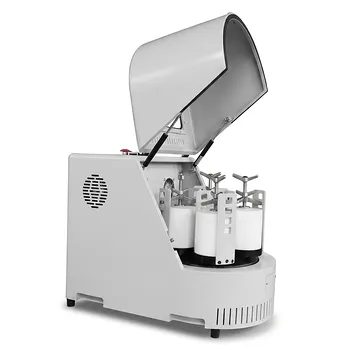
Vertical Semi Circular Planetary Ball Mill for Laboratory Precision Grinding
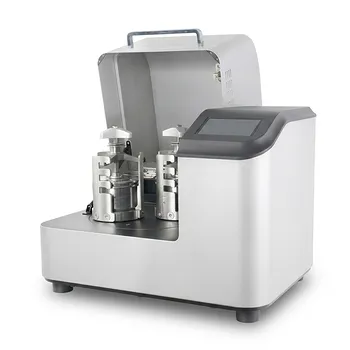
High Energy Planetary Ball Mill for Nano Scale Grinding and Mechanical Alloying
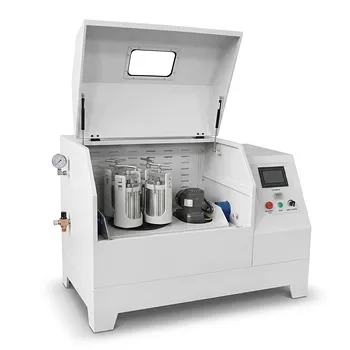
Vertical Production Planetary Ball Mill for High Throughput Powder Processing
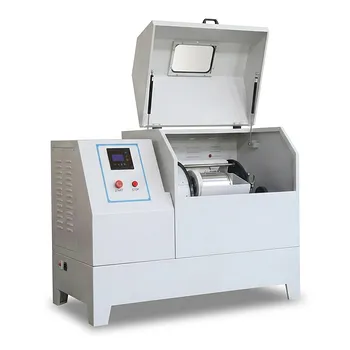
Heavy Duty Horizontal Planetary Ball Mill for Efficient Industrial Grinding and Sample Preparation
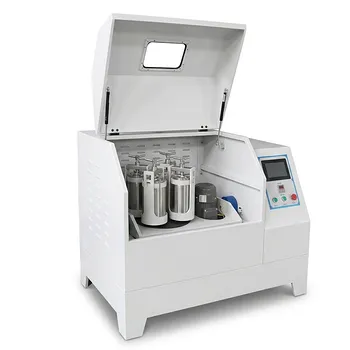
360° Rotating Omnidirectional Laboratory Planetary Ball Mill for Homogeneous Ultra-Fine Grinding and Mixing
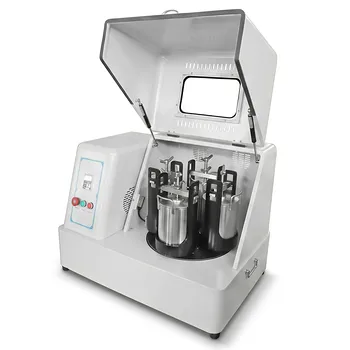
Vertical Square Planetary Ball Mill for Laboratory Sample Preparation and Nanoscale Grinding
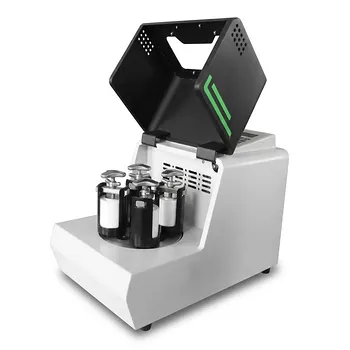
Miniature Planetary Ball Mill with Vacuum Grinding and High Efficiency for Laboratory Sample Preparation

High Energy Laboratory Planetary Ball Mill for Nano Grinding and Material Science Sample Preparation
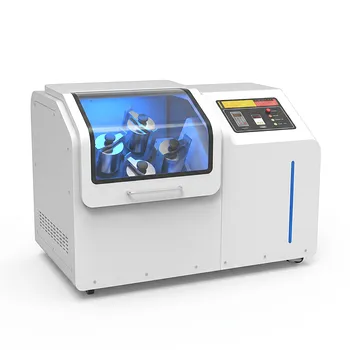
High Energy Omnidirectional Planetary Ball Mill 16L
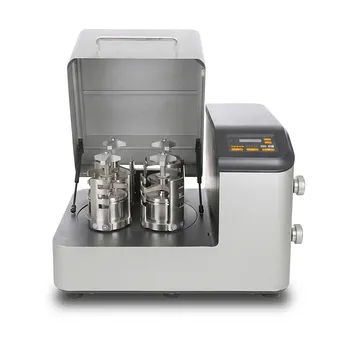
High Energy Planetary Ball Mill for Nano Scale Grinding and Colloidal Mixing in Material Science Research
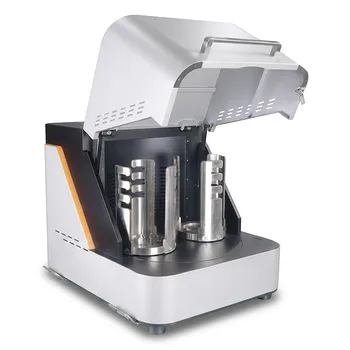
High Energy Laboratory Planetary Ball Mill for Nano Grinding and Colloidal Mixing of Hard and Brittle Materials
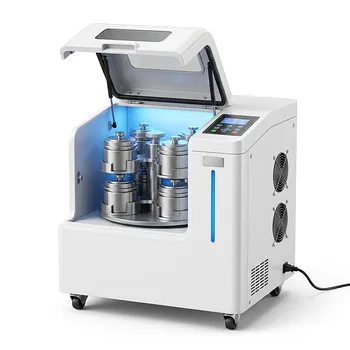
High Energy Omnidirectional Planetary Ball Mill 20L
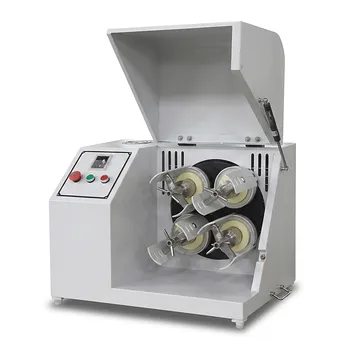
Horizontal Light Duty Planetary Ball Mill for Laboratory Sample Preparation

8L Planetary Ball Mill for Laboratory Grinding and Sample Preparation
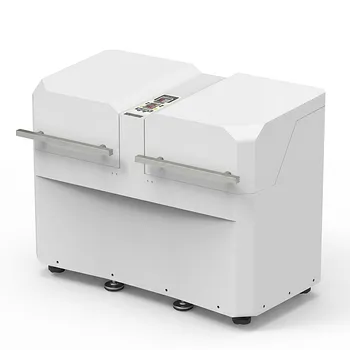
Dual Station Planetary Ball Mill 24L
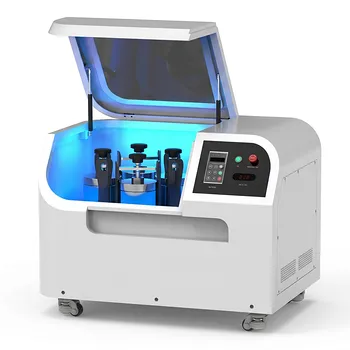
Planetary Ball Mill 12L

Nano High Energy Vibratory Ball Mill for Laboratory Sample Preparation
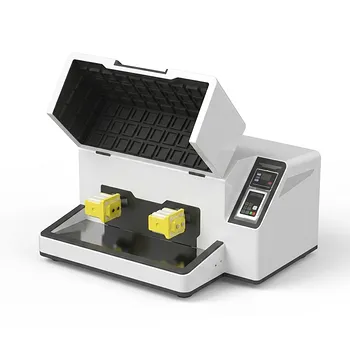
Multi-Platform Nanoscale High-Energy Vibratory Ball Mill
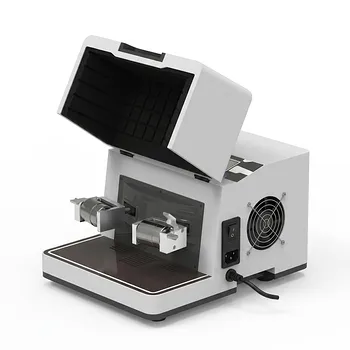
High Energy Hybrid Vibratory Ball Mill for Grinding Mixing and Cell Disruption