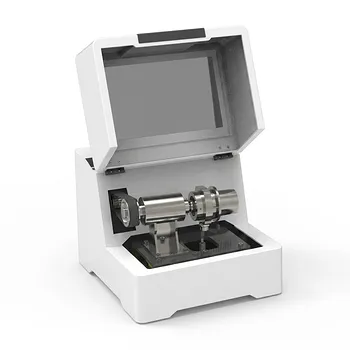
What is the core function of a Planetary Ball Mill in the preparation of nano-fly ash? Master Nano-Refinement
Updated 5 months ago
The core function of a Planetary Ball Mill in the preparation of nano-fly ash is the deep refinement and mechanical activation of raw fly ash particles. By utilizing high-energy impact and shear forces, the equipment reduces micron-sized powder to a nanometer scale, typically between 20 nm and 50 nm. This process significantly increases the specific surface area and transforms the material’s chemical reactivity, turning industrial waste into a high-performance additive.
The Planetary Ball Mill serves as more than a simple grinder; it is a high-energy reactor that triggers mechanical activation. By breaking down the physical and crystalline structure of fly ash, it unlocks latent chemical potential and enables the production of particles with superior reinforcing properties.
The Mechanism of Particle Refinement
High-Energy Impact and Attrition
The mill operates through a complex "sun and planet" motion where the milling jars revolve around a central axis while rotating in the opposite direction. This creates intense centrifugal forces that subject the fly ash to continuous, high-frequency impacts from the grinding media.
Achieving Nano-Scale Dimensions
Conventional fly ash typically exists at the micron level (approx. 53μm). The planetary mill provides the necessary energy to overcome the inter-particle forces, successfully refining the powder to a nanometer scale (20–50 nm).
Structural Surface Roughening
Beyond mere size reduction, the intense shearing action roughens the particle surfaces. This physical modification increases the geometric surface area, which improves interfacial adhesion when the nano-fly ash is later integrated into matrices like polyurethane or concrete.
The Role of Mechanical Activation
Breaking the Lattice Structure
The high-speed rotation generates enough energy to disrupt the crystalline lattice of mineral phases like mullite and quartz. This structural breakdown increases the number of internal defects and micro-strains within the particles.
Increasing Pozzolanic Reactivity
By breaking down the silicon and aluminum bonds within the fly ash, these atoms become more accessible for chemical reactions. This leads to significantly enhanced pozzolanic activity, allowing the nano-fly ash to participate more effectively in hydration reactions for cement and geopolymer production.
Uniform Component Blending
When used for combined grinding (such as with cement or ceramics), the mill ensures molecular-level mixing. This homogeneity is critical for high-density sintering and the development of uniform strength in composite materials.
Understanding the Trade-offs
Heat Generation and Thermal Stress
The high energy required for nano-refinement produces significant heat within the milling jars. If not managed, this thermal energy can lead to unwanted phase transformations or the re-agglomeration of fine particles.
Grinding Media Contamination
Extended milling times increase the risk of wear on the grinding balls and jar liners. This can introduce impurities into the nano-fly ash, which may negatively affect the purity and performance of the final material.
Energy Consumption vs. Yield
Achieving a 20-50 nm particle size requires substantial energy input and specialized rotational speeds (e.g., 300 rpm or higher). The diminishing returns of extended milling must be balanced against the desired reactivity and particle size goals of the project.
How to Apply This to Your Project
Implementation Guidelines
- If your primary focus is Enhancing Concrete Strength: Use the mill to increase the specific surface area to approximately 450 m²/kg, focusing on breaking the lattice structure to accelerate hydration.
- If your primary focus is Polyurethane Reinforcement: Prioritize the "roughening" of the particle surface through shear forces to maximize the contact performance between the ash and the polymer matrix.
- If your primary focus is Chemical Synthesis (Zeolites): Utilize high-frequency impact to ensure maximum dissolution of silicon and aluminum atoms in alkaline solutions.
By mastering the mechanical activation properties of the Planetary Ball Mill, you can successfully transition fly ash from a low-value byproduct to a high-activity nanomaterial.
Summary Table:
| Aspect | Function in Nano-Fly Ash Preparation | Key Benefit |
|---|---|---|
| Particle Size | Reduction from micron scale to 20–50 nm | Significant increase in specific surface area |
| Surface Texture | Physical roughening via intense shearing | Improved interfacial adhesion in polymer matrices |
| Chemical State | Mechanical activation & lattice disruption | Enhanced pozzolanic reactivity for hydration |
| Homogeneity | Molecular-level blending and mixing | Uniform strength and high-density sintering |
Elevate Your Material Research with Expert Sample Prep Solutions
Need to transform industrial byproducts into high-value nanomaterials? We provide complete laboratory sample preparation solutions for material science, specializing in advanced powder processing and compaction equipment.
From high-energy planetary ball mills, jet mills, and disc mills for precise nano-refinement to our full spectrum of hydraulic presses (including CIP/WIP and vacuum hot presses) for material compaction, we offer the tools you need to achieve superior material properties. Whether you are working on fly ash activation, ceramic sintering, or composite development, our equipment ensures reliability and high performance.
Ready to optimize your powder processing workflow? Contact our specialists today to find the perfect milling or pressing solution for your laboratory.
References
- Mohammed J. Kadhim, Fayq H. Jabbar. Synergistic Influence of Micro-and Nano-Reactive Additives on Cement Mortar Performance. DOI: 10.18280/rcma.350609
Mentioned Products
- Vertical Semi Circular Planetary Ball Mill for Laboratory Precision Grinding
- High Energy Planetary Ball Mill for Nano Scale Grinding and Mechanical Alloying
- Vertical Production Planetary Ball Mill for High Throughput Powder Processing
- Heavy Duty Horizontal Planetary Ball Mill for Efficient Industrial Grinding and Sample Preparation
- 360° Rotating Omnidirectional Laboratory Planetary Ball Mill for Homogeneous Ultra-Fine Grinding and Mixing
People Also Ask
- What role does a planetary ball mill play in the synthesis of Li6PS5Cl (LPSCl)? Unlock High Ionic Conductivity
- Why is a planetary ball mill essential for SiBCN-rGO wet-spinning? Achieve Superior Dispersion and Spinnability
- Why is an intermittent grinding process required for perovskites in a planetary ball mill? Ensure Stability & Purity
- Why is a planetary ball mill required for PET micronization? Ensure Accurate Chemical Analysis of Reprocessed PET
- How does mechanized planetary ball milling compare to manual agate grinding? Optimize sulfide standard material precision.

Tech Team · PowderPreparation
Last updated on May 14, 2026
Related Products
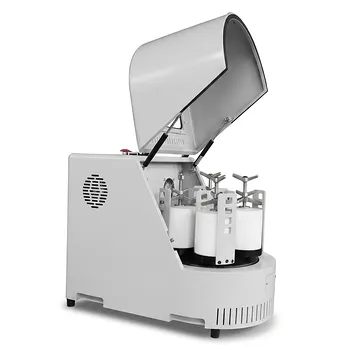
Vertical Semi Circular Planetary Ball Mill for Laboratory Precision Grinding
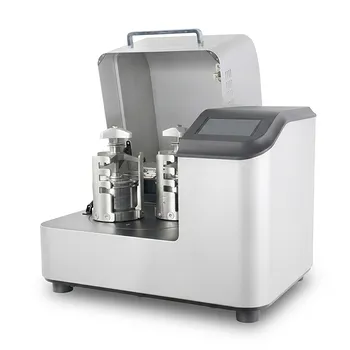
High Energy Planetary Ball Mill for Nano Scale Grinding and Mechanical Alloying

Vertical Production Planetary Ball Mill for High Throughput Powder Processing
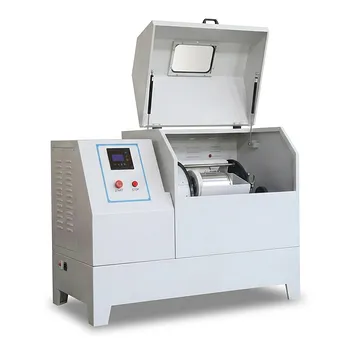
Heavy Duty Horizontal Planetary Ball Mill for Efficient Industrial Grinding and Sample Preparation
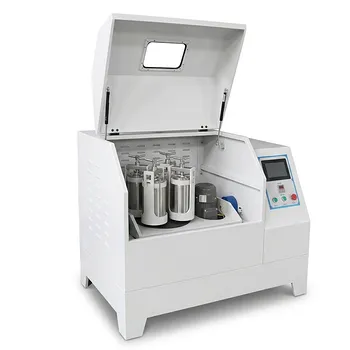
360° Rotating Omnidirectional Laboratory Planetary Ball Mill for Homogeneous Ultra-Fine Grinding and Mixing
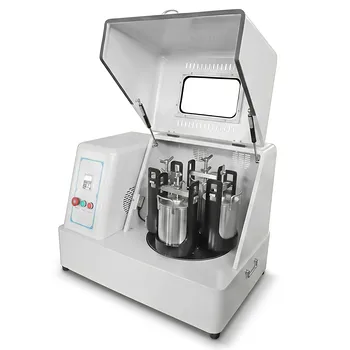
Vertical Square Planetary Ball Mill for Laboratory Sample Preparation and Nanoscale Grinding
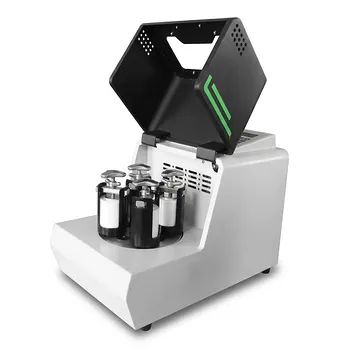
Miniature Planetary Ball Mill with Vacuum Grinding and High Efficiency for Laboratory Sample Preparation
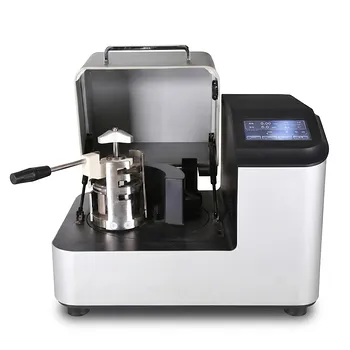
High Energy Laboratory Planetary Ball Mill for Nano Grinding and Material Science Sample Preparation

High Energy Omnidirectional Planetary Ball Mill 16L
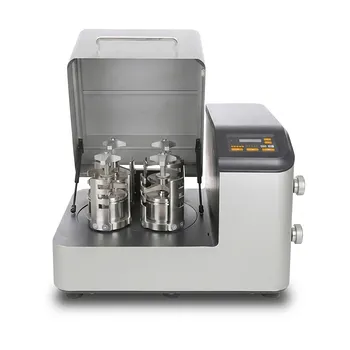
High Energy Planetary Ball Mill for Nano Scale Grinding and Colloidal Mixing in Material Science Research
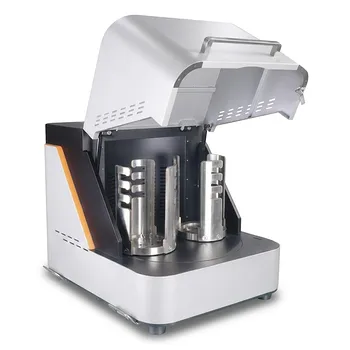
High Energy Laboratory Planetary Ball Mill for Nano Grinding and Colloidal Mixing of Hard and Brittle Materials
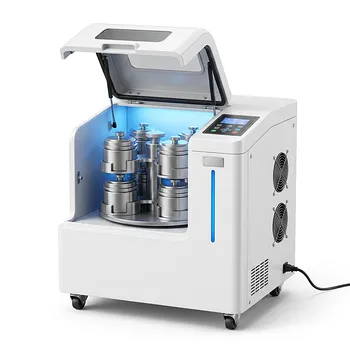
High Energy Omnidirectional Planetary Ball Mill 20L
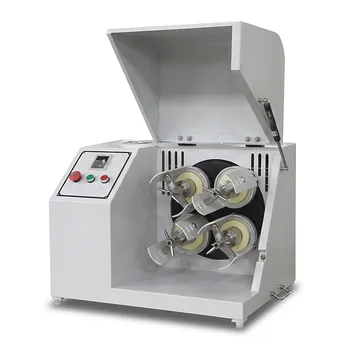
Horizontal Light Duty Planetary Ball Mill for Laboratory Sample Preparation
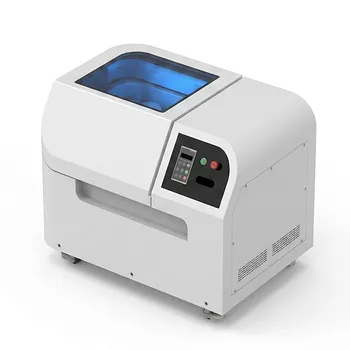
8L Planetary Ball Mill for Laboratory Grinding and Sample Preparation
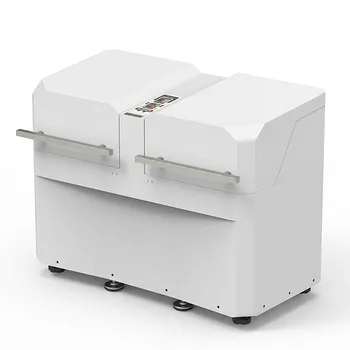
Dual Station Planetary Ball Mill 24L
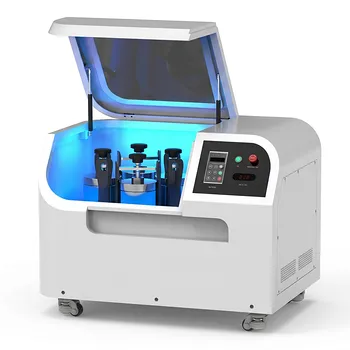
Planetary Ball Mill 12L

Nano High Energy Vibratory Ball Mill for Laboratory Sample Preparation
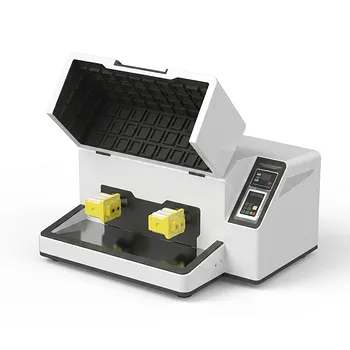
Multi-Platform Nanoscale High-Energy Vibratory Ball Mill
High Energy Hybrid Vibratory Ball Mill for Grinding Mixing and Cell Disruption