What functions does a uniaxial hydraulic press perform during Al-GO hot pressing? Master Powder Densification
Updated 4 months ago
The uniaxial hydraulic press acts as the primary engine for powder densification and structural consolidation. During the hot pressing stage of Al-GO fabrication, it applies precise axial pressure (often up to 450-700 MPa) to heated powders to overcome particle friction, induce plastic deformation, and eliminate internal voids. This transformation converts loose, mechanically alloyed material into a coherent, high-density green body with the mechanical strength required for subsequent processing.
Core Takeaway: The uniaxial hydraulic press is responsible for the transition from loose powder to a solid-state composite by combining axial force and thermal energy to achieve initial densification, geometric shaping, and mechanical interlocking of Al and GO particles.
The Mechanics of Powder Consolidation
Overcoming Particle Friction and Rearrangement
In the early stages of pressing, the hydraulic press applies axial force to help powder particles overcome inter-particle friction. At elevated temperatures (e.g., 300°C), this pressure forces the Al-GO particles to slide and rearrange into a more efficient packing configuration.
Inducing Plastic Deformation and Interlocking
As pressure increases, the press forces the aluminum matrix to undergo plastic deformation. This deformation allows the metal to flow into the gaps between Graphene Oxide flakes, creating a tight mechanical interlock that forms the foundation of the composite’s structural integrity.
Rupturing Oxide Films
The high axial pressure provided by the press is critical for breaking down the natural oxide films on the surface of aluminum particles. By rupturing these layers, the press facilitates direct metal-to-metal contact and particle diffusion, which are essential for effective sintering.
Structural and Geometric Formation
Defining the Green Compact Shape
The press utilizes precision molds to transform loose powder into a specific geometric form, such as a cylindrical or disc-shaped green body. This provides a stable, "near-net-shape" precursor that is easier to handle during secondary processes like Repeat Upsetting-Extrusion (RUE).
Minimizing Voids and Air Entrapment
By maintaining constant pressure over a specific holding time, the press forces air out from between the particles. This reduction in internal voids significantly increases the initial relative density, which is the most critical factor in preventing shrinkage or warping during the final sintering phase.
Establishing Volume Utilization
The consolidation process increases the volume utilization of the raw material. By compressing the powder into a dense billet, the press ensures the material can be fed consistently and stably into subsequent indirect extrusion or machining equipment.
Understanding the Trade-offs and Pitfalls
Pressure Limits and Micro-cracking
While higher pressure generally leads to higher density, exceeding the material's limits can cause elastic recovery issues once the pressure is released. This can lead to "spring-back" effects, resulting in micro-cracks or laminations within the green body.
Density Gradient Challenges
Because pressure is applied uniaxially (from one direction), there is a risk of creating an internal density gradient. The material closest to the punch may be denser than the material at the bottom of the mold, which can cause uneven shrinkage or mechanical weakness if not managed through precise control of the downward speed.
Thermal and Pressure Synchronization
In hot pressing, the timing between heating and pressure application is vital. Applying maximum pressure before the powder reaches the target temperature can lead to brittle fracture of the particles rather than the desired plastic flow.
How to Apply This to Your Project
- If your primary focus is maximizing final density: Prioritize a longer pressure-holding time at peak load to ensure total air evacuation and maximum plastic deformation.
- If your primary focus is preventing structural defects: Use a controlled, slower downward punch speed to allow for uniform stress distribution and minimize density gradients.
- If your primary focus is ensuring successful secondary extrusion: Focus on achieving a high green strength through precise temperature-pressure synchronization to prevent the billet from crumbling during handling.
By mastering the control of axial pressure and holding time, you ensure the Al-GO composite moves from a loose mixture to a high-performance engineering material.
Summary Table:
| Key Function | Mechanism Involved | Outcome for Al-GO Composite |
|---|---|---|
| Powder Densification | Overcoming particle friction & air evacuation | High relative density green body |
| Structural Consolidation | Inducing plastic deformation & interlocking | Robust mechanical integrity |
| Surface Activation | Rupturing aluminum oxide films | Enhanced metal-to-metal bonding |
| Geometric Shaping | Precision mold compression | Consistent near-net-shape precursors |
| Void Reduction | Constant pressure holding | Minimal shrinkage during final sintering |
Elevate Your Material Science Research with Precision Equipment
Achieving the perfect Al-GO composite requires more than just pressure—it requires precision and the right preparation workflow. At [Company Name], we provide complete laboratory sample preparation solutions tailored for material science professionals.
From initial powder processing using our planetary ball mills, jet mills, and disc mills to final consolidation, we support your entire R&D cycle. Our extensive range of powder processing equipment includes:
- Sample Preparation: Jaw/roll crushers, cryogenic grinders, and sieve shakers.
- Mixing Excellence: Powder mixers and vacuum defoaming mixers for uniform dispersion.
- Advanced Pressing Solutions: A full spectrum of hydraulic presses including Cold/Warm Isostatic Presses (CIP/WIP), standard lab presses, XRF pellet presses, and high-performance Vacuum Hot Presses.
Whether you are a researcher aiming for high-density green bodies or a distributor seeking reliable OEM/ODM support, our equipment ensures superior performance and repeatable results.
Ready to optimize your fabrication process?
Contact our technical experts today to find the perfect solution for your lab!
References
- Amirhossien Bahri, Sajede Roueini Fardi. Mechanical and electrochemical behaviors assessments of Aluminum- Graphene Oxide composites fabricated by mechanical milling and repetitive upsetting extrusion. DOI: 10.52547/jcc.3.3.1
Mentioned Products
- 6-Ton Small Single-Punch Tablet Press — Laboratory Powder & Granule Tableting Equipment / Tablet Forming Machine
- 5 Ton Single Punch Tablet Press Laboratory Small Batch Production
- Enhanced 9 Punch Rotary Tablet Press for Powder Compaction
- 6 Ton Variable Frequency Single Punch Tablet Press
- Ordinary Type Rotary Tablet Press for Pharmaceutical Chemical Food Electronic Industries
People Also Ask
- What is the function of a laboratory press in Cr-Ti alloy evaluation? Quantify Fracture Stress & Strength
- What is the function of a laboratory press in assessing the hydrophobic performance of modified vermiculite fillers?
- What is the core function of a laboratory press in the forming of ceramic filter element green bodies? Maximize Density.
- What is the function of a laboratory press in the preparation of ceramic feed rods? Master Density and Precision
- Why is vacuum sealing and flexible packaging necessary for Aluminum Titanate powders during CIP? Ensure Peak Density

Tech Team · PowderPreparation
Last updated on Jun 03, 2026
Related Products
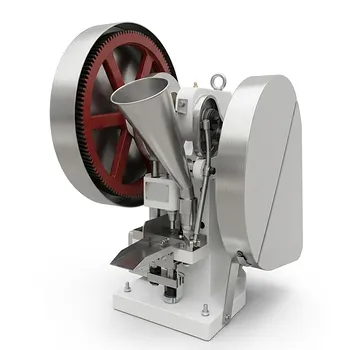
6-Ton Small Single-Punch Tablet Press — Laboratory Powder & Granule Tableting Equipment / Tablet Forming Machine
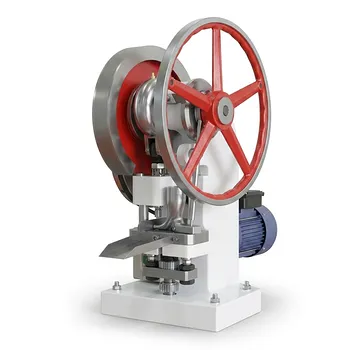
5 Ton Single Punch Tablet Press Laboratory Small Batch Production
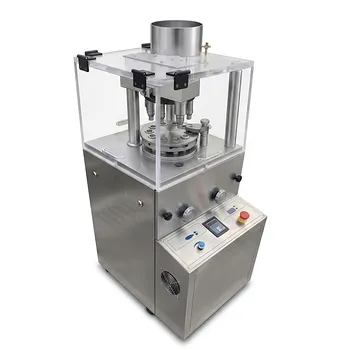
Enhanced 9 Punch Rotary Tablet Press for Powder Compaction
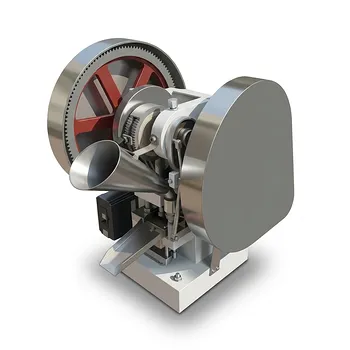
6 Ton Variable Frequency Single Punch Tablet Press
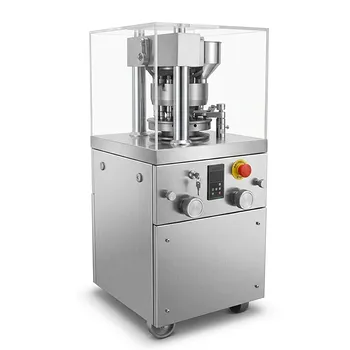
Ordinary Type Rotary Tablet Press for Pharmaceutical Chemical Food Electronic Industries
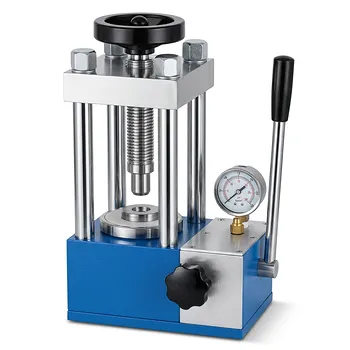
Manual Tablet Press with Dual Scale Pressure Gauge for Pharmaceutical Food Chemical Laboratory Sample Preparation
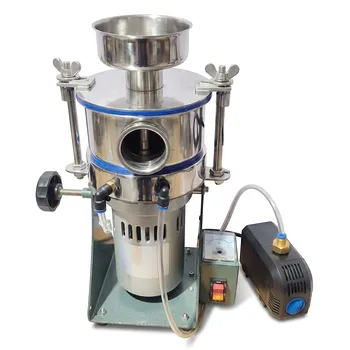
Water Cooled Airflow Ultra Fine Grinder for Low Temperature Material Processing
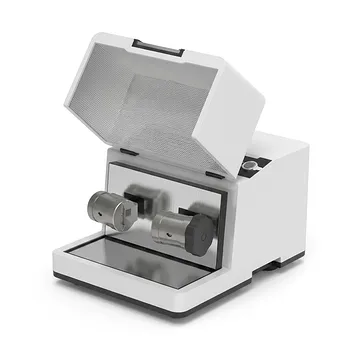
Heating Temperature Controlled High Energy Vibratory Ball Mill