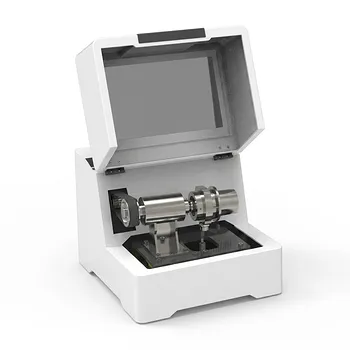
What functions does a planetary ball mill perform during the wet carbonation process of industrial waste? Boost Kinetics.
Updated 4 months ago
The planetary ball mill functions as both a high-energy reactor and a mechanical activator during the wet carbonation of industrial waste. Beyond simple size reduction, it facilitates a mechanochemical environment that simultaneously grinds materials to the nanoscale, disrupts passivating layers on particle surfaces, and accelerates the chemical reaction between carbon dioxide and solid waste.
Central Takeaway: In wet carbonation, the planetary ball mill serves as a critical catalyst for kinetics, using high-energy impacts to break the "shell-layer" diffusion limit and achieve theoretical carbonation efficiency in minutes rather than hours.
Accelerated Physical and Structural Transformation
Ultrafine Grinding and Surface Area Expansion
The primary function of the mill is to provide ultrafine grinding through high-energy shear and impact forces. By reducing industrial waste—such as steel slag or cement kiln dust—to micro- or nano-scales, the mill exponentially increases the specific surface area available for reaction.
Induction of Lattice Defects
High-speed rotation generates centrifugal acceleration that drives grinding media to create mechanical stress on crystal structures. This stress induces crack propagation and lattice defects, which heightens the microstructural activity of the waste material and makes it more chemically reactive.
Particle Homogenization
The mill ensures molecular-level contact between the liquid phase and solid particles by breaking down powder agglomerates. This creates a highly uniform suspension where industrial waste and reactants achieve a level of homogenization that standard stirring cannot provide.
Overcoming Chemical and Kinetic Barriers
Disruption of the Passivating Silica Layer
During wet carbonation, an inert silica (SiO2) coating often forms around the waste particles, creating a diffusion barrier that halts the reaction. The planetary ball mill continuously strips away this shell-layer through constant abrasion, exposing fresh silicate surfaces to the carbon dioxide.
Enhanced CO2 Dissolution
The intense energy within the milling jar acts as a mechanochemical driver that accelerates the dissolution of CO2 into the liquid phase. By forcing gas-liquid-solid interaction under pressure and impact, the equipment enables high carbonation yields within extremely short timeframes, often as little as 10 minutes.
Promotion of Reactive Sintering
By ensuring uniform distribution of binders and dispersants, the mill prepares the carbonated product for subsequent processing. The resulting slurry possesses consistent physical properties, which is essential for the stability and quality of the final recycled industrial material.
Understanding the Trade-offs
Energy Intensity and Operational Costs
While the planetary ball mill is highly efficient at a laboratory or pilot scale, it is an energy-intensive device. The high power required to maintain centrifugal forces can lead to significant operational costs when compared to passive carbonation methods.
Material Contamination and Wear
The high-energy impacts that facilitate the reaction also cause wear and tear on the grinding jars and media. Depending on the hardness of the industrial waste, small amounts of the milling media (e.g., zirconia or stainless steel) may leach into the sample, potentially altering the purity of the carbonated product.
Scalability Constraints
Translating the batch processes of a planetary ball mill to a continuous industrial scale remains a challenge. The mechanical complexity of planetary motion makes it difficult to design massive systems that maintain the same energy density found in smaller laboratory units.
How to Apply This to Your Carbonation Project
Strategic Implementation Based on Material Goals
The use of a planetary ball mill should be tailored to the specific mineralogy of the waste and the desired throughput of the carbonation process.
- If your primary focus is maximizing carbon sequestration yield: Utilize high-speed settings to ensure the continuous stripping of passivating layers and the exposure of fresh reactive sites.
- If your primary focus is producing high-quality construction materials: Prioritize the homogenization functions of the mill to ensure uniform particle distribution and consistent mechanical properties in the final product.
- If your primary focus is minimizing processing time: Focus on the mechanochemical activation capabilities to achieve rapid carbonation kinetics in under 15 minutes.
By integrating the planetary ball mill as a mechanochemical reactor, you transform industrial waste carbonation from a slow diffusion-limited process into a rapid, high-efficiency chemical synthesis.
Summary Table:
| Function | Role in Wet Carbonation | Primary Benefit |
|---|---|---|
| Ultrafine Grinding | Increases specific surface area | Drastically faster reaction rates |
| Layer Disruption | Strips passivating silica/product shells | Continuous exposure of reactive sites |
| Lattice Activation | Induces structural defects and stress | Lowers chemical activation energy |
| Mass Transfer | Facilitates gas-liquid-solid mixing | Achieves rapid carbonation kinetics |
Maximize Your Carbon Sequestration Efficiency Today
Achieving theoretical carbonation yields in minutes requires more than just mixing—it requires precision engineering. At our core, we provide complete laboratory sample preparation solutions for material science, specializing in high-performance powder processing and compaction equipment.
From planetary ball mills, jet mills, and disc mills to initial size reduction using jaw and roll crushers, we offer the tools needed to transform industrial waste into valuable resources. Our expertise extends to stabilization and forming with a full spectrum of hydraulic presses, including Cold/Warm Isostatic Presses (CIP/WIP), vacuum hot presses, and XRF pellet presses. We also provide specialized sieve shakers, liquid nitrogen cryogenic grinders, and defoaming mixers to ensure your research meets the highest standards of consistency and purity.
Ready to optimize your mechanochemical processes? Contact our technical team today to find the perfect equipment solution for your laboratory!
References
- Viktor Kolčić, Marijana Serdar. Regional waste materials as candidates for mineral carbonation-based CO₂ sequestration. DOI: 10.5592/co/phdsym.2025.12
Mentioned Products
- Vertical Semi Circular Planetary Ball Mill for Laboratory Precision Grinding
- High Energy Planetary Ball Mill for Nano Scale Grinding and Mechanical Alloying
- Vertical Production Planetary Ball Mill for High Throughput Powder Processing
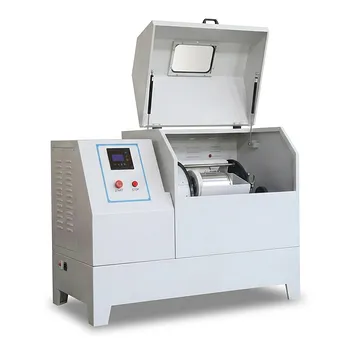
- Heavy Duty Horizontal Planetary Ball Mill for Efficient Industrial Grinding and Sample Preparation
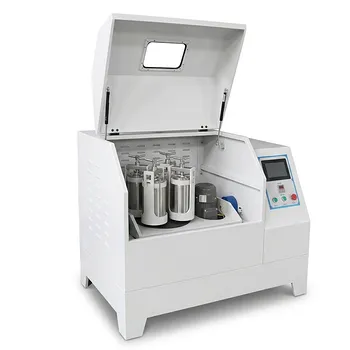
- 360° Rotating Omnidirectional Laboratory Planetary Ball Mill for Homogeneous Ultra-Fine Grinding and Mixing
People Also Ask
- What role does a planetary ball mill play in the synthesis of Li6PS5Cl (LPSCl)? Unlock High Ionic Conductivity
- Why is a planetary ball mill essential for SiBCN-rGO wet-spinning? Achieve Superior Dispersion and Spinnability
- Why is an intermittent grinding process required for perovskites in a planetary ball mill? Ensure Stability & Purity
- Why is a planetary ball mill required for PET micronization? Ensure Accurate Chemical Analysis of Reprocessed PET
- How does mechanized planetary ball milling compare to manual agate grinding? Optimize sulfide standard material precision.

Tech Team · PowderPreparation
Last updated on Jun 03, 2026
Related Products
Vertical Semi Circular Planetary Ball Mill for Laboratory Precision Grinding
High Energy Planetary Ball Mill for Nano Scale Grinding and Mechanical Alloying
Vertical Production Planetary Ball Mill for High Throughput Powder Processing
Heavy Duty Horizontal Planetary Ball Mill for Efficient Industrial Grinding and Sample Preparation
360° Rotating Omnidirectional Laboratory Planetary Ball Mill for Homogeneous Ultra-Fine Grinding and Mixing
Vertical Square Planetary Ball Mill for Laboratory Sample Preparation and Nanoscale Grinding
Miniature Planetary Ball Mill with Vacuum Grinding and High Efficiency for Laboratory Sample Preparation
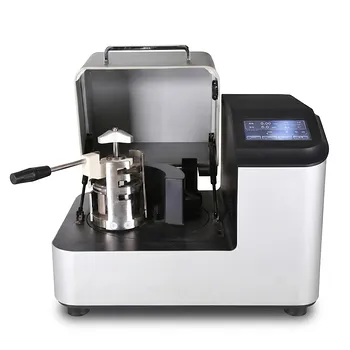
High Energy Laboratory Planetary Ball Mill for Nano Grinding and Material Science Sample Preparation
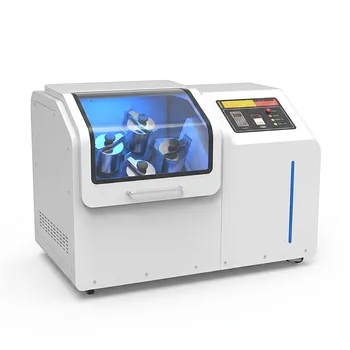
High Energy Omnidirectional Planetary Ball Mill 16L
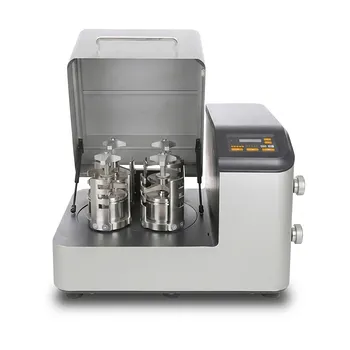
High Energy Planetary Ball Mill for Nano Scale Grinding and Colloidal Mixing in Material Science Research
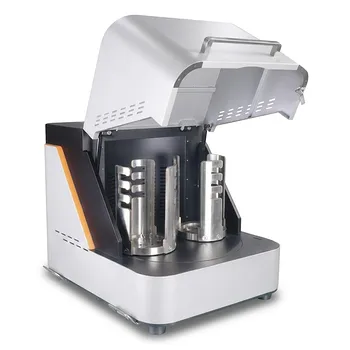
High Energy Laboratory Planetary Ball Mill for Nano Grinding and Colloidal Mixing of Hard and Brittle Materials
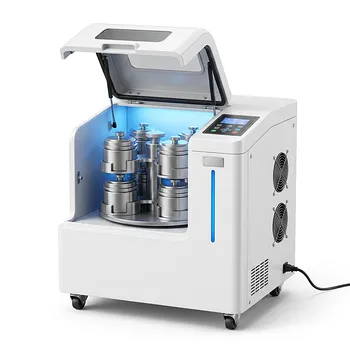
High Energy Omnidirectional Planetary Ball Mill 20L
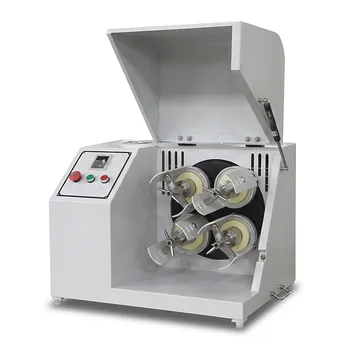
Horizontal Light Duty Planetary Ball Mill for Laboratory Sample Preparation

8L Planetary Ball Mill for Laboratory Grinding and Sample Preparation
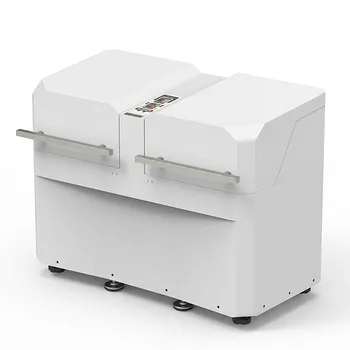
Dual Station Planetary Ball Mill 24L
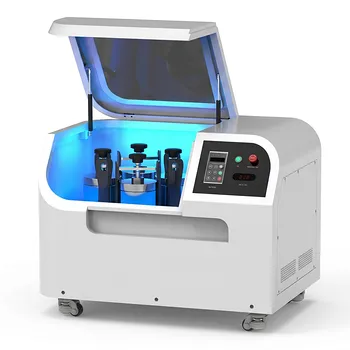
Planetary Ball Mill 12L

Nano High Energy Vibratory Ball Mill for Laboratory Sample Preparation
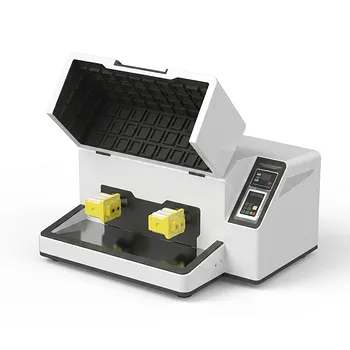
Multi-Platform Nanoscale High-Energy Vibratory Ball Mill
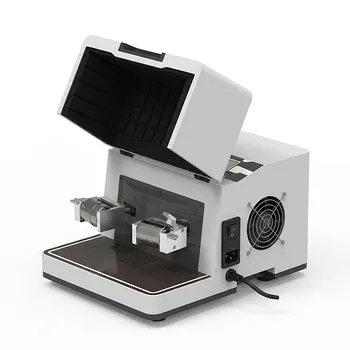
High Energy Hybrid Vibratory Ball Mill for Grinding Mixing and Cell Disruption