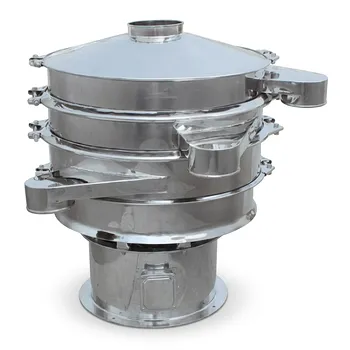
What function does a drum-type rotary mixer serve in resin application? Achieve uniform coating for wood particles.
Updated 4 months ago
A drum-type rotary mixer provides the mechanical agitation necessary to keep wood-based particles in a continuous state of suspension and tumbling. This dynamic environment allows the resin application system to uniformly atomize and coat adhesives, hardeners, and emulsions onto every particle surface, preventing localized accumulation and ensuring the structural integrity of the final board.
The drum-type rotary mixer acts as the critical interface between raw particles and chemical binders; by maintaining constant motion, it ensures a uniform macroscopic distribution of components that is essential for producing high-quality panels from mixed materials.
The Mechanics of Particle Suspension
Creating a Dynamic Tumbling Environment
The mixer uses mechanical rotation to lift and drop particles—such as bamboo, pine, or recycled wood—repeatedly through the internal chamber. This action ensures that no particles remain buried at the bottom of the drum where they would be shielded from the resin spray.
By keeping the material in a "suspended" state, the mixer exposes the maximum surface area of each individual particle. This is particularly vital when dealing with mixed material ratios where different particle sizes and densities are present.
Facilitating Uniform Resin Atomization
As the particles tumble, a pneumatic spray system introduces urea-formaldehyde (UF) resin, paraffin emulsions, and hardeners into the drum. The constant movement prevents the chemicals from soaking into just a few particles, which would otherwise lead to "glue spots" or saturated clumps.
The goal is to achieve a micro-thin, uniform coating across the entire batch. This level of precision is what allows for consistent physical properties throughout the thickness of the finished board.
Achieving Uniformity Across Mixed Feedstocks
Balancing Diverse Material Properties
When working with a mix of pine, bamboo, and other organic fibers, the varying absorption rates and surface textures can lead to bonding failures. The fixed rotational speed (often around 30 rpm) provides a predictable environment that compensates for these material differences.
By standardizing the agitation process, the mixer ensures that the thermoplastic binders or resins are distributed evenly regardless of whether the particle is a dense hardwood or a porous softwood. This creates a foundation for high-quality melt mixing or pressing in later stages.
Eliminating Structural Weak Points
Without the constant agitation of a rotary drum, resins tend to accumulate in localized pockets. These adhesive accumulations result in "blowouts" during the hot-pressing stage or structural weak points in the final product.
The rotary mixer ensures that every component—from semi-coke and activated carbon in specialized boards to walnut shells in composites—is pre-mixed macroscopically. This prevents the formation of voids and ensures the board meets its required density specifications.
Understanding the Trade-offs and Constraints
Rotational Speed vs. Particle Fragility
While high-intensity mixing ensures uniformity, excessive speed can lead to particle degradation. If the mechanical motion is too violent, delicate wood fibers may break down into "fines," which increases the total surface area and requires significantly more resin to achieve the same bond strength.
Conversely, if the speed is too low, the particles will "slump" rather than "tumble." This leads to uneven coating, where the particles on the outer edges of the mass receive too much resin while the core remains dry.
Maintenance of the Internal Drum Surface
A significant challenge with rotary mixers is the build-up of resin on the internal walls and lifters. Over time, this buildup can alter the tumbling pattern of the particles and reduce the efficiency of the mixing action.
Regular cleaning and monitoring are required to ensure the mechanical agitation remains consistent. Failure to maintain the drum can lead to cross-contamination between batches or the introduction of dried "resin skins" into the final panel.
Maximizing Efficiency in Your Application
Success in the resin application process depends on matching the mixer's performance to your specific material feedstock and binder chemistry.
- If your primary focus is structural consistency in recycled boards: Use a fixed rotational speed and pneumatic sprayers to eliminate glue spots and ensure even density.
- If your primary focus is processing diverse materials like bamboo and pine: Prioritize the tumbling action of the rotary drum to compensate for varying absorption rates between different wood species.
- If your primary focus is high-filling-rate feedstocks: Utilize the drum-type mixer as a pre-mixing stage to ensure a uniform macroscopic distribution before the material enters the extruder.
By mastering the suspension and tumbling dynamics within the drum, you ensure that every particle contributes equally to the strength and stability of the final composite.
Summary Table:
| Key Feature | Functional Mechanism | Benefit to Final Product |
|---|---|---|
| Mechanical Agitation | Continuous lifting and dropping (tumbling) | Exposes maximum surface area of all particles |
| Particle Suspension | Prevents particles from burying or clumping | Eliminates "glue spots" and structural weak points |
| Uniform Atomization | Integration with pneumatic spray systems | Ensures micro-thin, consistent resin distribution |
| Speed Control | Maintains optimal RPM (e.g., 30 rpm) | Prevents particle degradation while ensuring flow |
Elevate Your Material Research with Precision Mixing Solutions
Achieving perfect uniformity in composite materials requires specialized equipment that bridges the gap between raw feedstock and high-performance products. Whether you are processing wood-based particles, advanced ceramics, or specialized powders, [Your Brand Name] provides complete laboratory sample preparation solutions tailored for material science.
Our extensive expertise in powder processing and compaction ensures your materials meet the most rigorous standards. Our product range includes:
- Advanced Mixers: High-efficiency powder mixers and defoaming mixers for uniform macroscopic distribution.
- Size Reduction: Jaw/roll crushers, liquid nitrogen cryogenic grinders, and various mills (planetary, jet, disc, rotor).
- Sieving & Analysis: Vibratory and air-jet sieve shakers with precision test sieves.
- Full Spectrum Pressing: Cold/Warm Isostatic Presses (CIP/WIP), standard lab presses, and advanced hot/vacuum hot presses for final part consolidation.
Ready to optimize your resin application and material processing workflows? Contact our experts today to discover how our equipment can enhance your lab's efficiency and product quality.
References
- Fernando Rusch, Gabriel de Magalhães Miranda. Particleboard experimental production with bamboo, pine and mate for one product of new applications. DOI: 10.4067/s0718-221x2023000100414
Mentioned Products
- 360° Rotating Omnidirectional Laboratory Planetary Ball Mill for Homogeneous Ultra-Fine Grinding and Mixing
- Three-Dimensional Motion Mixer for Laboratory Powder and Granule Blending
- V-Type Powder Mixer for Uniform Blending of Dry Powders and Granules
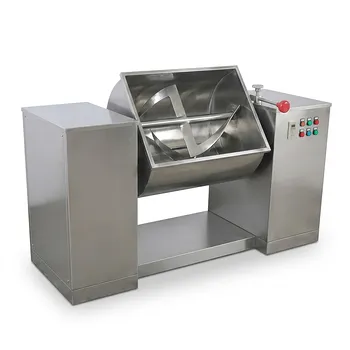
- Horizontal Trough Mixer for Uniform Powder and Paste Blending
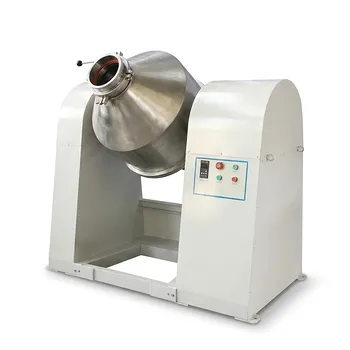
- Industrial Double Cone Mixer for Powder Blending and Homogeneous Mixing
People Also Ask
- What role does an omni-directional planetary ball mill play in brass/cobalt antimonide pretreatment? Achieve Nano-Scale Homogeneity.
- What is the function of an omni-directional planetary ball mill? Achieve Streak-Free Glass Homogenization
- Why is an intermittent grinding process required for perovskites in a planetary ball mill? Ensure Stability & Purity
- Why is a planetary ball mill essential for SiBCN-rGO wet-spinning? Achieve Superior Dispersion and Spinnability
- What role does a planetary ball mill play in the synthesis of Li6PS5Cl (LPSCl)? Unlock High Ionic Conductivity

Tech Team · PowderPreparation
Last updated on Jun 03, 2026
Related Products
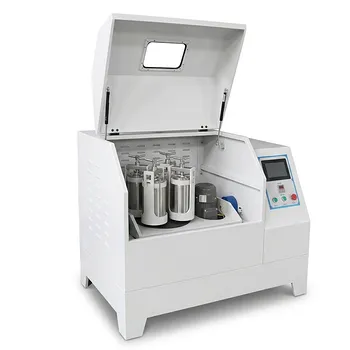
360° Rotating Omnidirectional Laboratory Planetary Ball Mill for Homogeneous Ultra-Fine Grinding and Mixing
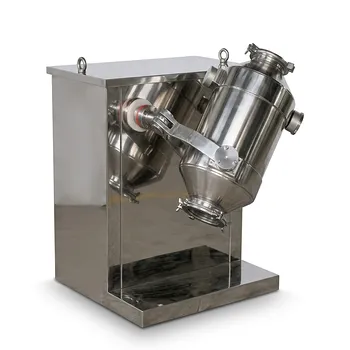
Three-Dimensional Motion Mixer for Laboratory Powder and Granule Blending
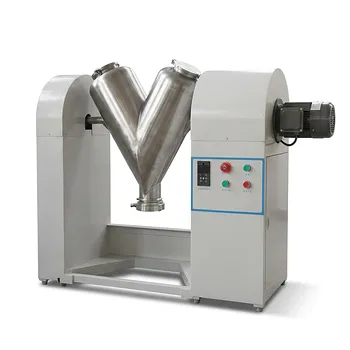
V-Type Powder Mixer for Uniform Blending of Dry Powders and Granules
Horizontal Trough Mixer for Uniform Powder and Paste Blending
Industrial Double Cone Mixer for Powder Blending and Homogeneous Mixing
Inclined Mixer for Homogeneous Powder Blending and Grinding
Horizontal Ribbon Mixer for Uniform Powder and Slurry Mixing
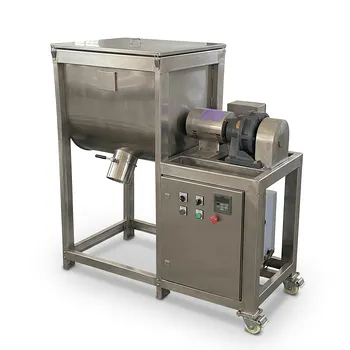
Horizontal Ribbon Mixer for Dry Powder and Slurry Blending
Ordinary Type Rotary Tablet Press for Pharmaceutical Chemical Food Electronic Industries
High Efficiency Vacuum Planetary Centrifugal Mixer and Defoaming Machine for Industrial Material Research and Precise Laboratory Powder Dispersion
High Speed Vacuum Planetary Centrifugal Mixer and Defoamer for Industrial Paste Processing
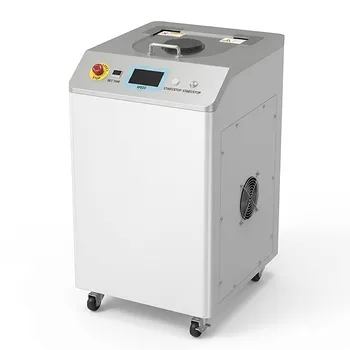
High Viscosity Planetary Centrifugal Vacuum Mixer for Material Defoaming and Uniform Mixing
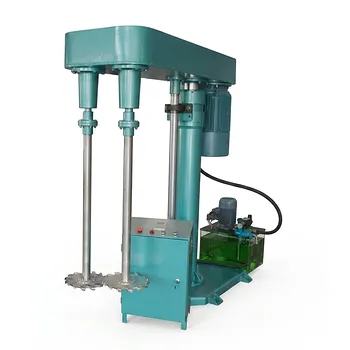
Hydraulic Double Shaft Disperser for High Viscosity Liquid Mixing and Dispersion
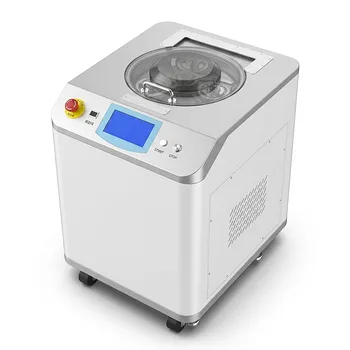
Dual Cup Vacuum Centrifugal Mixer Planetary Paste Defoaming Machine Industrial Material Processor
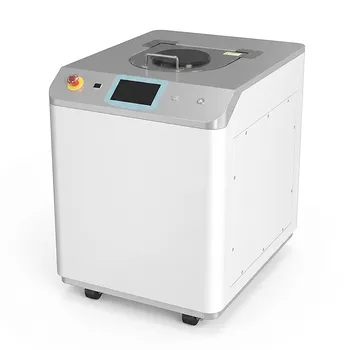
Industrial Planetary Centrifugal Vacuum Defoaming Mixer for High Viscosity Paste and Advanced Material Science
Enhanced 9 Punch Rotary Tablet Press for Powder Compaction