What environmental advantages does planetary ball milling offer for catalytic preparation? Green Synthesis Benefits
Updated 5 months ago
Planetary ball milling offers a transformative environmental advantage by enabling solvent-free mechanochemical synthesis. This method completely eliminates the need for large volumes of organic solvents and surfactants used in traditional liquid-phase methods like incipient wetness impregnation (IWI). By utilizing mechanical energy to drive reactions, it prevents toxic pollution and drastically reduces the energy and infrastructure required for industrial wastewater treatment.
The central advantage of planetary ball milling is the transition to a "dry" synthesis environment, which eliminates chemical waste streams and maximizes atom economy. This shift aligns catalyst production with green chemistry principles by replacing hazardous liquid-phase interactions with high-energy mechanical force.
The Elimination of Liquid Waste Streams
Solvent-Free Mechanochemical Routes
Planetary ball milling facilitates reactions through high-energy impacts rather than chemical dissolution. This approach removes the requirement for organic solvents, which are often toxic, volatile, and difficult to recover in traditional synthesis. By operating in a solid state, the process inherently avoids the environmental risks associated with solvent leakage and evaporation.
Reduction in Wastewater Treatment
Traditional liquid-phase synthesis generates significant volumes of hazardous liquid byproducts. For instance, producing just 2.74 mmol of catalyst via traditional methods can result in approximately 350 mL of surfactant-containing wastewater. Planetary ball milling eliminates this waste stream entirely, reducing the environmental footprint and the operational costs of water purification.
Prevention of Chemical Runoff
Because the process is contained within sealed grinding jars, there is no risk of accidental chemical discharge into the environment. This sealed environment also allows for precise control over gas atmospheres, preventing the release of reactive or greenhouse gases during the synthesis of sensitive catalytic materials.
Enhancing Resource Efficiency and Atom Economy
Maximizing Atom Economy
Planetary ball milling aligns with green chemistry by improving atom economy, ensuring that nearly all precursor materials are incorporated into the final catalyst. In liquid-phase synthesis, significant portions of active metal precursors can remain in the supernatant or be lost during filtration and washing stages. Mechanochemistry ensures that the initial mass of the reactants translates directly to the final product.
Preventing Material Aggregation and Waste
The high-energy density of planetary milling prevents the aggregation of active components, a common failure in traditional methods that leads to inactive, wasted material. By inducing lattice distortions and defects, the milling process stabilizes active species and prevents sintering. This results in more durable catalysts that require less frequent replacement, reducing the long-term material demand of industrial processes.
Microscopic Mixing Uniformity
The composite motion of revolution and rotation achieves molecular-level mixing without the need for chemical dispersants. This efficiency allows for the creation of complex, multi-element catalysts (such as high-entropy alloys) that avoid the precipitation of secondary phases. High mixing precision ensures that no raw materials are "lost" to non-functional chemical structures.
Understanding the Trade-offs
Energy Consumption vs. Chemical Savings
While planetary ball milling eliminates chemical waste, it is an energy-intensive process requiring significant electricity to achieve high rotational speeds. However, the environmental cost of this energy is often lower than the lifecycle cost of producing, transporting, and treating the large volumes of solvents used in traditional chemistry.
Risk of Mechanical Contamination
A potential pitfall in high-energy milling is the abrasion of grinding media (balls and jars), which can introduce impurities like zirconia or stainless steel into the catalyst. To maintain environmental and performance standards, practitioners must carefully select media materials that are either inert or compatible with the target catalytic system.
Heat Generation Management
The conversion of kinetic energy into chemical energy produces significant heat within the grinding jars. Without proper cooling cycles or specialized equipment, this heat can lead to unintended thermal decomposition of sensitive precursors. Modern planetary mills mitigate this through programmable interval settings that allow the system to dissipate heat during the synthesis process.
How to Apply This to Your Project
Making the Right Choice for Your Goal
To successfully implement planetary ball milling in a green catalyst production workflow, consider your specific environmental and technical requirements:
- If your primary focus is Waste Reduction: Prioritize dry mechanochemical routes to eliminate the need for surfactant removal and wastewater filtration systems.
- If your primary focus is Resource Efficiency: Use high-energy milling to maximize atom economy and ensure that expensive metal precursors are fully integrated into the support lattice.
- If your primary focus is Catalyst Longevity: Optimize milling duration and frequency to induce surface defects that prevent active site sintering and prolong the catalyst's operational life.
By replacing solvent-based chemistry with mechanical force, planetary ball milling provides a cleaner, more efficient pathway for the next generation of industrial catalysts.
Summary Table:
| Feature | Planetary Ball Milling (Mechanochemical) | Traditional Liquid-Phase Synthesis |
|---|---|---|
| Solvent Usage | Solvent-free / Dry process | High volumes of organic solvents |
| Waste Generation | Zero liquid waste streams | Significant hazardous wastewater |
| Atom Economy | Maximum (all precursors incorporated) | Material lost in supernatant/washing |
| Mixing Precision | Molecular-level via mechanical force | Dependent on chemical dispersants |
| Pollution Risk | Minimal (contained jars) | High risk of runoff and evaporation |
Revolutionize Your Material Synthesis with Green Technology
Are you looking to eliminate hazardous waste and maximize the atom economy of your catalytic research? [Company Name] provides complete laboratory sample preparation solutions for material science, specializing in high-performance powder processing and compaction equipment.
Our extensive product line is designed to support every stage of your workflow:
- Advanced Milling: Achieve molecular-level mixing with our planetary ball mills, jet mills, and cryogenic grinders.
- Precision Compaction: Optimize material density with our full spectrum of hydraulic presses, including Cold/Warm Isostatic Presses (CIP/WIP), vacuum hot presses, and XRF pellet presses.
- Processing Essentials: From jaw crushers and sieve shakers to vacuum defoaming mixers, we ensure your precursors are perfectly prepared.
Transition to a cleaner, more efficient laboratory today. Contact our technical experts to find the ideal equipment for your sustainable synthesis goals!
References
- Zhiqiang Wu, Pengxi Jiang. Preparation of lead dodecyl sulfate nanorod materials mediated by mechanochemistry and green solvent-free catalytic synthesis of heterocyclic derivatives. DOI: 10.1039/d4mr00123k
Mentioned Products
- Vertical Semi Circular Planetary Ball Mill for Laboratory Precision Grinding
- High Energy Planetary Ball Mill for Nano Scale Grinding and Mechanical Alloying
- Vertical Production Planetary Ball Mill for High Throughput Powder Processing
- Heavy Duty Horizontal Planetary Ball Mill for Efficient Industrial Grinding and Sample Preparation
- 360° Rotating Omnidirectional Laboratory Planetary Ball Mill for Homogeneous Ultra-Fine Grinding and Mixing
People Also Ask
- What role does a planetary ball mill play in the synthesis of Li6PS5Cl (LPSCl)? Unlock High Ionic Conductivity
- Why is a planetary ball mill essential for SiBCN-rGO wet-spinning? Achieve Superior Dispersion and Spinnability
- Why is an intermittent grinding process required for perovskites in a planetary ball mill? Ensure Stability & Purity
- Why is a planetary ball mill required for PET micronization? Ensure Accurate Chemical Analysis of Reprocessed PET
- How does mechanized planetary ball milling compare to manual agate grinding? Optimize sulfide standard material precision.

Tech Team · PowderPreparation
Last updated on May 14, 2026
Related Products
Vertical Semi Circular Planetary Ball Mill for Laboratory Precision Grinding
High Energy Planetary Ball Mill for Nano Scale Grinding and Mechanical Alloying

Vertical Production Planetary Ball Mill for High Throughput Powder Processing
Heavy Duty Horizontal Planetary Ball Mill for Efficient Industrial Grinding and Sample Preparation
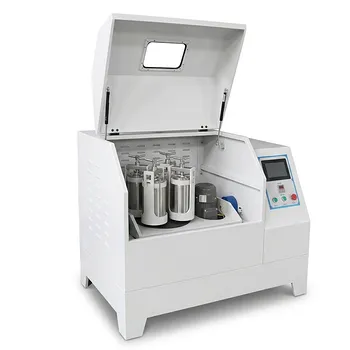
360° Rotating Omnidirectional Laboratory Planetary Ball Mill for Homogeneous Ultra-Fine Grinding and Mixing

Vertical Square Planetary Ball Mill for Laboratory Sample Preparation and Nanoscale Grinding

Miniature Planetary Ball Mill with Vacuum Grinding and High Efficiency for Laboratory Sample Preparation

High Energy Laboratory Planetary Ball Mill for Nano Grinding and Material Science Sample Preparation
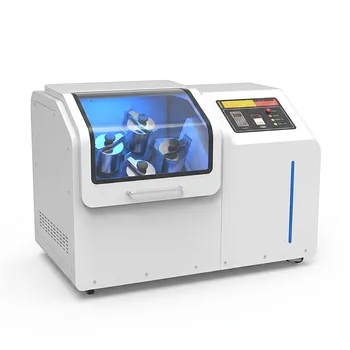
High Energy Omnidirectional Planetary Ball Mill 16L
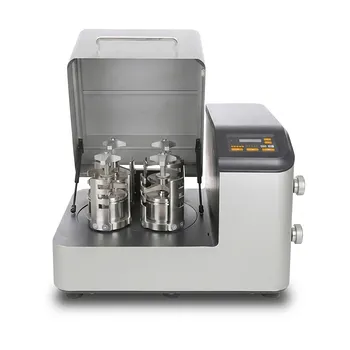
High Energy Planetary Ball Mill for Nano Scale Grinding and Colloidal Mixing in Material Science Research
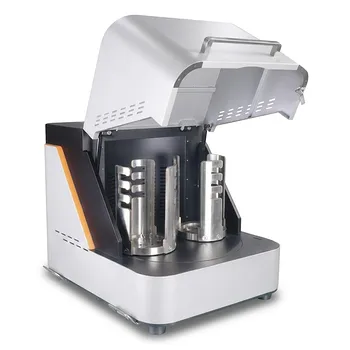
High Energy Laboratory Planetary Ball Mill for Nano Grinding and Colloidal Mixing of Hard and Brittle Materials
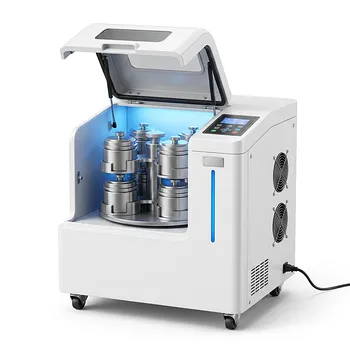
High Energy Omnidirectional Planetary Ball Mill 20L
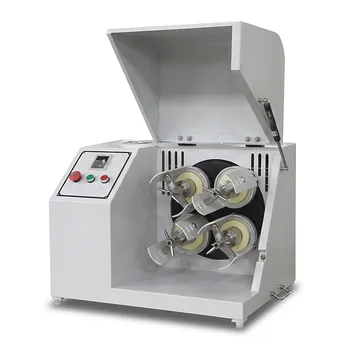
Horizontal Light Duty Planetary Ball Mill for Laboratory Sample Preparation
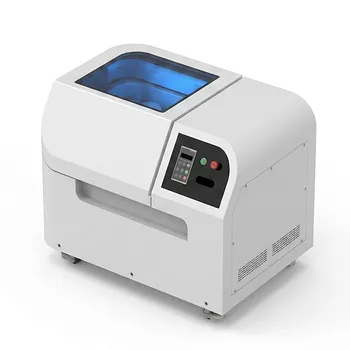
8L Planetary Ball Mill for Laboratory Grinding and Sample Preparation
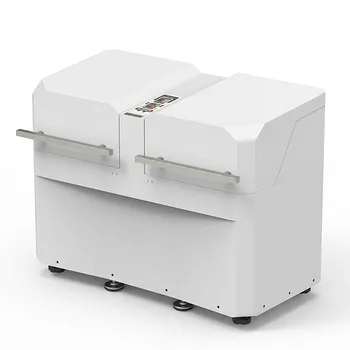
Dual Station Planetary Ball Mill 24L
Planetary Ball Mill 12L

Nano High Energy Vibratory Ball Mill for Laboratory Sample Preparation
Multi-Platform Nanoscale High-Energy Vibratory Ball Mill
High Energy Hybrid Vibratory Ball Mill for Grinding Mixing and Cell Disruption