What critical function do gassing lids serve in pressurized carbonation? Transform Your Mill Into a Reactor
Updated 5 months ago
The gassing lid is the critical component that transforms a standard grinding jar into a mobile, high-pressure micro-reactor. These specialized lids allow for the direct injection and containment of gases like carbon dioxide at controlled pressures, typically around 5 bar, while the jar is under centrifugal force. By creating a closed, pressurized system, the lids enable simultaneous mechanical activation and chemical reaction, ensuring that the energy generated during milling is used immediately for carbonation.
Specialized gassing lids bridge the gap between physical milling and chemical processing by maintaining a high-pressure, high-purity gas environment. This setup allows for "mechanochemical" reactions that are far more efficient than multi-step processes, particularly when working with low-reactivity materials.
The Mechanics of the Micro-Reactor
Achieving Pure Atmosphere Control
Standard grinding jars trap ambient air, which contains moisture and nitrogen that can interfere with carbonation. Gassing lids feature specialized valves that allow operators to evacuate atmospheric air and replace it with high-purity carbon dioxide.
This ensures that the reaction environment is purely focused on the target gas, providing a controlled atmosphere for efficient mineralization. Without this control, the concentration of CO2 would be insufficient to drive the desired chemical changes in the material.
Facilitating Simultaneous Processing
The most critical advantage of these lids is the ability to perform physical grinding and chemical reactions at the same time. This simultaneous activation uses the mechanical energy of the ball mill to break down particle sizes while the gas pressure drives the carbonation reaction.
By performing these steps together, you prevent the loss of surface activity that typically occurs when materials are moved between different machines. The closed-loop environment ensures that freshly exposed, high-energy surfaces react immediately with the CO2.
Maximizing Reaction Kinetics
Increasing Gas Concentration Gradients
The use of pressurized gas via the lid significantly increases the carbon dioxide concentration gradient within the reaction medium. This pressure is essential for overcoming the natural resistance of hardened residues, such as steel slag or concrete powder.
High pressure forces the gas molecules into closer contact with the solid particles. This increased contact frequency is the primary technical means to accelerate reaction kinetics for materials that are otherwise chemically inert.
Preserving Surface Energy
When a material is ground, it temporarily gains high surface energy; however, this energy dissipates quickly if the material is exposed to the atmosphere. The gassing lid keeps the material under constant pressure, ensuring the chemical reaction captures this energy peak.
This process is vital for minerals like potash feldspar, where mineralization reactions depend on the immediate contact between CO2 molecules and the newly activated surfaces.
Understanding Technical Trade-offs
Mechanical Stress and Pressure Limits
While high pressure increases reactivity, it also places significant mechanical stress on the jar and the lid’s sealing mechanism. Operators must balance the desire for higher pressure gradients with the structural limits of the high-strength grinding jars.
Exceeding recommended pressure levels can lead to seal failure or valve damage, especially under the high G-forces of a planetary ball mill. Regular inspection of the O-rings and valve seats is mandatory to maintain system integrity.
Scaling and Throughput Constraints
Because the gassing lid creates a "mobile micro-reactor," the process is inherently limited by the volume of the grinding jar. While highly effective for research and development, scaling this pressurized mechanochemical process to industrial levels requires significant engineering to replicate the same pressure-grinding dynamics.
Applying This to Your Research Project
Optimizing Your Pressurized Carbonation Setup
- If your primary focus is maximizing reaction speed: Utilize the gassing lid to maintain the highest safe pressure (e.g., 5 bar) to increase the concentration gradient.
- If your primary focus is processing inert industrial waste: Ensure the jar is fully evacuated of air before CO2 injection to provide a 100% pure reaction atmosphere.
- If your primary focus is material purity: Select gassing lids with high-grade valve seals to prevent any atmospheric leakage or contamination during long milling cycles.
By integrating specialized gassing lids, you shift the planetary ball mill from a simple size-reduction tool to a sophisticated reactor capable of driving complex chemical transformations.
Summary Table:
| Feature | Standard Grinding Jar | Jar with Specialized Gassing Lid |
|---|---|---|
| Atmosphere | Ambient air (traps moisture/N2) | Pure controlled gas (e.g., 100% CO2) |
| Pressure Capacity | Atmospheric pressure only | High-pressure (typically up to 5 bar) |
| Processing Mode | Mechanical size reduction | Simultaneous mechanochemical reaction |
| Kinetics | Slow for low-reactivity waste | Accelerated via concentration gradients |
| Energy Use | Surface energy often dissipates | Energy captured immediately for reaction |
Elevate Your Material Science Research with LabProcess Solutions
At LabProcess Solutions, we provide complete laboratory sample preparation solutions tailored for advanced material science. We specialize in high-performance powder processing and compaction equipment designed to streamline your workflow.
Our extensive product line includes:
- Advanced Milling: Planetary ball mills (with specialized gassing lids), jet mills, cryogenic grinders, and rotor mills.
- Crushing & Sizing: Jaw/roll crushers and vibratory/air-jet sieve shakers with precision test sieves.
- Compaction Excellence: A full spectrum of hydraulic presses, including Cold/Warm Isostatic Presses (CIP/WIP), XRF pellet presses, and vacuum hot presses.
- Mixing: High-efficiency powder and defoaming mixers.
Whether you are optimizing carbonation for industrial waste or developing novel minerals, our equipment ensures you capture peak surface energy and achieve superior reaction kinetics. Contact our technical team today to discuss how our specialized micro-reactor solutions can enhance your laboratory's efficiency and precision!
References
- Anthony de Schutter, Tom Van Gerven. Improving the Carbonation of Steel Slags Through Concurrent Wet Milling. DOI: 10.1007/s40831-024-00895-2
Mentioned Products
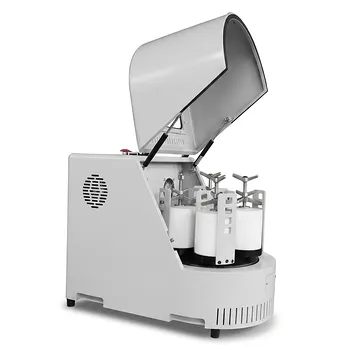
- Vertical Semi Circular Planetary Ball Mill for Laboratory Precision Grinding
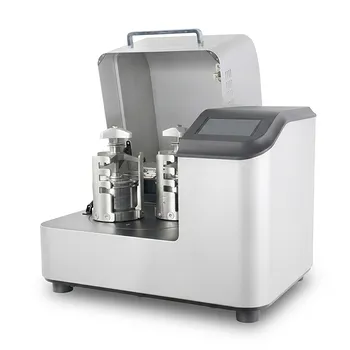
- High Energy Planetary Ball Mill for Nano Scale Grinding and Mechanical Alloying
- Vertical Production Planetary Ball Mill for High Throughput Powder Processing
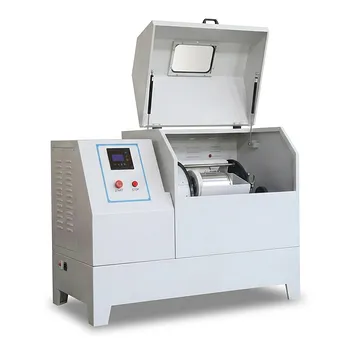
- Heavy Duty Horizontal Planetary Ball Mill for Efficient Industrial Grinding and Sample Preparation
- 360° Rotating Omnidirectional Laboratory Planetary Ball Mill for Homogeneous Ultra-Fine Grinding and Mixing
People Also Ask
- What role does a planetary ball mill play in the synthesis of Li6PS5Cl (LPSCl)? Unlock High Ionic Conductivity
- Why is a planetary ball mill essential for SiBCN-rGO wet-spinning? Achieve Superior Dispersion and Spinnability
- Why is an intermittent grinding process required for perovskites in a planetary ball mill? Ensure Stability & Purity
- Why is a planetary ball mill required for PET micronization? Ensure Accurate Chemical Analysis of Reprocessed PET
- How does mechanized planetary ball milling compare to manual agate grinding? Optimize sulfide standard material precision.

Tech Team · PowderPreparation
Last updated on May 14, 2026
Related Products
Vertical Semi Circular Planetary Ball Mill for Laboratory Precision Grinding
High Energy Planetary Ball Mill for Nano Scale Grinding and Mechanical Alloying

Vertical Production Planetary Ball Mill for High Throughput Powder Processing
Heavy Duty Horizontal Planetary Ball Mill for Efficient Industrial Grinding and Sample Preparation

360° Rotating Omnidirectional Laboratory Planetary Ball Mill for Homogeneous Ultra-Fine Grinding and Mixing
Vertical Square Planetary Ball Mill for Laboratory Sample Preparation and Nanoscale Grinding
Miniature Planetary Ball Mill with Vacuum Grinding and High Efficiency for Laboratory Sample Preparation
High Energy Laboratory Planetary Ball Mill for Nano Grinding and Material Science Sample Preparation
High Energy Omnidirectional Planetary Ball Mill 16L
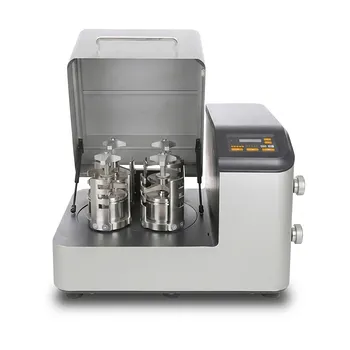
High Energy Planetary Ball Mill for Nano Scale Grinding and Colloidal Mixing in Material Science Research
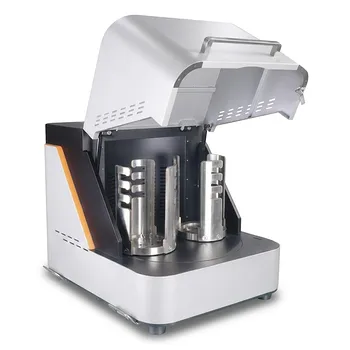
High Energy Laboratory Planetary Ball Mill for Nano Grinding and Colloidal Mixing of Hard and Brittle Materials
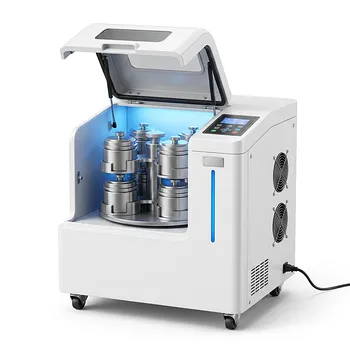
High Energy Omnidirectional Planetary Ball Mill 20L
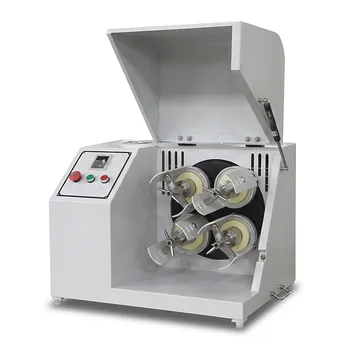
Horizontal Light Duty Planetary Ball Mill for Laboratory Sample Preparation

8L Planetary Ball Mill for Laboratory Grinding and Sample Preparation
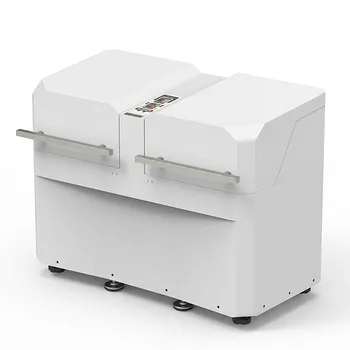
Dual Station Planetary Ball Mill 24L
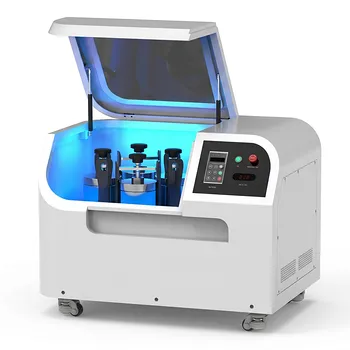
Planetary Ball Mill 12L

Nano High Energy Vibratory Ball Mill for Laboratory Sample Preparation
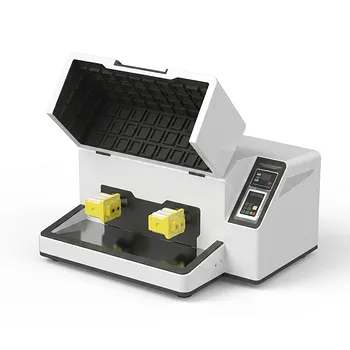
Multi-Platform Nanoscale High-Energy Vibratory Ball Mill
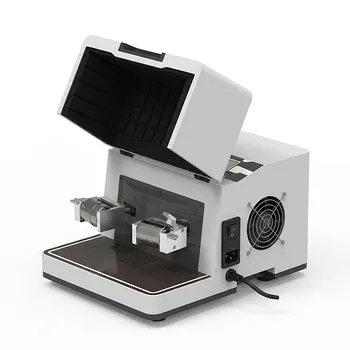
High Energy Hybrid Vibratory Ball Mill for Grinding Mixing and Cell Disruption