What are the technical advantages of using a mechanical sieve shaker over manual sieving? Achieve Precise Particle Data
Updated 3 months ago
Mechanical sieve shakers utilize stabilized mechanical movements to eliminate the inconsistencies of manual labor. By employing high-frequency vibrations or gyratory motions, these machines ensure that iron ore particles are subjected to a constant excitation force. This standardization results in superior repeatability, higher accuracy in fine particle passage, and a significant reduction in human-induced errors.
The primary advantage of mechanical sieving lies in its ability to transform a subjective manual task into a repeatable scientific process. By standardizing the frequency, amplitude, and duration of the test, it ensures that particle size distribution data is comparable across different batches and laboratories.
Standardizing the Separation Dynamics
Elimination of Human Operational Variability
Manual sieving is inherently inconsistent because the force, speed, and angle of shaking vary between operators and even across a single shift due to fatigue. Mechanical shakers provide a constant power output, ensuring that every sample is treated with the exact same energy levels regardless of the technician performing the test.
Precision through Programmed Parameters
Modern shakers allow for the precise setting of vibration frequencies and durations, such as a constant 278 cycles per minute. This level of control ensures that the "dwell time" of the ore on the mesh is optimized for separation, which is critical for calculating accurate average particle diameters.
Multi-Dimensional Particle Movement
Unlike the simple lateral or vertical motion of manual shaking, mechanical units often provide three-dimensional vibration patterns. This causes iron ore particles to jump and rotate across the sieve surface, providing them with more opportunities to present their smallest dimension to the mesh apertures.
Optimizing Accuracy and Efficiency
Uniform Material Distribution
A common failure in manual sieving is the "blinding" of the mesh or the accumulation of material in one corner of the sieve. Mechanical shakers ensure a uniform distribution of ore across the entire sieve surface, which maximizes the effective screening area and prevents fine particles from being trapped in a thick layer of larger material.
Enhanced Fine Particle Passage
For iron ore, the quantification of "fines" is critical for downstream processing. Mechanical agitation provides the high-frequency energy required to overcome the inter-particle friction that often prevents fine powders from passing through the smallest mesh sizes during manual operation.
Simultaneous Multi-Layer Processing
Mechanical shakers are designed to handle a standard stack of multiple sieves at once. This allows for the simultaneous separation of a sample into many different size fractions, significantly increasing throughput and ensuring that the entire vertical stack receives the same standardized vibration energy.
Understanding the Trade-offs
Equipment Maintenance and Calibration
While mechanical shakers remove human error, they introduce the need for regular equipment maintenance. Mechanical wear over time can shift the frequency or amplitude of the vibration, requiring periodic calibration to ensure the unit still meets the required testing standards.
Risk of Particle Degradation
The high-energy "impact" patterns of some mechanical vibrators can be too aggressive for certain fragile materials. In iron ore testing, excessive energy might cause attrition or breakage of the ore, leading to an over-representation of fines that does not accurately reflect the original sample's state.
Initial Capital Investment
The transition from manual to mechanical sieving requires a higher upfront cost for the machinery and standardized sieve sets. However, this is typically offset by the reduction in labor hours and the avoidance of costly processing errors caused by inaccurate manual data.
How to Apply This to Your Testing Lab
Making the Right Choice for Your Goal
- If your primary focus is regulatory compliance and data repeatability: Use an electromagnetic or vibratory shaker with programmable time and frequency settings to ensure every test is identical.
- If your primary focus is high-volume production control: Invest in a multi-sieve mechanical stack shaker to process large quantities of ore fractions simultaneously and reduce technician labor time.
- If your primary focus is fragile pellet analysis: Select a shaker with adjustable amplitude controls to ensure you provide enough energy for separation without causing mechanical degradation of the pellets.
Transitioning to mechanical sieving ensures that your particle size data is a reflection of the material properties rather than the variability of the person performing the test.
Summary Table:
| Feature | Mechanical Sieve Shaker | Manual Sieving |
|---|---|---|
| Consistency | High (Standardized parameters) | Low (Human variability/fatigue) |
| Repeatability | Superior (Scientific process) | Poor (Subjective results) |
| Throughput | High (Simultaneous multi-layers) | Low (Single layer processing) |
| Movement | 3D Vibratory / Gyratory | Basic Lateral or Vertical |
| Fine Particles | Enhanced passage & anti-blinding | Prone to mesh clogging |
Elevate Your Material Analysis with KINTEK
Ensure your data is a reflection of material quality, not human error. KINTEK provides complete laboratory sample preparation solutions for material science, specializing in high-performance powder processing and compaction equipment.
Our extensive range includes vibratory and air-jet sieve shakers designed for maximum accuracy, alongside robust jaw/roll crushers, liquid nitrogen cryogenic grinders, and planetary ball mills. To complete your workflow, we manufacture a full spectrum of hydraulic presses—from Cold/Warm Isostatic Presses (CIP/WIP) to XRF pellet presses and vacuum hot presses—tailored for the most demanding research and production environments.
Streamline your laboratory testing today. Contact our specialists to find the perfect equipment solution for your material preparation needs!
References
- Sushanta Kumar Pradhan, Sudip Sundar Das. Comparison of Sieving Techniques in Size Distribution and Estimation of Particle Size of a Bulk Sample. DOI: 10.37398/jsr.2023.670401
Mentioned Products
- Laboratory Vibratory Test Sieve Shaker for Precision Particle Size Analysis and Powder Grading
- Small Laboratory Vibrating Sieve Shaker for Precise Particle Size Analysis
- Laboratory Dry and Wet Three Dimensional Vibratory Sieve Shaker for Particle Analysis
- Vibratory Sieve Shaker Electromagnetic 3D Motion Powder Particle Size Analyzer for Dry and Wet Sieving
- Small Laboratory Vibratory Sieve Shaker for Powder Gradation and Particle Size Analysis
People Also Ask
- What role does a laboratory sieve shaker play in determining PDI? Achieve Precision in Biomass Quality Testing
- What are the functions of sieve shakers for coconut shell powder? Achieve Precise Particle Size & Quality Control.
- What function does a laboratory sieve shaker perform in the PSD analysis of residual soil? Ensure Precise Grading
- What is the role of a laboratory sieve shaker in the preparation of plantain peel adsorbents? Standardize Particle Size
- What is the function of a laboratory vibratory sieve shaker? Enhance Coal Particle Size Distribution (PSD) Analysis

Tech Team · PowderPreparation
Last updated on Jun 03, 2026
Related Products
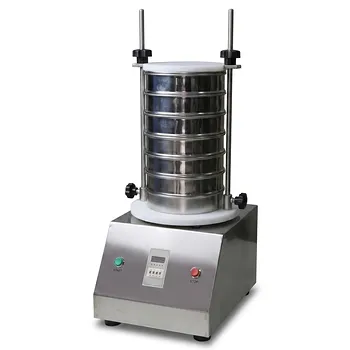
Laboratory Vibratory Test Sieve Shaker for Precision Particle Size Analysis and Powder Grading
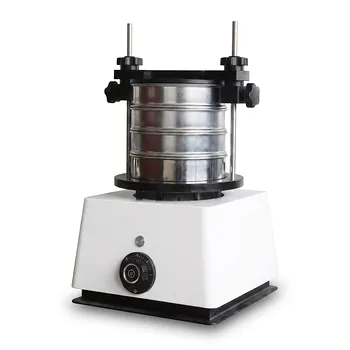
Small Laboratory Vibrating Sieve Shaker for Precise Particle Size Analysis
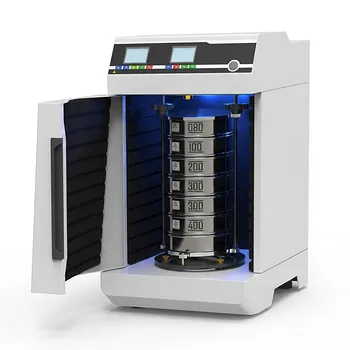
Laboratory Dry and Wet Three Dimensional Vibratory Sieve Shaker for Particle Analysis
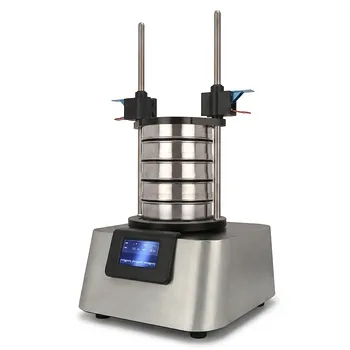
Vibratory Sieve Shaker Electromagnetic 3D Motion Powder Particle Size Analyzer for Dry and Wet Sieving
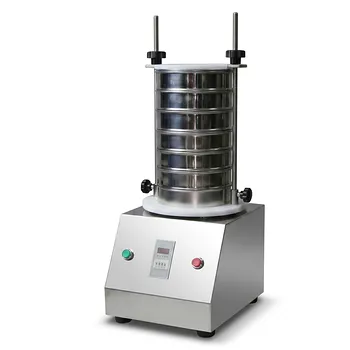
Small Laboratory Vibratory Sieve Shaker for Powder Gradation and Particle Size Analysis
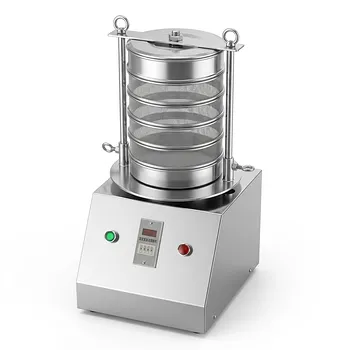
Stainless Steel Laboratory Vibratory Test Sieve Shaker
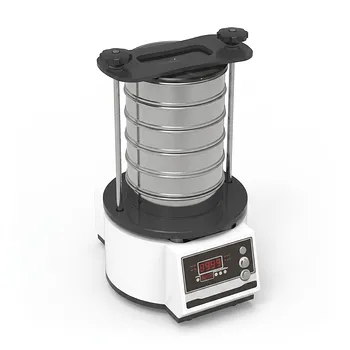
Tapping Oscillating Sieve Shaker for Dry and Wet Particle Size Analysis
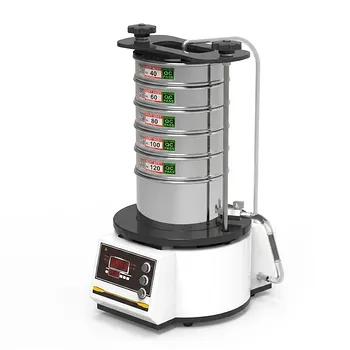
High Frequency Wet Three-Dimensional Vibrating Sieve Shaker for Dry and Wet Particle Size Analysis
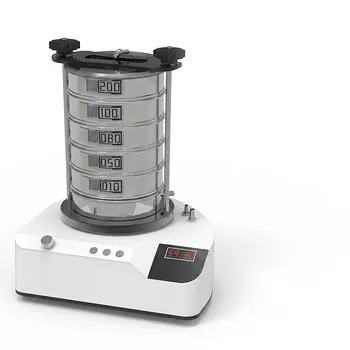
Heavy Duty Dry Three Dimensional Vibratory Sieve Shaker for Particle Separation
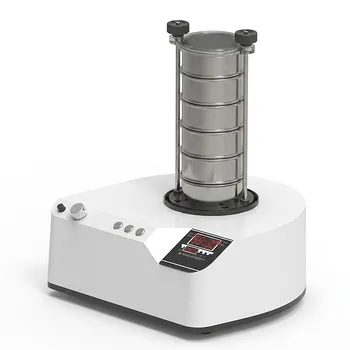
三维电磁微量振动筛分仪
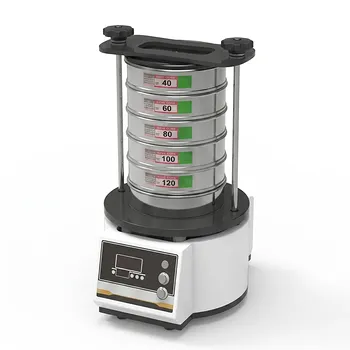
Dry Three Dimensional Vibratory Sieve Shaker
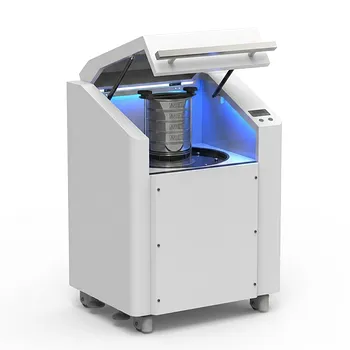
High Frequency Cabinet Type Three-Dimensional Rotary Vibrating Sieve Shaker for Dry Sieving and Particle Classification
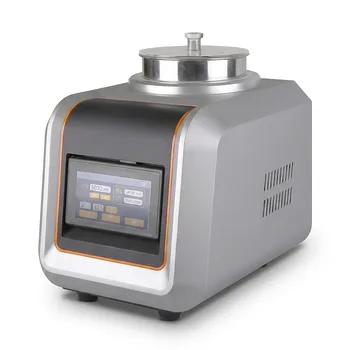
Laboratory Air Jet Sieving Machine for Fine Powder Particle Size Analysis and Deagglomeration
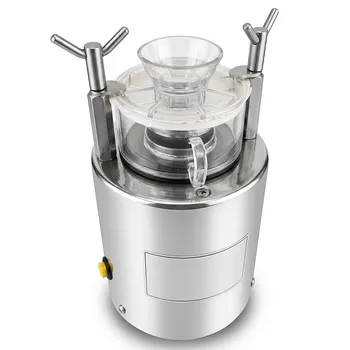
Laboratory Desktop Ultra Fine Powder Grinder High Speed Micronizing Pulverizer