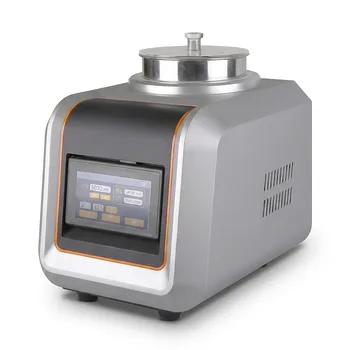
What are the technical advantages of using a laboratory mechanical sieve shaker? Ensure Repeatable Soil Analysis Data
Updated 5 months ago
Mechanical sieve shakers optimize soil analysis by providing standardized vibration frequencies and amplitudes that manual sieving cannot replicate. This technical transition ensures that soil particles are distributed uniformly across the sieve mesh, eliminating the random errors and physical inconsistencies inherent in human operation. By utilizing a constant power output—often calibrated to specific cycles per minute—these machines guarantee that particle size distribution (PSD) data is both repeatable and scientifically defensible.
The core advantage of mechanical sieving lies in its ability to replace human variability with a controlled, multi-dimensional vibration pattern. This ensures that every sample is subjected to identical energy levels, leading to precise stratification and objective data.
Standardization of Physical Energy
Constant Frequency and Amplitude
Mechanical shakers operate at a fixed power output, such as a standardized 278 cycles per minute. This consistency ensures that the energy applied to the soil sample remains uniform throughout the entire test duration. Unlike manual shaking, which fluctuates in intensity as a technician tires, the machine maintains a precise frequency and amplitude to move particles effectively.
Multi-Dimensional Particle Movement
Advanced shakers utilize high-frequency vibrations that cause soil particles to jump and rotate across the sieve surface. This multi-dimensional impact pattern ensures that particles have the maximum opportunity to orient themselves correctly against the mesh apertures. This motion is critical for the effective separation of sand, silt, and clay components that might otherwise become "blinded" or stuck.
Enhancing Data Integrity and Repeatability
Elimination of Human Operational Bias
Manual sieving is prone to "random errors" caused by variations in a technician’s technique, strength, and rhythm. Mechanical shakers eliminate these subjective variables, ensuring that the results are a product of the material properties rather than the operator's performance. This creates a level of scientific validity required for rigorous material science applications.
Precise Duration Control
A mechanical system allows for a regulated timeframe, typically a high-frequency agitation lasting exactly 15 minutes. This prevents the "over-sieving" or "under-sieving" that often occurs when manual timing is approximate. Consistent duration is the foundation for making grain size measurements comparable across different laboratories.
Operational Efficiency and Throughput
Processing Large Batches and Coarse Aggregates
Mechanical shakers are significantly more effective at processing large batches and coarse aggregates with larger grain sizes. The mechanical force required to agitate heavy samples of gravel or concrete aggregate is difficult to sustain manually. Automation allows for the simultaneous stratification of a full sieve tower, drastically reducing labor time.
Uniform Distribution Across Sieve Sets
The mechanical action ensures the sample is fully and uniformly distributed across a standard set of multiple sieves at once. In manual sieving, it is difficult to ensure that the bottom sieves in a stack receive the same quality of agitation as the top. The shaker’s energy is designed to penetrate the entire sieve tower, ensuring thorough processing of all fractions.
Understanding the Trade-offs
Equipment Maintenance and Calibration
While mechanical shakers increase precision, they require regular calibration to ensure the frequency and amplitude remain within specification. Over time, mechanical wear can alter the vibration patterns, potentially leading to drift in results if not monitored.
Risk of Particle Degradation
The high-frequency energy of a mechanical shaker can occasionally be too aggressive for friable or soft soil particles. If the vibration intensity is not correctly matched to the material, the mechanical action may physically break down the particles, leading to an inaccurate increase in the "fines" fraction.
How to Apply This to Your Laboratory
Making the Right Choice for Your Goal
To achieve the best results in soil analysis, choose your sieving method based on your specific project requirements:
- If your primary focus is regulatory compliance and repeatability: Utilize a calibrated mechanical shaker to ensure your data meets the standardized "scientific validity" required for official soil classification.
- If your primary focus is high-volume sample throughput: Deploy mechanical sieve towers to process large batches of coarse aggregates, which significantly reduces technician fatigue and labor costs.
- If your primary focus is Analyzing fragile or friable materials: Use a shaker with adjustable amplitude settings to prevent the mechanical degradation of soft soil particles during the agitation process.
By transitioning from manual to mechanical sieving, you ensure that your particle size analysis is defined by the objective characteristics of the soil rather than the limitations of human effort.
Summary Table:
| Feature | Manual Sieving | Mechanical Sieve Shaker |
|---|---|---|
| Energy Consistency | Variable (Human dependent) | Fixed Frequency & Amplitude |
| Particle Movement | Simple/Inconsistent | Multi-dimensional (3D) Vibration |
| Data Integrity | Prone to operational bias | Scientifically defensible & repeatable |
| Batch Capacity | Limited by physical labor | Handles full sieve towers/heavy loads |
| Timing Control | Approximate/Subjective | Precise, regulated duration |
Elevate Your Material Analysis with Precision Laboratory Solutions
Achieving defensible scientific data starts with standardized sample preparation. We provide complete laboratory sample preparation solutions tailored for material science, specializing in high-performance powder processing and compaction equipment.
Whether you need to optimize particle size distribution with our vibratory and air-jet sieve shakers, or require advanced size reduction via our crushers (jaw/roll) and mills (planetary ball, jet, and cryogenic), our equipment is designed for maximum repeatability. We also offer a full spectrum of Hydraulic Presses (CIP/WIP, Hot Presses, and XRF Pellet Presses) and specialized mixers to complete your workflow.
Ready to upgrade your lab's efficiency and accuracy? Contact our technical team today to find the perfect equipment for your specific applications!
References
- Joseph S. Smith, Ryan J. Winston. Comparing dry and wet sieving with laser diffraction to the hydrometer method for particle size analysis of sandy bioretention soil media. DOI: 10.1002/saj2.70079
Mentioned Products
- 三维电磁微量振动筛分仪
- Vibratory Sieve Shaker Electromagnetic 3D Motion Powder Particle Size Analyzer for Dry and Wet Sieving
- Laboratory Dry and Wet Three Dimensional Vibratory Sieve Shaker for Particle Analysis
- Small Laboratory Vibrating Sieve Shaker for Precise Particle Size Analysis
- Stainless Steel Laboratory Vibratory Test Sieve Shaker
People Also Ask
- Why is a standard sieve shaker essential for CBA powders in geopolymers? Enhance Reactivity & Material Strength
- Why are standard metal sieves and sieve shakers necessary for 5-aminotetrazole mixtures? Optimize Thermal & Kinetic Data
- Why Use Sieve Shakers for Gangue Slurry Experiments? Optimize Particle Grading for Superior Results
- What are the advantages of mechanical vs. manual sieving for road dust analysis? Achieve Superior Data Standardization.
- How do high-precision sieve shakers and powder mixers facilitate material circularity in metal PBF? Optimize AM Cycles

Tech Team · PowderPreparation
Last updated on May 14, 2026
Related Products

三维电磁微量振动筛分仪
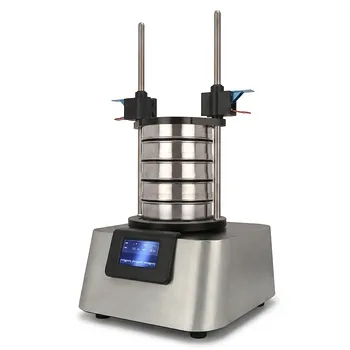
Vibratory Sieve Shaker Electromagnetic 3D Motion Powder Particle Size Analyzer for Dry and Wet Sieving

Laboratory Dry and Wet Three Dimensional Vibratory Sieve Shaker for Particle Analysis

Small Laboratory Vibrating Sieve Shaker for Precise Particle Size Analysis
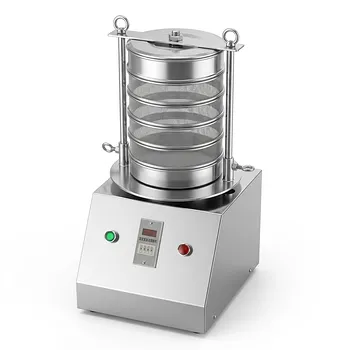
Stainless Steel Laboratory Vibratory Test Sieve Shaker

Heavy Duty Dry Three Dimensional Vibratory Sieve Shaker for Particle Separation

Dry Three Dimensional Vibratory Sieve Shaker

Small Laboratory Vibratory Sieve Shaker for Powder Gradation and Particle Size Analysis

Laboratory Vibratory Test Sieve Shaker for Precision Particle Size Analysis and Powder Grading
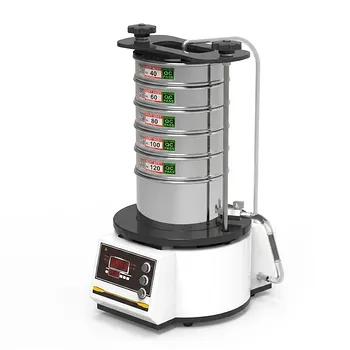
High Frequency Wet Three-Dimensional Vibrating Sieve Shaker for Dry and Wet Particle Size Analysis

Tapping Oscillating Sieve Shaker for Dry and Wet Particle Size Analysis
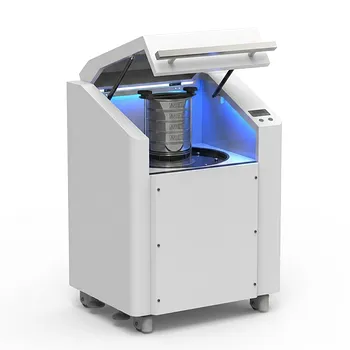
High Frequency Cabinet Type Three-Dimensional Rotary Vibrating Sieve Shaker for Dry Sieving and Particle Classification

Stainless Steel Rotary Vibrating Sieve High Precision Circular Vibratory Separator Industrial Powder Grading Machine Multi Layer Sifting Equipment

Three Dimensional Rotary Vibrating Sieve