What are the technical advantages of using a laboratory hydraulic press for toroidal samples? Ensure Precise Measurement
Updated 4 months ago
Dimensional precision and material density control are the primary technical advantages of using a laboratory hydraulic press for toroidal sample preparation. By utilizing precision molds and controlled pressure, this equipment ensures that high-entropy ferrite samples achieve the exact geometric tolerances required for high-frequency coaxial test fixtures.
The laboratory hydraulic press allows for the creation of high-density, standardized specimens that eliminate air gaps and geometric defects. This structural integrity is mandatory for obtaining accurate, repeatable measurements of complex permeability and magnetic loss in the GHz range.
Geometric Precision and Field Uniformity
Perfect Integration with Coaxial Fixtures
High-frequency measurements often utilize coaxial line methods requiring specific dimensions, such as an outer diameter of 20.1 mm and an inner diameter of 6.63 mm.
The hydraulic press ensures these tolerances are met consistently, allowing the sample to fit perfectly within the test fixture without gaps.
This precise fit is critical because any air space between the sample and the fixture wall can lead to significant errors in calculated permeability.
Uniform Electromagnetic Field Distribution
Precise geometric shaping ensures a uniform electromagnetic field distribution within the high-entropy ferrite sample.
When the field is uniform, the measured complex permeability accurately reflects intrinsic material characteristics like spin rotation and magnetic loss.
Without this precision, geometric irregularities can cause field distortions that mask the true high-frequency behavior of the ferrite.
Material Density and Microstructural Integrity
Elimination of Porosity and Air Gaps
High-pressure compaction (e.g., 30 bar) effectively eliminates air between powder particles, significantly increasing sample density.
By removing these pores, the hydraulic press reduces random interference and geometric defects that could otherwise disrupt the dielectric and magnetic spectra.
Improved inter-particle contact ensures that the composite—often a mixture of ferrite powder and paraffin—behaves as a homogenous medium during microwave absorption testing.
Stress Relief and Organizational Uniformity
Advanced hydraulic presses feature automatic pressure-holding functions that maintain constant force for a set duration.
This specific process allows for the release of residual stress and reduces internal density gradients within the green body.
Minimizing these gradients prevents warping, deformation, or micro-cracks during subsequent high-temperature sintering, ensuring the final bulk material is structurally sound.
Data Reliability and VNA Repeatability
Consistency for Vector Network Analyzers
The stable and adjustable pressure provided by a hydraulic press is essential for achieving consistent sample thickness.
Consistent thickness and structural integrity directly determine the accuracy and repeatability of data obtained from Vector Network Analyzers (VNA).
Standardized specimens allow researchers to confidently compare different high-entropy ferrite compositions without worrying about sample-to-sample variation.
Foundation for Advanced Processing
In powder metallurgy, the press creates a high-density green compact that serves as the critical foundation for annealing or thermal processing.
The increased density of the green body improves the kinetics of the subsequent sintering stage.
This leads to a more uniform final microstructure, which is vital for the performance of complex high-entropy alloys and ferrites.
Understanding the Trade-offs
The Risk of Over-Compaction
While high pressure increases density, exceeding the optimal pressure limit can cause lamination or micro-cracking upon pressure release.
These internal defects may not be visible to the naked eye but can significantly degrade the magnetic performance and mechanical strength of the sample.
Paraffin-to-Powder Ratios
When using a paraffin matrix, the ratio of magnetic powder to binder must be carefully controlled to ensure the mixture remains compressible and homogenous.
An incorrect ratio can lead to uneven pressure distribution within the mold, resulting in a sample with non-uniform magnetic properties across its volume.
Applying This to Your Research Project
Recommendations Based on Your Objectives
- If your primary focus is GHz-range characterization: Use a hydraulic press with precision molds to ensure a zero-clearance fit in coaxial fixtures, minimizing impedance mismatch.
- If your primary focus is minimizing measurement noise: Prioritize the "pressure-holding" phase to eliminate density gradients and air pockets that cause random signal scattering.
- If your primary focus is material development (Sintering): Focus on achieving maximum green body density to prevent warping and cracks during high-temperature processing.
Precision sample preparation is the bridge between theoretical material design and accurate experimental validation in high-frequency magnetics.
Summary Table:
| Technical Advantage | Impact on Sample Quality | Benefit for Magnetic Testing |
|---|---|---|
| Dimensional Precision | Perfect fit for 20.1mm/6.63mm coaxial fixtures | Eliminates air gap errors and impedance mismatch |
| High-Pressure Compaction | Maximum density and eliminated porosity | Ensures homogenous medium for GHz-range accuracy |
| Field Uniformity | Standardized geometric shaping | Accurate calculation of intrinsic magnetic loss |
| Pressure-Holding | Internal stress relief and uniform density | Prevents warping or micro-cracks during sintering |
Elevate Your Material Research with Precision Compaction
High-accuracy high-frequency measurements start with perfect sample preparation. [Brand Name] provides complete laboratory sample preparation solutions for material science, specializing in high-performance powder processing and compaction equipment.
Whether you are developing high-entropy ferrites or advanced alloys, our extensive lines help you achieve consistent results:
- Advanced Hydraulic Presses: A full spectrum including Cold/Warm Isostatic Presses (CIP/WIP), standard lab presses, XRF pellet presses, and vacuum hot presses.
- Powder Processing: Crushers (jaw/roll), liquid nitrogen cryogenic grinders, and various mills (planetary ball, jet, sand/bead).
- Analysis & Mixing: Sieve shakers (vibratory/air-jet), powder mixers, and defoaming mixers.
Ensure your toroidal specimens meet the rigorous tolerances required for VNA repeatability and microwave absorption testing. Contact our experts today to discuss your specific laboratory needs and discover how our equipment can optimize your research workflow!
References
- Adrian Radoń, P. Włodarczyk. Dielectric and electromagnetic interference shielding properties of high entropy (Zn,Fe,Ni,Mg,Cd)Fe2O4 ferrite. DOI: 10.1038/s41598-019-56586-6
Mentioned Products
- 6-Ton Small Single-Punch Tablet Press — Laboratory Powder & Granule Tableting Equipment / Tablet Forming Machine
- 5 Ton Single Punch Tablet Press Laboratory Small Batch Production
- Manual Tablet Press with Dual Scale Pressure Gauge for Pharmaceutical Food Chemical Laboratory Sample Preparation
- 6 Ton Variable Frequency Single Punch Tablet Press
- High Speed Small Laboratory Crusher for Dry Material Sample Preparation
People Also Ask
- What is the function of a laboratory press in Cr-Ti alloy evaluation? Quantify Fracture Stress & Strength
- What is the function of a laboratory press in assessing the hydrophobic performance of modified vermiculite fillers?
- What is the core function of a laboratory press in the forming of ceramic filter element green bodies? Maximize Density.
- What is the function of a laboratory press in the preparation of ceramic feed rods? Master Density and Precision
- Why is vacuum sealing and flexible packaging necessary for Aluminum Titanate powders during CIP? Ensure Peak Density

Tech Team · PowderPreparation
Last updated on Jun 03, 2026
Related Products
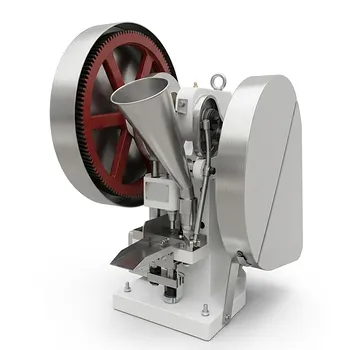
6-Ton Small Single-Punch Tablet Press — Laboratory Powder & Granule Tableting Equipment / Tablet Forming Machine
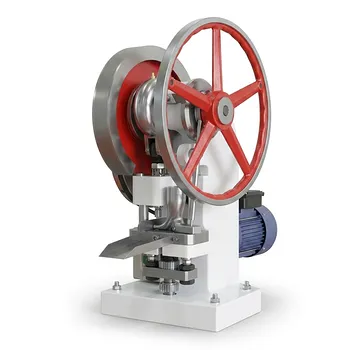
5 Ton Single Punch Tablet Press Laboratory Small Batch Production
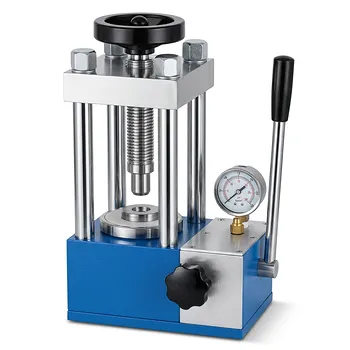
Manual Tablet Press with Dual Scale Pressure Gauge for Pharmaceutical Food Chemical Laboratory Sample Preparation
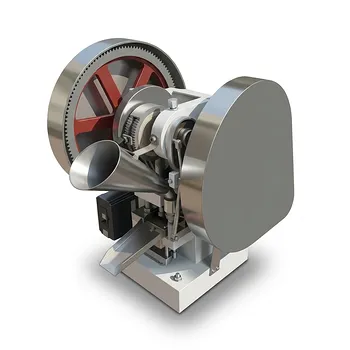
6 Ton Variable Frequency Single Punch Tablet Press
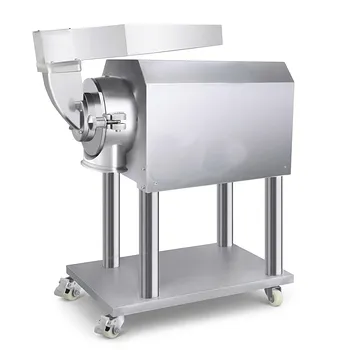
High Speed Small Laboratory Crusher for Dry Material Sample Preparation
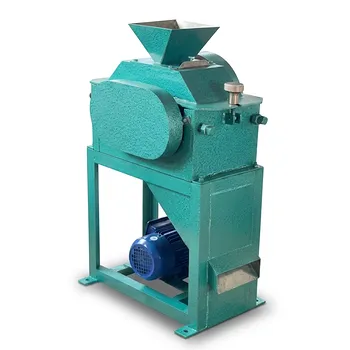
Laboratory Double Roll Crusher for Medium Hardness Materials Coal Ore Sample Preparation
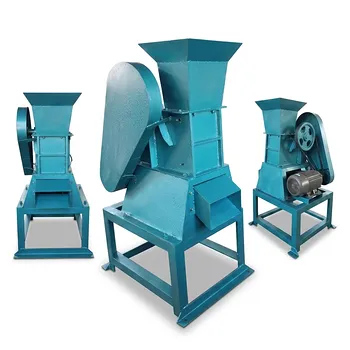
Custom Raised Height Laboratory Jaw Crusher for Precision Sample Preparation in Material Science
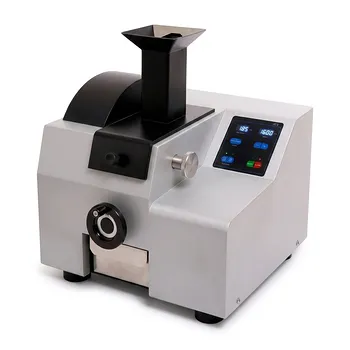
Laboratory Benchtop Jaw Crusher for Hard Brittle Materials Primary Size Reduction and Sample Preparation
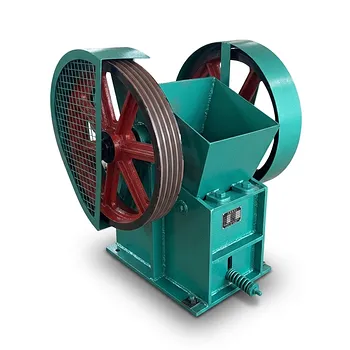
150x250mm Laboratory Jaw Crusher for Medium Hard Material Crushing and Sample Preparation
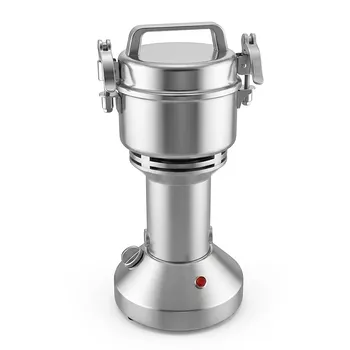
Small High Speed Upright Grinder for Laboratory Sample Preparation
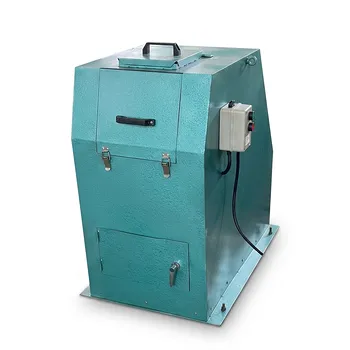
Environmentally Friendly Sealed Laboratory Jaw Crusher for Sample Preparation
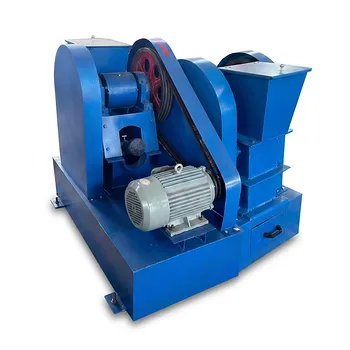
Horizontal Jaw Crusher Medium Hard Material Crushing Laboratory Sample Preparation Equipment
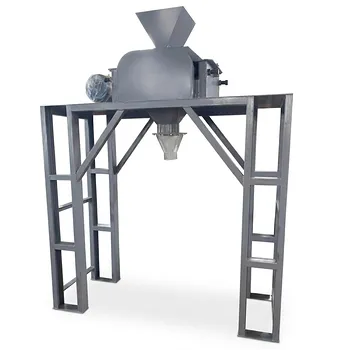
Heightened Customized Laboratory Double Roll Crusher for Coal Ore Rock Crushing
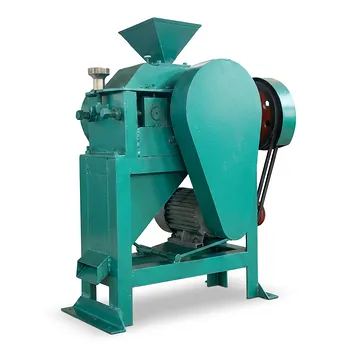
Laboratory Sealed Double Roll Crusher for Coal Ore Rock and Medium Hardness Materials Sample Preparation
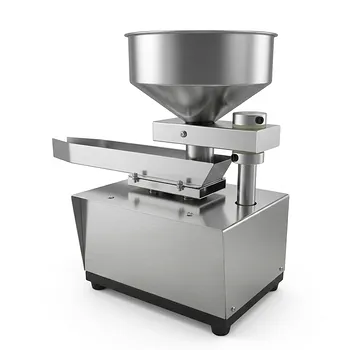
Automatic Vibrating Powder Feeder for Laboratory Material Processing Precision Vibratory Hopper Feeder for Granular and Powder Material Handling Industrial Grade Vibrating Tray Feeder for Consistent Material Sample Preparation
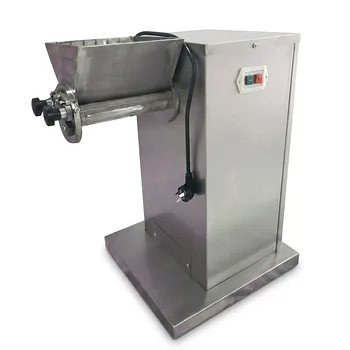
Small Laboratory Oscillating Granulator for Wet and Dry Granulation Processing
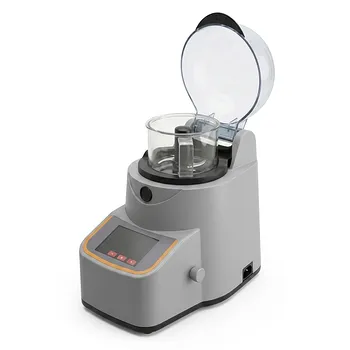
Industrial Knife Mill for Food and Biological Sample Preparation High Speed Laboratory Homogenizer
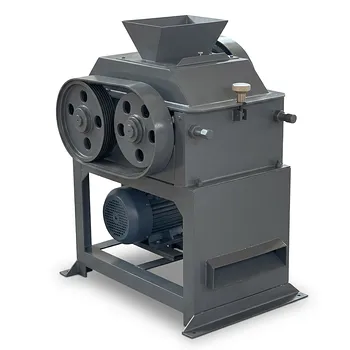
Sealed Laboratory Double Roll Crusher for Coal, Mineral, Ore Sample Preparation
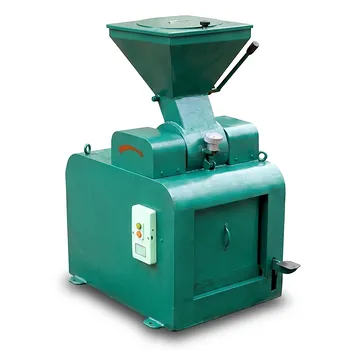
Laboratory Sealed Hammer Crushers for Coal Sample Preparation and Medium Strength Material Crushing