What are the technical advantages of Spark Plasma Sintering (SPS) compared to traditional hot pressing for UHTCs?
Updated 5 months ago
Spark Plasma Sintering (SPS) offers a revolutionary approach to densifying Zirconium Diboride (ZrB2) by utilizing pulsed direct current to achieve superior material properties in a fraction of the time required by traditional hot pressing. This technology enables ZrB2 to reach relative densities of 97% to 99% at significantly lower temperatures and shorter holding times. By passing current directly through the mold and the powder, SPS activates particle surfaces and inhibits grain growth, resulting in a fine-grained microstructure that is difficult to achieve with conventional methods.
Core Takeaway: SPS outperforms traditional hot pressing by using direct Joule heating and spark discharge to remove surface impurities, allowing for near-theoretical densification of UHTCs while preserving an ultra-fine grain structure that enhances mechanical performance.
Enhanced Densification and Surface Activation
The Role of Pulsed Current and Spark Discharge
Unlike traditional hot pressing, which relies on external heating elements, SPS utilizes low-voltage, high-pulse currents that act directly on the material. This creates a spark discharge effect between particles, which effectively removes adsorbed gases and oxide films from the powder surfaces.
Achieving Near-Theoretical Density
By cleaning the particle surfaces, the SPS process "activates" the powder, facilitating faster diffusion and bonding. This allows Zirconium Diboride to reach 97–99% relative density far more efficiently than the slow, conduction-based heating of traditional furnaces.
Superior Thermal Efficiency and Speed
Rapid Heating and Cooling Cycles
SPS equipment can achieve extremely high heating rates, often reaching 200°C/min, compared to the much slower ramps of traditional hot pressing. This volumetric heating avoids the limitations of heat transfer through the mold, allowing the entire sample to reach sintering temperature almost instantaneously.
Drastic Reductions in Holding Time
While traditional hot pressing may require hours at peak temperature to densify UHTCs, SPS typically requires less than 20 minutes, and often as little as 10 minutes. This short duration minimizes the energy consumption of the process and significantly increases production throughput.
Microstructural Control and Material Integrity
Inhibition of Grain Growth
One of the primary challenges with UHTCs like ZrB2 is the tendency for grains to coarsen at high temperatures, which degrades mechanical strength. The rapid nature of the SPS process inhibits grain growth, ensuring the final ceramic maintains an ultra-fine or even nanometer-scale microstructure.
Preservation of Phase Stability
In complex composites, the speed of SPS prevents unwanted chemical reactions or phase decompositions that occur during long thermal cycles. For specific materials like MgAgSb or Ti-Al alloys, this rapid processing is the only way to preserve the desired functional phases.
Understanding the Trade-offs
Geometry and Scalability Constraints
SPS is primarily limited to simple geometries like discs or cylinders because the current must flow uniformly through the sample and die. Creating complex, net-shape components is significantly more difficult than with traditional sintering or hot pressing methods.
Equipment and Tooling Costs
The initial investment for SPS systems is high, and the graphite tooling used is subject to extreme stress and current flow, often requiring frequent replacement. Furthermore, for very large components, maintaining thermal uniformity becomes a technical challenge that can lead to internal stresses.
How to Apply This to Your Project
Making the Right Choice for Your Goal
To determine if SPS is the correct path for your UHTC development, consider your primary performance requirements and production constraints.
- If your primary focus is maximum mechanical strength: SPS is the superior choice as it maintains the fine grain size necessary for high fracture toughness and hardness.
- If your primary focus is rapid prototyping and R&D: SPS allows you to iterate designs and material compositions quickly due to its extremely short cycle times.
- If your primary focus is optical or electrical performance: Use SPS to achieve the high density and precise grain control required to minimize light scattering or maximize conductivity.
- If your primary focus is large-scale production of complex shapes: Traditional hot pressing or alternative sintering methods may be more cost-effective despite the slower cycles.
By leveraging the unique electromagnetic effects of Spark Plasma Sintering, engineers can push the performance limits of Zirconium Diboride beyond what is possible with conventional thermal processing.
Summary Table:
| Feature | Spark Plasma Sintering (SPS) | Traditional Hot Pressing |
|---|---|---|
| Heating Source | Internal (Pulsed DC Current) | External Heating Elements |
| Heating Rate | Rapid (up to 200°C/min) | Slow (conduction-based) |
| Holding Time | < 20 Minutes | Several Hours |
| Relative Density | 97% – 99% (for ZrB2) | Lower (for same time/temp) |
| Microstructure | Ultra-fine (inhibits growth) | Tendency for grain coarsening |
| Energy Efficiency | High (localized heating) | Low (volumetric furnace heating) |
Elevate Your Material Research with Precision Sintering Solutions
Achieving near-theoretical density in Ultra-High Temperature Ceramics like Zirconium Diboride requires more than just heat—it requires precise control over the sintering environment. At [Company Name], we provide complete laboratory sample preparation solutions for material science, specializing in high-performance powder processing and advanced compaction equipment.
Whether you are refining your powder with our jet mills, planetary ball mills, or cryogenic grinders, or seeking the perfect densification with our full spectrum of hydraulic presses—including Cold/Warm Isostatic Presses (CIP/WIP), standard lab presses, and Vacuum Hot Presses—our equipment is designed to ensure material integrity and phase stability.
Our comprehensive range includes:
- Powder Processing: Crushers (jaw/roll), liquid nitrogen grinders, and rotor mills.
- Sieving & Mixing: Vibratory sieve shakers, air-jet sieves, and defoaming mixers.
- Compaction Excellence: XRF pellet presses and specialized hot presses for advanced R&D.
Ready to optimize your UHTC development and achieve superior mechanical performance? Contact us today to discuss your project requirements!
References
- Annamária Duszová, Marcin Podsiadło. Selected properties of ZrB2 composites obtained by SPS method for parts of electro-erosion shaping machines. DOI: 10.17814/mechanik.2018.2.32
Mentioned Products
- Heating Temperature Controlled High Energy Vibratory Ball Mill
- Water Cooled Pulse Jet Ultrafine Grinder
- Small Swing Granulator Efficient Powder Granulation for Pharmaceutical Chemical Food Industries
- Small Ceramic Structure Laboratory Sand Mill Nanoscale Grinding Dispersion Equipment Seal-less Screen-less Design
- Vertical Production Planetary Ball Mill for High Throughput Powder Processing
People Also Ask
- How does a high-energy vibratory ball mill improve the performance of MgH2? Optimize Hydrogen Storage Kinetics
- What is the primary purpose of using a vibratory ball mill in the preparation of respirable carbon fiber fragments?
- What is the purpose of using a vibratory ball mill for Al-Ni-Fe alloy ribbons? Achieve High Catalytic Activity
- Why is a vibratory ball mill preferred over a planetary ball mill for rapid powder particle refinement? High-Speed Impact
- What is the purpose of adding alcohol as a PCA during titanium ball milling? Prevent Cold Welding & Enhance Refinement

Tech Team · PowderPreparation
Last updated on May 14, 2026
Related Products
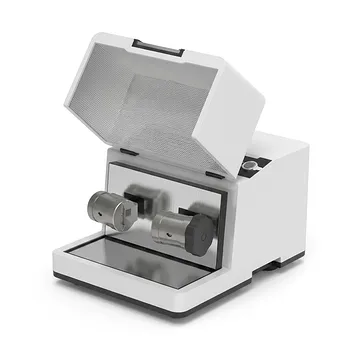
Heating Temperature Controlled High Energy Vibratory Ball Mill
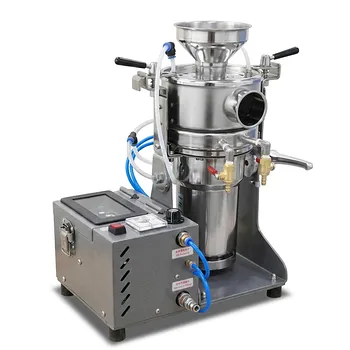
Water Cooled Pulse Jet Ultrafine Grinder
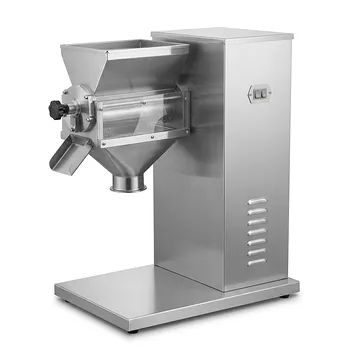
Small Swing Granulator Efficient Powder Granulation for Pharmaceutical Chemical Food Industries
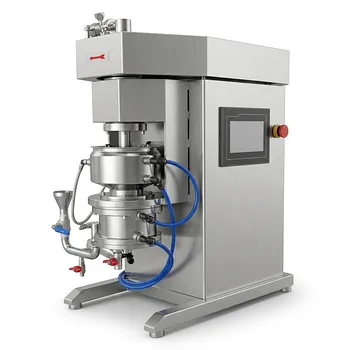
Small Ceramic Structure Laboratory Sand Mill Nanoscale Grinding Dispersion Equipment Seal-less Screen-less Design
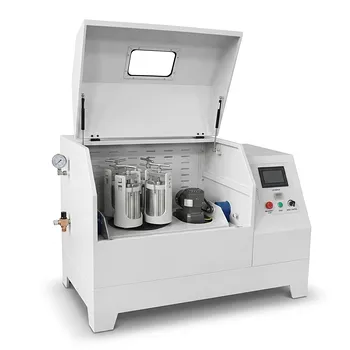
Vertical Production Planetary Ball Mill for High Throughput Powder Processing
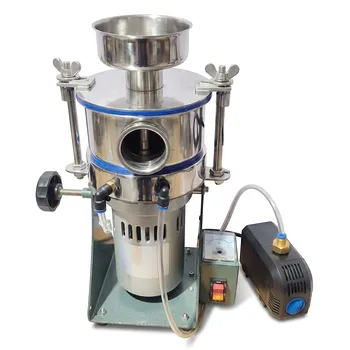
Water Cooled Airflow Ultra Fine Grinder for Low Temperature Material Processing
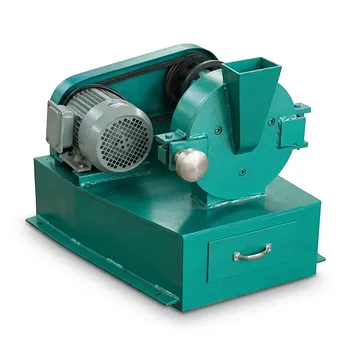
Medium Hardness Material Disc Pulverizer for Coal Ore Sample Preparation
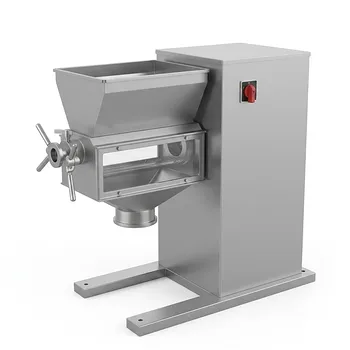
Industrial Swing Granulator for Powder Processing in Pharma Food and Chemical Industries
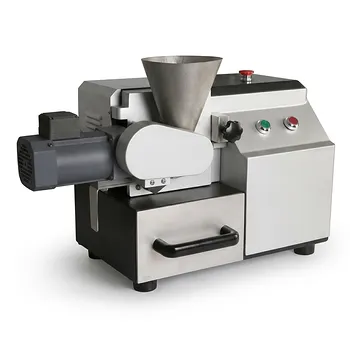
Laboratory Hammer Mill for Coal Quality Analysis and Brittle Mineral Grinding
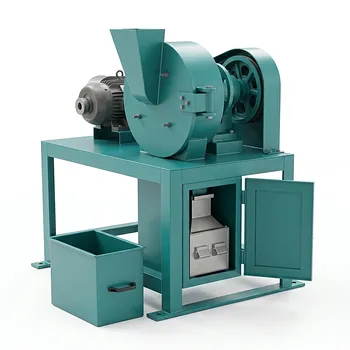
Sealed Disc Pulverizer Customized Model
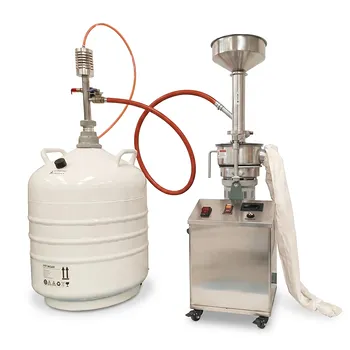
Laboratory Liquid Nitrogen Cryogenic Grinder Polymer Sample Preparation Pulverizer
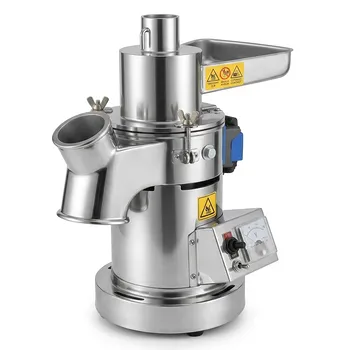
Continuous Feeding Grinder High Efficiency Pulverizer for Lab Sample Preparation
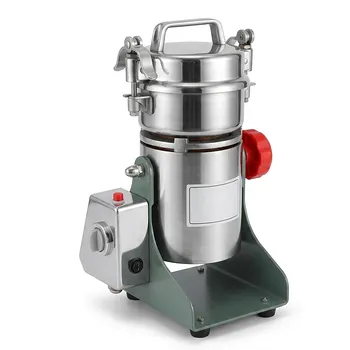
High Speed Swing Type Laboratory Pulverizer for Fine Powder Grinding and Sample Preparation
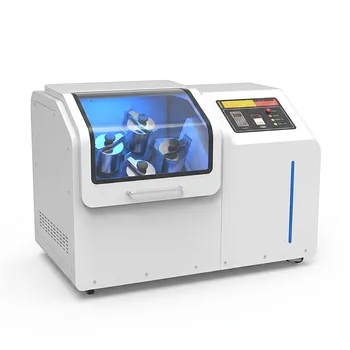
High Energy Omnidirectional Planetary Ball Mill 16L
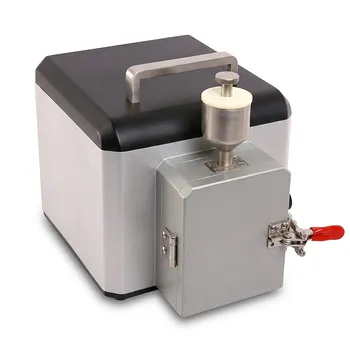
Portable Cutting Mill for Laboratory Sample Preparation and RoHS WEEE Compliance Testing

Miniature Planetary Ball Mill with Vacuum Grinding and High Efficiency for Laboratory Sample Preparation
Cyclonic Laboratory Mill for NIR Spectroscopy Sample Preparation Food and Feed Grinding

High Energy Planetary Ball Mill for Nano Scale Grinding and Mechanical Alloying
Automatic Vibrating Powder Feeder for Laboratory Material Processing Precision Vibratory Hopper Feeder for Granular and Powder Material Handling Industrial Grade Vibrating Tray Feeder for Consistent Material Sample Preparation