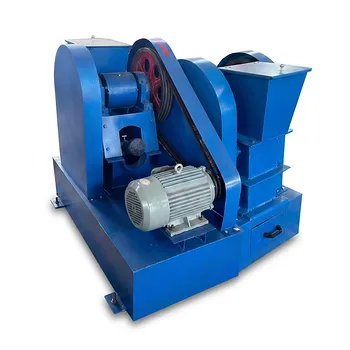
Functions of Presses & Furnaces in UO2 Fuel Pellet Prep: Achieving High-Density Nuclear Fuel
Updated 5 months ago
The preparation of Uranium Dioxide (UO2) nuclear fuel pellets relies on two distinct phases: mechanical compaction and thermal densification. Laboratory hydraulic presses are used to cold-press UO2 powder into "green bodies" with precise geometric shapes, while high-temperature sintering furnaces facilitate the final densification and microstructural stabilization of the ceramic pellet.
Core Takeaway: The hydraulic press establishes the physical foundation by maximizing particle contact and "green density," while the sintering furnace uses controlled thermal profiles to drive atomic diffusion, ultimately transforming loose powder into a high-density, reactor-ready ceramic fuel.
The Role of the Laboratory Hydraulic Press
Establishing Green Density and Particle Contact
The primary function of the laboratory hydraulic press is to apply high, uniform pressure to UO2 powder within a high-strength mold. This process rearranges and deforms powder particles, expelling air and drastically reducing the distance between them.
This high-pressure environment maximizes the contact area between particles, which is the essential physical foundation for the chemical and atomic reactions that occur later. Without sufficient initial compaction, the subsequent sintering process cannot proceed efficiently.
Precision Geometric Shaping
Nuclear fuel pellets must adhere to strict dimensional tolerances to ensure they fit correctly within fuel rods. The hydraulic press, utilized with precision-engineered die sets, ensures that each green body possesses the specific diameter and length required.
Consistency in shaping prevents mechanical stress points and ensures a uniform distribution of mass throughout the pellet. This geometric stability is critical for simulating industrial-scale pelletization in a controlled laboratory setting.
The Function of High-Temperature Sintering Furnaces
Driving Atomic Diffusion and Densification
After pressing, the "green" pellets are porous and mechanically fragile. The high-temperature batch sintering furnace provides the thermal energy necessary to trigger atomic diffusion and grain rearrangement.
As the temperature rises, the contact points between particles fuse together, causing the pellet to shrink and its density to increase toward the theoretical maximum. This transformation turns a compacted powder into a solid, high-strength ceramic.
Microstructural Stability and Thermal Profiles
The furnace allows for the precise control of thermal profiles, including heating rates, soak times, and cooling phases. This control is vital for achieving a stable microstructure with specific grain sizes.
A well-regulated sintering environment ensures that the fuel pellets reach their target density while minimizing internal defects. Proper microstructural development is essential for the pellet's ability to withstand the extreme thermal and radiation environment inside a nuclear reactor.
Understanding the Trade-offs and Potential Pitfalls
Pressure-Related Defects
Applying excessive pressure during the hydraulic pressing stage can lead to "capping" or internal laminations, where the pellet cracks upon pressure release. Conversely, insufficient pressure results in low green density, which may cause the pellet to crumble or fail to densify during sintering.
Thermal Gradients and Cracking
In the sintering furnace, heating or cooling too rapidly can introduce thermal stresses. These stresses often manifest as radial or circumferential cracks, which compromise the integrity of the fuel and can lead to unpredictable behavior during fission.
The Sensitivity of Sintering Kinetics
The success of the furnace stage is heavily dependent on the quality of the press stage. If the initial compaction is non-uniform, the sintering kinetics will vary across the pellet, leading to warping or non-uniform density in the final product.
How to Apply These Principles to Fuel Research
Making the Right Choice for Your Goal
- If your primary focus is maximizing final pellet density: Ensure the hydraulic press is calibrated to achieve the highest possible green density without inducing mechanical fractures.
- If your primary focus is microstructural grain size control: Prioritize the precision of the sintering furnace's thermal ramp-up and soak time settings to manage grain growth kinetics.
- If your primary focus is dimensional accuracy: Use high-strength, wear-resistant carbide die sets in the press and account for the specific shrinkage percentage that will occur in the furnace.
By mastering the synergy between mechanical compaction and thermal densification, researchers can produce UO2 pellets that meet the rigorous standards required for nuclear energy applications.
Summary Table:
| Process Stage | Equipment Used | Key Function | Final Impact |
|---|---|---|---|
| Mechanical Compaction | Laboratory Hydraulic Press | Maximizes green density & particle contact | Provides the physical foundation for pellet geometry |
| Thermal Densification | Sintering Furnace | Triggers atomic diffusion & grain growth | Transforms green body into high-strength ceramic fuel |
Optimize Your Nuclear Material Research with Precision Equipment
Achieving the rigorous density and microstructural standards required for UO2 fuel pellets starts with the right equipment. We provide complete laboratory sample preparation solutions tailored for material science and nuclear research.
Our specialized range includes:
- Advanced Hydraulic Presses: A full spectrum including Cold/Warm Isostatic Presses (CIP/WIP), standard lab presses, and vacuum hot presses for perfect green body formation.
- Powder Processing Tools: High-performance planetary ball mills, jet mills, and cryogenic grinders to ensure optimal particle size distribution.
- Sieving & Mixing: Precision sieve shakers and high-efficiency powder mixers for uniform material preparation.
Whether you are focusing on maximizing green density or controlling sintering kinetics, our equipment ensures reliability and repeatability. Contact our experts today to discuss your specific application and find the ideal solution for your laboratory workflow!
References
- Andrew Nelson. Prospects for additive manufacturing of nuclear fuel forms. DOI: 10.1016/j.pnucene.2022.104493
Mentioned Products
- 6-Ton Small Single-Punch Tablet Press — Laboratory Powder & Granule Tableting Equipment / Tablet Forming Machine
- 5 Ton Single Punch Tablet Press Laboratory Small Batch Production
- Manual Tablet Press with Dual Scale Pressure Gauge for Pharmaceutical Food Chemical Laboratory Sample Preparation
- 6 Ton Variable Frequency Single Punch Tablet Press
- High Shear Laboratory Emulsifier for Mixing and Homogenization
People Also Ask
- What is the function of a laboratory press in Cr-Ti alloy evaluation? Quantify Fracture Stress & Strength
- What is the function of a laboratory press in assessing the hydrophobic performance of modified vermiculite fillers?
- What is the core function of a laboratory press in the forming of ceramic filter element green bodies? Maximize Density.
- What is the function of a laboratory press in the preparation of ceramic feed rods? Master Density and Precision
- Why is vacuum sealing and flexible packaging necessary for Aluminum Titanate powders during CIP? Ensure Peak Density

Tech Team · PowderPreparation
Last updated on May 14, 2026
Related Products
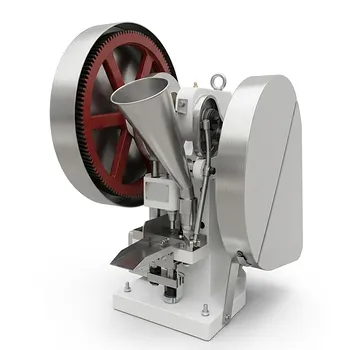
6-Ton Small Single-Punch Tablet Press — Laboratory Powder & Granule Tableting Equipment / Tablet Forming Machine
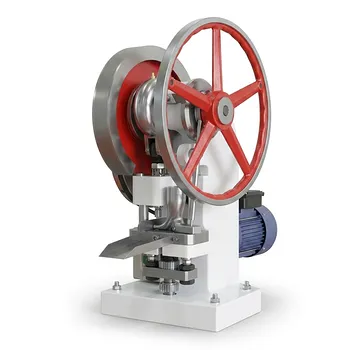
5 Ton Single Punch Tablet Press Laboratory Small Batch Production
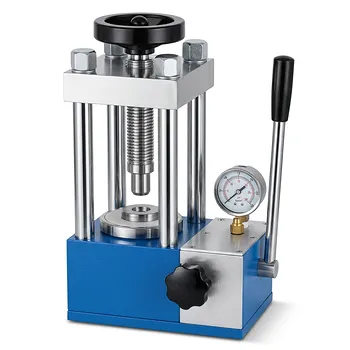
Manual Tablet Press with Dual Scale Pressure Gauge for Pharmaceutical Food Chemical Laboratory Sample Preparation
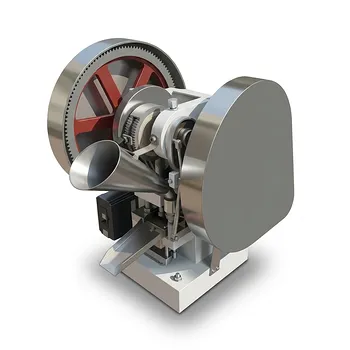
6 Ton Variable Frequency Single Punch Tablet Press
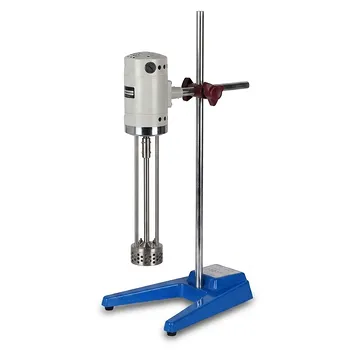
High Shear Laboratory Emulsifier for Mixing and Homogenization
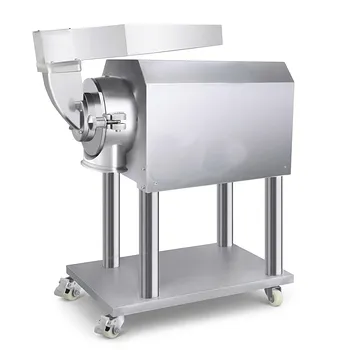
High Speed Small Laboratory Crusher for Dry Material Sample Preparation
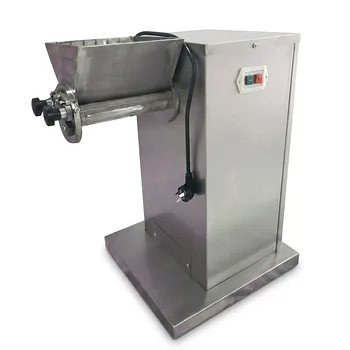
Small Laboratory Oscillating Granulator for Wet and Dry Granulation Processing
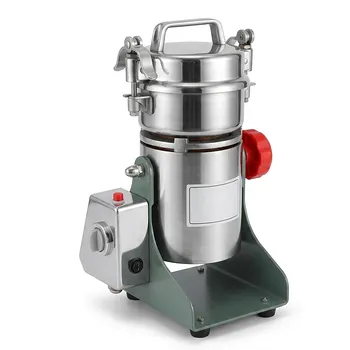
High Speed Swing Type Laboratory Pulverizer for Fine Powder Grinding and Sample Preparation